On the morning of October 26, 1881, four men stepped into the vacant lot behind the O. K. Corral in Tombstone, Arizona, and walked directly toward five members of the Clanton gang. Virgil Earp, the town’s deputy marshal, moved with his brothers Wyatt and Morgan beside him, and Doc Holliday at his side.
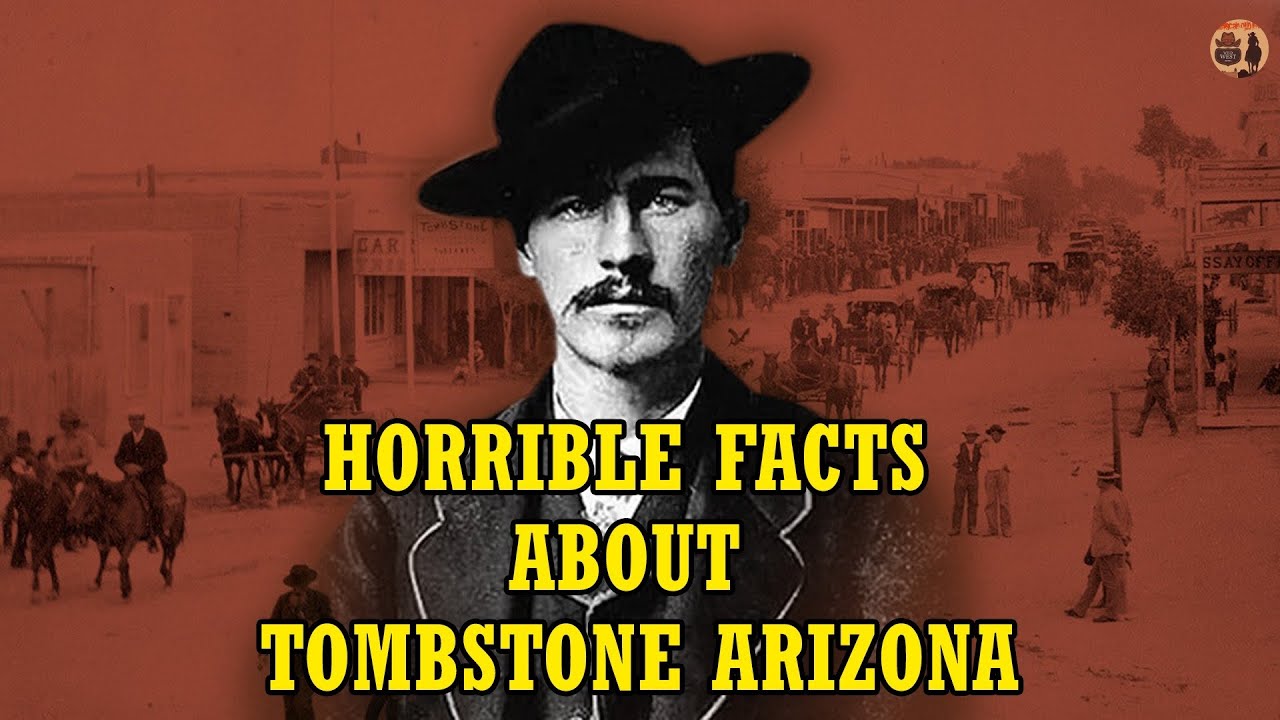
The Cowboys—Billy Clanton, Tom and Frank McLaury, and the two Clanton brothers, Ike and Billy—stood waiting, armed and ready. Thirty seconds later, three of the five lay dead in the dust, and the gunfight at the O. K. Corral had carved its name into American history.
But the story of that thirty seconds began years earlier, in the silence of a lone miner staring into distant mountains, and it would not end until the last of the Cowboys had been hunted down across the desert. Ed Schieffelin worked as a minor at Camp Huachuca, a military outpost in the Arizona Territory. Gazing out at the majestic peaks that rose beyond the camp, he saw something others missed: color, and with it, the promise of silver. He told a nearby soldier what he intended to do.
The soldier warned him that the Apaches controlled that country, and that the only thing he would find in those hills would be his tombstone. Schieffelin was undeterred. In February 1878, he set out alone, riding up into the hills on a solo journey in search of fortune. After two nights of exploration, Schieffelin found a vein of silver on a high ledge above his hideout.
Climbing to the ledge, he pried out a few pieces of pure silver. Examining the deposit, he estimated it ran about fifty feet long and twelve inches wide. Remembering the soldier’s warning, he named his discovery Tombstone. The name would later attach itself to the mine, and then to the town that grew around it.
Ed traveled to Tucson to file his claim, then moved to Signal, Arizona, where his brother Al lived. Signal is now considered a ghost town. Ed hoped to make his fortune with his brother’s support, but Al wanted no part in such a risky project, so Ed took a temporary job at the McCracken Mine while he continued to seek help. Not long after, he gave an ore sample to Richard Gird, an assayer in Signal.
Gird examined the sample, recognized its abundance, and quickly offered to finance the development of the mine in exchange for a one-third interest. When Al learned of this promising opportunity, he changed his mind and partnered with Ed. The three became equal partners in the venture. On his journey back to the mountains, Ed found two more locations filled with silver ore, betting claims he named Lucky Cuss and Tough Nut.
Both would soon turn into prosperous mines, and the Tombstone mine itself would prove be a significant producer. News of the discovery spread quickly, drawing a wave of silver seekers into the area. Mining activity increased, and new mines such as Grand Central, Charleston, and Contention opened up. A mining camp emerged, named after Ed’s original statement: Tombstone.
The Tombstone post office was officially established on December 2, 1878, and has remained in continuous operation ever since. In March 1879, an official town was laid out, and plots of land along Allen Street went on sale for five dollars apiece. Before long, Tombstone had about forty cabins and a population of roughly one hundred. As rumors of the growing settlement spread, more people flocked to the area.
Among them were the Earp brothers, who began arriving in the autumn of 1879. The influx of settlers propelled Tombstone into a vibrant town experiencing rapid growth and prosperity. But founder Ed Schieffelin was more interested in exploration than owning a mine. When he returned from a four-month expedition, his brother Al had found a buyer for their requirements, as the capital needed to develop the silver mine was beyond their financial means.
Al and Ed Schieffelin sold two-thirds of their profit in the Tough Nut mine for one million dollars. Some time later, Gird sold one-third of his profit for the same amount. Careful management of the mine eventually yielded about sixty million dollars worth of silver, the equivalent of roughly two billion dollars today. With this wealth, Ed Schieffelin chose to leave Tombstone and embark on a new adventure, motivated by a desire to pursue new mining prospects in the United States.
When Wyatt Earp came to Tombstone in December 1879, he planned to establish a stage line, only to discover there were already two operating in town. He then formed a partnership with the owner of the Oriental Saloon to enter the gambling business, a lucrative arrangement that guaranteed him twenty-five percent of the profits. In addition, Wyatt took on the role of carriage driver for Wells Fargo deliveries. Meanwhile, his brother James founded a pub on Allen Street.
Virgil Earp was already a deputy sheriff in Tombstone, and Morgan Earp worked alongside his brother as a lawman. In 1880, Doc Holliday and his companion Kate Elder, known as Big Nose Kate, also arrived in Tombstone. Kate quickly recognized the opportunity and built a large tent filled with women and a wide range of affordable whiskies, creating a place of entertainment that attracted many men. Not surprisingly, gambling also thrived.
Before the Earps arrived, the area had been plagued by a group of outlaws known as the Clanton gang, led by Old Man Clanton and his sons Ike, Finn, and Billy. Other notable members included the McLaury brothers, Frank and Tom, as well as Curly Bill Brocius and Johnny Ringo. The notorious Cowboys and their accomplices quickly expressed their displeasure when the Earps appeared in the area. On May 1, 1880, the introduction of the Tombstone Epitaph marked the establishment of the oldest continuously published newspaper in Arizona.
By June of that year, the population had reached about three thousand, attracting various groups of residents including workers, dancing hall girls, outlaws, pub owners, and gamblers. Before long, Tombstone gained a reputation as one of the most unsettled towns in the Southwest. The lucrative operations of the Tombstone, Tough Nut, and Richmond mines yielded large amounts of silver, fueling the town’s growth. By 1881, the population had grown to about eight thousand residents, cementing Tombstone’s status as home to many of the largest gambling establishments, pubs, and red light districts in the Southwest.
The town also boasted four churches, a school, two banks, and an opera house. In February 1881, Bat Masterson and Luke Short, both former lawmen from Dodge City, Kansas, joined Wyatt Earp at the Oriental Saloon gambling tables in Tombstone. Their time in town was short-lived, as Masterson had to return to Dodge City to support his brother Jim. Meanwhile, the cowboy faction, known for its involvement in cattle rustling, continued to operate in the area.
Despite the constant tensions, Deputy Marshal Virgil Earp could do nothing, as cattle theft fell under the jurisdiction of the county, not the town of Tombstone. The Earp brothers, along with Doc Holliday, frequently clashed with the cowboy faction, leading to numerous confrontations between law enforcement and the lawless. On June 22, 1881, a devastating fire ravaged the eastern half of Tombstone’s business district. Not having enough water hampered firefighting efforts, allowing the blaze to engulf many homes.
The townspeople blamed Field Marshal Ben Sippy for his failure to control the looting under such circumstances, and Virgil was quickly appointed field marshal in his place, which further increased tensions with the already hostile Clanton faction. Long-standing tensions between the two factions reached a climax on October 26, 1881, leading to the infamous gunfight at the O. K. Corral.
In just thirty seconds, Virgil, Wyatt, and Morgan Earp, along with Doc Holliday, faced off against five members of the Clanton gang in a brutal gunfight. When the smoke cleared, Billy Clanton and Tom and Frank McLaury lay dead. Virgil had been injured in the leg, and Morgan had been injured in the shoulder. Amidst the chaos, Wyatt confronted Sheriff Johnny Behan, who quickly announced he was placing the Earps and Holliday under arrest.
They later faced trial for murder, but it was determined that their actions were justified under the law. However, Virgil’s involvement in the deadly encounter led to his later dismissal from the position of field marshal. On March 18, 1882, in an act of revenge for the O. K.
Corral gunfight, a group of cowboys shot and killed Morgan Earp. After that, the entire Earp group departed with Morgan’s body, setting off for California. During the journey, however, Wyatt, Warren Earp, and Doc Holliday disembarked in Tucson, embarking on a year-long pursuit to track down and eliminate each member of the Clanton gang. In the end, neither the Earps nor Holliday ever returned to Tombstone.
On May 25, 1882, Tombstone suffered another devastating fire, this time consuming much of the town’s western business district, including the iconic O. K. Corral. But the town’s resilient residents rallied once more, determined to rebuild what was lost.
In 1882, construction of the Cochise County Courthouse began, an important development for the community. At the same time, the Bird Cage Theatre emerged as a standout establishment, offering a mix of culture while also serving as a pub, gambling hub, and brothel. The New York Times described it as the wildest, most brutal carnage between Basin Street and the Barbary Coast, because the theater was involved in twenty-six deaths in its eight years of operation. In 1886, the discovery of a new source of water brought initial joy to the inhabitants of Tombstone.
However, this new find of water would end the mining boom and almost end the town. Water began to flood into many mines in the area, and despite efforts to control it through the installation of large pumps, when a fire destroyed the pumps at the Grand Central Mine in 1886, the mine was eventually flooded. Frustrated miners quickly found work in the burgeoning copper mines of Bisbee and the newly established mining towns. Neighboring settlements such as Charleston and Millville were severely affected.
Eventually, Tombstone lost its status as a growing town and began to fade away. In 1929, a decision was made through a vote to move the county offices to Bisbee, about twenty-five miles from Tombstone. This turn of events seemed to determine Tombstone’s destiny as a ghost town. However, the resilient citizens of Tombstone united in their efforts to preserve their beloved town.
Drawing on its rich history, they began to focus on Tombstone’s tourism opportunities. Considerable efforts were made to restore and repair the town’s historic buildings, breathing new life into the once-deserted streets. Boot Hill has become a top attraction, and the famous gunfight has been recreated to attract tourists. Tombstone’s compelling story has captured the attention of filmmakers and authors, leading to the creation of numerous films and books that continue to bring new life to the town.
The notorious Allen Street, once filled with bars, casinos, and brothels, has undergone careful restoration to attract visitors. Cochise County’s original courthouse and gallows, dating from 1882, have been transformed into a state historic park, offering a glimpse into the town’s long past. Today, Tombstone, Arizona, is conveniently located just sixty miles southeast of Tucson and near Benson, with countless accommodations and dining options for visitors looking to experience the town’s unique charm. Interestingly, according to Guinness, the world’s largest rose bush was planted in Tombstone in 1885 and still thrives in the city’s sunny climate.
The Lady Banksia rose is native to Scotland. This vibrant and historically significant old town has stood the test of time, a testament to the resilience of its residents and a living reminder of the lawless, brutal, and unforgettable days of the old West.
