In January 1981, after years of chaotic breakups and reconciliations, the marriage between Frank “Lefty” Rosenthal and Jerri McGee was finally dissolved. By the fall of 1982, Jerri was living in Los Angeles, battling addiction and running out of options. On November 6th, she was found heavily drugged in the lobby of the Beverly Sunset Hotel on Sunset Boulevard. Three days later, on November 9th, she was dead at the age of 46.
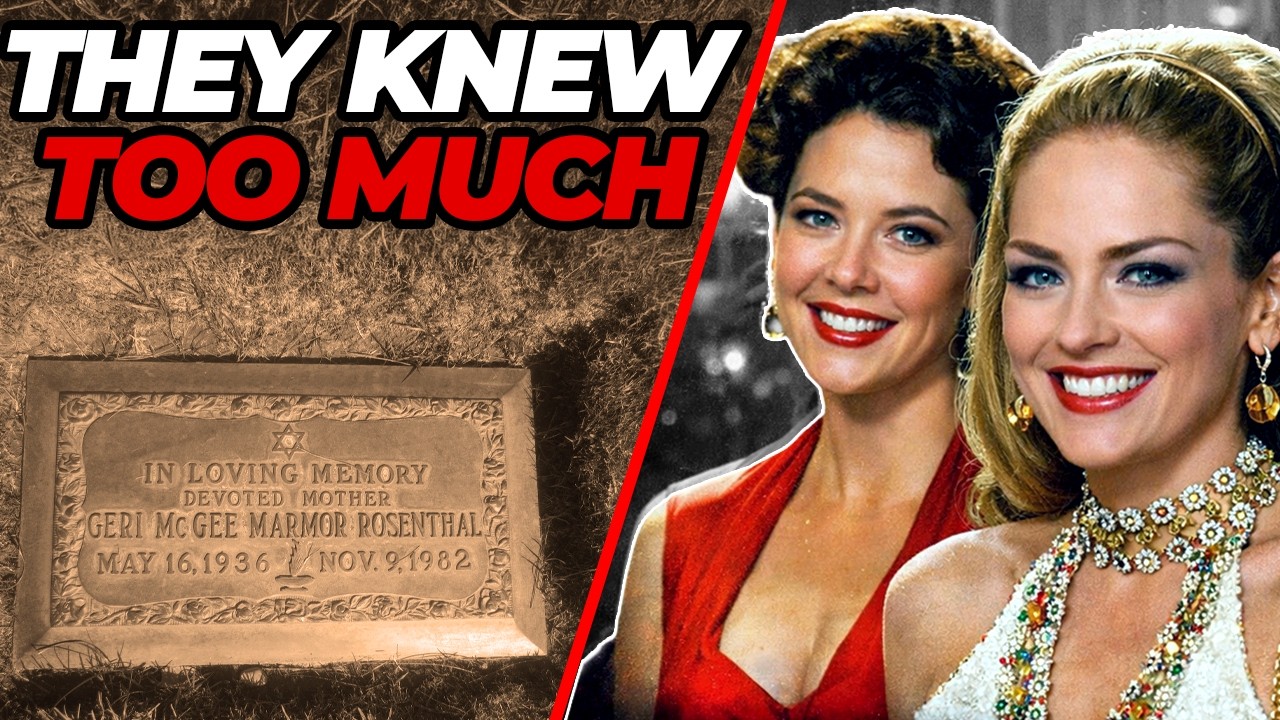
The official story of these women—Karen Hill, Jerri McGee, and Virginia Hill—has been told for decades through the lens of the great mob films that made them famous. In *Goodfellas*, Karen Hill is the frightened wife of Henry Hill, a woman pulled into his world, then left scrambling when it collapses. In *Casino*, Ginger McKenna is a tragic, self-destructive spectacle, a train wreck of addiction and betrayal. In *Bugsy*, Virginia Hill is the beautiful, fiery companion of Benjamin “Bugsy” Siegel, the glamorous woman standing beside a visionary.
All three portrayals earned acclaim. All three were wrong. The real women were deeper in organized crime than any of those films had the nerve to show. Karen Friedman grew up in Lawrence, on Long Island, in a middle-class Jewish neighborhood, a dental hygienist living a normal life.
In 1965, she met Henry Hill on a double date arranged through the orbit of Paul Vario, the Lucchese family captain who ran the crew Henry would eventually join. In the movie, her date partner is Tommy DeSimone, the volatile hitman played by Joe Pesci. In reality, her date was Paul Vario Jr. , the son of the crime boss himself.
That single detail already places Karen closer to the center of the Lucchese family social world than the film ever lets on. This was not a random night out. She was being introduced to Henry through the boss’s own family. *Goodfellas* captures the seductive pull of that world with precision: the famous Copacabana entrance, the wads of cash, the man who never waited in line.
Karen’s own voiceover admits she got used to it. The film is honest about the glamour of that life, but even by its own terms, it shows more than a passive victim. Near the end of the movie, during the drug raid, Karen is the one flushing cocaine down the toilet while the FBI bangs on the door. That moment alone demonstrates she was a participant by the final act, not a spectator.
The real story travels much further. In Henry Hill’s 2004 memoir, *Gangsters and Goodfellas*, he wrote that while he was serving time in prison for extortion in the mid-1970s, Karen was having an affair with Paul Vario himself, the boss, the man who ran the crew. In *Goodfellas*, Vario appears as Paulie Cicero, played by Paul Sorvino, and the film never touches the affair. Henry also wrote that during that same period, Tommy DeSimone beat Karen and attempted to rape her.
According to Henry’s account, Vario found out about the assault, and one theory holds that this is part of why Vario eventually gave DeSimone up to the Gambino family. DeSimone had killed a made man, Billy Batts, and the Gambinos wanted payback. Vario may have finally allowed them to take Tommy, partly because of what Tommy had done to the woman the boss was sleeping with. The idea is that a mob boss possibly signed a man’s death warrant partly over what he did to his own mistress.
*Goodfellas* leaves all of this out. The movie makes Karen scary to the audience only once Henry’s world collapses. The actual story suggests she was already much closer to that world than the film ever wants to admit. The reason is probably narrative: the movie is Henry’s story, not Karen’s.
Including the affair with Paulie would complicate the audience’s sympathy for both Karen and for Paulie as a character. The film preserves Karen’s relatability by preserving uncertainty, letting the audience believe she might have been more naive than she actually was. It is smart filmmaking, but it is also selective. Outside the movie, Karen Hill was a woman who was introduced into the mob through the boss’s family, had an affair with the boss himself, helped run her husband’s drug operation, and destroyed evidence during a federal raid.
That is a woman several layers deep in that life, not an outsider standing on the fringes. *Casino* handled Jerri McGee differently, and at first glance, it seems the film did her more justice. Sharon Stone received an Oscar nomination for playing Ginger McKenna, one of the most vivid portraits of self-destruction in any crime film. She was electric, tragic, unforgettable.
But the real woman’s life was messier and less cinematic than anything that reached the screen. Jeri McGee grew up in the Sherman Oaks area of Los Angeles, graduated from Van Nuys High School, and by 1960 had moved to Las Vegas. She started working as a cocktail waitress and a Tropicana chorus showgirl. She hustled at casino tables, cultivated relationships with high rollers, and earned enough to buy a house for herself and her family.
She was not waiting around for a man to give her a life in Las Vegas; she had already built one. By the time she married Frank Rosenthal in 1969, she already had a daughter, Robin, from a previous relationship with a man named Lenny Marmor. She then had two more children with Rosenthal, a son named Steven and a daughter named Stephanie. Three children total.
The movie gives Ginger one daughter. That is not a small change. A woman with three children, trapped in a marriage falling apart, married to a casino boss with mob ties, is a more complicated, more domestic, and more desperate figure than what the film shows. *Casino* turns Ginger into a spectacle.
The real Jeri was juggling kids, addiction, affairs, and threats of losing custody. What happened next is the part that still does not make sense. Rosenthal threatened to divorce Jeri and take the children, leaving her with almost nothing. Their marriage went through a brutal cycle of breakups and reconciliations through the entire 1970s.
If Jeri had stopped with just the domestic chaos, this would be a very different story. But the affairs made everything worse. She was involved with Anthony Spilotro, the Chicago Outfit’s enforcer in Las Vegas and a close associate of Rosenthal—the character Joe Pesci plays as Nicky Santoro. The affair was real, and it was one of several factors that blew the entire Las Vegas arrangement apart.
Their divorce was finalized in January 1981. Less than two years later, Jeri was gone. The official ruling was an accidental overdose. The toxicology report found cocaine, Valium, and whiskey in her system.
But her sister publicly stated she believed Jeri had been murdered by the mob, possibly because she knew too much about the Las Vegas underworld. Frank Rosenthal spent $50,000 on a private autopsy to fight off rumors that he had been involved. That second autopsy confirmed the same finding: accidental overdose. It is impossible to know which version is true, and it is likely no one alive does either.
But the fact that the question even exists says something about how deep this woman was in it. *Casino* turns all of this into one of the great tragic arcs in modern cinema, but it smooths the edges: one child instead of three, a cleaner narrative arc, a death that feels like the inevitable end of a Hollywood tragedy. Ginger McKenna is probably Sharon Stone’s best performance, but the real Jerri McGee looks less like a symbol and more like a chaotic person swallowed by a brutal environment. Her story is painful in a way that does not translate neatly into a three-hour film, and even the people closest to it acknowledged that.
Rosenthal, who lived until 2008, admitted the movie was broadly similar to his life but not fully accurate. When asked about Sharon Stone’s portrayal of his wife, he said he would rather not get into that area and declined to elaborate. By the mid-1990s, *Casino* and *Goodfellas* had cemented the popular image of mob women as either glamorous or doomed, usually both. Neither film prepared audiences for Virginia Hill, who may be the worst case of the three.
The 1991 film *Bugsy* turned a woman who actually worked for the mob into a love interest. Annette Bening plays Virginia Hill as a beautiful, fiery woman attached to Warren Beatty’s Bugsy Siegel. The movie focuses almost entirely on the romance and the Flamingo Hotel project. Virginia is charismatic, but her role is essentially the girlfriend, the woman standing next to the man with the vision.
*Bugsy* is a good movie, but it does what mob films almost always do with women: it makes her interesting because of who she is sleeping with, not because of what she actually did. The real Virginia Hill was nothing like that. She was born in Lipscomb, Alabama, in 1916, one of ten children, with an alcoholic father who worked as a horse trader. By the age of seventeen, she had left home and moved to Chicago.
She found a waitressing job at a mob-run restaurant called the San Carlo Italian Village during the 1933 World’s Fair, and that is where she met Joseph Epstein, a bookmaker connected to the Chicago Outfit. Epstein saw something in Virginia that was more than looks: he saw someone who was smart, discreet, and willing to work. He became her mentor, her financial handler, and her entry point into organized crime at a national level. Virginia could have stopped there.
She did not. By the mid-1930s, she was already functioning as a courier for the Chicago Outfit, moving cash, stolen goods, and messages between mobsters across state lines. Up to that point, she had been on the fringes. That was about to change.
The Outfit sent her to New York to get close to Joe Adonis, one of the most influential figures in the Luciano crime family. The job was espionage: Chicago wanted to know if New York was honoring its end of a financial arrangement. Virginia began an affair with Adonis, laundered tens of thousands of dollars in cash that Epstein mailed to her, and helped Adonis run gambling rackets. Looking back, that was either incredibly brave or incredibly stupid, probably both.
While working with Adonis, she met Bugsy Siegel. This is where the movie picks up, but it skips everything that came before: the courier work, the laundering, the espionage assignment, and the fact that Virginia had already been a working criminal for nearly a decade before Siegel entered the picture. The Mob Museum in Las Vegas describes Virginia Hill as more than a mob mistress: they call her an organized crime figure in her own right, involved in money laundering, gambling, intimidation, and fraud. She rose higher than any other woman in the national underworld, working alongside Meyer Lansky, Frank Costello, Tony Accardo, Frank Nitti, and Johnny Rosselli.
You do not build a list like that by being someone else’s girlfriend. That is a criminal career. She also helped establish narcotics trafficking routes through Mexico. By some accounts, she was essentially the intellectual director of the Chicago Outfit’s Mexican drug operation.
Most people never hear about that part. The movie *Bugsy* gives you romance and glamour in a doomed hotel in the desert. The real Virginia Hill was a working piece of the machine: carrying cash in rubber bands, funneling Outfit money into Swiss bank accounts, and reporting intelligence between rival mob factions. Even her exit from the story has layers the film cannot capture.
Four days before Siegel was shot to death in her Beverly Hills living room in June 1947, Virginia took an unscheduled flight to Paris. Whether she was warned or simply lucky has never been definitively answered. A woman who spent fifteen years moving between the Chicago Outfit, the Luciano family, and the Mexican drug trade does not just happen to leave town four days before a murder. In 1951, she testified before the Kefauver Committee hearings, playing dumb, telling senators she did not understand business and knew nothing about organized crime.
When she walked out of the courthouse, she punched a female reporter in the jaw and kicked a photographer who tried to get a low-angle shot. That does not sound like somebody’s arm candy. This was a woman who had spent two decades in rooms full of killers and was not about to be rattled by senators. Virginia fled to Europe after being indicted for tax evasion in 1954.
She lived in Austria with her son, mostly broke, mostly forgotten. In March 1966, she was found dead near a brook outside Salzburg. The official ruling was suicide by an overdose of sedatives, though some accounts suggest she had been trying to squeeze the mob for money using what she knew. If that is true, she miscalculated badly.
When you line up all three stories, the pattern is inescapable. The filmmakers did not just simplify these women. They consistently pushed them toward passivity, glamour, or tragedy, when the real women were more informed, more entangled, and more useful to the criminal operations than the films let on. Screenwriters and directors look at a woman like Virginia Hill with her cash runs, her rackets, and her espionage assignments, and decide the love story is easier to sell.
They look at Karen Hill’s affair with the boss and decide the audience will not root for her if they know. They look at Jerri McGee’s three children and decide one daughter is more cinematic. Every time, the choice goes the same direction: make her simpler, make her less threatening, make her easier to watch. Mob movies like women most when they can turn them into victims, trophies, or warnings.
Real life keeps giving us women who were harder to categorize. The films gave them faces. The real stories give them something the films never quite could: agency.
Messy, dangerous, sometimes self-destructive agency, but agency all the same.
