He lay bleeding on the floor of the Trail City saloon, hands raised in a plea that gained him nothing. The man above him, Joe Sparrow, had long awaited this moment, nursing his grudge, and now he advanced slowly and fired a final bullet into Print Olive’s forehead. The man known as Man Burner, the cattleman who had buried a brother and hanged two rustlers from an elm tree, was dead at forty-six, killed over ten dollars in a town that would hardly outlast him. How he ended up on that floor traces back decades, to a different country altogether.
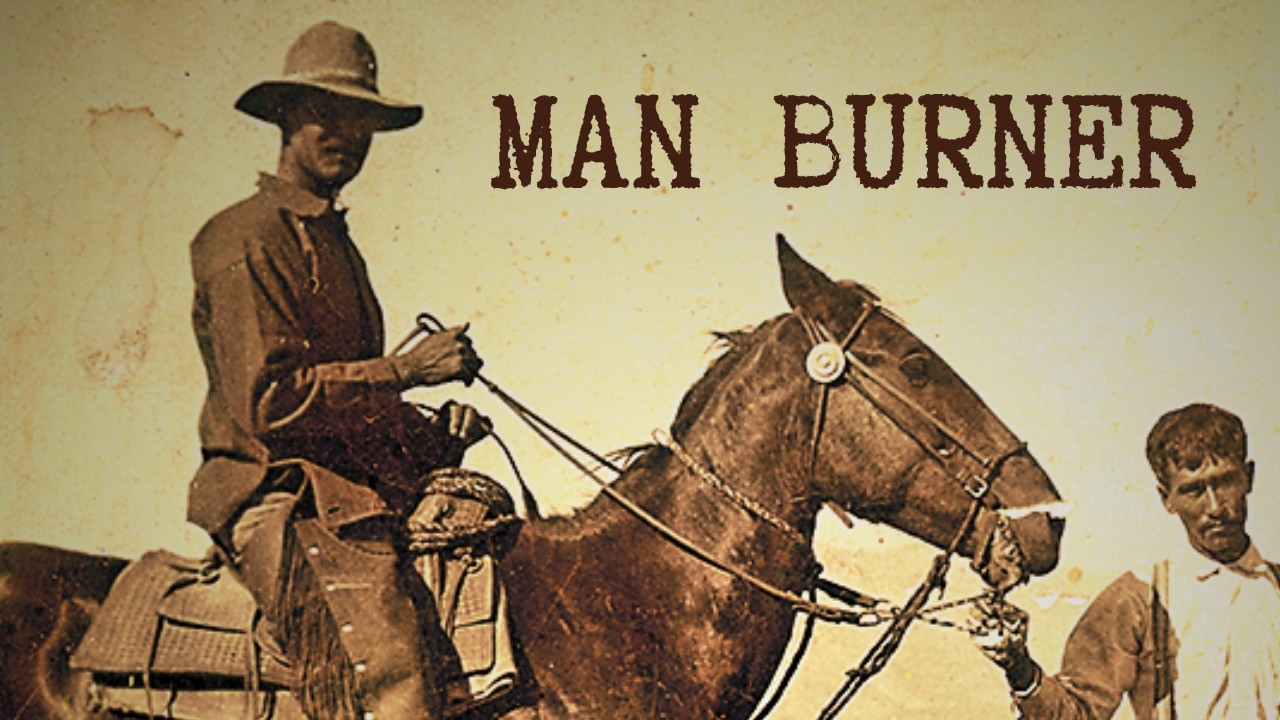
Isum Print Olive was born in Union Parish, Louisiana, in 1840, though some accounts say Mississippi. By age three, his family had moved again, this time to what is now Williamson County, Texas, where his father James started a ranch. Print essentially grew up on horseback; by his teens, he and his brothers were already driving herds east to market. The Civil War broke that life, and like many young Texans, Print enlisted with the Confederacy, serving in Company H of the 2nd Texas Infantry.
He experienced brutal fighting from Shiloh, where a bullet hit him in the hip, to Farmington, Tallahatchie Bridge, the Second Battle of Corinth, and finally the Siege of Vicksburg, where he was captured. The Yankees held him only a few days before returning him to Texas. He spent the remainder of the war in Galveston, guarding the docks and battling monotony. Something significant had occurred to Texas cattle while he was gone.
With most men away at war, ranches were left short-handed or deserted. Cattle ran loose, went wild, and multiplied unchecked. By the time Print came back, millions of unbranded cattle, called mavericks, wandered the state, free for anyone bold enough to drag them from the brush. Print and his brothers seized the opportunity, rounding up and branding all they could catch.
The only issue was that plenty of rustlers had the same notion, and if there was one thing Print Olive could not tolerate, it was a cattle thief. In late 1865, Print caught a man named Rod Murray driving some of his cattle. He drew his pistol and shot Murray out of the saddle. But Murray survived, and he insisted he hadn’t known the cattle were stolen.
Rather than finishing him, Print took Murray home, treated his wounds, and hired him. Another rustler, Dave Freeman, would not be so fortunate. He, too, was caught driving Olive steers. As historian Leon Metz wrote in The Shooters, “Freeman and Print shot it out from horseback and Freeman lost.
Even though Olive was wounded in the fight, he stood trial for murder. The jury dismissed the charge and freed him. ” That became a pattern. Print Olive faced murder charges many times, and nearly always walked away without even a minor penalty.
Life held more than gunfights. In February 1866, twenty-five-year-old Print married a young woman named Louisa. They had been set to wed a month earlier, but Olive was away in court fighting one of those shooting charges. The couple would have five children, one girl and four boys, though their firstborn, Mary Ann, died at only three months.
Despite that loss, things prospered. Olive built a ranch running thousands upon thousands of cattle, and in the following years, he began driving herds north to the railheads. Most trips went smoothly. Then came 1872, and the town of Ellsworth, Kansas.
Olive had just delivered a herd when he got into a dispute with a man named Jim Kennedy, son of Mifflin Kennedy, who had helped establish the legendary King Ranch. Kennedy had lost too many poker hands and accused Olive of cheating. Print told him to leave the saloon while he still could. Kennedy departed, but his pride rankled, and he came back later that evening.
According to the August 1st, 1872 edition of the Ellsworth Reporter, Kennedy “came into the room, went behind the bar, and taking a revolver, walked up in front of Olive and fired at him, telling him to pass in his checks. ” Olive raised his hands and yelled, “Don’t shoot! ” The second, third, and fourth shots struck him: one in the groin, one in the thigh, one in the hand. Kennedy probably would have finished him if not for Olive’s loyal friend, James Kelly.
Kelly was a remarkable man in his own right. His parents, Amos and Phoebe, were former slaves who had lived near the Olives, and Print and James had grown up together. In fact, James had been named after Print’s father. Known variously as Inward Jim or Prince Bad Inward, Kelly was completely devoted to the Olives and skilled with a pistol.
As Leon Metz put it, “As a gun hand, he had few peers and might have been as well known as Billy the Kid or John Ringo had his skin been white. ” When cowboys driving cattle met homesteaders trying to charge a toll for crossing their land, Print would send Kelly to negotiate. One of Print’s own cowboys described the effect: “That big black boy with his gun would sure tell them pumpkin rollers. He’d roll his eyes up like a duck in a thunderstorm and grit his teeth.
Lord, he could play a tune with his teeth. When they saw Kelly, they’d come down quick enough, $25 to $5 as the price for water in our herd. ” It was Kelly who, in Ellsworth, drew his own gun and disabled Kennedy long enough to get Print to safety. Olive survived that shooting, and once healed, he and his brothers launched a campaign.
In just the next couple of years, they killed at least half a dozen rustlers, perhaps more. One Austin newspaper article from March 30th, 1876 credited Print and his brothers with killing twelve people in only three or four months. In one especially gruesome killing, Print and his brother Jay caught two thieves in the act of butchering their cattle. According to legend, they wrapped the men in fresh cowhides, tied them to a tree, and left them under the Texas sun.
As the green hides dried, they tightened, slowly crushing and suffocating the men inside. Old-timers called it the death of skins. Whether it truly happened is uncertain; contemporary newspapers merely reported that the rustlers had been shot to death, with one found covered in a cowhide bearing the Olive brand. Not wrapped, but covered, the brand facing outward, most likely a message.
Print was indicted for both of the killings and, true to form, walked free. But the local outlaws had had enough of his brand of vigilante justice, and they came after his ranch. What followed was an outright battle. Print took a wound, his ranch house was reduced to ashes, and his younger brother Thomas was killed, along with at least one hired hand.
The bloodshed didn’t stop there. Print tracked down one of the raiders, a man by the name of Fred Smith, catching him just as Smith was fording a river. Olive held off until the man was clear of the water, ordered him to drop his weapons, and the moment Smith complied, Print proved quicker, drilling a bullet into the bridge of his nose. Weeks later, Print shot another man who turned up at his ranch asking for water, a stranger suspicious enough that Olive took him for an assassin.
When the man panicked and made a grab for his horse, Print gunned him down. Charged with murder once more, Print Olive was once more acquitted. Come the spring of 1877, the rustler problem had grown so severe that Print shut down his operation and relocated everyone north to Nebraska. There, in Custer County, he built a new ranch that would expand into one of the biggest spreads in the whole state.
Nebraska was no real refuge from rustlers; Doc Middleton, one of the West’s most infamous horse thieves, was working the same territory at the time. Given Olive’s recent history, you might assume the two would be sworn enemies. They weren’t. They got on well enough, or at any rate reached an understanding. As Harry Chrisman’s biography The Ladder of Rivers recounts, Print actually took a liking to Middleton and made a deal with him, allowing him to use any of his camps whenever he pleased, provided he wasn’t carrying stolen stock.
Print laid out the terms plainly, telling him he could steal from him as much as he wanted, but that if they caught him, which they would, he’d stretch his neck between two saddle horses. Middleton accepted, and as far as anyone knows, he never gave trouble. Homesteaders were another story entirely. Once he was settled in Nebraska, Olive was simply another cattle baron, among the biggest in the state, and the big ranchers detested sharing land and resources with farmers.
The Homestead Act let anyone claim as much as 160 acres of open range, settle on it, improve it, and hold it outright. But men like Print Olive regarded that open range as their own and no one else’s, even if they had never filed on it or acquired it legally. Once homesteaders began staking claims and stringing fences, Print turned aggressive and started throwing his weight around. One account tells of him pistol-whipping a farmer with such force that he shattered the man’s jaw, leaving permanent damage.
Not everyone was so easy to scare. A pair of small-timers, Luther Mitchell and Amy Ketchum, appeared utterly unbothered by Print Olive or his threats. Both are commonly labeled rustlers, though whether that label fits is unclear, as is so often true in these range wars, where cattle barons branded anyone who stood up to them a thief. Some sources maintain that Mitchell and Ketchum were caught with nearly a hundred head of Olive’s cattle.
Perhaps they were thieves, perhaps Print was after their land, perhaps both. Either way, Print’s younger brother Bob, who had somehow gotten himself deputized in spite of a murder charge hanging over him back in Texas, made sure warrants were sworn out against the two. When he rode out with a posse to serve them, everything fell apart. Ketchum wasn’t inclined to surrender and reached for his gun.
Bob Olive drew and shot him in the left arm. That was when Mitchell stepped in and put a round through Bob’s lungs. Bob held on for a few days before dying on November 27th, 1878. Mitchell and Ketchum took off.
Print Olive was nearly blinded by fury. He put up a $700 bounty, a modest fortune at the time. Within two weeks, the pair were caught in Loop City. A judge ordered them moved to Custer County for trial, but they never arrived.
The sheriff in charge of the escort, a man named Barney Gillan, met Olive at Plum Creek and turned his prisoners over. They were hauled by wagon to a spot called Devil’s Gap, roughly fifty miles west of Kearney, and hanged from an elm tree. Leon Metz described the scene: seating the two men in a wagon, Olive’s cowboys drove into the back country and stopped beneath an elm with low-hanging branches. Ropes were thrown over the limbs and nooses were clumsily knotted around the trembling necks of Ketchum and Mitchell.
Mitchell started to plead, and Print shot him with a rifle, the slug throwing him backward. His boots kept him upright in the wagon while the rope kept him from dropping to the ground. Olive turned to the driver and said, ‘Move it.’ And the wagon jerked forward.
Except for the head and neck, the bodies hit the ground, but the vaqueros corrected this shortcoming by hauling the two men high into the air and snubbing the ropes off on the tree.
As if that weren’t enough, the bodies were then soaked in oil and set alight. Whether Olive struck the match is unknown. He denied it afterward, and Metz notes there is some evidence that two of Print’s hands did the burning after Print had already departed the scene.
Either way, the lynching earned him the nickname Man Burner. It also stirred up substantial outrage in Nebraska. Olive was arrested and charged with murder, and this time he did not walk free. In spite of excellent lawyers and whispers of jury tampering, he was convicted and sentenced to life in the Nebraska State Penitentiary.
In the end, he served only about two years. It helps to have friends in high places. The Nebraska Supreme Court threw out the conviction on the grounds that the trial had not been held in the same county where the lynchings took place. The case was sent back for retrial in the proper jurisdiction, but that retrial never came.
Some of the witnesses had died, others had fled the state, and the remainder simply refused to show up. With no witnesses, the charges were dismissed. Olive walked out of prison a broken man. He had lost half his cattle to a brutal winter, and whatever money he had left had been consumed by lawyers.
On top of that, many of his neighbors in Custer County were no longer friendly. They had tolerated the occasional lynching, but burning the bodies was a step too far. So Print shut down his operation once more and moved his family to Dodge City, where he started a new ranch, got himself elected director of the Western Kansas Stockmen’s Association, opened a butcher shop, and, according to some sources, ran his own saloon. It was around this time that he lost his oldest son, Billy.
Billy had killed a man in a drunken brawl and fled to the territory, where he ironically turned rustler himself, before being ambushed and killed in Beaver City. Print’s newest ventures turned out to be disasters. His partner in the butcher shop vanished, leaving Print roughly ten thousand dollars in debt. The winter of 1885 cost him about forty percent of the cattle he had left.
Unable to settle what he owed, Print headed west to Trail City, Colorado—today a ghost town—in hopes of striking it rich again. Trail City had sprung up in 1885 close to where Holly, Colorado now stands, created specifically in reaction to the quarantine rules Kansas had passed. Those rules came about because of Texas fever, a tick-borne disease spread by Texas longhorns that wiped out cattle in Kansas. Once longhorns were barred from Kansas, drovers started routing their herds through eastern Colorado instead.
Trail City soon held the familiar mix of saloons, soiled doves, and gambling houses that catered to cowboys. By 1890 the place would be finished, yet in just five short years it generated enough bloodshed and vice to put larger towns to shame. Print Olive intended to rebuild his fortune there, and he nearly pulled it off. By September of ’85 he held a share in a saloon and operated a livery stable, all while shuttling back and forth to Kansas to oversee the remnants of his herds.
About that time he co-signed a loan for a Texan named Joe Sparrow, who had come north with a drive and opened a dance hall in Trail City. Sparrow barely scraped by, and when he couldn’t come up with the final ten dollars, Print started leaning on him. As Leon Metz put it, “Olive threatened Sparrow and received several promises to pay, but never any money. Instead, the young deadbeat Sparrow brooded over the matter, then slipped into Trail City where he waited for Print to make one of his periodic trips to town.
”
On August 16th, 1886, Print walked into a Trail City saloon, and Sparrow opened fire. Olive went down wounded, raised his hands, and begged for his life. Sparrow ignored him. He strolled over without hurry and put the fatal bullet through Print’s forehead.
The Man Burner was dead at last. Joe Sparrow stood trial for murder three times and was acquitted every time. He drifted south to Mexico, where he died an old man in 1924. James Kelly, Print’s faithful friend, passed away in Ansley, Nebraska in 1912, never having wed or fathered children, as far as anyone knows.
Jim Kennedy, the man who had shot Print in Ellsworth, landed in trouble again only six years later after killing a young Dodge City woman named Dora Hand. Some very famous lawmen ran him to ground and threw him in jail, but his rich father posted bail. He lived seven more years before dying of consumption or typhoid, and when he died he was under indictment for accidentally killing one of his own workers. Regarding Olive’s legacy, there is one further thread.
A book titled The Cattlemen by Mary Sandoz, released in the 1940s, discusses Print Olive at length, along with a black man who had a confrontation with him called Deets, and another man named P. I. Larry McMurtry, the author of Lonesome Dove, had studied Texas history. The similarities are difficult to dismiss: the outlaws in the novel who shoot, hang, and burn a pair of sodbusters; the sign Captain Call hangs that reads “Man burner”; the black man who rides with them and sounds very much like James Kelly, right down to the nicknames.
As far as the evidence reaches, it indicates that Print Olive left his mark not only on the range but on one of the great stories of the American West.
