In March of 1932, a health inspector making his way into the isolated hollows of eastern Kentucky came upon something that would change forever how people understood what seclusion could do to a family. County birth records listed five children born to the Codle household across twelve years. Yet the inspector’s report carried one handwritten note in the margin: all five share the same parents, but the mother and grandmother are the same woman. Harold Jessup had served as a county health inspector for the Commonwealth of Kentucky for seven years when he took on the assignment that would trouble him for the remainder of his life.
The order arrived by ordinary means—a typewritten memo from the state capital in Frankfort instructing him to carry out a welfare check on the Codle family living somewhere in the upper stretches of Breathitt County, where the mountain ridges crowded so tightly together that whole hollows stayed in shadow until noon. The Depression had worn state resources thin, and rural inspections had grown irregular at best. No official had visited this particular family in more than a decade, perhaps longer. Jessup filled his leather medical bag with basic examination tools, vaccination records, forms for documenting household conditions, and enough supplies for what he expected would be an overnight trip.
The address on the assignment amounted to nothing beyond a family name and a general geographic area: Codle Family, Upper East Ridge, Breathitt County. There was no street, no house number, no landmarks that would show up on any map. This was ordinary for the most remote homesteads, where families had lived for generations on land claimed through occupation rather than legal deed. The journey started on a coal company road cut into the mountainside during the boom years of the 1920s, when mineral extraction companies had driven their operations deeper into territory previously out of reach.
But the road had been kept up for corporate profit, not public service, and it fell apart quickly once the company withdrew after the economic collapse. After two hours of slow going, the road finally stopped at what had once been a coal loading station, now abandoned and gradually being swallowed by vegetation. Jessup parked his vehicle and went on foot, following directions supplied by the county office: follow the old logging trail north until it splits, take the eastern fork, keep going until you reach a creek crossing, then look for a foot path marked by three stacked stones on the uphill side. His guide for this last stretch was Vernon Watts, the postal carrier who served the remote families twice a month.
Watts was a lean man in his fifties, weathered by decades of mountain travel, who moved with the efficient economy of someone who had learned to conserve energy over long distances. He carried a walking stick carved from hickory, worn smooth by years of use, and he set a pace that Jessup struggled to match despite being twenty years younger. As they climbed, Watts shared what little he knew about the Codle family. Ezra Codle, the household patriarch, collected supplies from a drop point about a mile below his property.
Watts left packages there and picked up outgoing mail, rare as it was. He had seen Ezra perhaps thirty times over eight years, always the same brief, wordless exchange. “He’s not a talker,” Watts explained. “Mountain folk can be quiet, but Ezra takes it to another level.
Never asks about weather, crops, nothing. Just takes his goods and leaves. “
Watts had never been invited to the cabin itself, nor had he asked to visit. Mountain culture valued privacy above almost all other considerations.
But Watts admitted he had always found something unsettling about the Codle arrangement. The children he had glimpsed on rare occasions didn’t seem quite right. They moved strangely, looked different from other mountain children, though he couldn’t articulate exactly how. Once, several years earlier, he had mentioned his concerns to men at the general store in the settlement below.
They had listened in silence, their faces carefully neutral. Then someone had changed the subject to tobacco prices. The message was clear: whatever happened on Ezra Codle’s property was Ezra Codle’s business. The trail switchbacked up the eastern face of a ridge that seemed to climb forever, each turn revealing another stretch of steep ascent through thick forest.
Jessup’s city-bought boots proved inadequate for the rocky, root-crossed path. He slipped twice, catching himself on tree trunks. Three hours after leaving his vehicle, they finally emerged into a clearing that felt less like an arrival and more like a wound in the forest. The surrounding trees stopped abruptly at an invisible boundary, leaving an open space of perhaps two acres where a cabin stood in stark isolation.
The structure appeared to have been built in stages over many years, starting with a core of hand-hewn logs dark with age and weather, then expanded with additions that used progressively cruder materials. The roof consisted of split wooden shingles, many curling or missing entirely, patched in places with what looked like flattened tin cans. Smoke rose from a stone chimney that leaned slightly, as though the entire structure was slowly surrendering to gravity’s patient pull. A man emerged from the cabin as Jessup and Watts approached.
Ezra Codle was tall, perhaps six-foot-two, with a raw-boned frame that suggested both strength and deprivation. His clothes hung loosely on a body that carried no excess weight—patched work pants held up by rope suspenders, a homespun shirt that had faded to a nondescript gray. But it was his eyes that arrested Jessup’s attention: pale blue, almost colorless in the morning light, studying the visitors with an intensity that held no warmth, no welcome, no curiosity. Just assessment, calculation.
The look of someone determining threat levels and necessary responses. Ezra said nothing for a long moment, standing in the cabin doorway like a sentinel. Behind him, through the open door, Jessup caught glimpses of movement in the cabin’s dark interior—shadows that suggested multiple people but revealed no details. When Ezra finally spoke, his voice carried the distinctive flattened vowels and dropped consonants of deep mountain dialect.
“Don’t need no inspection. Family’s well. Don’t need no government concern. “
Jessup introduced himself, explained his official capacity, and cited the legal authority granted to health inspectors conducting wellness checks on families with minor children.
Kentucky law, he stated carefully, gave him the right to verify the health and safety of all children in the household. The birth records indicated at least three children under the age of twelve, possibly more. Ezra’s expression didn’t change, but something shifted in his posture. “Children are fine,” he repeated, his tone flat.
“Fine. Living as we always have. Don’t need outsiders bringing trouble. “
But Jessup had conducted enough rural inspections to recognize when resistance indicated something beyond normal mountain privacy.
Ezra’s defiance came with a hint of real threat, a caution that pushing past this threshold would bring trouble. Even so, Kentucky law left little room for argument, and Jessup declared, with a certainty he did not truly possess, that he would have to go into the cabin and inspect the children. Should Ezra stand in the way, Jessup would come back with the sheriff and a court order. For an instant something stirred in Ezra’s pale eyes, a quiet reckoning, as though he were weighing paths and their costs.
At last, saying nothing, he moved away from the doorway. Jessup advanced, his pulse hammering harder than the climb by itself could account for, and passed over the threshold into the Codle cabin. At first the inside looked much like other poor mountain homes Jessup had seen across his career. A cast iron stove stood in one corner.
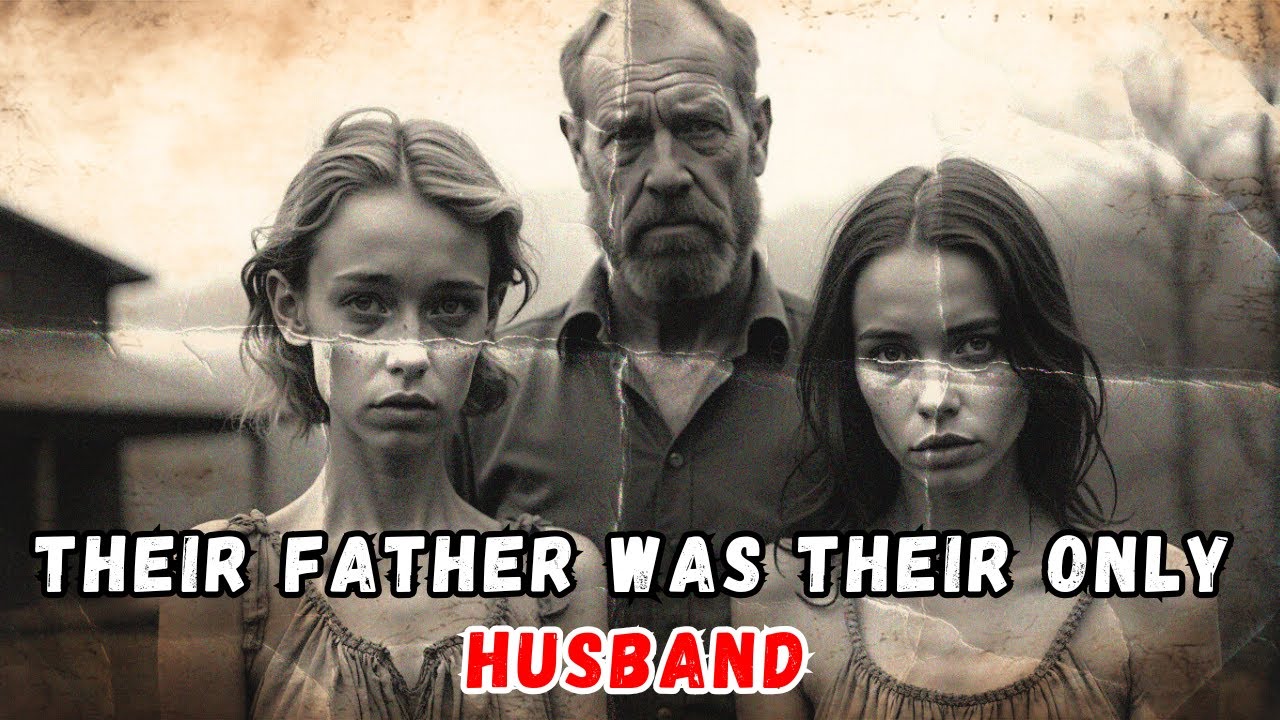
Crudely made furniture ran along the walls. Yet as his vision grew used to the weak light coming through oil paper windows, he took in the people living there, and something deep in his grasp of what he was looking at began to change. Two women sat by the stove, both with Ezra’s sharp cheekbones and slender frames. The younger could not have been past thirty, though her weathered hands hinted at many decades of grueling work.
The older woman, maybe fifty, studied Jessup with a look he could not read. Three children clustered against the far wall, their ages hard to pin down. One boy looked about ten yet had the bodily build of a far younger child. A girl, perhaps seven or eight, fixed her gaze on him with eyes that seemed oversized for her face.
Jessup started the usual examination, requesting the children’s vaccination records, asking about their schooling, and looking for clear indications of malnutrition or mistreatment. Ezra met most questions with short refusals. No, the children had never gone to school. The closest one was fifteen miles off.
No, there were no vaccination records. Yes, they had plenty to eat from their garden and livestock. When Jessup requested the children’s names and birth dates, Ezra motioned toward the younger woman. “That’s Sarah.
She’ll tell you.”
Sarah’s voice came out hardly louder than a murmur as she gave the details Jessup wrote down carefully in his inspection book. Yet something in her manner of speaking, the way she looked toward Ezra before replying to each question, unsettled him in a way he could not yet put into words. The older woman, introduced only as Martha, said nothing at all during the whole visit.
She kept her focus on some needlework in her lap, though Jessup saw that her hands had gone still. Three days afterward, back at the county office, Jessup started the slow task of matching his notes against official records. Birth certificates for the Codle children did exist, properly filed with the county clerk, but once he spread them over his desk, inconsistencies started surfacing like cracks in bedrock. Sarah Codle was named as mother on all five certificates, covering twelve years.
Still, no father’s name was written on any of them. The certificates showed Sarah herself had been born in 1902, which made her barely fifteen when the first child was born. He went looking for the marriage records. No marriage license existed for any Sarah Codle in Breathitt County.
He looked through the death records, wondering if perhaps she had been widowed. Nothing. Then he asked for Sarah’s own birth certificate. When it came from the state archive in Frankfort, he sat staring at the page for a full minute before he picked up the telephone.
Sarah’s birth certificate named Ezra Codle as father and Martha Codle as mother. The woman he had taken to be Sarah’s mother was in fact her sister. And the man standing in that doorway, the patriarch who governed every word uttered in that cabin, was father not only to Sarah and Martha but to every child in that household across three generations. The family tree did not spread outward.
It wound back on itself in a loop that broke every biological and moral limit Jessup had ever trusted. Jessup’s call to the state medical board brought Dr. Raymond Pritchard, a physician focused on hereditary conditions, to Breathitt County within the week. Together they made the three-hour climb back up the mountain, this time carrying legal authority that forced the Codle family to undergo medical examination.
Ezra met them at the edge of the clearing, his face like stone. But Kentucky law gave him no way out of complying. What the medical examination uncovered turned a case of suspected abuse into something far more scientifically troubling. The five children ranged from three to fourteen years old, but each showed physical abnormalities that Dr.
Pritchard recorded with clinical care in his leather-bound examination journal. The oldest boy, Thomas, had a marked curvature of the spine and legs that bent inward at angles that made walking hard. His mental function seemed severely limited—he could not answer simple questions about his age or the current season. The seven-year-old girl, Rebecca, had the enlarged cranium typical of hydrocephalus, though the condition had somehow never turned fatal.
Her sight was badly impaired, her eyes clouded by congenital cataracts. The youngest child, a boy of three named Samuel, had not yet learned to walk and showed no wish to, content to drag himself over the cabin floor using only his arms. But it was the household structure itself that exposed the real horror. Through careful questioning, Pritchard assembled a timeline that turned Jessup’s stomach.
Sarah had given birth to her first child at fifteen, fathered by Ezra. She had borne four more in the years that followed, each with increasingly severe abnormalities. Martha, three years younger than Sarah, had also started bearing Ezra’s children at sixteen. Two of her children had died in infancy, according to whispered confessions, buried somewhere on the property in unmarked graves.
The women lived in a condition Pritchard described in his notes as conditioned captivity. They had never gone past the ridge. Neither could read or write. They spoke only when Ezra gave permission, and even then in voices that carried the flatness of deep resignation.
When Pritchard asked Sarah outright about her relationship to Ezra, she merely said he was her father and the father of her children, as if this arrangement held no more moral weight than a remark about the weather. She had known no other life, no other possible way of existing. Ezra himself would not answer any questions beyond confirming basic facts. He displayed no remorse, no shame, no awareness that his actions had produced a genetic catastrophe.
When Pritchard tried to explain the medical consequences of inbreeding, Ezra simply turned his back and started splitting firewood. The doctor’s report, filed with both state medical authorities and the county prosecutor, used language seldom seen in official documents: willful genetic destruction through repeated incestuous assault across multiple victims and generations. What haunted investigators was not only how this had happened but how it had gone unnoticed for nearly two decades. The Codle property stood at an elevation that put it above even the scattered homesteads dotting the lower slopes.
No road came closer than three miles. In winter, snow might render the footpath impassable for weeks at a stretch. The closest neighbor, a widower by the name of Hosea Combs who lived an hour’s walk down the mountain, told investigators he had seen Ezra maybe twice a year, when the older man came to gather supplies left at the trail junction. Not once had he been invited to the Codle cabin, and he had never asked to visit.
Pressed on whether he had ever suspected something was amiss, Combs studied his boots and chose his words with care. “Mountain folks don’t pry into another man’s family business. That’s how it’s always been up here.”
This code of fierce privacy, born from generations of hardship and self-reliance, had created an environment where even obvious signs of trouble went deliberately unnoticed.
The Baptist church in the nearest settlement had baptized several of the Codle children. Reverend Marcus Thorne, who had held the position since 1926, remembered performing the ceremonies but claimed ignorance of the family’s true structure. He had assumed the children belonged to various relatives living together, a common enough arrangement during the Depression when extended families pooled resources for survival. The economic collapse of 1929 had further isolated the family.
Government services, already thin in rural Kentucky, had been cut to the bone. Health inspections that might have occurred every two years now happened only when specific complaints arose. The Codle family generated no complaints because no one from the outside world witnessed their daily existence long enough to recognize what was unfolding. Dr.
Pritchard’s full medical assessment, completed over three separate visits to the Codle cabin, produced a document that would later be studied in medical schools as an example of extreme genetic deterioration. Each child represented a compounding of recessive traits that would typically remain hidden in normal populations but emerged with devastating clarity when the gene pool collapsed upon itself. Thomas suffered from a severe form of skeletal dysplasia. Hospital records from a brief stay two years earlier, discovered during the investigation, noted that Thomas had broken his left arm simply by lifting a water bucket.
Beyond the physical deformities, Pritchard documented profound cognitive impairments. Thomas could not count beyond five. He possessed no concept of time or seasons despite living fourteen years. When shown a mirror, he displayed no recognition of his own reflection.
His speech consisted of perhaps twenty words, most related to basic needs. Rebecca’s condition proved even more heartbreaking. The fluid pressing against her brain had been slowly increasing since birth, and without surgical intervention she experienced chronic headaches so severe she would sometimes beat her own head against the cabin wall for relief. The cataracts clouding her vision had progressed to near total blindness.
Pritchard estimated she could distinguish only between light and darkness. Yet she’d developed an acute sensitivity to sound, turning her head toward voices with an accuracy that suggested her brain had compensated for the lost vision by enhancing other senses. Nine-year-old Joseph had been born with a cleft palate so severe that eating solid food remained difficult. His speech was nearly incomprehensible even to his own family.
Six-year-old Esther possessed fingers that had fused together in the womb, creating hand structures that resembled mittens more than functional appendages. Three-year-old Samuel represented perhaps the most severe case. His legs had developed with bones so malformed they could never support his weight. His spine curved in ways that compressed his internal organs, leading to chronic digestive problems and breathing difficulties.
Pritchard privately estimated Samuel would not survive beyond age ten. What made these conditions particularly tragic was their preventability. Had even one generation married outside the immediate family, the genetic damage would have been diluted. Instead, Ezra had created a closed loop where harmful recessive genes met their matches with each pregnancy, expressing themselves in increasingly catastrophic combinations.
Pritchard’s report included a section that would be quoted in medical journals for decades: “The human genome requires diversity to maintain integrity. When that diversity collapses to a single lineage, repeatedly folding back upon itself, the results are not merely predictable, but inevitable. These children are not anomalies of nature, but mathematical certainties of genetic mathematics gone terribly wrong.”
The legal machinery of Kentucky ground slowly in 1932, particularly when confronting a case without clear precedent.
County prosecutor Daniel Herndon found himself navigating statute books that addressed incest as a crime but offered little guidance for situations involving multiple victims across extended time frames. The laws assumed discrete incidents between adults, not systematic abuse spanning nearly two decades with children born as living evidence. Herndon’s first obstacle emerged immediately. Sarah and Martha, now adults, refused to testify against Ezra.
When interviewed separately by a female social worker brought from Lexington, both women insisted they’d never been harmed. Sarah stated plainly that Ezra had provided for her, kept a roof over her head, and fathered children who needed caring for. The concept that she’d been victimized seemed incomprehensible to her. Martha proved even more resistant to intervention.
She wouldn’t speak at all in Ezra’s presence and could barely whisper responses when alone with investigators. Her hands shook violently during questioning, and twice she fainted when pressed for details. The children themselves could provide no useful witness statements. Herndon then confronted a second problem that threatened to derail the entire prosecution.
Kentucky law in 1932 defined incest specifically as relations between parent and child or between siblings. But the law remained silent on the status of children born from such unions. Were Sarah’s children legally considered Ezra’s children or his grandchildren? Several law professors consulted by the state attorney general admitted the situation existed in a legal gray zone that had never been properly addressed.
Ezra himself, when finally brought to the county courthouse for questioning, sat in silence for most of the proceeding. He’d retained no attorney, claimed he needed none, and refused to acknowledge the authority of the court to interfere in his family affairs. When Judge Clement Breckinridge directly asked if he understood he’d fathered children with his own daughters, Ezra simply stated, “They’re my family. I provided for them.
That’s all that matters.” The judge, visibly shaken, ordered a psychiatric evaluation. The evaluation, conducted over two days by Dr. William Kendrick from the state hospital, concluded that Ezra suffered from no mental defect or illness that would impair his understanding of right and wrong.
He simply rejected the premise that his actions were criminal. By April of 1932, three months after the initial inspection, the case remained legally stalled. Prosecutors had abundant evidence but uncooperative victims. They had a defendant who acknowledged the facts but denied any wrongdoing.
And they had five severely damaged children who required immediate intervention regardless of whether criminal charges could successfully proceed. Dr. Pritchard submitted an urgent memorandum to the state health commissioner, warning that without immediate medical intervention, at least two of the children would likely die within the year. In May of 1932, Judge Breckinridge issued an order removing the Codle children from the household on grounds of medical neglect and imminent danger to their welfare.
Sheriff Boyd Tacket, along with two deputies and a nurse from the county hospital, made the ascent up the mountain to carry out the order. They found Sarah standing in the cabin doorway, her slight body set as though sheer determination could stop her children from being taken. Rebecca, picking up on the commotion, started screaming so violently that she threw up. Thomas seized a chunk of firewood and swung it blindly, hitting one deputy on the shoulder before they subdued him.
Little Esther clutched Sarah’s legs with her fused fingers, crying out in fear. Only Ezra stayed composed, standing in the yard with folded arms, observing the turmoil with a look Sheriff Tacket afterward called satisfaction, as if he had staged the entire scene to cast them as the villains. The trip down the mountain took six hours. Thomas had to be carried by two men alternating in shifts.
Rebecca’s screaming went on until she collapsed from exhaustion halfway down the trail. Samuel, too frail to cry, just went limp in the nurse’s arms. By the time they arrived at the county hospital, all five children were in varying states of medical emergency. Samuel ceased breathing twice during his first night.
Rebecca’s intracranial pressure had risen sharply from the strain, triggering seizures that left her unconscious for three days. Thomas attempted to escape twice and bit a nurse who tried to bathe him, drawing blood. Dr. Helena Vance, a specialist in pediatric care, took over the children’s treatment.
Thomas needed surgery to keep his spine from collapsing further. Rebecca required a shunt to drain the excess fluid from her skull, a dangerous operation with high mortality rates. Joseph’s cleft palate called for reconstructive surgery he should have had years before. Esther’s fused fingers might be separated, though the procedure would be painful and the results uncertain.
Yet beyond the physical conditions, Dr. Vance observed something even more troubling in her psychological evaluations. The children had no understanding of the world past their mountain. They had never seen a town, never met more than a few people, never known electric lights or running water.
Rebecca asked again and again for Sarah. Thomas refused to eat food made by strangers, certain it was poisoned. Samuel, the youngest and weakest, died on his fourth night in the hospital. His small body simply gave out, overcome by the combined strain of separation and systemic organ failure.
His deformed heart could no longer keep going. Samuel’s death at last shattered the community’s silence. The Breathitt County Courier published its first front-page story on the case, though cautiously phrased to avoid libel while the criminal proceedings were still unresolved. Within days, newspapers from Lexington and Louisville arrived in the county, turning a local tragedy into a statewide scandal.
Reverend Thorne confronted furious congregants who demanded to know why he had baptized clearly suffering children without looking into their home circumstances. He resigned his position within a week. The county clerk who had filed the birth certificates without question was suspended pending an administrative review. Even postal carrier Vernon Watts received threats from townspeople who called him complicit through his silence.
Hosea Combs, the closest neighbor, gave the most damning testimony during a community meeting at the courthouse. He confessed he had heard Sarah screaming one night years before, a sound that traveled down the mountain through the still air. He had mentioned it to his brother, who advised him to mind his own business. “We all knew something evil was happening up there,” Combs said, his voice breaking.
“But we told ourselves it wasn’t our place to interfere. We chose peace over doing what was right. And those children paid the price for our cowardice.”
Sarah and Martha stayed on the mountain through all this turmoil, though social workers came weekly to check on their well-being.
Sarah had retreated into almost total silence after the children were removed. She passed her days sitting in the cabin doorway, gazing down the trail as if expecting them to come back. Martha’s condition declined sharply. She stopped eating regularly and lost weight her thin frame could not afford to lose.
When a social worker suggested they might leave, build lives away from Ezra, Sarah looked at her in genuine bewilderment. “Leave for where? To do what?”
Ezra himself appeared invigorated by the attention.
He started making trips down to the settlement, something he had seldom done before, seemingly relishing his new notoriety. He would sit outside the general store, challenging anyone to confront him face to face. Most people crossed the street to avoid him. Those who did speak with him reported that he expressed no remorse at all, maintaining he had done nothing wrong and that the state had stolen his children.
In July of 1932, the prosecutor finally gathered enough evidence to bring criminal charges. The indictment listed four counts of incest and five counts of child endangerment. Ezra was arrested without incident and held on ten thousand dollars bond, a sum he had no way of raising. His trial was set for September.
The trial never took place. On August 14th, 1932, Ezra Codle suffered a massive stroke in his jail cell. Deputies found him collapsed on the floor during morning rounds, the left side of his body already paralyzed. He was taken to the county hospital, where he lingered for three days before dying without regaining consciousness.
He was fifty-eight years old. His death removed any chance of a criminal conviction but did nothing to mend the human wreckage he had left behind. Sarah received word of his passing without any visible emotion. She did not attend the burial, a meager affair attended only by the sheriff and a minister who read perfunctory prayers over a pine coffin.
Ezra was buried in the far corner of the county cemetery, his grave deliberately set apart from the other plots. No marker was ever placed. With Ezra gone, the question of what would become of Sarah and Martha grew more urgent. Social workers from the state welfare office evaluated both women and concluded they had neither the education nor the psychological capacity to live independently.
Sarah, at thirty, had the practical life skills of a sheltered child. She could cook over an open fire and tend a garden, but she had never handled money, never navigated a town, never made a decision without Ezra’s approval. Martha’s condition had deteriorated to the point where she needed constant supervision. She had begun talking to herself, long conversations with people who were not there.
The state arranged for both women to be placed in the Kentucky Training Home for the Feeble-Minded in Frankfort, a sprawling institution that housed over eight hundred residents by 1933. Sarah and Martha were classified as morons in the official paperwork, a technical term of the period that measured supposed intelligence levels. Their departure from the mountain came on a cold morning in October. Sarah took one bundle of possessions—clothing, a worn Bible she couldn’t read, and a photograph of the children taken during one of Dr.
Pritchard’s visits. Martha brought nothing. They rode in the back of a state vehicle, watching the only landscape they had ever known disappear behind them. Neither spoke during the four-hour journey to Frankfort.
The records indicate that Sarah adjusted to the strict routine more successfully than Martha did. She was assigned to the laundry, where she showed herself dependable at basic, repetitive work. Staff members described her in their notes as quiet, obedient, and profoundly sorrowful. During her first year she inquired about her children without fail, though such questions grew less frequent as the years went on.
She never truly understood that what Ezra had done to her was wrong. To her mind, he had occupied two roles—father and husband—and in the sealed-off existence of that mountain cabin those roles had never come into conflict. Martha’s condition kept deteriorating. By 1934 she had ceased speaking altogether.
She passed her days rocking in a chair beside a window, now and then producing sounds that were something like humming. The children’s outcome was just as bleak. Rebecca died in 1935 from complications tied to her hydrocephalus. The shunt that had been placed to drain the fluid became infected, and her weakened immune system was unable to overcome the sepsis that followed.
She was eleven years old. Thomas was sent to a state institution for the mentally disabled, where he remained almost entirely institutionalized until pneumonia took his life in 1941 at the age of twenty-three. Joseph and Esther lived into adulthood but never exited institutional care. Joseph’s speech stayed severely impaired in spite of surgical repairs to his palate, and his cognitive limitations ruled out any possibility of independent living.
Esther gained a degree of dexterity in using her partially separated fingers, yet she struggled with anything demanding fine motor control. Both of them remained state wards until their deaths in the 1950s. The Codle cabin sat empty on its mountain ridge, slowly giving way to weather and the passage of time. By 1940 the roof had fallen in.
By 1950 nothing was left standing except the stone chimney. The Codle case faded from public awareness nearly as fast as it had surfaced. In 1935 a court order sealed the official records, supposedly to shield the surviving children’s privacy, but in practice entombing proof of the systemic breakdowns that had made the horror possible. Those records stayed sealed until 1972, when Dr.
Margaret Hoffman, a geneticist at the University of Kentucky studying hereditary disorders, sought access to them while assembling case studies of extreme genetic bottlenecking. What she found in those dusty archived files left her stunned. After decades of studying human genetics, she judged the Codle case to be one of the most extreme instances of sustained inbreeding ever documented in American medical history. Hoffman’s analysis, printed in the Journal of Medical Genetics in 1974, computed that the children born to Sarah and Martha had a coefficient of inbreeding higher than 0.
25—which meant they were more genetically alike than ordinary siblings. The odds of harmful recessive genes being expressed came close to mathematical certainty. The study became required reading in medical genetics programs, although the family name was altered to shield descendants. Hoffman’s work showed how geographic isolation, poverty, and patriarchal domination could produce circumstances in which fundamental genetic principles played out with brutal clarity.
Yet past the genetics, the case laid bare failures that reached across all of society. Kentucky’s legal system in the 1930s had no framework for dealing with multigenerational sexual abuse. The medical establishment had noticed signs of genetic trouble in hospital records as early as 1928, but the underlying cause was never investigated. The religious community had baptized children who were plainly suffering without ever posing hard questions.
The neighbors had picked silence over intervention. Harold Jessup, the inspector whose routine visit had brought the nightmare to light, quit government service in 1934. He relocated to Ohio and never discussed the case publicly. In a 1996 interview for a documentary project, his daughter recalled that her father was haunted by nightmares about the Codle children for the rest of his life.
He would wake describing Rebecca’s screams, Thomas’s confusion, and little Samuel’s labored breathing. He passed away in 1962, carrying whatever guilt and trauma he bore into his grave. Dr. Pritchard’s examination notes were turned into teaching materials at the University of Louisville School of Medicine, illustrating both the medical fallout of inbreeding and the value of mandatory reporting laws.
Kentucky significantly reinforced its child welfare statutes in 1934 in direct reaction to the case. The mountain itself took back the property where so much suffering had taken place. Present-day hikers sometimes come upon the stone chimney, now overgrown with vines, with no notion of the history it stands for. In the 1980s the county historical society gave brief thought to marking the site but ultimately decided not to.
Certain histories, they reasoned, are better suited to serving as warnings than as tourist draws. Sarah survived until 1968, dying in the Frankfort institution at the age of sixty-six. Pneumonia was listed as the cause on her death certificate. Yet staff notes from her last years portray a woman who had simply disengaged from life.
Martha had gone before her by twelve years, dying in 1956 after spending her final two decades in an almost total catatonia. Not one of the children ever married or produced offspring. The genetic nightmare Ezra Codle created perished with his victims, a closed circuit of suffering that at least could not carry on past those he had directly harmed. The case stays sealed in Kentucky archives, open only to researchers able to show a legitimate academic purpose.
It remains a testament to what occurs when isolation, ignorance, and unchecked authority come together, producing conditions in which basic human decency and biological necessity are violated in equal measure.
