A grocery store begins with a smell: fresh bread from the back, sawdust near the meat case, coffee left brewing in the break room. Behind the counter stands a butcher like Earl, fourteen years on the job, who remembers that your wife prefers the chuck roast trimmed close. At the register sits Doris, who has rung up your family for nine years, knows your children’s names, and tears off a strip of S&H green stamps from a chrome dispenser after every purchase. A bag boy in a striped apron walks your groceries to the car and refuses a tip.
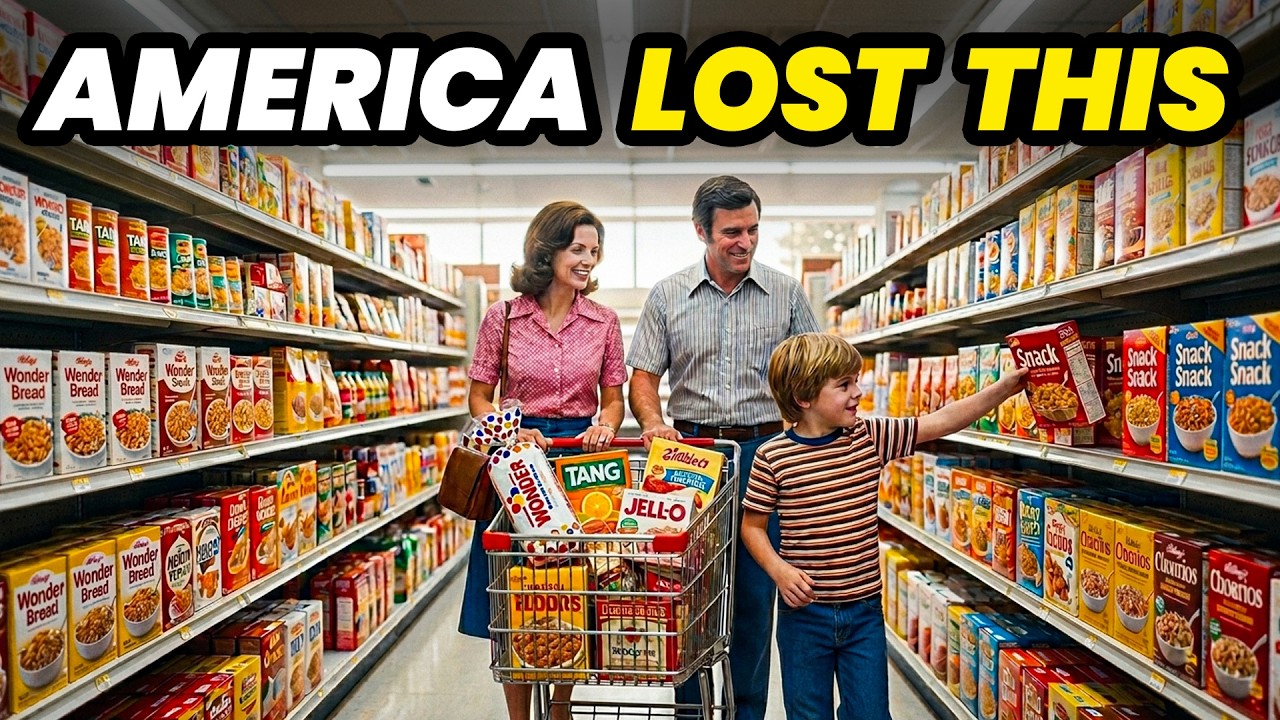
If your grandmother shopped there, someone rode along to help her unload at home. That was just how it worked. That store was a real business. The family that owned it sent two kids to college on what it brought in.
The butcher owned his house. The cashier had a pension waiting at sixty-two. That math worked for roughly a hundred years. Then a different kind of buyer walked in the door.
Some of what followed was a matter of consumer choice. Americans picked the bigger store with the lower prices, chose the faster checkout, traded Tuesday at the local grocery for Saturday at the supercenter. But something else happened on top of those choices. A new kind of buyer entered the grocery business in the 1980s and 1990s.
Not a grocer. Not a retailer. A financial firm that does not sell a single can of beans. These firms buy other companies, take them apart, and sell the pieces.
The polite name for the move is the leveraged buyout. The firm puts up roughly ten cents of every dollar in real money and borrows the other ninety. Then comes the trick: the loan goes on the grocery store’s books, not the firm’s. The store now owes the bank for being bought.
Imagine buying a pickup truck using the truck’s own credit card. A grocery store runs on a profit margin of perhaps one or two cents per dollar. There is no fat. When a mountain of debt is bolted onto a company that thin, the manager cannot reinvest in the meat counter, cannot fix the leaky cooler, cannot give the butcher a raise.
Every spare dollar goes to the loan. While the store chokes on the debt, the firm that bought it starts pulling cash out the back through management fees, special dividends, and real estate sold to itself and leased back at a rent the store never used to pay. Sometimes those deals work, and a store gets a real owner who fixes it up. But when the playbook is run on a thin-margin grocery chain with valuable real estate, the chain often ends up in bankruptcy court a few years later, and the firm walks away with more money than it put in.
One case New Yorkers still remember is Fairway Market. It opened in 1933 on the Upper West Side as a fruit and vegetable stand run by Nathan Glickberg. By the early 2000s, his grandson Howie was running a chain of four stores stocked with fifty kinds of olive oil and dozens of cheeses and smoked salmon. In 2007, a founding partner wanted to retire, and Howie looked for an investor to buy the uncle’s stake.
He found a private equity firm in Westport, Connecticut, called Sterling Investment Partners. Sterling put about fifty million dollars of its own money into the deal; the rest, around eighty-seven million, was debt. It took an 80 percent stake. Three Sterling partners joined the Fairway board.
None had ever worked in groceries. What followed was the playbook in plain sight. Sterling pushed Fairway into the suburbs of New Jersey, Connecticut, and Long Island. Every new store was financed with more borrowed money.
In 2013, the chain went public. The IPO raised over 170 million dollars. According to Fairway’s own bankruptcy filings, a large portion went toward accrued dividends and existing obligations tied to the ownership group, with around 76 million flowing to Sterling-controlled shareholders. The company struggled to report consistent profits.
The stock collapsed from 13 dollars a share to under four. With roughly 267 million dollars in debt, Fairway filed for Chapter 11 bankruptcy in 2016. Sterling walked away. Fairway filed a second time in 2020 and was finally broken up and sold for parts.
Compared to what happened at Albertsons, the Fairway deal was a warm-up. In 2006, a New York private equity firm called Cerberus Capital Management led a group of investors that bought hundreds of Albertsons supermarkets. The headline equity price was around 350 million dollars. Industry observers later argued the buy was a real estate play first and a grocery play second.
In 2013, Cerberus came back and bought another 877 stores from a struggling chain called Supervalu. Albertsons, Acme, Jewel-Osco, Shaw’s, Star Market. The price was 100 million dollars in cash plus the assumption of more than three billion in existing debt. One hundred million for nearly 900 grocery stores.
In 2014, the combined Albertsons bought Safeway for over nine billion dollars, financing almost eight billion of that with new debt loaded onto Safeway. The whole stack, Safeway, Albertsons, Acme, Jewel-Osco, Vons, ended up owing bondholders more than 12 billion dollars. Service that debt and there is nothing left for the meat counter, the bakery, the produce manager, or the pension. In 2022, with a proposed merger with Kroger sitting in front of regulators, the Cerberus-led group ran the move that put the playbook on national display.
Albertsons announced a special cash dividend of about four billion dollars. Cerberus alone was set to collect more than a billion. To fund it, Albertsons drew down one and a half billion in fresh debt on top of what it already owed. A federal judge in Washington state temporarily halted the payout.
Attorneys general from Washington, California, Illinois, and D. C. went to court trying to block it. Moody’s downgraded Albertsons over the dividend.
None of it stopped the money from eventually going out the door. In 2024, the Kroger-Albertsons merger was finally blocked by federal and state courts. Cerberus had hoped to net somewhere over five billion dollars on the way out. Whatever it ended up with, that 2006 deal turned a small private equity stake into one of the most lucrative grocery investments in American history.
A&P, the Great Atlantic and Pacific Tea Company, was the Walmart of its era. At its peak in 1930, A&P operated around 16,000 stores, roasted its own coffee, baked its own bread, ran its own dairies. By the 2000s, it was a different animal: underfunded, over-leveraged, holding too many old stores. The company filed for bankruptcy in 2010 and emerged fifteen months later with a new ownership group led by the Wall Street firm Yucaipa, with backing from Goldman Sachs and a hedge fund called Mount Kellett.
To make the deal work, the unions agreed to roughly 600 million dollars in concessions: less in every paycheck, thinner benefits. Less than five years later, A&P filed for bankruptcy a second time in 2015. This time there was no rescue. The plan was to liquidate the company as fast as possible.
The chain sold off its store leases, closed 25 of its remaining 300 stores immediately, and laid off more than 26,000 workers. Then came the part that receives little attention. When A&P was sold off, the buyers wanted the stores but not the pensions. Three A&P pension plans covering more than 21,000 former employees were dumped onto the Pension Benefit Guaranty Corporation, the federal agency that pays out under a legal cap.
The agency picked up a bill of about 288 million dollars. More than 21,000 people who had spent their working lives in an A&P uniform traded years for the promise of a monthly check after sixty-two. The company that made the promise sold itself for parts. The pensions went to taxpayers.
In a letter-writing campaign to the bankruptcy judge, A&P workers said senior managers had looted the company on the way down. A federal watchdog opened an investigation into executive expense accounts. By then, it was already over. The same logic that pulls cash out the back of a store also leans on suppliers to keep the price tag steady while the contents shrink.
General Mills family-size cereal used to be 19. 3 ounces; the new family size is 18. 1. Same name, same box, same price.
Ice cream tells the story even better. The traditional half gallon was 64 ounces of vanilla for decades, then quietly dropped to 48, then 46. Some premium brands went to 42. Häagen-Dazs cut its pint from 16 ounces to 14.
Oreo family size went from 13. 1 ounces to 11. 78. Charmin mega rolls dropped from 264 sheets to 244.
Bounty select-a-size fell from 120 sheets to 100. Klondike bars went from 5 ounces to 4. Frito-Lay chip bags lost ounces a handful at a time over a decade. The net weight changes; the price does not.
The butcher’s son did not go into meat cutting because there was no shop left to apprentice in. The bag boy never got that first job. The cashier’s pension, if she was lucky, got picked up by a federal agency that pays out under a legal cap. If she was less lucky, she watched the math on her retirement get rewritten in a bankruptcy court she never saw.
Meanwhile, the firms that ran the playbook walked away with returns most ordinary investors will never see in a lifetime. Cerberus turned a 2006 grocery investment into a payout some industry watchers estimated at multiples of the original stake. Sterling collected its dividends from Fairway and exited before the second bankruptcy. Goldman, Yucaipa, Mount Kellett, the same story at A&P, different uniform.
That is a pattern. Money moved from the people who showed up and worked the aisle to people in glass towers a thousand miles away who learned to extract value out of a company without ever selling a loaf of bread. Some of what happened to the American grocery store came from the same forces that reshape every part of American life. But a real, named piece of it came from a specific group of people who had never pushed a cart through the parking lot in the rain and never had to look the butcher or the cashier in the eye when the math stopped working.
Some of it was the world moving on. Some of it was a choice somebody made in a room the rest of us will never see.
