The smoke rose before the bells did, a black column climbing out of the blue onion dome that had come to symbolize the entire Colt empire. It was just before eight on the morning of February 5, 1864, and more than nine hundred machinists were settling into their shifts at the Hartford Armory when a plume of fire burst from the upper floor. Fed by oil-soaked wooden floors, varnish, and dry timber, the small flame became a wall of fire within minutes, tearing through the massive brownstone complex while alarm whistles echoed across the city. Frozen water lines in the bitter winter air made the fire companies helpless.
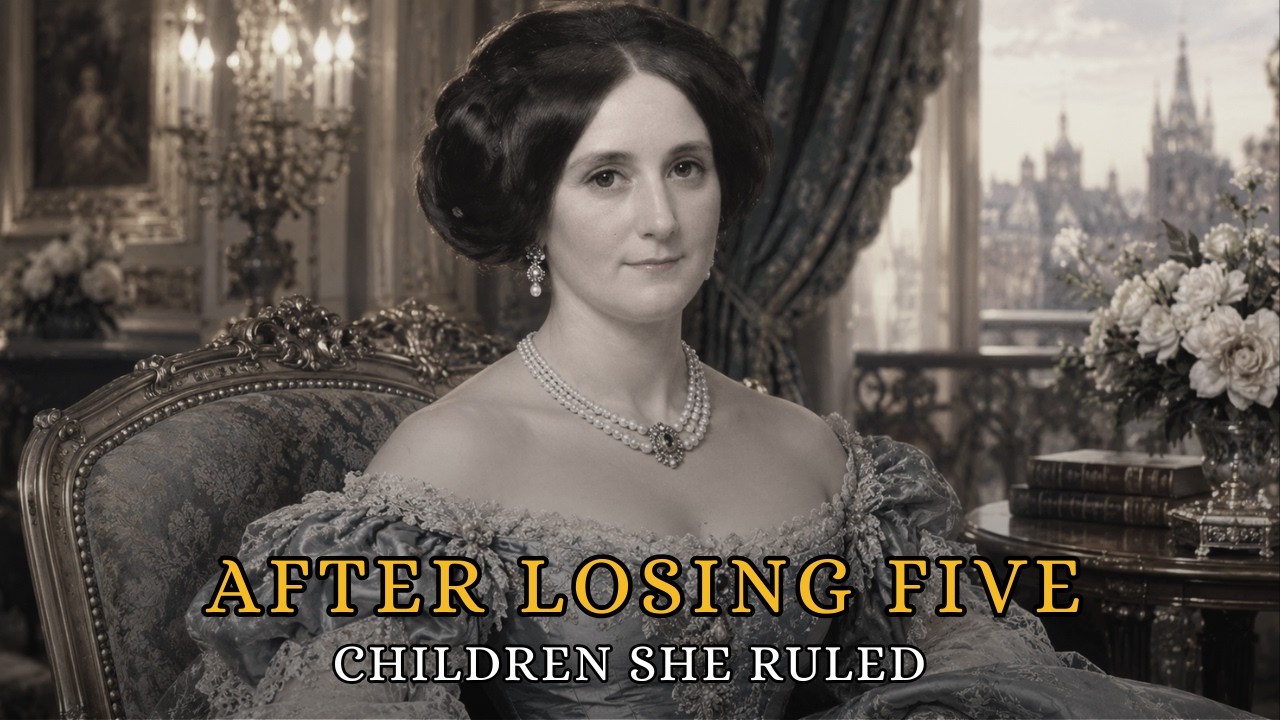
Millions of dollars in precision machinery, irreplaceable gunsmithing patterns, and government military records disappeared into a column of black smoke visible for thirty miles down the Connecticut River Valley. By noon the iconic dome had collapsed into twisted iron and glowing embers, and the Union Army’s primary small-arms supplier was a smoldering skeleton. Standing on the frozen riverbank in her heavy black morning silks was Elizabeth Jarvis Colt, a woman who had already buried her husband and four of her infant children. To the male board members, military contractors, and Wall Street investors watching the collapse, she was merely a frail, grieving widow expected to sell off the charred remains of her husband’s empire.
Yet she stepped directly into the ashes and assumed absolute executive command. Over the next forty years she would rule one of the most powerful firearms empires in global history, and the disaster that should have ended the family name would become the proving ground of her authority. Elizabeth Hart Jarvis Colt had been born into a prominent intellectual Episcopal family in West Hartford, raised in a culture of quiet dignity, deep religious faith, and rigorous education. When she married Samuel Colt in 1856 in a wedding so lavish that newspapers called it an imperial coronation, she stepped seamlessly into the role of America’s premier industrial hostess.
While her husband traveled the globe securing military contracts from kings and emperors, Elizabeth transformed Armsmear, their grand Italianate villa on a high ridge overlooking the Connecticut River, into an international diplomatic salon where foreign dignitaries, cabinet members, and titans of industry were entertained with a sophistication that softened the ruthless edge of the Colt enterprise. Behind the grand receptions and champagne flutes, she was far sharper than the public realized. She spent hours reviewing architectural drafts, financial ledgers, and foreign correspondence, absorbing the mechanics of assembly-line manufacturing, patent litigation, and international supply lines. She understood that Samuel’s genius lay not only in weapon design but in his mastery of interchangeable parts, precision machining, and aggressive brand marketing.
She internalized these principles and recognized that the Colt name was not merely a business but a national institution. The first years of the marriage appeared flawless. But beneath the glittering surface gathered tragedy. In the late 1850s and early 1860s, Victorian infant mortality proved no respecter of wealth.
Elizabeth’s first child, Samuel Jarvis Colt, born in 1857, died before his first birthday. Twin daughters perished almost immediately after birth. Another infant followed them into the family crypt. Each death required the agonizing rituals of Victorian mourning: heavy black crepe, mirrors draped in dark silk, months of silent grieving while maintaining composure before visiting dignitaries.
The contrast was agonizing: her husband commanded an army of machinists who could mold steel into mechanisms capable of taking life at a distance, yet all the gold in the world could not preserve the breath of his own children. The losses reshaped her. Instead of retreating into permanent invalidity, the common trajectory for wealthy Victorian women overwhelmed by grief, she sought solace in her Episcopal faith and quiet systematic reflection. She came to view her life not as a fairy tale of luxury but as a moral proving ground, a place where suffering tempered the soul for some higher purpose.
Her private sorrow stripped away vanity and replaced it with an ironclad emotional fortitude. As the nation fractured toward civil war, Samuel Colt’s health collapsed under the pressure of expanding the armory to produce hundreds of thousands of muskets and revolvers for the Union. Political enemies accused him of profiteering and treason for having sold weapons to the South before the outbreak of hostilities. Elizabeth found herself managing a doubly shattered household, tending to her dying, paranoid husband, riddled with inflammatory gout, while nursing her only surviving child, Caldwell Hart Colt, born in 1858, whose health seemed constantly threatened.
On January 10, 1862, Samuel Colt died at Armsmear at the age of forty-seven. His funeral was a spectacle of state: artillery boomed, thousands of machinists marched through the snow-covered streets, and military brass honored the man who had placed industrial steel in the hands of the Union. When the bands departed, the corporation faced its moment of truth. Standing at the center of the storm was thirty-six-year-old Elizabeth, holding three-year-old Caldwell, the sole survivor of five children.
To the male board members and banking elites, she appeared a tragic, fragile figure, unequipped for the brutal world of steel manufacturing, patent litigation, and wartime logistics. The corporate establishment assumed she would sell her controlling interest to a syndicate of male industrialists or step aside into quiet retirement while experienced men managed the munitions empire. They viewed firearms manufacturing as a physical, aggressive industry far beyond the delicate sensibilities of an aristocratic widow defined by parlor receptions and nurseries. They miscalculated entirely.
Rather than surrendering a single share, Elizabeth quietly asserted her position as majority shareholder and undisputed owner. She appointed Elisha K. Root, the brilliant senior engineer and master machinist, as nominal corporate president to handle day-to-day shop operations, but retained absolute control over all major strategic, financial, and land-use decisions. She transformed a private sitting room at Armsmear into an executive office and demanded daily briefings, financial ledgers, and government contract reports.
Victorian norms prevented her from pacing the factory floor, but her presence hovered over every decision made in the Hartford Armory. Two years later came the fire. In the immediate aftermath, while the ruins still scorched leather boots, Elizabeth convened an emergency council in her drawing room. Rejecting every proposal to sell the land, liquidate the assets, or relocate, she issued swift executive directives.
She ordered financial relief dispersed from her personal accounts to support the families of injured workers and the fallen fire engineer, preventing a mass exodus of skilled labor. She directed management to secure temporary foundry spaces, lease surrounding shops, and salvage usable machinery from unburned buildings so that limited revolver production could resume within weeks. Most momentously, she decided to rebuild the armory on an even grander, fireproof scale, pledging her entire private fortune and insurance reserves to finance it. She negotiated with insurance adjusters, reviewed architectural drafts, and sent stern telegrams to Washington assuring the War Department that Colt would honor its commitments.
Within forty-eight hours she had frozen the panic. The reconstruction became one of the great achievements of industrial resilience in nineteenth-century America. Elizabeth personally selected the design: solid fireproof brick, reinforced iron beams, and heavy brownstone meant to withstand future accidents or sabotage. At the apex of the new main building she ordered the exact reconstruction of the blue onion dome, capped with a gilded colt, sending an unbroken message to the world.
While the brick fortress rose along the river, she fought off banking syndicates and rival manufacturers who saw the disaster as a chance to acquire Colt shares at discounted prices. She deployed her legal counsel to block hostile acquisitions and used her personal fortune to buy up outstanding equity. She made clear to Wall Street and Washington that she would never relinquish majority ownership. Under her direction the company modernized its entire technological infrastructure, investing in steam-turbine technology, state-of-the-art metal lathes, and specialized drop-forging machinery that increased efficiency while lowering costs.
When the Civil War ended in 1865, she anticipated the decline in domestic military contracts and ordered an aggressive expansion of international sales, securing contracts with European governments, Latin American militaries, and domestic law enforcement. Most crucially, she navigated the transition from muzzle-loading percussion revolvers to metallic cartridge firearms. Recognizing that traditional systems were obsolete, she green-lit new breech-loading mechanisms and cartridge revolvers, culminating in the licensing and mass production of the legendary Single Action Army revolver, a firearm that would dominate the American West and cement the company’s global supremacy for decades. By backing engineers like Charles Richards and William Mason, she kept Colt at the forefront of weapons design while competitors struggled to adapt.
By the late 1860s the new armory stood complete, larger and more advanced than the original. Thousands of machinists had returned to their stations beneath the gas lights, producing tens of thousands of modern firearms every month for shipment around the globe. Having rebuilt the physical plant, Elizabeth expanded her influence over the entire community known as Coltsville. In an era of violent strikes and brutal labor exploitation, she practiced a corporate paternalism that stood in sharp contrast to rival Gilded Age tycoons.
She understood that a precision-weapons manufacturer required a stable, skilled, loyal workforce. She funded modern brick tenement housing for married machinists, boarding houses for young apprentices, and parks, sports grounds, and community halls. She established Charter Oak Hall as a cultural center with adult education, lectures, musical performances, and technical night classes. She instituted pension funds for retired gunsmiths, emergency aid for widows of injured workers, and high medical standards across company facilities.
While railroad workers burned yards and steel workers clashed with Pinkertons in Pittsburgh, the machinists of Coltsville remained peaceful and devoted to their mistress in black silk. They knew she demanded precision, sobriety, and discipline inside the gates, but equally protected their livelihoods and families. She became the cultural and political sovereign of Hartford, the primary benefactor of schools, hospitals, art galleries, and historical societies. Local politicians and visiting federal officials routinely paid homage at Armsmear, knowing no major municipal project could move forward without her approval.
She wielded this power with quiet velvet-gloved authority, never raising her voice in public debate yet making her preferences unmistakably clear. For nearly thirty years she poured her energy into shielding her only surviving child. Caldwell Hart Colt grew up as the cherished prince of Armsmear, surrounded by every luxury, yet carrying the weight of a terrifying legacy. As he reached manhood, he showed little of his father’s mechanical genius or his mother’s disciplined fortitude.
He became a charismatic, reckless playboy of the Gilded Age, favoring yachting and the glamorous circles of New York and Newport over ledgers and machine shops. Elizabeth adapted with strategic pragmatism. Rather than forcing him into an executive role, she arranged for trusted executives to manage the factory while Caldwell enjoyed the dividends, appointed to symbolic titles that satisfied public expectations. She financed his racing yachts, including the famous schooner Dauntless, which brought international prestige.
As long as her son was healthy, safe, and happy, her decades of sacrifice held meaning. In January 1894, tragedy struck its final catastrophic blow. Anchored off the coast of Punta Gorda, Florida, aboard his yacht, the thirty-five-year-old Caldwell suddenly contracted a severe fever, later reported as tonsillitis complicated by heart failure. He died before his mother could reach his bedside.
The sixty-seven-year-old matriarch was devastated. She had buried her husband and four infants; now her last remaining child was gone, leaving her entirely alone in her echoing villa. Reporters and social commentators openly questioned how she could survive such loss. Rivals assumed the final tragedy would break her, expecting her to sell the corporation, give up Armsmear, and retreat into silent invalidity.
Once again they underestimated her. Out of the ashes of her final bereavement, she forged a new vision. Her family bloodline had ended, but her duty to the community of Hartford and the legacy of the Colt name remained absolute. She made the conscious choice to transform her private pain into grand public benevolence, shifting her focus from building a family dynasty to creating permanent cultural, religious, and civic monuments.
Her most personal project was the Church of the Good Shepherd, a Gothic Revival sanctuary built in memory of her husband and four deceased children. Designed by architect Edward Tuckerman Potter, it featured a striking spire and interior details that subtly incorporated gun parts and mechanical gears into sacred Gothic motifs, a symbol of the union between industry and faith. After Caldwell’s death, she expanded the complex by commissioning the Caldwell Hart Colt Memorial Parish House, designed in the shape of a ship’s bridge to honor her son’s passion for the sea. She spent hundreds of thousands of dollars importing marble, wood carvings, and stained glass from European craftsmen.
The buildings functioned as active community centers with free educational programs, music classes, social services, and recreational facilities for the working-class families of Coltsville. She also established herself as a premier art collector, turning Armsmear into a world-class private gallery of Hudson River School paintings, European sculpture, and decorative arts. She became the first female president of the Hartford Art Society, founding art schools, sponsoring young artists, and establishing public exhibition spaces that democratized access to fine art. She served as founding president of the Union for Home Work, a social service agency providing employment, child care, and vocational training for destitute women and young mothers.
She was a driving force in the National Society of the Colonial Dames of America, funding historical preservation across New England. When municipal committees hit deadlock or shortfalls, they turned to the quiet matriarch, knowing her decisive leadership and open checkbook could resolve any crisis. As the nineteenth century closed, Elizabeth reached four full decades as controlling majority owner of Colt’s Patent Firearms Manufacturing Company. From the dark days of 1862 through catastrophic fires, economic panics, and takeover attempts, she had maintained an iron grip.
Under her stewardship the volatile armory became a stable multinational corporation arming militaries, law enforcement, and civilians on every continent. She balanced conservative financial management with bold innovation, keeping substantial cash reserves while avoiding speculative ventures. In the late 1890s she backed a strategic partnership with a brilliant, reclusive gun designer named John Moses Browning, greenlighting automatic pistols and heavy machine guns that would define global military hardware in the coming world wars. At a time when women were barred from voting and excluded from corporate suites, she operated as one of the most powerful corporate leaders in the world.
Two full generations of machinists had lived, labored, and retired under her peaceful reign. For the aging workers who had stood beside her on the frozen riverbank during the fire of 1864, and for the young apprentices at the turn of the century, the quiet woman in black silk was an eternal constant. Her annual appearances at company celebrations, her holiday distributions to worker families, her dignified presence provided continuity and pride. In her late seventies, she prepared the company for transition, delegating operations to a trusted board while retaining absolute majority stock ownership and veto power until her final days.
She had fulfilled the promises she made in the dark weeping days of 1862. On August 23, 1905, Elizabeth Jarvis Colt died quietly at Armsmear at the age of seventy-eight. The city of Hartford plunged into mourning. Flags lowered to half-mast, municipal offices closed, the brownstone armory shuttered, and thousands of weeping machinists, civic leaders, and ordinary citizens lined the streets to pay their respects.
She was buried beside her husband and five children in Cedar Hill Cemetery, beneath a memorial monument she had designed herself. Her final will was one last act of public devotion. Having no surviving heirs, she bequeathed her massive art collection of hundreds of priceless paintings, sculptures, and artifacts, along with a substantial endowment, to the Wadsworth Atheneum, funding the Colt Memorial wing and establishing one of the premier public art museums in the United States. She gifted the sprawling estate of Armsmear to the city of Hartford to be preserved forever as a public park and a residential retreat for the widows and daughters of Episcopal clergymen.
The fortune generated by global arms manufacturing was permanently converted into beauty, recreation, and sanctuary for the public good. The Church of the Good Shepherd and the ship-shaped Caldwell Hart Colt Memorial Parish House remain active jewels of nineteenth-century American architecture. Down along the Connecticut River, the historic Coltsville complex, anchored by its blue onion dome, stands as a designated national historical park, recognized as a cradle of American industrial innovation. Her true legacy lies in her quiet subversion of nineteenth-century expectations.
In a society that expected grieving widows to remain passive and invisible, she stepped into the fiery heart of a male-dominated firearms empire, mastered corporate strategy, patent law, and international finance, buried her husband and all five of her children, and refused to let despair consume her. She governed an industrial giant for four decades with calm, velvet-gloved authority, earning the fierce devotion of her workforce and the respect of a nation. The blue onion dome still catches the morning light over the Connecticut River, and the memory of Hartford’s iron matriarch endures as a testament of courage over tragedy, resilience over destruction, and enduring love over the finality of the grave.






