It was the scent that Magistrate William Bradock could not shake. Hours after the Calverton family had fallen, the sweet perfume of almonds and honey still lingered in the dining room like a ghostly confession. Seven bodies lay where they had dropped, faces contorted in agony, tongues blackened, every man, woman, and child of one of Virginia’s most powerful families struck down in a single evening. No foam at the mouth, no violent vomiting, none of the familiar signs of arsenic or mercury that occasionally surfaced in domestic murders.
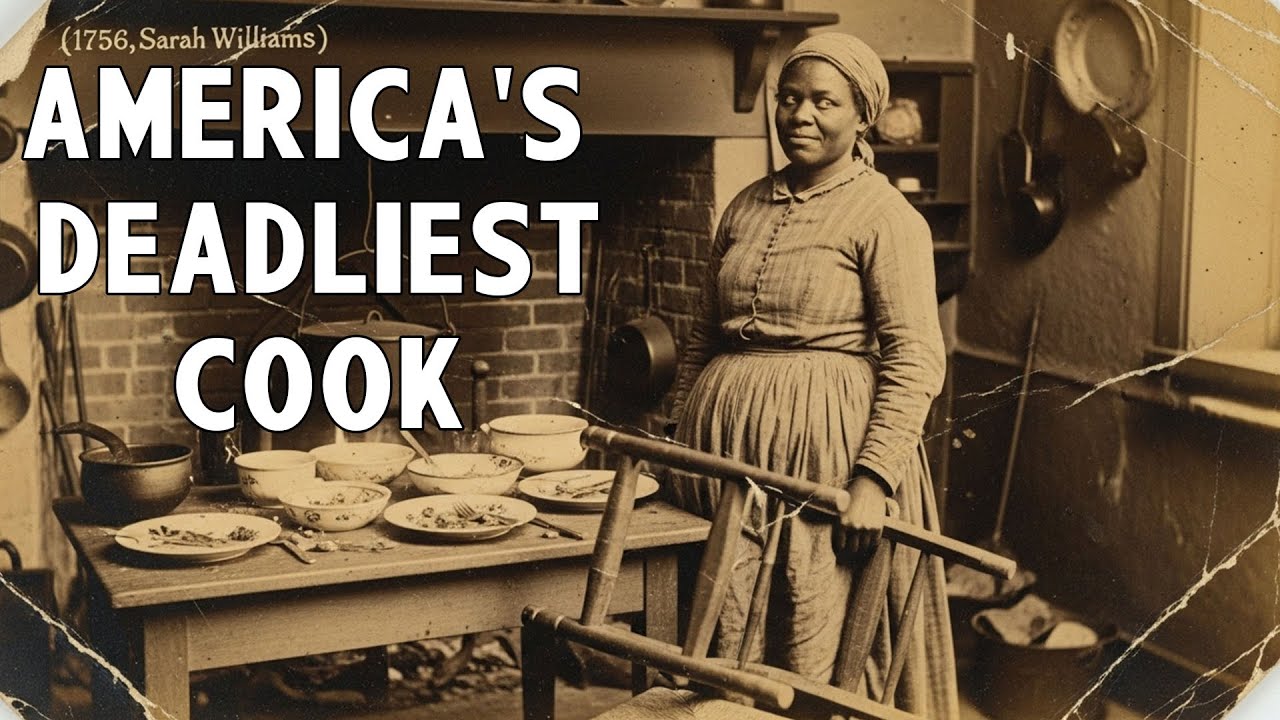
Only that impossible sweetness, hanging in the winter air, and the terrible question of who had served it. The story that would force Bradock to confront answers he never wanted began more than two decades earlier, on the coast of Angola, where a village healer’s granddaughter was learning the properties of plants. Born around 1720, she had been captured during tribal warfare and sold to Portuguese slave traders. Her African name was lost to history.
The Calverton family replaced it with Sarah Williams, a name that carried a cruel irony, because hope was precisely what the slave system was designed to destroy. After two years on a Barbados sugar plantation, she was purchased by a Virginia tobacco merchant who recognized her potential as a skilled domestic worker. By the time she reached the Calverton plantation in Charles City County, she had been trained in the brutal arithmetic of survival. The Calverton estate sprawled across 3,000 acres along the James River, which curved through the county like a brown serpent carrying the wealth of colonial Virginia toward the Atlantic.
Master Edmund Calverton, fifty-two years old, had inherited forty-three enslaved souls from his father and expanded his holdings considerably since taking control in 1739. His tobacco commanded premium prices in London markets, and other planters visited to study his methods. But in the winter of 1756, cracks were showing in Edmund’s carefully constructed world. An early October frost had damaged a significant portion of the harvest, reducing income just as substantial debts from land purchases came due.
Margaret Calverton, née Randolph, had brought a substantial dowry that funded the plantation’s expansion into rice cultivation, but she had also brought a cold pragmatism about human ownership that sometimes chilled even her husband. Every enslaved person had a value. Every decision weighed cost against benefit. Even mercy had a price.
The household in December 1756 included three generations of plantation royalty. Thomas, twenty-four, had returned from three years of education in London with expensive tastes and dangerous ideas. His exposure to Caribbean sugar plantation techniques had created tension with his father’s traditional Virginia methods, and his proposals for more intensive cultivation would require capital investments the plantation could not afford. Catherine, twenty-one, embodied the carefully cultivated refinement that distinguished plantation families from smaller farmers; her engagement to Richard Peyton represented another strategic alliance, though financial negotiations had stalled over dowry payments complicated by the plantation’s reduced circumstances.
Young Edmund Jr. , sixteen, was being groomed to inherit the empire, but he had been caught fraternizing with enslaved children his own age and had begun questioning the morality of slavery itself, attitudes his parents viewed as both morally misguided and threatening. Patients Randolph, Margaret’s unmarried sister, had found refuge with the Calvertons after a scandal in her youth and served as household manager. Colonel James Hartwell controlled the shipping networks that carried Calverton tobacco to Europe; his connections made him indispensable, though his obvious attraction to Patients and his increasing influence over plantation business decisions chafed Edmund’s pride.
Sarah occupied a position of unusual authority among the enslaved population as head cook and kitchen supervisor. Her culinary skills had earned the Calverton table a reputation throughout the county. But what made her remarkable was her apparent literacy, a dangerous and strictly illegal accomplishment for an enslaved person in colonial Virginia, one that plantation owners viewed as a direct threat to the entire system. She had somehow acquired this forbidden knowledge and had been using it in ways that would ultimately terrify her oppressors.
The plantation operated under brutal efficiency. Enslaved people rose before dawn to tend fires, prepare meals, and begin the endless cycle of agricultural labor that defined their existence. The tobacco fields required constant attention: planting, transplanting, weeding, topping, harvesting, and curing leaves in specially constructed barns where temperature and humidity had to be maintained within precise ranges. During winter months, they repaired tools, processed food for storage, and performed countless maintenance tasks.
Punishments for infractions were swift and severe, administered by Edmund himself or his overseer Jeremiah Cook, who had earned a countywide reputation for creative cruelties that served as examples while stopping just short of damaging valuable property beyond repair. The winter of 1756 had been particularly difficult. Most devastating to the enslaved community, Edmund had been forced to sell two families to a South Carolina rice plantation to raise immediate cash. Parents were separated from children, husbands torn from wives.
The remaining enslaved people watched these separations with the resigned horror of those who understood their own vulnerability. Families that had been together for years could be broken apart with a single business decision, and the knowledge that similar sales might be necessary created an atmosphere of constant anxiety and desperation. In the weeks leading up to December, tensions in the Calverton household had built to dangerous levels. Thomas’s radical ideas conflicted sharply with his father’s traditional methods.
Catherine’s engagement had become a source of stress rather than celebration. And young Edmund Jr. ‘s apparent sympathy for enslaved people had alarmed his parents, who feared such attitudes could undermine their authority. On December 15th, the day dawned gray and bitter cold, frost coating the bare branches of massive oak trees that lined the quarter-mile drive to the mansion.
Inside the great house, preparations were underway for what Edmund had declared a celebration dinner to mark the end of harvest season. Sarah had spent three full days preparing for this gathering, which she understood from overheard conversations was more significant than usual family meals. The dinner would celebrate the harvest, discuss strategies for improving the plantation’s financial situation, and make decisions about the family’s future that would affect every person on the plantation. She supervised the slaughter of a prize pig fattened specifically for the occasion, directed preparation of preserved vegetables from the plantation’s gardens, and requested special spices from Margaret’s locked pantry.
The menu showcased the best of the plantation’s production: roasted pork with a complex herb stuffing of sage, thyme, and garden herbs; sweet potato pudding flavored with molasses and spices; cornbread enriched with eggs and butter; winter greens cooked with bacon and seasoned with vinegar; and a special rice pudding flavored with vanilla and cinnamon that required expensive imported ingredients and preparation techniques few cooks in colonial Virginia had mastered. The menu represented not just a meal, but a statement of the family’s status and Sarah’s exceptional abilities. She had risen at four in the morning to begin the slow roasting of the pork, carefully tending the fire in the kitchen’s massive hearth and adjusting the spit to ensure even cooking. The kitchen was a substantial separate building connected to the main house by a covered walkway, designed to reduce fire risk while providing a buffer zone separating domestic labor from the family’s refined living spaces.
That separation would prove crucial to understanding how the poisoning occurred without affecting kitchen staff. As the afternoon wore on, Sarah noticed several unusual occurrences she would later recall with disturbing clarity. Master Edmund visited the kitchen twice, something that rarely happened, engaging her in conversation about the evening’s menu with specific questions about ingredients, preparation methods, and timing that went beyond mere curiosity. His questions focused particularly on the spices being used and the exact schedule for serving each course, details that had never concerned him during fifteen years of working relationship.
Margaret also made an unprecedented appearance in the kitchen, examining dishes and suggesting modifications to seasoning, her behavior nervous and distracted, asking repeatedly whether everything would be ready precisely at six o’clock. Most significantly, Colonel Hartwell requested a private tour of the kitchen facilities in the late afternoon, claiming interest in cooking methods that produced such renowned meals. He examined the hearth, preparation areas, and storage spaces, asking detailed questions about food preparation and safety. The dinner was set for six o’clock, just as winter darkness settled over the plantation and candlelight began to flicker in the windows of the great house.
The timing had been chosen to allow for extended conversation after the meal, when business matters could be discussed without the formality that characterized daytime meetings. In the formal dining room, a grand space dominated by a mahogany table imported from England that could seat twelve, only seven chairs had been arranged in precise pattern reflecting the social hierarchy of colonial Virginia plantation society. Within hours, Jupiter, an enslaved man, made a frantic midnight ride to summon Magistrate Bradock. Armed men from neighboring plantations surrounded the Calverton buildings, and every enslaved person on the property was placed under heavy guard while investigators attempted to determine whether this was an isolated act of rebellion or part of a broader conspiracy threatening the entire regional slave system.
Bradock arrived before dawn on December 16th, accompanied by Dr. Samuel Hayes and Reverend Thomas Whitfield. What they found in the dining room defied their understanding of poison and medicine. Seven bodies lay where they had fallen, faces contorted in expressions of agony, tongues blackened, the sweet almond scent still permeating the room hours after death.
Dr. Hayes, whose medical training consisted primarily of a seven-year apprenticeship in Williamsburg and extensive study of European medical texts, was particularly puzzled. The symptoms matched descriptions he had read of certain exotic poisons derived from plants found in tropical climates, but nothing in his experience with colonial Virginia medicine had prepared him for this systematic execution of an entire family. The investigation revealed complex webs of relationships, resentments, and desperate circumstances that had been building for months or years.
Under aggressive and often brutal questioning, several enslaved people reluctantly provided testimony. Rachel, a house servant with daily access to the family’s private conversations, revealed that she had overheard heated arguments between Edmund and Thomas about plantation management. Thomas had proposed selling additional enslaved families to raise capital for new agricultural techniques, including purchasing additional land and constructing new tobacco curing facilities. More disturbing, Rachel testified that she had heard Edmund discussing with Margaret the possibility of selling Sarah herself.
Despite her valuable skills and long service, Edmund considered her advancing age was making her less productive, while her knowledge of letters and numbers made her potentially dangerous as an example to other enslaved people. Moses, a blacksmith and general repairman, provided additional context. He revealed that Sarah had been secretly teaching other enslaved people to read and write using pages torn from old almanacs, discarded newspapers, and religious texts. This clandestine school had operated for years without detection, meeting in abandoned tobacco barns, sections of slave quarters not regularly inspected, and remote forest areas.
The education network had grown to include more than a dozen participants learning not just basic literacy but mathematical skills useful for planning resistance activities. Moses reported that in the weeks before the dinner, Sarah had made several unusual requests for access to different plantation areas outside her normal responsibilities, asking permission to collect herbs and roots from forest areas beyond the tobacco fields and to clean storage areas where pest-control substances were kept, including compounds containing arsenic, mercury, and other toxic materials. When Bradock finally conducted his formal interrogation of Sarah, he encountered a woman whose demeanor confounded his expectations. Rather than the terrified, submissive response he anticipated, she displayed a calm dignity and intellectual sophistication that unnerved everyone present.
She answered questions in fluent, articulate English that demonstrated vocabulary and grammatical sophistication shocking to white officials who had never heard her speak extensively before. Her responses revealed knowledge of legal procedures, understanding of property law, and familiarity with philosophical concepts about justice and human rights that were considered dangerous even when expressed by free white people. Her initial testimony was a masterpiece of strategic misdirection. Yes, she had prepared the dinner following the same methods and recipes she had used successfully for fifteen years.
Yes, she had used special spices that Mrs. Calverton had specifically requested, accessing them from the locked pantry with permission explicitly granted for this important occasion. No, she had not added any unusual ingredients or deviated from standard cooking procedures. She provided detailed accounts of her movements throughout December 15th that could be verified by other enslaved people, creating a timeline that seemed to make her guilt impossible to prove.
But Bradock was not easily fooled. Over several days of intensive interrogation in the cold, windowless punishment cell, he gradually extracted a different story through psychological pressure, physical deprivation, and threats against other enslaved people who might have been involved. The breakthrough came not from Sarah’s confession, but from an unexpected discovery by Dr. Hayes during his systematic examination of the victims.
Working by candlelight in the plantation’s ice house, where the bodies had been moved to slow decomposition, Hayes detected traces of a substance he initially couldn’t identify: small brownish fragments with a distinctly bitter taste that produced the same almond odor that had permeated the dining room. He preserved samples in alcohol and sent them to a colleague in Williamsburg who had studied with European physicians familiar with exotic poisons. The response that came back two weeks later fundamentally changed the investigation. The fragments were identified as processed seeds from a species of plant that grew wild in Virginia’s forests, a plant indigenous peoples and some enslaved people had traditionally used in very small quantities for medicinal purposes, but which became extremely deadly when concentrated and prepared using specific techniques.
Sarah hadn’t simply added a readily available poison to the food in a moment of desperate rage. She had spent months, perhaps years, developing the specialized knowledge and technique necessary to create a lethal toxin from indigenous plants, a process requiring botanical information, experimentation with different preparations, testing dosages on small animals, and perfecting methods that would be effective against humans without being detected during cooking and serving. The investigation took an even darker turn when searchers discovered Sarah’s hidden workspace in an abandoned tobacco curing barn on the far edge of the plantation. Concealed beneath loose floorboards modified to create a hidden compartment, investigators found dozens of dried plant specimens, each carefully labeled with notations in a mixture of English letters and African symbols none of the white investigators could decipher.
The collection included not just the species used in the fatal poisoning, but samples of numerous other potentially dangerous plants native to Virginia, with detailed notes about their properties, preparation methods, and effects on small animals. Some specimens included precise measurements indicating dosages and concentration techniques; others included observations about seasonal variations in plant toxicity and optimal harvesting times. Most shocking was the discovery of a handwritten journal documenting years of careful experimentation, written in sophisticated English that demonstrated scientific methodology rivaling the work of trained European botanists. Sarah had been conducting her research for at least three years before the poisoning, systematically testing the effects of various plant combinations on rats, rabbits, and other small animals.
One entry dated several months before the fatal dinner was particularly chilling in its clinical detachment: “The bitter seeds show greatest promise when ground to finest powder and mixed with strong sweet substances that mask both taste and scent. Test subjects died quickly with larger doses, but smaller amounts produce only temporary sickness followed by recovery. Further testing required to determine optimal dosage for subjects weighing approximately 150 to 200 lb. The characteristic almond scent remains detectable, but can be successfully hidden by honey, molasses, and strong spices when properly combined.
”
But the journal contained much more than scientific observations. Scattered throughout were personal reflections revealing the psychological torment and mounting rage that had driven her. She wrote about watching enslaved children sold away from their parents, about the sexual abuse enslaved women endured from white overseers and visitors, about the daily humiliations and casual violence that defined plantation life. She described the gradual erosion of hope as she realized no legal or social mechanism existed to address these injustices, the futility of appealing to religious authorities who preached Christian mercy while owning enslaved people, and the impossibility of seeking protection from legal systems that defined her people as property.
One passage written just weeks before the poisoning revealed her ultimate decision: “Master Edmund speaks again of selling thee to the Carolina rice fields where the work kills most within 5 years and where families are separated as easily as livestock. After 15 years serving his table, keeping his family secrets, tending his children when they suffered illness, he would discard me like broken pottery simply to raise money for his son’s wasteful schemes. But I have learned the power that grows wild in Virginia’s forests. And I have learned that justice sometimes requires terrible choices that good people should never have to make.
”
As investigators pieced together the timeline, they discovered her activities had begun nearly two years earlier, shortly after Edmund had first mentioned selling some of his older enslaved people to improve the plantation’s finances. She had used her position as head cook to gather information about the family’s routines, dietary preferences, schedules, and the timing of business meetings. The choice of December 15th had been carefully calculated: the date marked the end of the tobacco harvest season when final accounts were settled, and the traditional time when major decisions about plantation management and enslaved people’s futures were made. Colonel Hartwell’s presence would ensure the dinner conversation focused on the plantation’s economic problems and potential solutions, including the sale of enslaved people she was determined to prevent.
The investigation reached its most critical turning point when Bradock discovered Sarah had not acted alone. She had been part of a sophisticated conspiracy involving multiple enslaved people, revealing communication networks connecting resistance activities across several plantations throughout Charles City County and beyond. Rachel eventually revealed she had been part of an organized intelligence network of enslaved women who systematically gathered and shared information about their owners’ private conversations, business plans, and family secrets. This network had operated for years without detection, exploiting enslaved people’s invisibility within white households.
Moses admitted he had helped modify cooking equipment to process plant materials more effectively, constructed hidden storage spaces, and helped establish communication methods between plantations. Most disturbing to colonial authorities, he revealed that similar networks existed throughout the region. Dr. Hayes’s continued investigation revealed additional disturbing details about Sarah’s botanical knowledge.
The plant materials she had used grew commonly in Virginia’s forests and had been used by indigenous peoples long before European colonization. But the knowledge of how to concentrate and weaponize these substances appeared to represent a combination of African traditional medicine, information learned through interactions with Native Americans, and original research conducted through systematic experimentation. The most chilling discovery came when investigators realized the Calverton poisoning might not have been isolated. Records from other counties, examined in light of what they now knew, revealed similar unexplained deaths in plantation families over the previous decade.
In at least three other cases within a fifty-mile radius, entire families or significant portions had died suddenly from mysterious illnesses sharing characteristics with the Calverton poisoning. These cases had been dismissed as natural occurrences, but the new evidence suggested a coordinated campaign of resistance operating across multiple plantations for years. The final confrontation between Bradock and Sarah took place on a cold January morning in 1757, nearly a month after the poisoning, in the stone-walled punishment cell beneath the Charles City County courthouse. By this time, the investigation had uncovered the full scope of the conspiracy, and Sarah understood denial was no longer possible.
What followed was one of the most remarkable confessions in colonial Virginia’s legal history. Her confession began not with the night of the fatal dinner, but with her childhood in Angola, where she had learned about plants from the women in her village who served as healers, midwives, and keepers of traditional knowledge passed down through generations. She described her capture during a raid by rival tribes allied with Portuguese slave traders, the horror of the Middle Passage, and her early years in the Caribbean and Virginia, where she had gradually realized the knowledge her grandmother had taught her about healing plants could be adapted for very different purposes. She spoke with quiet dignity about watching other enslaved people suffer and die from overwork, disease, and brutal punishment, and of her growing understanding that the legal and social systems of colonial Virginia offered no justice for people reduced to property.
The decision to learn reading and writing had been the first step toward rebellion. She had taught herself by studying discarded newspapers, religious texts, and account books, gradually developing the literacy that allowed her to document experiments and plan resistance. The years of preparation had been motivated not just by personal grievance against the Calverton family, but by a calculated decision to strike at the heart of the system that oppressed her entire community. By eliminating the entire family, including the children who would inherit and continue operations, she had sought to create chaos that might lead to the sale and dispersal of the enslaved community, potentially offering some individuals opportunities to escape to more favorable situations or even to freedom.
Her choice of poison had been deliberate and deeply symbolic. Rather than using imported substances that would point to outside assistance, she had used plants that grew in Virginia soil, processed with techniques combining African traditional knowledge with careful observation and original experimentation. The poison represented indigenous resistance: the land itself turned against the colonizers who had claimed ownership of both the earth and the people who worked it. The most haunting part of her confession was her description of the dinner itself.
She had observed the scene through the kitchen window, feeling no satisfaction or joy as her plan reached its culmination, but rather a profound sadness for the necessity of what she had done and the terrible choices slavery had forced upon her. She had not acted from personal hatred of the Calvertons as individuals, but from recognition that they represented a system of oppression that could only be challenged through extreme measures. When Bradock pressed her about others who had assisted, Sarah refused to provide names, accepting full responsibility even though investigators knew she had not acted alone. This final act of protection for her community demonstrated the same careful calculation that had characterized her entire approach to resistance.
She understood she would be executed as an example, but she expressed hope that her resistance might inspire others to find their own paths to freedom, and argued that increased repression would only reveal more clearly the fundamental injustice and inherent instability of the slavery system. Sarah was executed by hanging on February 14th, 1757, in a public ceremony in the Charles City County courthouse square designed to demonstrate the consequences of slave rebellion to both enslaved and free populations throughout the region. The execution drew crowds from neighboring counties as colonial authorities sent a clear message about the fate awaiting any enslaved person who dared to challenge the established order. The colonial government’s response was swift, comprehensive, and severe.
New legislation restricted enslaved people’s access to forested areas where toxic plants could be gathered, imposed harsher penalties for unauthorized collection of plant materials, required plantation owners to maintain closer supervision of kitchen activities and food preparation, and mandated regular searches of slave quarters. The Calverton plantation itself was sold at auction to pay the family’s debts, and the entire enslaved community was dispersed to buyers across Virginia, the Carolinas, and Georgia. The plantation house stood empty for several years before being purchased by a Richmond merchant who demolished the original Georgian mansion and built a smaller, more modest residence. The site is now marked only by scattered foundation stones barely visible beneath vegetation and the encroaching forest.
The investigation records were sealed by court order in 1757 to prevent the details from inspiring other acts of rebellion. They were not opened again until the 1980s, when historians studying colonial Virginia’s legal system discovered the cache of documents during a courthouse renovation project. The water-stained documents preserved Sarah’s voice across centuries of silence. The detailed testimonies and evidence collected by Bradock provided unprecedented insight into both the daily life of enslaved people and the complex strategies they developed to resist oppression.
Modern botanical researchers who have studied Sarah’s journal and plant specimens, now preserved in the Virginia Historical Society’s archives, have confirmed the sophistication of her knowledge. The indigenous plants she weaponized are now known to contain compounds chemically similar to those found in cyanide, and her methods for concentrating these substances demonstrated understanding of chemical principles that would not be formally codified by European science for several more decades. Her work represents one of the earliest documented examples of systematic botanical research conducted by an enslaved person in colonial America. The Calverton case revealed the existence of knowledge networks and resistance strategies that challenged fundamental assumptions about enslaved people’s capabilities and potential for organized opposition.
The discovery that botanical and medical knowledge was being preserved, adapted, and weaponized by enslaved communities forced colonial authorities to confront the reality that their property possessed not just physical strength and labor capacity, but intelligence, organization, and determination that could be turned against the system that oppressed them. The sweet scent of almonds that lingered in that dining room on December 15th, 1756 carried more than just the evidence of poison. It carried the accumulated rage of generations, the desperate intelligence of the oppressed, and the terrible mathematics of a woman who calculated that seven deaths might purchase freedom for dozens of others. Sarah Williams understood that her actions would cost her life.
She also understood that the colonial authorities buried her story, scattered the documents, and tried to erase her name from history because she represented their deepest fear: not the savage violence they expected from enslaved people, but the sophisticated intelligence, the scientific knowledge, the organizational capability, and the moral reasoning that proved enslaved people were every bit as human and capable as their oppressors. They feared her mind more than they feared her poison. The water-damaged documents found in that courthouse basement preserved what they tried to hide: proof that intelligence cannot be enslaved, that knowledge cannot be contained, and that the human spirit, pushed beyond endurance, will find ways to strike back that the oppressors never imagined possible.
