On October 30, 1942, a young Slovak Jewish woman stood before a small audience of prisoners and SS guards in Auschwitz and began to sing. Twenty-year-old Helena Citranova had been in the camp for seven months, one of nearly a thousand teenage girls and unmarried women who had arrived on the first official transport of Jews to Auschwitz the previous March. She had watched women around her die of despair, had slept on bug-ridden straw, had crushed rubble and demolished buildings under the watch of guards who beat prisoners at will. Now, as part of a musical performance staged by a group of inmates, she sang with a passion born of the belief that this might be the last time she would ever sing at all.
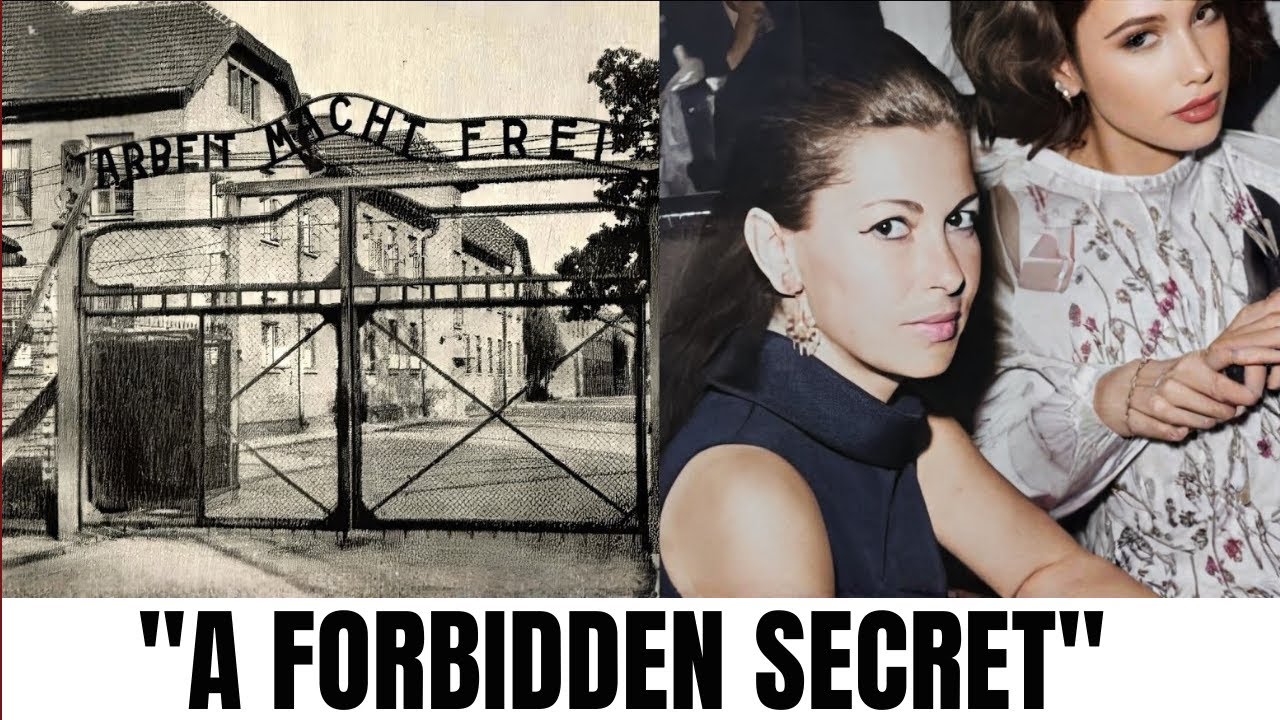
When she finished, an SS man approached her. His name was Franz Wunsch, an overseer who supervised the sorting of stolen possessions in the warehouses known as Canada. He asked her, in a voice that betrayed none of the cruelty she had come to expect, to sing the song again. Helena looked up with tears in her eyes, saw the uniform, and thought: God, where are the eyes of a murderer?
These are the eyes of a human being. The story that brought Helena to that moment had begun years earlier, in a different world. She was born on August 26, 1922, in Humenné, then part of Czechoslovakia, the daughter of Jewish parents and one of four children. Her father was a tanner.
Helena loved to sing, but she also loved to dance, and her older brother jokingly promised that one day he would take her to Prague to exercise her talent. In 1934, her sister Rosika and Rosika’s husband immigrated to Palestine. But the husband could not find work there, and in 1939 the young couple decided to return to Czechoslovakia, bringing their daughter with them. The Jews of Palestine warned them: “What?
Are you crazy? There’s a war brewing. ” By the time the family understood the mistake, it was too late. The Second World War began on September 1, 1939, when Nazi Germany invaded Poland.
In April 1940, the first Aryanization law was passed in Slovakia, providing for the seizure of Jewish-owned property and the exclusion of Jews from the economy. The measure was justified by an old stereotype, reinforced by propaganda, that Jews had obtained their wealth by oppressing the Slovak people. On September 9, 1941, the Slovak government passed the Jewish Code, which its propaganda boasted was the strictest set of anti-Jewish laws in Europe, based on the Nazi Nuremberg laws. The code comprised 270 articles, longer than the Slovak constitution itself.
It comprehensively denied rights to Slovak Jews, definitively excluded them from public life, restricted the hours during which they could travel and shop, and barred them from clubs, organizations, and public events. It required Jews to wear the yellow star, annulled all debts owed to them, and confiscated Jewish property. When some members of the government objected to the introduction of National Socialism in Slovakia, the prime minister, Vojtech Tuka, answered bluntly: “I am not a democrat. ”
But for the Slovak Jews, the worst had not yet come.
A census taken on December 15, 1940, had counted 89,000 Jews in Slovakia. In March 1942, the Slovak state signed an agreement with Germany permitting the deportation of Slovak Jews, becoming the first state outside direct German control to agree to the removal of its Jewish citizens. Between March and October 1942, the Slovak authorities concentrated some 58,000 Jews in labor and concentration camps established on Slovak territory, mainly at Sereď, Nováky, and Vyhne. From these camps, the Slovaks transported the Jews to the border of the General Government or the German Reich and handed them over to the SS and police.
The Hlinka Guard, Slovakia’s state police, participated in the deportations with notable willingness. The victims were given only four hours’ warning, to prevent them from escaping. Beatings and forcible shaving were commonplace, as were invasive searches meant to uncover hidden valuables. Some members of the Hlinka Guard used their power to rape Jewish women.
In 1942, Jozef Tiso, a Catholic priest who served as president of Slovakia, delivered a speech justifying the ongoing deportations. Hitler himself commented on it afterward, remarking: “It is interesting how this little Catholic priest Tiso is sending us the Jews. ” Virtually all of the deported Slovak Jews were killed at Auschwitz, Majdanek, Sobibór, and other places in German-occupied Poland. Of the Jews deported from Slovakia in 1942, only three hundred survived.
The Slovak state paid Germany five hundred Reichsmarks for every deported Jew, for what the authorities called “retraining and accommodation. ” Over the course of the war, German and Slovak authorities deported more than seventy thousand Jews from Slovakia, and the Germans murdered more than sixty thousand of them. By the end of the Holocaust, more than two-thirds of the Jews who had lived in Slovakia were dead. Helena Citranova was one of the first to be taken.
On March 25, 1942, she stood among 997 teenage girls and unmarried young women on the first official transport of Jews to Auschwitz. The Slovak authorities told them they were going away to perform government work service for just a few months. In truth, they had been sold to the Germans by the Slovaks for five hundred Reichsmarks apiece, roughly two hundred dollars, as slave labor. They arrived in Auschwitz on March 26, 1942.
At first, Helena was assigned to an outdoor work unit, demolishing buildings and shifting rubble. She slept on straw infested with bugs and watched in terror as the women around her began to give up hope and die. She would later recall the particular horror of the demolition work: “We weren’t allowed to run, so when the wall came down, the first girls were crushed and died on the spot. ”
On October 30, 1942, Helena was moved to work in the Canada warehouse, sorting the possessions of murdered Jews.
The warehouse was named for Canada because that country was thought to be a place of great riches. The belongings of inmates were taken from them on arrival and brought there; the items were sorted and sent back to Germany, although some were stolen by the SS guards. Working in Canada was one of the few sought-after jobs in the camp, because prisoners received food and water, could grow their hair out, and were not beaten. That same day, Helena participated in the prisoners’ musical performance.
Franz Wunsch noticed her. He was one of the SS personnel responsible for overseeing the sorting tasks in the Canada warehouses, and he had heard her sing. When she finished, he asked her to sing again. He fell in love with her.
Wunsch began to visit Helena often. He was gentle, kind, and protective. He brought her extra food and clothing, and turned over his own rations to her. When she fell ill with typhus, he hid her and nursed her back to health, making sure she was well fed and giving her gifts of food that his own mother had sent him.
He risked his life with his SS superiors to help save her fellow prisoners. Sometimes he passed her notes that said simply: “I fell in love with you. ”
Helena later admitted: “I thought I’d rather be dead than be involved with an SS man. ” She despised the Nazis, not only for what they did to the Jews but for what they had done to her own family.
Her parents and her brother had been sent to Auschwitz, and her brother, attempting to escape the camp, was killed on the electrified fence, his face and hands pressed up and immobilized against the barbed wire. Yet over time, Helena began to develop some affection for Wunsch in return. The turning point came when he was able to help her sister Rosika, now a mother of two. Rosika had been transported to Auschwitz from Slovakia with her nine-year-old daughter and her newborn son.
When Helena heard of their arrival, she ran to the crematorium, fearing they would be killed there. She hysterically told the guards that she wanted to die with them. A friend alerted Wunsch, who rushed to the scene just as Josef Mengele, the SS physician known as the Angel of Death, was deciding which of the prisoners would live and which would die. When Wunsch reached the crematorium, he began to beat Helena violently, punishing her for the crime of violating curfew.
But as he beat her, he whispered secretly to her, telling her to be quiet. Then he turned to Mengele. The children, he insisted, could work. Helena’s sister and the children would live.
Wunsch’s cruelty in the camp was real and documented. He beat men and women alike, though after meeting Helena he beat women less; it was enough for him to beat only men, often with a stick he carried. Helena had a positive influence on him, and she tried to make him behave less cruelly. But after the war, a Holocaust survivor testified that during the Jewish revolt at Auschwitz on October 7, 1944, Wunsch shot a twenty-year-old Greek Jew without mercy.
The relationship between Helena and Franz ended in January 1945, as the Soviet army approached Auschwitz. In their last conversation, he told her: “Take care, Helena. You’ll make it. I’ve loved you so much.
” Then they kissed, long and intimately. On January 27, 1945, the Soviet army entered Auschwitz, Birkenau, and Monowitz, liberating about seven thousand prisoners, most of them ill and dying. Among those liberated by the Red Army was Helena Citranova. For the next twenty-seven years, Helena and Franz did not see each other.
After the war, Helena married a Zionist activist, moved with him to Israel, and had two children. Wunsch searched for her for years, writing letters, but Helena avoided them. He settled in Austria, married, and started his own family. In 1972, Franz Wunsch, then fifty years old, was put on trial for war crimes.
His wife sent Helena a desperate written request, asking her to come and testify on his behalf. Helena, now a married woman and mother of two, traveled to Vienna to do so, despite threats from Jewish rights activists. She considered it her duty to outline the good things he had done in Auschwitz, but she also confirmed that she had witnessed him committing crimes against other prisoners. In court, Helena spoke slowly, without emotion, and not once did she look at Wunsch.
But when she came to the story of her sister Rosika’s children, the words caught in her throat. She could not continue. At that moment, Franz Wunsch began to cry.






