The most dangerous man in any palace is never the king, never the general, never the minister who arrives at the gate with a dispatch box under his arm, because all three of them live in the open and can be watched, voted out, or broken by a single paragraph in a newspaper. The most dangerous man in any palace is the one who keeps the papers. He reads every letter before the sovereign reads it, and he decides which of them the sovereign will never see at all. He sits in the corner of every audience and remembers the whole of what was said.
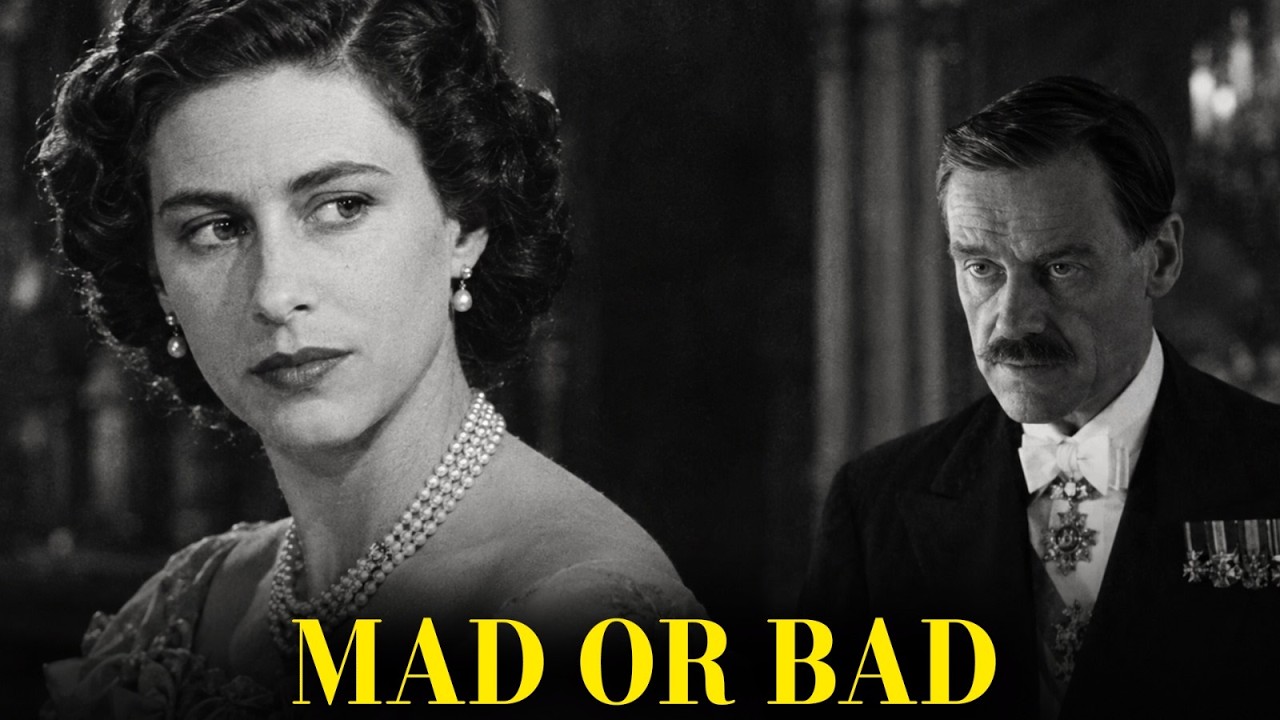
He holds no office the law recognizes, has no power any court would enforce, and could be dismissed before breakfast. And yet the entire machinery of a monarchy runs through his hands, and stops there. The most dangerous man of that kind in the twentieth century was a boy from a west country village with a soldier’s walk, a courtier’s silence, and a memory like a filing cabinet. His name was Alan Frederick Lascelles, and to a small circle of friends, to four sovereigns, and to one furious princess, he was known simply as Tommy.
He was the private secretary, the gatekeeper, the man who decided what the royal family was permitted to do with its own life. He served the crown for twenty-seven years, and he wrote down what he saw. Thirty years after he was dead, the world would finally read it. One decision of his, taken in the autumn of 1953 in a corridor of a Scottish castle, would cost a young woman the only happiness she ever truly wanted.
She would never forgive him for it. When she was old, and difficult, and alone, she would still say his name with a coldness that everybody around her learned to notice. That is the shape of the story, and it begins a long way from the palaces, in a small house in Dorset, where the sixth child of a family with a great name and very little money was born on the 11th of April, 1887. The house was called Sutton Waldron House, and it stood in a village of a few hundred people in the Blackmore Vale.
The boy was the youngest of six children and the only surviving son. The distinction mattered more than anybody outside the family could understand. A family with a great name and no great fortune lives on expectations, and the expectations of a family rest upon the son. A single surviving son carries the whole of the weight.
Everything the family could afford would be spent on his education and on his start in the world, and everything else would be given up to making him the man he was supposed to be. He was born of the cadet branch of a family whose name was written all over the north of England. The Lascelles were the builders and owners of Harewood House in Yorkshire, the great Palladian palace of the eighteenth century with its lawns and its lake, its collection of paintings, and its estate of many thousands of acres. His grandfather had been the fourth Earl, and the boy grew up in the shadow of a house he would never inherit, belonging to a family whose greatness he could see and could not touch.
It is a particular education to grow up beside a palace, and he learned it thoroughly. He learned a lesson that would form everything he did for the rest of his life: a great house is not a home, and the family inside it is not a private family at all. The Lascelles had been connected for generations to courts and governments and imperial administration, and the boy was raised on stories of governors and generals, of relatives who had held posts in distant places the children could only imagine. He learned the grammar of that world before he could read: a grammar of service and silence, of placing the institution above the person.
He never afterwards questioned a single line of it. He was sent to Marlborough College on the Wiltshire Downs, a foundation of the 1840s built for the sons of clergymen, soldiers, and colonial officials who could not afford Eton. The place was large, cold, and muscular. It taught Latin and cricket, and it taught the boys that the strongest moral obligation of a life was the obligation not to let down the group.
He was not a distinguished scholar and not a famous athlete. What he took away was an accent, a set of manners, and a habit of command that would prove useful far beyond the classroom. From school he went up to Trinity College, Oxford, where he spent four years in the ordinary way of a wealthy undergraduate, acquiring the ease of manner and breadth of reading that would distinguish him for the rest of his life. He was a good talker and a good listener, enthusiastic in a world of dinners, debates, and country weekends.
Oxford was a machine for converting boys of his background into men of affairs. He took away the friendships that placed him, the polish that recommended him, and above all the conviction that he belonged in the rooms where large decisions were made. In the summer of 1913 he married Lady Joan de Viger, the daughter of a great imperial proconsul who had governed India and had commanded the navy as First Lord of the Admiralty. It was the perfect match for a man whose career was yet to be made: a young man of great name and small fortune with a talent for administration and a talent for discretion; a woman of great name and no illusions about what service to the state would cost a family.
They were married for the better part of a lifetime, and it was she who bore the burden of every absence and every silence. Within a year of the wedding, the world ended. The guns of August 1914 broke the peace that had held Europe for a century. He was a reserve officer of the Bedfordshire Yeomanry, a county regiment of territorial cavalry.
When the call came, he went with the whole of the confidence his training had given him. He was not yet thirty, with a young wife and a great name, and no reason to believe that the following four years would strip his generation of nearly everything it had. He sailed for France and served through the whole of the long, murderous business. He rose to the rank of captain and was decorated with the Military Cross for gallantry in the field, the plainest of the army’s tributes to a man who did something brave when nothing required him to do it.
The citation is spare, and he never afterwards spoke about what he did, which is the way of that generation, that regiment, and that man. He came home with a decoration harder to earn than anything he would do in a palace, and he never once used it as a thing to talk about. He came home into a country whose best men had been killed. The estates were struggling, the money had gone, the old certainties shaken.
He was thirty-one, a war hero with a famous name, and he had no idea at all what he was going to do with his life. Between the armistice and the beginning of his life in the royal household there were two years of searching. He returned to the world of the country house and the London club, tried a little of the city and a little of the empire, and none of it took hold. He was a man of thirty-three who had commanded cavalry in a war and had not yet found the work that would use the whole of him.
The work came through the network that had surrounded him since birth. In 1920, the household of the heir to the throne needed a new assistant private secretary. The appointment was not advertised, there was no examination, no competition, because there was no such thing as a competition for such a position. The Prince of Wales had a household that had to run the whole of the life of the most famous young man in the world: a diary, a correspondence, a set of foreign tours, an enormous ordinary flow of trivial business, without the men who ran it ever once becoming interesting themselves.
The name of Alan Lascelles was put forward by men who had served with him and men who had married into his family. The offer was made and accepted, and the course of his life was fixed. The Prince of Wales was twenty-six, the most popular human being in the British Empire, a figure of extraordinary charm and good looks made a national idol by the war. He had toured Canada in 1919 and been mobbed from one end of the Dominion to the other.
The contrast between father and son was the central fact of the royal family in the 1920s. King George V was a small, gruff, dutiful, unyielding man who had come to the throne by accident and had spent his reign in the tireless performance of constitutional duty, with the greatest respect for the machinery of government and no interest whatever in being loved. The Prince of Wales was a charming, restless, undisciplined young man who disliked the machinery and wanted nothing more than to be loved. They could barely conduct a conversation of more than five minutes without a misunderstanding.
The new assistant private secretary was placed exactly between them. He learned the trade of the courtier in the hardest possible school, the school of a court falling apart around a charming man. The prince was a man of enormous energy and no method, filling his days with engagements and then cancelling them and inventing new ones, expecting the entire apparatus of the household to rearrange itself around his mood. He kept his staff awake until three in the morning and expected them to function at seven, intoxicating the people he exhausted so they forgave him and came back for more.
It took a man of colder judgment than any of them to see what the vitality was doing to the institution. In 1921 the prince was sent to India on one of the largest undertakings of the imperial age. The household travelled the length of the subcontinent by special train for several months. The prince met crowds that ran to hundreds of thousands, and the ceremonies were on a scale with no modern equivalent.
Lascelles went with him and saw firsthand what it cost to move a royal person through a nation of hundreds of millions. He also saw, for the first time, how the prince behaved when nobody was watching him in a state room. The India tour was a triumph in public and a strain in private. The prince stayed out in the evenings with officers and attachés and visiting dignitaries, danced and played and laughed, and the following morning the machinery was waiting for him to perform the duties the tour had been arranged to perform.
The staff handled it, smoothed it over, made excuses to the viceroy and the resident and the Maharajas. And the young assistant secretary began to keep notes. The notes were the beginning of a lifetime habit. He was a natural diarist of a particular kind, without self-pity and without exaggeration, recording what he had seen and thought in a small, exact hand at the end of very long days.
He wrote down the things a man could not say in a letter and would not say in a memorandum, and he observed the royal family with the unblinking eye of a servant who had a classical education and no illusions. The diaries were never intended for the public, and they are the reason we can know what the privy chamber of the twentieth century actually felt like from the inside. By the middle of the 1920s he had begun to understand precisely what kind of trouble the prince was in. The prince was a man of great warmth and no center, and the missing center produced a hunger fed by the affection of the people around him, increasingly the wrong sort of people.
He had fallen into habits and friendships and relationships that were not merely irregular but dangerous for an heir to a throne. The most important was with a married woman of London society, the wife of a naval officer, and the attachment dominated the prince’s life for years. All of London knew, the whole household knew, the king was told, and the relationship continued. The men who worked closest to the prince learned a lesson that would be of terrible use twenty years later: a member of the royal family cannot be stopped by the machinery of the court from doing anything at all.
They could arrange his correspondence and rearrange his diary and cover his absences and lie for him to the newspapers, and they could not alter one single feature of his character. The question every man in the household had to answer was what a servant owes to an institution whose head is destroying it. Lascelles had been trained to serve and to be silent, yet his whole character could not leave a wrong thing alone. His good fortune was that he was not in the household for all of it.
His movement through the imperial service in the 1920s gave him a perspective the full-time courtiers never had. He travelled with the prince to the dominions and colonies and foreign capitals, and saw the crown from the outside as well as the inside. What he saw convinced him the institution was worth more than the man wearing it. The conviction would eventually require the only truly insubordinate decision of his career, made with a clear conscience and paid for with seven years of exile.
In 1925 the Prince of Wales set out on the longest journey of his life to that date, a tour through Africa and across the South Atlantic to the southern cone of the Americas, from the Cape to the Zambesi, from Nigeria to the Argentine. The progress of the heir through those territories was one of the last great imperial processions of the British century. Lascelles went with him, and the forced intimacy confirmed everything he had suspected. He watched the prince charm the whole of the world in a single journey.
The crowds in the African townships and mining settlements came out in their thousands, and the prince in a white suit and sun helmet would stand on the platform and speak a few words in the local language, leaving whole towns weeping with delight. He was unfailingly good with people and genuinely interested in them, and there was no category of human being he was too grand to talk to. Behind the performance was a man who could not bear the business of a household. The correspondence of the tour alone ran to many thousands of letters and dispatches.
The princely diary had to be constructed months in advance and rebuilt every day, and the prince’s contribution was a set of orders given late, changed often, and forgotten immediately. He would decide at midnight to go somewhere and expect the machinery to have arranged it by breakfast, and would be hurt when told a journey of a thousand miles cannot be arranged in five hours. He would apologize charmingly and do the same thing the following evening. The staff began to understand that the charm and the unreliability were the same single fact.
The grandest figure in the prince’s household was his own private secretary, a man of enormous ability and great social position who had been with the prince for years. From him Lascelles learned the arts of the office: the memorandum, the audience, the properly placed word. He also learned the price of those arts. The senior man had spent fifteen years managing the prince with an infinite patience the younger man did not possess, and came to despise, because he had concluded that patience in the service of a man who does not intend to mend his ways is not a virtue but a form of complicity.
It was in those years that Lascelles began to keep a record of the prince’s conduct in a form that could be shown to people. The diaries were private; the memoranda were official, artful and specific, written in language no reader could call disloyal. He wrote down the dates, the places, the facts, with a lawyer’s precision, because he had begun to understand that one day somebody would have to say out loud what the household had been hiding. The particular danger of the prince’s position was not the danger the newspapers used to frighten the palace with.
Adultery in the upper reaches of English society was as common as rain and had never brought down a monarchy. The danger was to the constitutional machinery itself, because the prince was heir to a throne founded on the appearance of private virtue. A king whose private life was a public joke would lose the authority the machinery required him to have. The modern monarchy governs nothing and commands nothing, and must be believed in order to survive.
The men in the household understood that better than the prince ever would. The 1920s were also the decade in which the prince’s relations with his family deteriorated to the point of rupture. The king found his eldest son frivolous and self-indulgent; the prince found his father cold and oppressive. The misunderstandings accumulated year by year and were never cleared away.
In such an atmosphere the household of the heir was bound to regard itself as a separate court, and the private office of the crown was bound to regard it as a source of danger. There were periods of happiness, and Lascelles recorded them too, because he was an honest witness and not a prosecutor. There were the ordinary jokes and kindnesses, the long evenings when the prince talked about his travels and ambitions with a warmth that made everybody in the room feel he was worth the trouble. He was capable of generosity and courage, and he had been in the war a young man who desperately wanted to fight and had been prevented by a government that would not risk the heir.
The courtier understood the root of the spoiling and recorded his sympathy, without ever letting it affect his judgment. By 1926 Lascelles had become the senior working official of the prince’s private office, and the strain had become extreme. He was managing a household whose head was unmanageable, in a city where all society knew what he knew and the newspapers were beginning to circle. He had a young family, a wife who saw him very little, and a career whose future depended on the goodwill of a man whose goodwill moved with the wind.
The position had begun to make him ill. His letters of the period are the letters of a man who has decided in his heart that something must be done and is waiting for the moment and the courage to do it. The thing that finally pushed him over was a discovery of a kind a courtier makes once in a career and never forgets. In the ordinary course of his work he found evidence that the prince had been conducting his most intimate correspondence in a manner that made the whole of the crown vulnerable, signed and seen by people who had no business to see it.
It was the sort of mistake a lovesick young man of twenty-five might make, and that an heir to the throne of the British Empire had no right whatever to make. Lascelles, who had spent five years arranging the prince’s life, understood with terrible clarity that the man he served was not merely unreliable but unsafe. He did not go to the prince, because he had learned the prince could not be spoken to about anything touching his pleasures. He did not go to the newspaper proprietors, because he was a servant of the crown, and to go to the newspapers would be a betrayal of the thing he served.
He did what an officer of his generation was trained to do when he saw a danger his immediate superiors would not act upon. He put the whole of it in writing and sent it up the chain of command, which in a monarchy runs from the household of the heir to the household of the king. In the winter of 1926 a memorandum began to make its way through the private office of George V, written in a small exact hand, containing the most damaging assessment of a future king ever committed to the files of a royal household. It was the act that decided the whole of the rest of his life.
In it he laid out, in the dispassionate language of an officer reporting on a subordinate, the state of the heir, his household, and the prospects of the monarchy. He was careful, accurate, and merciless, with the mercilessness of professional judgment rather than personal cruelty. The substance of his assessment was that the prince was not fit to be king in the form the twentieth century required. He did not mean the prince was stupid or wicked, and he said so plainly, honest about the man’s qualities and generous in his account of them.
He meant the prince could not and would not accept the disciplines of the position, and that a sovereign who cannot accept them will eventually come into conflict with the machinery of government in a way that will harm the crown. It was a constitutional argument, and it was a prophecy, delivered into the private office of the king in the middle of the 1920s, ten years before the prophecy came true. The palace kept the paper and did nothing with it, which was the only thing the palace could do. To act would have meant confronting the heir with the judgment of his own household, and the king was not a man who could conduct such a confrontation, and the court possessed no procedure for one.
The paper was filed, and the situation allowed to continue. The young official learned a lesson that would be confirmed a hundred times in the following decade: the machinery of a monarchy is capable of absorbing an extraordinary quantity of information and taking almost no action upon any of it. What he received was the ordinary treatment the machinery reserves for men who tell unwelcome truths: to be listened to politely, then quietly regarded as a source of difficulty. The princes and courtiers who had spent their lives in the glow of the heir’s charm found the memorandum embarrassing and self-righteous.
The story of the young assistant who had dared to write down what everybody knew was passed around the palaces. The relationship between the young man and his prince never recovered. The prince learned what the paper said, and while he was too well bred and too charming to dismiss the man who had done it, the temperature of the household dropped and never rose again. Every arrangement was made in an atmosphere of suspicion, every long day spent in the company of a man who knew his most senior servant thought him unfit for the job he was born to inherit.
There are few positions in the world more miserable than that of a discreet man known to have written the truth. The 1920s went on. The prince visited Canada again, the United States, the great provincial cities of England, received everywhere with enormous enthusiasm, and the machinery of touring was run by the man who was by then the effective head of his private office. The success made the prince more certain of his own judgment and less tolerant of the judgment of others.
The more successful the machinery became, the more expendable it appeared to the man who benefited from it. In 1927 the prince went to Canada to open the Parliament buildings at Ottawa and take part in the Diamond Jubilee of the Confederation, one of the great successes of his public life, behind which was the usual small disaster of management. The man who did the protecting had by then decided the job was finished, and was waiting only for a decent occasion to go. The occasion came from the accumulation of a thousand small humiliations rather than a single great one.
He had been in the household nine years, given it the whole of his thirties and his professional capacity, and watched the prince grow into a charming middle-aged man with fixed habits. He concluded there was nothing left he could do. He was forty-two, and the world outside the palace was a world in which the careers of men of his age and class were made and finished. If he did not leave in the next year or two, he would be leaving at fifty with nothing to go to.
The decision to resign was taken in the winter of 1928 and the resignation submitted the following year. He told the prince he intended to go, giving his reason as professional, and the prince took the news with the mixture of relief and offense the situation required, because a prince criticized by a servant is always glad to see the servant go and always wounded by the departure. The household gave him a dinner and a silver object and a set of letters saying what such letters always say. The letters did not mention the memorandum, and neither did he, and the episode was closed as though it had never happened.
In his own papers he left the reflection that would eventually be quoted against him. He wrote that he had wasted the best years of his life, the complaint of a man of forty-two who has spent his professional prime in a job in which his judgment was neither wanted nor used, a complaint entirely just. He also wrote down the reason he had gone in the plainest terms: he could not bear to be a party to the destruction of the institution he had been raised to serve. The king gave him a decoration of the sort given to men whose real service was understood by nobody who was not in the room when it happened.
He took it home to Dorset, put it in a drawer, and went to find the next thing. The departure was the most important thing that had happened to him since the war, and it was important precisely because it was a failure. He had set out to serve, found that service in that household meant complicity, refused the complicity, and been pushed out of the world in which he had expected to spend his life. He was enough of a realist to know he would very probably never be asked back.
For five years he lived the life of a man of affairs in the city and the country, while his judgment of the prince was confirmed from a distance by every newspaper in the world. Then, in 1930, he was offered the appointment of secretary to the governor general of Canada, one of the most important and agreeable posts in the imperial service. He took it, sailed for Ottawa with his wife and family, and spent four years in the government of a dominion. The Governor General was Lord Bessborough, a man of great wealth and charm and no particular intellectual distinction, and the secretary was the official who actually ran the office.
The post was perfect employment for a man of Lascelles’ training, combining large administrative responsibility with small political freedom and enormous ceremonial duty. The four Canadian years were among the happier of his working life, and they gave him what his time in the prince’s household had not: a view of the crown as an instrument of government. In a dominion the office of governor general is a working part of the constitution, dealing with ministers and budgets and elections. He learned the constitutional law of the crown in the only place it can be learned properly, in the practice of a real government, and the knowledge would make him the single most formidable private secretary of the twentieth century.
He was in Canada when the news came that the king was dying, in the winter of 1935, and the appointment offered by return of post was to the private office of George V. The old king had reigned a quarter of a century, competent and scrupulous through enormous upheaval, and the last years of his reign were years of illness and the slow failure of a body worn out by duty, tobacco, and the peculiar exhaustion of constitutional monarchy. The appointment of the returned exile as assistant private secretary was made by men who understood exactly what had happened in 1929 and had decided that the man who had resigned on a point of principle was exactly the man they now wanted in the room. He arrived in London in the autumn of 1935, in time for the last great set piece of the old reign, the celebration of the king’s silver jubilee.
It was the first great public festival of the age of radio. The crowds lining the streets of London were among the largest ever assembled in the city, and the whole empire listened to the service at St Paul’s on the wireless, hearing the old king’s thin, formal voice thanking his people for their loyalty. Lascelles saw the old sovereign through the whole of the jubilee, and saw what the affection of a nation does to a man who has spent his life in the performance of duty. He wrote down his impression in his diary: one of profound respect.
The court in the last winter of the reign was a court of waiting and of intrigue, about the arrangements to be made when the king died. The heir was fifty, in a state of open war with his father for two decades, given almost no share in the business of the monarchy, never allowed to read a state paper. Lascelles, one of the only men alive who had served in both camps, understood the trouble coming better than anybody in either of them. The king himself understood it, and said so in the plain speech of a sailor: that the boy would ruin himself within twelve months of inheriting the throne.
He said it to men who wrote it down. It was the professional judgment of a sovereign about his successor. The whole court knew it and kept it to itself, and the men closest to the machinery of state began quietly to prepare for a reign they expected to be short and disastrous. The old king died on the 20th of January 1936 at Sandringham, in the house he loved, in the middle of the shooting season.
His last days were spent in the ordinary domestic life of a country gentleman and were recorded by the diarists of the court with a precision that has been doubted by some historians and confirmed by others. There was a famous scene in his final days in which the exhausted king was given a mild sedative and had the whole household around his bed; the accounts have been collected, compared, and disputed for ninety years. What is not disputed is that the sovereign died at about five minutes before midnight, and that his eldest son became king in the first minute of the following day. The accession of Edward VIII on the 21st of January 1936 was received by the country as the beginning of a golden age, and by the private office of the crown as the beginning of a calamity.
The new king was forty-one, the most popular man in the empire for two decades, with an enormous reservoir of public affection and a household built around the service of his pleasures. He arrived at the palace in the first hours of the morning and began at once to conduct the business of the monarchy in the manner the palace had always feared, keeping the whole machinery waiting while he attended to his private arrangements. The new king’s first instruction to the private office was in fact about a private matter, issued within hours of his father’s death. The private secretary in post was a man of great ability named Alec Hardinge, and the assistant private secretary who had come back from Canada was the man who had to write the memoranda, keep the diary, and hold the office together while the storm gathered.
The reign lasted 325 days, and every one of them was a day of crisis in one form or another. The new king had no interest in the papers of state, the boxes, the audiences, or the constitutional business of the crown. He was absent from a large part of the work of his own office and careless about the whole machinery. The private office managed the monarchy for him, the most demoralizing work a public servant can be asked to do, in the knowledge that the whole world was watching and drawing conclusions no official could correct.
The crisis that ended the reign was a crisis about the king’s private life, visible from the beginning, and it had the structure of a Greek tragedy rather than a political scandal. In the first phase, the court hoped the king would settle into the job and the love affair would be managed quietly and pass. In the second phase, the court discovered the love affair was not going to be managed, and that the king intended to marry the woman at the center of it. In the third phase, the whole political establishment was required to decide whether the marriage could be permitted.
The answer was no. The woman was an American of two previous marriages who had come into the king’s life in the early 1930s and become the fixed object of his existence. She was intelligent, humorous, and commanding, and entirely unsuitable by the standards of the English establishment of the period, partly for her nationality, partly for her two living former husbands. The Church of England was the established church, and the sovereign was its supreme governor.
The king had decided he would marry her whatever the cost, and the whole machinery of state discovered in the course of 1936 that no argument, threat, or appeal could move him. The private secretary was the man who had to carry the news to the prime minister. On the 13th of November 1936 he wrote to the king himself a letter of extraordinary frankness, telling the sovereign plainly what the crown faced and what the consequences would be. It is the model of what an honest servant says to a master who will not listen, and it marked the beginning of the end of the reign.
Lascelles was in the same office, in the room for the whole of it. The king’s response was rage, directed at the private secretary rather than at the substance of what he had said, and the office was required to continue its work in an atmosphere of open hostility between sovereign and staff. The king came to regard the court as an enemy, conducting his business through his own personal friends and his own lawyer, and the machinery of the monarchy was excluded from the most consequential negotiation of the century. The men in the private office kept the letters and memoranda and diaries as they went along, and the record they left is the reason the abdication crisis is one of the most completely documented episodes in the history of the British state.
The political crisis moved through the winter at a speed that surprised everybody inside it. The prime minister took the view that the king could not marry the woman and remain king, and told him so. The Dominion prime ministers were consulted, and the leaders of the opposition, and by the beginning of December the whole establishment had arrived at the same conclusion. The king was told he could not have both the crown and the marriage, in the plainest language, and the plainness was what finally convinced him the machinery was serious.
The decision to abdicate was taken in the first week of December. The instrument of abdication was prepared by the government’s law officers, the bill passed through both houses of Parliament in a single day, and the whole constitutional process was completed within a week of the king’s announcement. He signed the instrument on the 10th of December in the presence of his brothers, and the following day the bill received royal assent and the reign ended. The speed was made possible by the fact that every institution in the country had decided in advance what it was going to do, in private rooms, by men whose names were never printed in any newspaper.
The abdication broadcast was made on the evening of the 11th of December 1936, listened to by a very large part of the population of the empire. The speech was a masterpiece of self-justification. He spoke of the woman he loved, the burden of responsibility that would have fallen upon him, the impossibility of discharging his duties without her support. He did not once mention the government, the constitution, or the machinery that had brought him to the point.
The men in the palace who listened understood that the king was leaving with the reputation of a romantic hero, and that his brother was inheriting it with the reputation of a man who had taken his place. The injustice was felt in the household more bitterly than any of the political arguments. The new king was proclaimed on the 12th of December, taking the title of George VI, deliberately choosing his father’s name to signal continuity, with the advice of the court, within hours of the abdication. He was a shy, stammering, deeply religious man of forty-one who had spent his whole life in the shadow of his elder brother and had no expectation whatever of becoming king.
He came to the throne in the middle of the worst constitutional crisis of the century with a wife and two small daughters and a total absence of preparation. The assistant private secretary who had served the old king and the abdicated king was carried over into the household of the new reign, one of the most important decisions of his life, made by the new king himself. The staff of the office were the men who had written the memoranda and kept the diaries and held the machinery together through the crisis, and the new sovereign understood he needed men who knew where the bodies were buried and could be trusted to keep them buried. The returned exile from Canada, the man who had resigned in 1929 and been proved right about everything, was exactly the man the new reign required.
The first task of the new reign was the repair of the institution, conducted with the greatest possible care in the two years that followed. The coronation of 1937 was held in May on the date fixed for the coronation of the abdicated king, a decision to show the country and the world that the machinery of the monarchy was unbroken. The new king was crowned with his wife beside him, the ceremony broadcast, the whole country hearing the sovereign take his oath. The accession and the coronation together served the court’s purpose: to demonstrate that the crown outlasted the man.
The Duke of Windsor, as the abdicated king was now styled, married the woman he had given up the throne for the following summer and settled in France, beginning the long, unhappy, restless, complaintive exile that occupied the rest of his life. He was given a financial settlement arranged through the private office, and the arrangement was a permanent source of friction between the two households that grew worse as the years went on. The men who had served him as Prince of Wales found themselves dealing with him as a pensioner of the crown, and the letters between the two households are among the most painful documents in the archives of the modern monarchy. The new king’s own difficulties were of a kind the household had never had to manage, and the greatest was a stammering sovereign in the age of the wireless.
The impediment made public speaking a torture to him and to anybody who loved him. The Australian speech therapist who worked with him in the years before the war produced one of the most extraordinary improvements in the history of medicine. The private office arranged the whole therapy in secret, the exercises conducted in private rooms, the record kept out of the newspapers. The enterprise was a demonstration of what the machinery of a royal household can achieve when it sets out to protect its master.
The years between the abdication and the war were years of hard and unglamorous work, and the household of the new king was the most industrious and least glamorous in the history of the modern monarchy. The private office was strengthened, the household purged of a great many people attached to the previous reign, and Lascelles, who had survived both previous regimes, found himself at the center of the rebuilding. His judgments about who deserved to stay and who deserved to go were the judgments on which the new court was constructed. The war came in September of 1939, to a monarchy that had been quietly rebuilding itself for two years.
The decision that the king and queen would remain in London through the bombing was taken early and deliberately, and was probably the single most important public act of the reign. The palace was struck by bombs on nine separate occasions, and one raid in the autumn of 1940 destroyed the chapel and damaged the great windows of the east front. The king and queen walked the ruins of their own house on the morning after, and the photographs of them standing among the wreckage were among the most effective pieces of propaganda of the whole war, achieved entirely because the royal family had refused to leave. The king worked the ordinary hours of a civil servant, reading war cabinet papers, meeting the prime minister every week, going to bomb sites and factories and ships and hospitals, performing his duty through an act of will that exhausted him and impressed everybody who saw it.
The queen appeared in the east end of London during the raids, went into the shelters, talked to the people who had been bombed out, and the whole country came to regard her as the emblem of its own refusal to be broken. The royal princesses were kept in the palace for the first years of the war, then moved to Windsor Castle, their education reconstructed around the conflict. The elder made her first broadcast to the children of the empire at fourteen and registered with the labor exchange at eighteen. The machinery of the household managed all of it, creating the model of the public princess that would occupy the crown for the next eighty years, without anybody knowing what they were creating.
The greatest service the private office performed in the war was keeping the sovereign out of politics and the government out of the palace. The king had strong views about the conduct of the war and about a number of the men conducting it, and the temptation for a sovereign in a war of national survival is very nearly overwhelming. The men in his office understood that the crown had to be seen to be above party and above the dispute about strategy. The prime minister of the first years of the war was a man the king distrusted, and the peace was not a warm one.
The candidate who replaced him in the spring of 1940 was a man the palace regarded with deep suspicion, and the suspicion was entirely mutual. The two of them worked together for five years in a partnership that turned into the most consequential political relationship in the modern history of the crown, meeting every Tuesday for the whole of the war, in private, the only record kept by the men in the private office, because the prime minister was not a man who kept his own notes. The war also produced the most dangerous of the palace’s private dilemmas, about the Duke of Windsor. He had gone to France at the beginning of the war, then been in the south of Europe, then, in the summer of 1940, been sent to the Bahamas as governor of a colony as far from the war as the empire could arrange.
The whole operation was organized by the government and the palace, the reason being the fear that the duke would become the center of a peace movement or fall into the hands of the enemy, and the arrangements had to be made without a single word of the real reason appearing in the newspapers. He served in the Caribbean for five years, unhappy in every one of them, and the letters he wrote to the private office of his brother are documents of an almost unbearable self-pity. The war years were the years in which Lascelles became the single most indispensable official in the royal service. He had come into the household of the new king in 1935, carried through the abdication, the coronation, and the first years of the war, and by 1940 he was deputy private secretary, running the office in everything but name.
The private secretary of the period was a man of great ability and failing health, and the practical business fell increasingly upon the deputy. Lascelles also served in the civil apparatus of the war effort, a man of fifty-three when the war began, working seven days a week in the machinery of government in addition to all his palace work, because the king needed him and the government needed him, and because the man himself was incapable of doing less than the whole of what he was able to do. The office he ran was a small operation by modern standards. In 1940 the private office of the sovereign consisted of the private secretary, his deputy, two or three assistants, and a small body of typists and clerks.
The whole of the business that passed through the private office was decided by no more than twenty human beings. The sovereign received every dispatch from every ambassador, every cabinet minute, every report from every department, and all of it came into the private office first. The private secretary was required to know the contents of all of it and advise his master on the parts requiring action. The boxes went to the palace and came back and went again, and the entire constitutional business of a great state was conducted through a correspondence that occupied two men and a set of locked boxes.
The judgment of the office on men and measures was the real work, invisible to anybody outside. The prime minister would come to the palace, the sovereign talk to him, and the private secretary would be present in the corner of the room, afterwards asked what he thought of the interview. The whole of the modern constitution depends upon an official trusted by both the sovereign and the government, who can tell each of them what the other really means. Through the Second World War, Lascelles was one of the very few Englishmen of his generation who could be trusted with the whole of the truth.
The most delicate of his responsibilities was the management of the king’s own character and health. The sovereign was a man of acute anxiety, a stammer, a temper that erupted without warning, and physical frailties the war made worse. The private secretary arranged his master’s life to protect the king from himself: engagements timed around the king’s energy, papers selected around his interest, interviews scheduled around his moods, all done invisibly, so the country saw a sovereign calm and unhurried while the man behind the throne was being managed minute by minute by a small office that never complained. The promotion to the whole office came at the end of 1943, in the ordinary way of the machinery, without ceremony and without announcement.
At fifty-six, Lascelles held the office that controlled the whole relationship between the monarchy and the state, and he held it for the following ten years, the period in which the modern constitutional monarchy was constructed out of the ruins of the imperial one. The office he held had no constitutional existence at all; its whole power came from the confidence of the sovereign and the confidence of the ministers. The king’s own assessment was written down privately and has come down to us: that the private secretary was the one man in the whole household to whom he could say anything without fear of it coming back from an unexpected direction. The authority rested on the fact that the king trusted him with the whole of the truth, a trust produced by twenty years of small, thankless acts of discretion.
The last eighteen months of the war required his judgment on the largest questions the monarchy had faced since the abdication: the shape of the postwar world. The allies were winning, the governments of the world planning the peace, and the crown was required to bless a set of changes that would dismantle the imperial edifice on which the monarchy had been built. The sovereign was the head of a commonwealth about to lose the greater part of its territory and people, and the private secretary was the man who had to explain what was happening and arrange the ceremonies that would make it endurable. The end of the war in Europe came in May 1945, and the celebrations in London were the largest public gatherings the city had ever seen.
The royal family appeared on the balcony of the palace eight times in a single day, and the two princesses were allowed out into the crowd on the evening of the victory. The private secretary who helped arrange it all understood what the day was for, and that the monarchy’s place in the country’s life had been restored by the war and confirmed by the peace. The end of the war was followed by the end of the government that had won it. The general election of July 1945 produced one of the greatest political surprises of the century, voting out the man who had led the country through the war and voting in a party of the left with a program of nationalization and social reconstruction.
The private secretary, who had spent five years in the closest possible working relationship with the outgoing prime minister, arranged the resignation and the appointment of his successor in the space of a single afternoon, with the exact correctness the constitution requires, without permitting a single sign of his own views to appear anywhere in the record. The new government passed a body of legislation that remade the social settlement of the country, and all of it passed through the private office of the sovereign. The National Health Service, National Insurance, the nationalization of the industries came to the palace in the boxes, marked by the sovereign and noted by the private secretary. The greatest of the postwar constitutional changes was the independence of India and the creation of the two new dominions, one of the largest events in the history of the modern world.
The sovereign ceased to be Emperor of India, and the whole imperial architecture built up over two centuries was dismantled within two years. The private secretary had spent his life in the service of an empire, and he watched the whole of it come apart without a single recorded complaint. The empire at its height had covered something approaching a quarter of the land surface of the earth and contained a quarter of its population, and the transformation of empire into commonwealth happened inside a single working lifetime, managed from a small set of rooms in London. The most important private event of the postwar royal family was the engagement of the heir to the throne, announced in the summer of the year after the war’s end, and the whole country delighted in a way no royal event has been delighted in since.
The princess was a young woman of twenty-one, her fiancé a naval officer of twenty-six, in love for several years. The private office managed the announcement and the wedding arrangements, and the private secretary recorded his own private doubts about the match in his diary: doubts about the prince’s circumstances rather than his character, about the family background and the position of a man who would have to be absorbed into the British establishment from the outside. The marriage was celebrated in the abbey in the autumn of 1947, the first great public ceremony of the postwar monarchy. The wedding dress was made with ration coupons, the ceremony broadcast by the wireless, the crowds in London of a size the police had not managed since the victory.
Lascelles understood exactly what the event was designed to achieve. The question of the name of the new family was the first of the difficulties, managed for the following fifteen years. The groom had renounced his own titles and nationality to marry the heir, adopting the surname of his mother’s family, a German name of great distinction, and a family using a German name could not be the family of a British sovereign. The palace, the government, and the commonwealth spent the following decade in a series of private negotiations, the private office in the middle of every stage.
The eventual settlement was announced in the spring of 1952, giving the royal house its present name. The first years of the new marriage were spent in a house in the grounds of one of the palaces, the couple living the life of a junior branch of the family, and the private office managed it as a subsidiary household. Lascelles recorded in his diary his impression of a couple well-matched, hardworking, and thoroughly sensible, the record of a man genuinely fond of them, who never imagined what the following decade would make of the family. The first child, a boy, was born in the autumn of 1948, second in line to the throne, and the whole household understood instantly what the birth meant.
Lascelles, who had spent thirty years watching the crown pass from one generation to the next, knew he was present at the beginning of a reign that would not come for half a century. The king’s health began to fail in the late 1940s, a slow, public decline the household managed with the greatest possible care. He had been a heavy smoker for his whole life, and the smoking produced a disease of the arteries that eventually required the removal of a lung. The illness was kept from the public for months, the sovereign continuing to perform his duties while the doctors told the household he would not recover.
The private secretary who managed the deception had spent his life in service of the truth within the walls and secrecy without them, and the balance of those two duties was the central problem of his professional life. The crown lands, the palaces, and the estates were matters of enormous public interest, the finances of the monarchy in a state of quiet crisis since the abdication, and the arrangement by which the sovereign surrendered the revenues of the crown estate in return for a civil list was renegotiated in the middle of the century. Lascelles, who had no interest in money and no talent for accounts, understood better than any accountant in the country that the whole point of the arrangement was the dignity of the crown rather than the size of its income. The most enduring legacy of his years in office was a letter he wrote to a newspaper under a pen name.
In the spring of 1950 there was a general election, and the result was a parliament in which the government had a majority so small that the constitution had to consider what would happen if it lost. The prime minister asked the sovereign for a dissolution, one of the great unresolved questions of the constitution, argued across the newspapers in the most public possible way. Lascelles was the man who knew the whole practice of the constitution as no academic or politician could, because he had been present at every audience and read every paper for a quarter of a century. He could not write a public statement of the crown’s position, because the crown’s power depends upon its not being seen to take a position, and he could not brief a journalist, because his whole professional life was spent keeping the crown’s business out of the newspapers.
The solution he devised was an anonymous letter to the newspaper of record, signed with a Latin word meaning an old man. It appeared in May of 1950, attributed to a figure called Senex, and the whole political world read it within a week. The substance of the argument was that the sovereign might properly refuse a dissolution if the existing parliament was viable, if the general election a dissolution would produce would be unlikely to produce a different result, and if the parliament could continue to govern the country. It was a restatement of the whole practice of the modern constitution, written with a precision only a man at the center of the machine could have achieved.
The secret of the authorship was kept for nearly fifty years, confirmed only when the papers of the period were released. He had written it knowing he was committing a piece of constitutional advice in the most public form available, and that his professional reputation would be destroyed if the authorship became known. He had done it because the alternative was a series of constitutional crises in which the crown would be blamed for decisions it had not made. The philosophy that guided his whole career can be summarized in a sentence: the monarch has almost no power, and must therefore be scrupulous about the whole of the power that remains.
The king’s health collapsed in the autumn of 1951, and the whole machinery prepared for the possibility of a regency and the accession of a young woman of twenty-five. The illness was a cancer, the diagnosis kept from the public and from the king himself, and the household managed the period with a secrecy unimaginable in the modern age. Lascelles was present at the consultations with the doctors, the discussions with the government, the arrangements for the succession, and he was the man who had to decide what the sovereign should be told and what he should not, the heaviest responsibility of his professional life. The king made his last public appearance in the winter, at the airport to see off his daughter on a journey to Africa, standing bareheaded in the cold on the tarmac while the whole country understood from the photographs that he was a dying man.
Lascelles, who had arranged the farewell, understood exactly what the pictures would do. The princess flew out to Kenya with her husband, the tour going forward on schedule, and the king went back to the palace and to the house in the country where he had always been happiest, and where he would spend the last week of his life. The sovereign died in his sleep on the morning of the 6th of February 1952 at Sandringham, earlier than the household had expected, and the machinery of the succession was set in motion within hours. The news was carried to the new queen by her husband in a lodge in the African bush, the operation of informing the heir planned months in advance, and the plan worked exactly as designed.
The private secretary was at the center of it, and the country woke to the news that it had a queen, and to the beginning of a reign that would last seventy years. The new sovereign was twenty-five, trained for the position by her father and her upbringing, and the partnership that began in those weeks was the most successful working relationship in the modern history of the crown. She relied upon him completely for the first two years of her reign, and the man who taught her had spent a lifetime preparing for the task. The great crisis of the new reign arrived within a year of the accession, and it concerned the private future of the queen’s own sister.
The princess was a young woman of twenty-two, in love with a man of thirty-seven who was a servant of the household, a wartime fighter ace, and divorced. The affair had been conducted in secrecy, watched from a very early stage by the private office. The romance had begun in the middle of the war, in the most ordinary way, in a palace where a girl of fifteen had met a handsome officer home on leave from the fighting. The man was a decorated pilot who had commanded a squadron, been shot down, and escaped through occupied Europe, and the palace regarded him as a hero.
They had fallen in love over a period of years, with the knowledge of the household and the silent complicity of the family, and Lascelles had been aware of it from the beginning. The obstacle was not the man’s character or the queen’s affection for him. It was the law of the church and the terms of an act of Parliament. The group captain was divorced, his former wife living, and the Church of England in that period did not permit the remarriage of a divorced person while the former spouse was living, and the sovereign, as supreme governor of the church, was required to uphold its teaching.
The difficulty was compounded by an act of Parliament of 1772 requiring the sovereign’s consent to the marriage of any member of the royal family, making such a marriage void if the consent was withheld, a statute still on the books in the twentieth century. Lascelles’s role was the role of the counselor rather than the decider. He was the man who knew the law, the precedent, and the relationship between crown and church, and all the advice the palace gave in the crisis came through his office. He also had to manage the press interest, the diplomatic interest of the dominions, and the family’s own unhappiness, through two years in which the whole country watched the princess and took sides.
The prime minister was consulted, the whole government’s advice sought, and the advice was that the marriage could not be permitted. There was a plan devised in the last months under which the princess could have married and kept her title and income while giving up her place in the succession, devised by the government and the palace together, showing the institution was willing to make a considerable accommodation, and Lascelles was in the middle of the negotiations, conducted in a secrecy preserved for fifty years. The princess’s own decision was made over a period of months, in a state of unhappiness the whole family understood and could not relieve. She was a young woman of enormous spirit and considerable intelligence given no education, no career, no function, her whole life arranged around her position rather than her desires.
She was told that the marriage would cost her her standing, her income, her place in the family, her place in the succession, told by men who loved her and believed with real conviction that the institution mattered more than the person. The decision was announced in the autumn of 1955 in a public statement in which she gave her reasons and set out her willingness to give up the marriage rather than her duty to the commonwealth. The statement was drafted with the help of the office, and she read it with a composure the whole country admired. The crisis ended with the institution intact and the young woman’s life broken, exactly what the men in the palace had designed.
Lascelles had retired from the office at the end of 1953, not in service for the final two years of the crisis, his advice given in the first phase, the advice that determined the course the palace followed. He had advised a postponement, a period of waiting, resolution on the occasion of a public event that would give the princess space to decide, designed to protect the institution from a crisis arriving at the moment of the coronation. The princess knew exactly who had advised the postponement, and the whole of her life afterwards was lived in the company of his decision. Her coldness towards the court can be traced to the office of the private secretary.
The coronation of the new queen had been held in the summer of the year after the accession, the greatest public ceremony of the century, the first broadcast on television to the whole nation, conducted in the abbey with the traditional forms and the pomp of a thousand years. Lascelles was fifty-seven, and the great work of his professional life had been completed. The country saw a ceremony that appeared to be the work of tradition and was in fact the work of one man’s judgment about what the tradition required. His retirement came at the end of 1953, in the ordinary way of the machinery, without ceremony and without announcement, marked only by private letters and the gratitude of the sovereign.
He had spent twenty-seven years in royal service, ten in its highest office, serving four sovereigns and watching the crown pass through abdication, war, and the dissolution of the empire. The machinery he left behind was the most efficient instrument of constitutional government in the world, and his successor was the first of the new dispensation, a career civil servant from the treasury and diplomatic service, trained in the modern administrative machine. The difference between the two men was the difference between the amateur and the professional, the courtier of the great tradition and the first of the administrators, the transition of the institution itself from a private court to a public service. He lived for twenty-eight years after retirement, in the country and in London, among his books and his family and his garden.
He was made a knight of the great orders, given the honors of the crown, sat in the house of lords for a period, and his public activity was a minimum, the retirement a matter of character, devoted to the private life and the domestic affections and the ordinary pleasures of a gentleman of his kind. Historians of the royal family came to him for information, and he received them with courtesy and discretion that made the visits useful to the visitors and dangerous to nobody. The younger generation of courtiers regarded him as the oracle of the institution, and consultations with him became the last link between the court of the twentieth century and the court he had joined in the 1920s. He died in London in the summer of 1981 at the age of ninety-four, announced in the newspapers in the terms used for a great public servant.
He had outlived the sovereign he had served longest, the empire the sovereign had ruled, and the world into which he had been born. His diaries remained unpublished for a further quarter of a century, the last act of the discretion that had been his life. When they were published, in two volumes, they were one of the most significant events in the historical study of the modern monarchy, containing the private judgments of a man who had served at the center of the institution for thirty years, judgments frequently harsh and occasionally savage, a shock to the establishment that had assumed the secrets were safe. They have become the most quoted source for the inner history of the twentieth-century monarchy, the work of a man with a classical education, a soldier’s directness, and a courtier’s access, reading as though the twentieth century had been watched by a man with no reason to flatter anybody.
The verdict of the historical profession upon his career has been favorable, qualified by a persistent sense that the man was the instrument of an institution the modern age has come to distrust. The criticism of his conduct of the princess’s affair has been the sharpest, and the defense the strongest, and the argument is the argument about the moral status of the institution itself. He believed with the entirety of his being that the monarchy was worth the sacrifice the monarchy demanded. The last word upon the private secretary belongs to the princess whose happiness he helped to refuse, and the word was never said in public.
She lived for another half century after the decision, and became in the end a figure of great determination and great difficulty, her life a demonstration of the cost of the system he had maintained. The story of the two of them is the story of the twentieth-century monarchy in a single room, and the verdict is left to the reader, and the evidence is in the diaries that a man who kept the secrets decided at the last to leave behind.
