On the morning of July 2, 2009, a 25-year-old man was found dead in his Manhattan apartment. The coroner listed the cause as acute mixed drug toxicity. The tabloids feasted on every detail. But the people who knew him watched a far more complicated story unfold for years, one that began long before he was born.
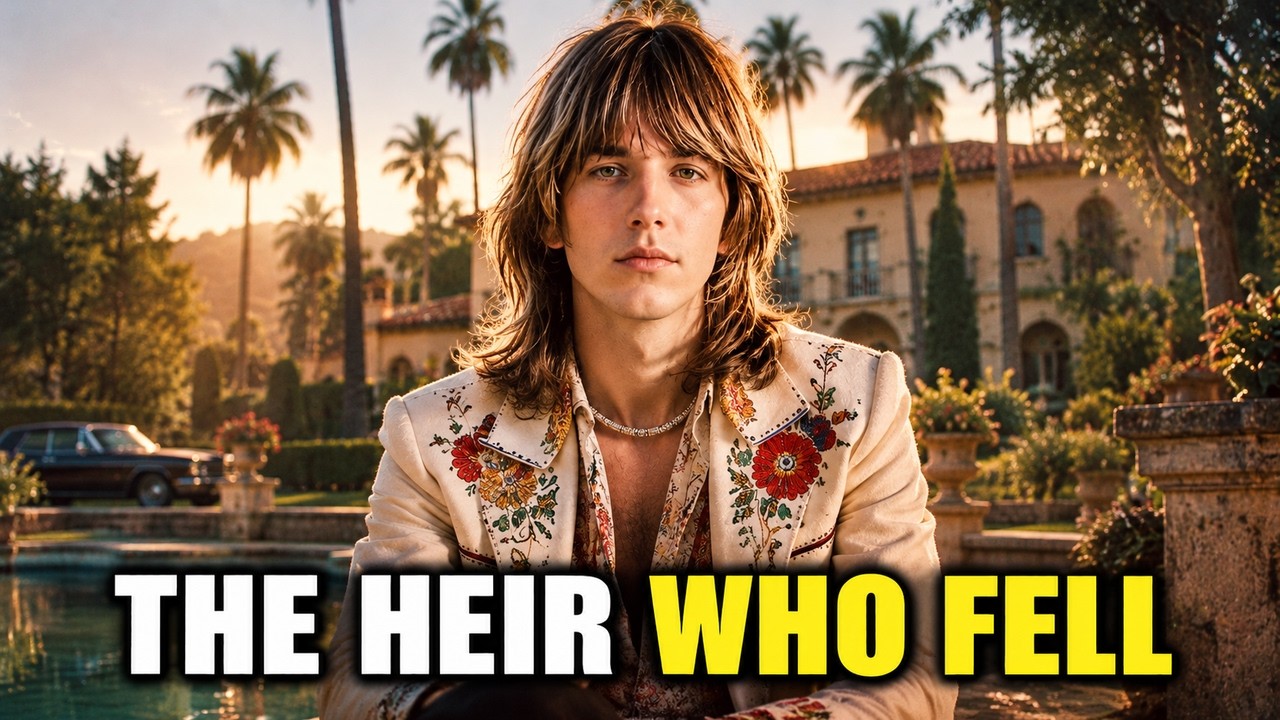
His last name was a dynasty in itself. Four generations of old East Coast money had survived depressions and wars, but it was his father who turned the family name into a global brand. By 1971, the rock icon had sold 40 million records, headlined stadiums on three continents, and accumulated properties from the Hamptons to the south of France. The main estate sprawled across 14 acres in Connecticut, staffed year-round by a rotating team of nine.
There were London flats, an Aspen chalet, and a yacht moored in Monaco. When his son was born in 1983, the boy inherited not just wealth but an almost gravitational pull. Doors opened before he reached them, and every introduction began with the last name everyone already knew. Behind the gilded doors, the marriage that created him was already fracturing.
His parents met in 1979 at a private club in Mayfair. She was a 23-year-old model fresh off the Paris runways; he was 15 years older and at the peak of his fame. The wedding eight months later made the cover of four major magazines, and the reception at the Plaza cost $400,000. For the first two years they played the part flawlessly, but the cracks appeared early.
He was gone for months on tour, and she grew restless in the estates, alone with staff and silence. By the time their son turned two, they were sleeping in separate wings. The marriage held together not by affection but by the weight of the name they both carried. Then came the affair.
She was a family friend. Photographers caught them leaving a restaurant in Malibu, and by morning the story was everywhere. The divorce turned vicious, with lawyers fighting over custody for 18 months while the nine-year-old son sat in waiting rooms outside courtrooms, watching his parents weaponize his own schedule. Tabloids ran photos of him being walked to school alongside speculation about which parent he preferred.
The message was clear before he could articulate it: his value was currency, not care. He learned to code-switch between two households. At his mother’s estate, Mondays through Thursdays were formal, silent, and polished. At his father’s Laurel Canyon compound, Fridays through Sundays were loud, chaotic, and full of strangers.
Two wardrobes, two manners of speaking, two performances depending on whose approval he needed that week. Neither house felt like home. His father’s world was a kingdom of access. At 11, he watched sound checks from the wings of arenas holding 20,000 people.
He sat on leather couches in green rooms while men twice his age lined up powder on mirrors. No one thought to shield him. By 13, he had seen more of the industry’s underbelly than most artists see in a career. Chaos wasn’t an exception in that orbit; it was the operating system.
And the rule was simple: never show weakness. At 14, he was sent east to a boarding school where tuition ran $65,000 a year and the student directory read like a Forbes list. He tried to fit in, wore the right watches, learned the codes. But the other boys had families who showed up on visiting weekends.
His father was on tour, and his mother was managing the fallout from the latest tabloid spread. By sophomore year he had found his circle: three other sons of famous men, all fluent in the language of absence, all carrying prescriptions their parents had signed without reading. The school nurse noticed the frequency of his visits. A faculty adviser flagged the weight loss.
But the family name was on a scholarship fund, so the concern never quite turned into action. During Thanksgiving weekend, a party at his father’s Malibu estate changed everything. Someone brought cocaine, someone else brought OxyContin, and he chased them with his father’s 18-year-old Macallan. At 3 a.
m. , his breathing slowed to six breaths per minute. A girl found him unresponsive in a guest bathroom. The ambulance was told to come to the service entrance.
His father flew back from London, furious not at the drugs but at the exposure and the risk to the brand. Within 48 hours, the 14-year-old was on a plane to a $95,000, 28-day treatment facility in Arizona that specialized in clients requiring discretion. He attended group therapy, learned the 12 steps, and told his counselors what they wanted to hear. What he actually learned was how to hide it better.
Sixteen months later, his mother found him unconscious in the pool house. This time the family hired an interventionist. The intervention took place in a lawyer’s conference room, with his parents, half-siblings, manager, and godfather all reading letters. He listened, cried, and agreed to 90 days of inpatient treatment followed by sober living.
For a while, it looked like the promise might hold. He started running at dawn, joined a woodworking class, kept a journal. His therapist called it a breakthrough. His mother called it a miracle.
Then came the call in month seven: a seat on the family foundation board, a photo opportunity at the Met Gala, a keynote at a fundraiser his grandfather had chaired for 30 years. The family lawyer reminded him the trust was structured around participation, not just bloodline. If he wanted access at 25, he needed to be visible. So he showed up.
He wore the suits his mother had tailored, smiled for photographers, sat through four-hour board meetings, and signed documents he barely read. Every room he walked into carried the weight of the name before anyone spoke. He met a woman named Elena at a bookstore in Silver Lake. She was a graphic designer who didn’t recognize him.
For six weeks they talked over coffee and walked through Griffith Park. She knew he came from money but never asked how much. For the first time in his life, he felt like the person in the room, not the name on the trust. But at a foundation dinner, a board member asked who he was seeing.
The table went quiet. His mother called three days later to clarify: if he married this woman, the trust would be restructured. His father sent a two-page letter that closed with a single handwritten line: “Choose wisely. ”
He broke up with her six days after the dinner.
She moved to Chicago within the month. The people who saw him that spring say he was never the same. The relapse happened 11 days later at a gallery opening in Tribeca. By June, he was using daily.
His circle thinned fast. His mother found out in October when a hotel manager called about unpaid charges and damage to a suite. His father hired a private investigator, but this time there was no family meeting, no intervention. His parents were barely speaking.
In November, he entered a facility in Malibu on 22 acres above the Pacific, with private rooms, organic meals, and equine-assisted therapy. He attended every session and completed the workbook. By week seven, his counselor noted significant progress. The facility offered weekend passes starting in month three, framed as reintegration.
He qualified in early February. His father picked him up Friday at noon. But he didn’t go to a friend’s house. He went to a party in Laurel Canyon, where there were pills on the coffee table and cocaine in the bathroom.
He returned to Malibu on Monday with pinned pupils and shaking hands. The staff noted it in his file but didn’t test him. He completed the program three weeks later, said all the right things about gratitude, and everyone clapped. On his 25th birthday, the trust his grandfather had established became his outright, with no spending limits and no questions.
He bought a Porsche the first week and a watch collection the second. He wired $200,000 to a producer in Ibiza who promised a nightclub partnership that never opened. Old acquaintances from boarding school reappeared, suddenly available and enthusiastic, calling themselves his team. In late October, he moved into a three-bedroom glass penthouse in West Hollywood for $22,000 a month.
The doorman logged 47 different visitors in a single week. On November 18, just after 2 a. m. , hallway security footage captured a heated argument between him and a 34-year-old hanger-on who had been staying in the guest room for three weeks.
The man shoved him hard, and for a moment the camera caught his face clearly. He looked scared, not angry, not drunk. The incident was never reported. On December 9, at 6:47 a.
m. , his mother received a call from a woman who would not give her name. She said something was wrong, that he wasn’t waking up. Then she hung up.
His stepbrother arrived at 7:33 a. m. and pounded on the penthouse door. Security opened it with a master key.
People were asleep in the living room. His bedroom door was closed. A house guest found him lying face down on the floor in the clothes from the night before. No one had checked on him.
The official time of death was called at 12:09 p. m. , though the coroner later estimated he had been gone for hours, possibly since dawn. The medical examiner’s report listed acute mixed drug toxicity: oxycodone, alprazolam, traces of cocaine, and alcohol at nearly twice the legal limit.
There was a bruise on his left temple, fresh within hours of death, along with abrasions on his knuckles and a laceration inside his lip. The report noted these as consistent with a fall. But the toxicology panel found one anomaly: a pharmaceutical sedative he had never been prescribed, a drug almost impossible to acquire without medical access or specific intent. It was not recreational.
It was calculated. Alone, each substance was survivable. Together, they were a chemical equation with only one outcome. A former friend came forward with an allegation that someone in the entourage had been managing his drugs for weeks, measuring them and increasing potency without his knowledge.
Investigators reviewed the claim, but the accuser had an alibi and there was no physical evidence. The allegation went into the file, unproven and unresolved. Security footage had already shown a figure leaving the penthouse at 6:11 a. m.
on the morning he died, hours before anyone called 911. Nobody in the apartment could remember the name. The county ruled the death accidental. His mother demanded a criminal investigation and publicly accused his father of neglect.
His father released a statement calling it a tragic accident and instructed his legal team to shut down any inquiry that threatened the estate. The family fractured further. The entourage scattered within 72 hours, deleting social media, changing numbers, and retaining lawyers. The will was read shortly after.
The estate was worth $47 million. His father received the properties, a sister received a trust, three charities split $12 million, and the single largest bequest, $9 million, went to his childhood nanny, a woman who had raised him from age four to fifteen and had been fired by his father years earlier. The will had been updated eight months before his death. She tried to return the money.
It was confirmed to be the clearest sentence in the 19-page document. His journal was found in a locked drawer. The family tried to suppress it, but a lawyer leaked 11 pages to a reporter. He wrote about the pills in careful detail, about how he understood he was disappearing, about trying to stop four times in 18 months and never making it past 9 days.
Three weeks before his death, he wrote that the people closest to him were the most dangerous, not because they wanted him dead, but because they needed him just alive enough to keep signing. He used the word accident. He saw it coming and he didn’t run. Four years after his death, a former friend sat down with a documentary crew and admitted what the inner circle had spent years denying: they knew he was using, they knew the doses were climbing, and they stayed because proximity to him meant access and work.
The interview triggered a full reopening of the case. Nine months later, investigators recovered a text message sent at 3:47 a. m. the night he died: “I can’t breathe right?
Something’s wrong. Don’t leave me alone here. ” It had been deleted from his phone but retrieved from the carrier. It was sent to a friend who had told police he was asleep in another wing and hadn’t seen him after midnight.
The metadata showed the message was read at 3:51 a. m. No reply was sent. No criminal charges were filed.
The DA said the evidence showed neglect, but not causation. In June 2019, three members of the entourage settled quietly out of court. The terms were sealed, but sources confirmed a seven-figure sum paid jointly. None of it went to the estate.
The family directed every dollar into a foundation in his name, funding addiction treatment for young adults in underserved communities. His mother lobbied for mandatory psych holds that could not be bought out of, testifying twice before the state legislature. The foundation placed 127 people in long-term care within three years and funded 19 full scholarships to sober living homes. A bill passed in 2019 bears his name, requiring luxury rehab centers to meet the same licensing and transparency standards as state-funded programs, establishing criminal liability for employees who supply drugs to patients, and allowing courts to freeze distributions to heirs in active documented addiction until a recovery plan is met.
Eleven facilities have lost their licenses under the law, and three enablers have been prosecuted. The account of his life is a study in what the very things meant to protect him became the things that endangered him most. He was surrounded by people but profoundly isolated. He had access to the best care money could buy but no one who could say no and make it stick.
The wealth that was supposed to be his foundation became the cage he couldn’t escape. His mother still tends a small walled garden on the estate with a bronze plaque bearing his birth name. Each year, the scholarship recipients are invited to visit. His father, who gave only one interview touching on the loss and ended it 40 minutes early, has never visited the garden and has never met a scholarship recipient.
The last text his mother received from her son, sent three hours before he was found, said only: “I’m sorry. ” The official ruling was accidental overdose, and the question of intent will never be resolved. But the consequences of his death continue to move through the lives of strangers who never met him, carried by a foundation funded with the same money that once flowed into his trust.
The inheritance that couldn’t save him is now saving people who look nothing like him, people without safety nets or famous last names.
