By the winter of 1907, Clara Huitt had delivered more babies in Pike Hollow than any doctor who had ever attempted the mountain roads. For twenty-three years she had been the primary midwife for the hollow and three neighboring valleys, and the Breathitt County clerk’s office held records of sixty-three births attributed to her work, though local families insisted the true number was closer to ninety. Some births, Clara understood, needed to remain off the official record entirely. She lived in a cabin two miles up Kettle Creek, reachable only by a trail that turned impassable in heavy rain.
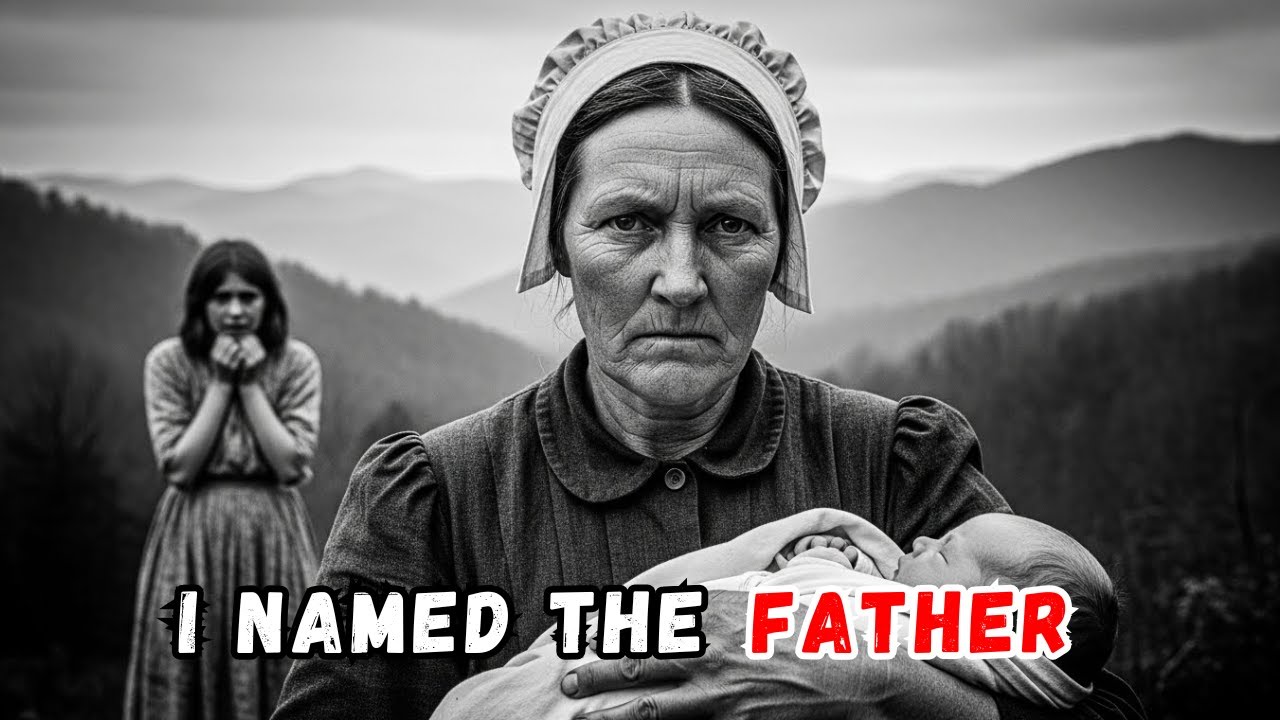
The location was deliberate: women could reach her without being seen from the main road, and Clara could turn away visitors she did not trust simply by claiming the creek was too high to cross safely. The work itself demanded more than medical knowledge. She could identify complications by touch alone, knew how to turn a breach baby before it became a death sentence for mother and child, and kept a leather bag packed with clean linens and boiled scissors. But the real skill, the one that made Clara trusted above any outsider doctor, was her absolute silence about what she witnessed.
In a region where family reputation determined access to credit, employment, and marriage prospects, an illegitimate pregnancy could destroy multiple generations. A girl who bore a child without a husband’s name risked being cast out entirely, which in practical terms meant starvation or prostitution in the lumber camps. Clara’s discretion made survival possible. She delivered babies in the middle of the night, accepted payment in preserved food and firewood rather than cash that might create a record, and never asked questions about paternity.
County records revealed the pattern: births appeared in the official ledgers with increasingly creative explanations for missing fathers. Some listed men as deceased without death certificates. Others claimed fathers had left the region for work and provided names that matched no census records anywhere in Kentucky. A few simply left the space blank.
In January 1908, a girl arrived at Clara’s cabin alone, shaking from more than the cold. She appeared sixteen or seventeen years old, though malnutrition could have made her look younger. She was roughly seven months pregnant, refused to give her full name, offered only the name Ruth, and carried nothing except a cloth bag with a change of clothes and a small amount of money. When Clara asked who knew she had come here, Ruth’s response was immediate and panicked: nobody could know.
What made Ruth different was her refusal to name the father, even in private conversation. She acted as though speaking the name aloud would summon something dangerous. During the final week before Ruth went into labor, she asked Clara whether she had ever delivered a baby that looked so much like its father that paternity was impossible to deny. Clara confirmed this happened frequently.
Ruth’s response was quiet but clear. She said that was what she was afraid of: that everyone would know just by looking, that the baby would be proof of something that could not be explained away or forgotten. Clara understood then that Ruth was not afraid of community judgment about illegitimacy. She was afraid of what the child’s appearance might reveal about its conception.
On January 23, 1908, Ruth went into labor three weeks earlier than Clara had calculated. The labor lasted fourteen hours, and Clara observed physical evidence suggesting the young woman had experienced significant force during conception, evidence pointing toward assault rather than consensual activity. Combined with Ruth’s age, apparent malnutrition, and psychological state, Clara found the picture impossible to ignore. The second observation was more straightforward.
The baby, a boy weighing approximately six pounds, bore such strong resemblance to someone Clara knew that paternity seemed undeniable. Clara saw the distinctive forehead that ran through four generations of the Tenbrook family, the specific ear shape that marked every male member, and the unusual eye spacing and brow line that made Tenbrooks identifiable even in old photographs. Virgil Tenbrook owned approximately three thousand acres of timberland in Pike Hollow and the surrounding valleys. He employed forty-two men directly, controlled credit arrangements for most families through his partnership in the general store, served on the county board of supervisors, and maintained connections to the state legislature through family ties.
His economic power meant that challenging him carried consequences far beyond social disapproval. For two days Clara cared for Ruth and considered her options. The standard practice would be to say nothing and let the situation resolve itself through private family arrangements. She had followed that protocol successfully for twenty-three years.
But Ruth’s age made consent legally questionable, the evidence of trauma suggested circumstances beyond poor judgment, and the power imbalance between a wealthy landowner and an apparently poor girl from outside the hollow created conditions where meaningful choice was impossible. Clara also understood the practical implications of speaking. Ruth’s word alone would carry no weight against Tenbrook’s denial. Clara’s testimony changed the calculation.
As a respected midwife with decades of trusted service, her word carried authority that Ruth’s could not. On January 25, two days after the birth, Clara walked down to the valley and spoke to three different families in the span of four hours. She told them Virgil Tenbrook was the father of Ruth’s child. She stated that medical evidence from the delivery suggested circumstances inconsistent with consensual relations.
She explained that the child’s appearance provided physical proof that Ruth’s claim was accurate. The news spread through Pike Hollow within hours. By the following morning, everyone in Breathitt County who knew either Clara or Tenbrook had heard some version of the story. Clara’s action violated every principle that had made her trusted and successful.
Midwives maintained their position through absolute discretion. By naming Tenbrook publicly, Clara destroyed the foundation of trust that had supported her work. Within a week, families who had lived as neighbors for three generations stopped speaking to each other. The split followed economic dependencies, family loyalties, and calculations about who held power versus who held moral authority.
The church congregation, stable at approximately sixty families since 1895, lost seventeen families between February and April. By summer it had split into two separate congregations meeting in different buildings. The economic consequences appeared just as quickly. The Tenbrook store ledger for 1908 shows the pattern clearly: families known to support Clara found their credit limits reduced or eliminated entirely, while families who publicly questioned her judgment saw better terms than they had previously enjoyed.
Men who worked for Tenbrook’s lumber operation found their hours reduced if their families had spoken in Clara’s defense. Samuel Qincaid, whose wife had been Clara’s most vocal defender, lost his position as timber crew supervisor in April, officially due to his age. He was forty-three and had worked the same position successfully for seven years. Several families sold their property and left the region entirely.
Ruth and her child remained at Clara’s cabin through February and March. In April, they disappeared from the historical record entirely. No census entry, no birth certificate, no baptism record, no death certificate, no grave marker. The absence was so complete that it suggested deliberate erasure rather than simple gaps in recordkeeping.
Whether Ruth left voluntarily, was persuaded to leave, or met some other fate cannot be determined from surviving documents. The Tenbrook family never denied the accusation. Virgil made no public statements, filed no defamation lawsuit, offered no formal denial. His silence suggested the accusation was so beneath his dignity that acknowledging it would be degrading.
His economic actions spoke clearly enough: families who questioned Clara’s authority thrived, families who supported her struggled. Clara’s professional decline was measurable. She attended twenty-one deliveries in 1906, eighteen in 1907, and only four in 1909. By 1910 her name appeared on just one birth certificate, and after that year she vanished from official medical documentation entirely.
The families who stopped calling her included even those who had initially supported her accusation. Calling Clara for a delivery meant making a social statement most families could not afford to make. One woman traveled eight hours to the county seat for a doctor while in active labor rather than call the midwife who lived three miles away, because her husband worked for the Tenbrook lumber operation and could not risk being identified as a Clara supporter. Clara’s isolation extended beyond her work.
She stopped attending church entirely. Margaret Qincaid’s diary entries from 1909 track her deterioration: the cabin fell into poor condition, the garden went unplanted, and Clara became altered beyond recognition, speaking in fragments and barely acknowledging presence. In October 1909, Clara told Margaret she had spoken all her words at once and had none left. Neighbors avoided her cabin entirely, warned a traveling preacher that she had gone peculiar and was not fit for company.
The last documented reference to Clara alive appears in a property tax notice from 1912. After that year, she vanishes from every record system as completely as Ruth had four years earlier. No death certificate, no burial record, no probate documents. The woman who had kept meticulous records of other people’s births left no trace of her own death.
The Breathitt County courthouse fire of 1937 destroyed half the building, but the gaps in documentation from Clara’s era existed decades before the flames touched the archives. Researchers in the 1970s noticed the pattern: damage clustering around specific time frames, particularly 1908 through 1910. Pages covering February through May of 1908 show water damage so severe that entries are illegible, while pages immediately before and after remain in good condition. A property deed page from April 1908 was removed so cleanly the binding shows clear knife marks.
At least seven family Bibles from Pike Hollow families have pages torn out from the section covering those years. Newspaper archives are missing every edition published between January 15 and March 10 of 1908. Church session minutes contain visible gaps covering exactly the period when the congregation was splitting over Clara’s accusation. The gaps cluster so precisely that they suggest intentionality rather than chance.
Whether the destruction was deliberate or coincidental cannot be determined. But the effect was the same: verification of Clara’s claims became impossible. The mountains closed ranks to ensure no one could ever confirm what she had said. Whether that collective silence protected an innocent man from false accusation or protected a guilty man from accountability depends entirely on which version of events one chooses to believe.
The evidence supports both interpretations equally. What remains indisputable is that a community invested significant effort in making the truth unknowable, and in the space where truth should have been, only silence remained.






