On February 14, 1906, the most famous young woman in America stood in the East Room of the White House and became a bride. Alice Roosevelt, daughter of the president, married Nicholas Longworth, a congressman from Ohio, in a ceremony that drew crowds so thick they spilled down the streets of Washington. Gifts arrived by the crate. Newspapers devoted entire pages to the lace of her gown, the flowers, the guest list.
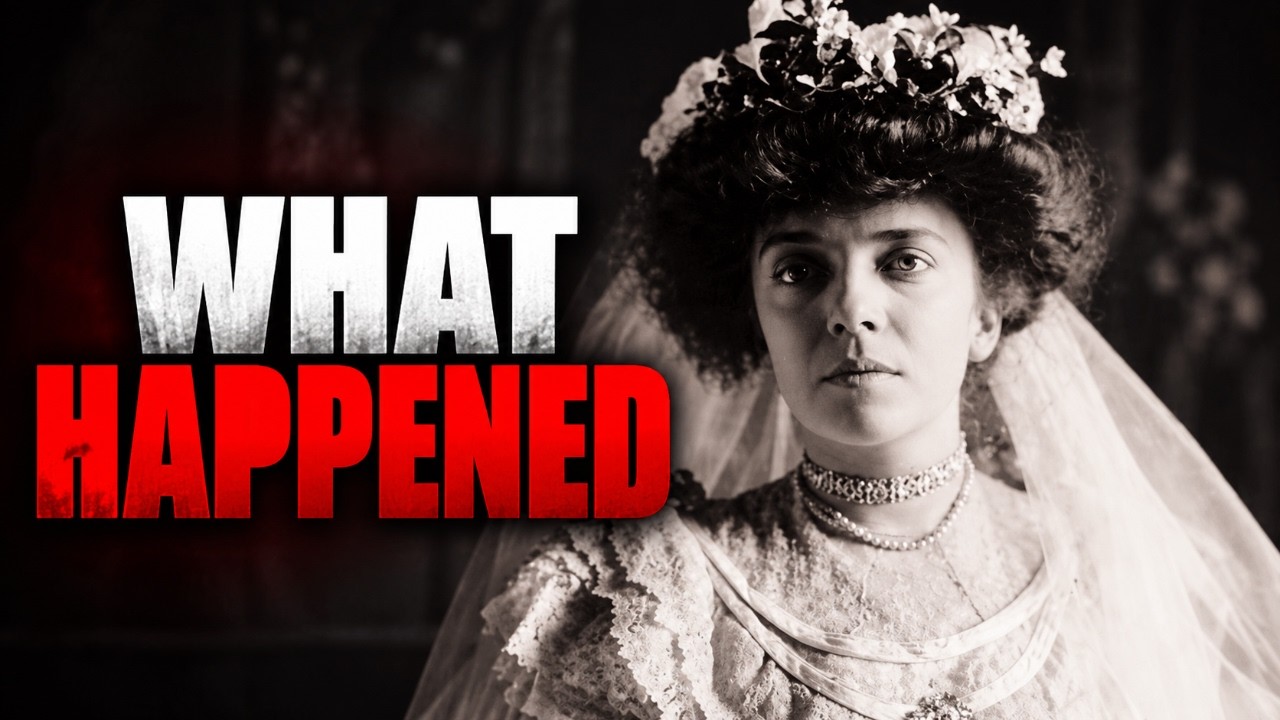
The country had watched Alice since her father took office in 1901, and now it watched her take this next step. It seemed the story of her life could not be anything but golden. But behind the laughter and the headlines, the marriage was not what it appeared. Nick was warm and sociable, a man who moved easily through Washington’s social world, but he had habits of his own, and by all accounts both he and Alice looked elsewhere for affection.
Alice, in particular, began a long and discreet relationship with Senator William Borah of Idaho, a married man and a powerful presence on Capitol Hill. Washington knew. Washington whispered. And decades later, that quiet relationship would place a shadow over the family that no amount of celebrity could lift.
To understand Alice Roosevelt was to begin with the loss that shaped her. She was born in New York City in February 1884, the daughter of Theodore Roosevelt, then a young politician, and his wife, also named Alice. The birth was catastrophic. Her mother died only days afterward.
On that same terrible day, in the same house, Theodore’s own mother died as well. The young father was shattered, left with an infant girl and a grief so overwhelming that he went west for a time, unable to face the home he had lost. Baby Alice was given into the care of her aunt Anna, a woman the family called Bammy. When Theodore returned, he remarried.
Edith Carow became his wife, and in the years that followed, half brothers and a half sister arrived. A new family took shape around Alice, but she often seemed the child who did not quite fit. She was bright and restless, hungry for attention, and she learned early that being outrageous was one reliable way to be noticed. That instinct would carry her far.
Her rise to national fame began the moment her father became president in 1901. Alice was seventeen, and suddenly the whole country was watching her. Newspapers followed her everywhere. She traveled, she attended parties, she became one of the first true celebrities of the modern age.
Women copied her clothes. A shade of blue was named after her. She was clever and funny and completely unafraid of scandal. She reportedly kept a pet snake.
She smoked, which was not what a president’s daughter was supposed to do. She made sharp remarks that traveled around Washington faster than any telegram. In 1905, she joined a large diplomatic trip to Asia, and her fame only grew. The press loved her, and her father, it was said, struggled to control her.
Supporters in his circle helped guide her through those early years, but the spotlight was already doing its work. The wedding to Nick Longworth in February 1906 seemed to crown it all. Here was the president’s daughter, marrying a charming and rising politician in the most splendid ceremony the capital had seen in years. The crowds gathered, the gifts poured in, and the country congratulated itself on a fairy tale fulfilled.
But the fairy tale was a story told in public. In private, the marriage was difficult, and the sympathy between the couple was not what the celebration suggested. When her father left office in 1909, the spotlight moved on. Alice remained a famous name, but a name alone is not a purpose.
She reinvented herself as a hostess, a political commentator, a woman whose sharp tongue was sought after at dinner parties. Her husband rose in Congress, eventually becoming Speaker of the House in 1925. But fame borrowed from someone else’s position has a way of fading. Alice was no longer the president’s daughter in the daily headlines.
She was the wife of a politician. Later, she would become a witness to history rather than a maker of it. It is a familiar fate for those who live in the shadow of a famous name: admired, watched, quoted, but rarely allowed to be simply themselves. Her family, too, carried heavy losses.
Her brother Quentin was killed in the First World War in 1918, and the death marked her father deeply. Theodore Roosevelt himself died in January 1919. Alice, who had spent years in conflict with expectations, found that the center of her world was gone. Then came the event that would change her life more than any scandal.
In February 1925, Alice gave birth to a daughter, Paulina. She was Alice’s only child. The baby arrived at a moment when Washington gossip was at its height, because it was widely understood that her biological father was not Nick Longworth but Senator Borah. Nick, however, accepted the child as his own, and publicly the girl was a Longworth.
It was the great secret of the family, and in a surprising turn, it was a secret that everybody half knew and nobody said aloud. Paulina grew up inside that mystery, surrounded by adults who refused to explain it. Alice was a mother who was often distant, sharp, consumed by her own world. Reports from those who knew the family describe a loving father figure in Nick and a more complicated relationship with Alice.
Finding true love had never been simple for Alice, and her marriage to Nick lasted until his death in 1931, when Paulina was only six. Alice remained a widow for the rest of her long life. Her bond with Borah, whatever it truly was, never became a normal family. The senator did not raise the child.
He stayed in the background. So Paulina grew up with a famous mother, a famous grandfather, a father who died too soon, and a secret that hung over the house. Those who knew her described her as thoughtful and sensitive, quite different from her mother’s loud, glittering style. She wanted something quieter, something real.
In 1944, she married Alexander Sturm, and the couple later had a daughter, Joanna. But the marriage did not bring the peace Paulina had hoped for. Alexander Sturm died in 1951, leaving her a young widow with a small child. The grief was heavy, and the pressures of the family name did not help.
According to accounts from those close to the family, Paulina struggled with depression and with the long shadow of a mother who could be hard to please. By the mid-1950s, her life was in difficulty. She had the best address and the most famous surname in America, but she did not have what she needed most: peace. Alice, for her part, was reportedly trying to help.
But the two women had never found an easy way to talk to each other. In 1957, Paulina Longworth Sturm died at the age of thirty-one. She was found after an overdose of sleeping pills. The death was reported as accidental, though questions have always surrounded the circumstances, and the full truth of her final days is not clearly documented.
What is known is that a young woman with every advantage of birth had died alone, and that her mother was left to face a loss that no wit could soften. The aftermath was quiet, and in some ways more painful for being so. Alice took on the role of guardian to her granddaughter Joanna and raised her. It was a second chance of sorts, a chance to be the kind of parent she had not always been.
Those who saw Alice in later years said she was devoted to the girl, even if she never lost her sharp tongue. Alice herself lived on for decades. She became an elder stateswoman of Washington, famous for her sayings and for her willingness to speak her mind to presidents. She died in 1980 at the age of ninety-six.
She had outlived her husband, her daughter, her father, and nearly everyone she had known in her youth. Rumors have long surrounded the story of Paulina. Some say she was neglected. Others say she was protected.
The truth, as far as history can tell, lies somewhere in the middle: a mother who loved in her own way, a daughter who needed more, and a family so tied to fame that the quiet pain at its center was never properly seen. Alice Roosevelt Longworth was a woman of brilliance and courage. The greatest sorrow of her life was hidden behind the brightest name in America.
Paulina Longworth Sturm deserves to be remembered not as a footnote but as a person: a gentle soul born into a loud family, who left behind a daughter and a story that still asks us to look closer.
