The body was lying on a road in Dongan Hills, Staten Island, on the morning of July 20, 1977. The man had been shot a single time in the back of the head, at close range, from behind. His name was John Quinn, and most accounts put him at thirty-four years old. He made his living stealing cars.
Contemporary press reports identified the weapon as a .32 caliber handgun. A dead car thief was not, on its own, the kind of news that would trouble anyone’s sleep. But what unfolded in the four days after his body was discovered was the part that rattled even people not easily rattled.
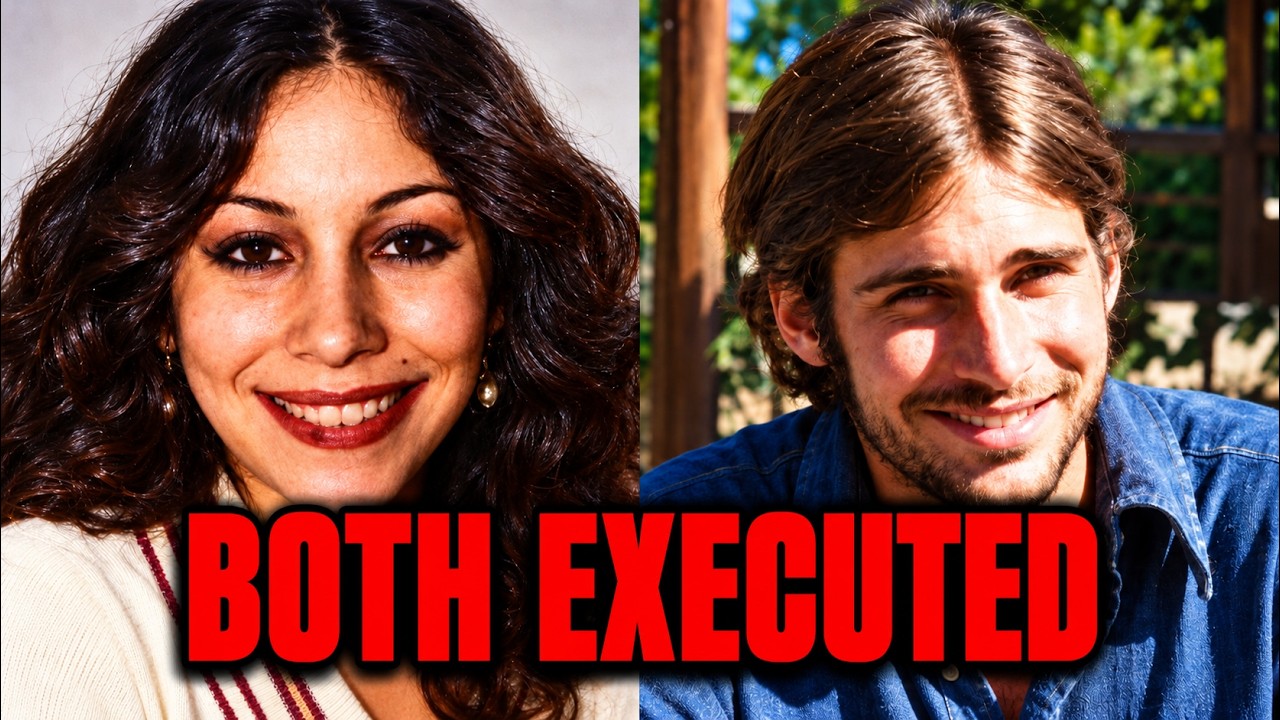
Gerritsen Beach, Brooklyn, July 24. A car sat parked on a residential street. Inside it was a young woman with a gunshot wound to the head. She was nineteen.
Her name was Sherry Golden, and she was John Quinn’s girlfriend. No account of her life mentions a criminal record. She was never charged with anything. So why did Sherry Golden die?
The reason was not that a car thief had been killed over suspected grand jury testimony. That question answered itself, and the men responsible would have explained it without a trace of embarrassment. The harder part was the second body. The version most people know is brief.
Roy DeMeo learned that John Quinn had talked, so DeMeo ordered both of them killed, and the girlfriend was simply collateral damage. That version is not wrong in its essence. But it is incomplete at the most important point, and the records it rests on are weaker than anyone repeating it admits. Three federal appellate opinions concerning the DeMeo gang trials were read in preparation for this account.
None of them names John Quinn or Sherry Golden. Roy DeMeo was born in Flatlands, Brooklyn, on September 7, 1940. He was lending money at interest while still a teenager, which was unusual for someone to excel at at that age. He also spent a stretch of time working as a butcher’s apprentice.
Both facts appear in every serious account of him, and both mattered later. The man who drew him into the orbit of the Gambino family was Anthony “Nino” Gaggi. Gaggi was a capo, with his own crew and his own obligations to those above him. The accounts date their association to the mid-1960s.
DeMeo spent more than a decade as an associate before he was formally made. Sources indicate this occurred in the mid-to-late 1970s, without agreeing on a specific year. Above Gaggi stood Paul “Big Paul” Castellano, who became boss of the Gambino family after Carlo Gambino died in October 1976. That structure is worth paying attention to.
DeMeo reported to Gaggi. Gaggi reported to Castellano. Money moved along the same path in the opposite direction, and so did problems. The money came mostly from cars.
A 1987 Second Circuit opinion in the case against Gaggi, Henry Borelli, Peter LaFroscia, and three others states it plainly. Late-model cars were stolen from the streets of New York City, then shipped to Kuwait, elsewhere in the Middle East, and to Puerto Rico and other states. That is a court record, not a legend. It is hard to size it precisely.
Secondary accounts say the crew stole four to seven cars a night, and that five active partners in the export side each cleared about thirty thousand dollars a week. Those numbers come from conflicting accounts, not from the legal opinion. The crew worked out of the Gemini Lounge, a bar on Flatlands Avenue. There was an apartment attached to it, reachable through a side door.
Government witnesses later described what the crew used that apartment for, and that description does not need to be repeated here. What matters to this story is simpler. The crew had a place a man could be taken to and never leave, and everyone in the operation knew it existed. John Quinn worked at the bottom of that operation.
He stole the vehicles and delivered them. He was not a made member of anything, not a nephew of anyone. He was paid per car, the most replaceable position in an illegal business, and also the most exposed, because the man who actually steals the vehicle is the first one the police arrest. Even his basic details do not line up.
Most compilations say he was thirty-four. A 1977 newspaper index entry lists John W. Quinn, thirty-five, of Farmingdale, Long Island. The clipping behind that index could not be accessed, so the age and the home address remain unresolved.
Sherry Golden is harder than that too. She was nineteen. She lived in Brooklyn. A newspaper index entry suggests that she and Quinn left her family home together on the night of July 20, 1977, in a silver Lincoln Continental, but that clipping sat behind a paywall and was not read, so the car and the address remain on the unconfirmed side.
Apart from her age, her name, and her relationship to Quinn, the public record of her life is nearly empty. And the men who kept the lists afterward did not consider her a problem worth explaining. A crew like DeMeo’s was not a division of the Gambino family. It was a business that paid rent.
Gaggi took a share of what DeMeo produced and passed part of it upward, and in return DeMeo got something more valuable than protection. He got standing. The man behind him was a capo who could collect debts no one else could collect, and deliver threats that were believed as soon as they were heard. That arrangement lasts only as long as the money lasts.
Nothing in it is a promise. DeMeo did not live like the characters in the stories. He owned a house on Long Island, with the property in his wife’s name. He had children.
His son Albert turned seventeen on January 10, 1983, and that date will return before the end. The detail that sticks in the minds of those who read the trial testimony is domestic and strange. DeMeo had a chandelier from his house that he intended to fix. He carried it with him in his car in his final days, the way a man postpones an errand for weeks.
He was also, according to witnesses who later testified against the crew, capable of sending his men to pick up pizza while “work” was being done in the back of the Gemini. That combination is not a contradiction in his case. It is the full explanation of why he lasted. A man who treats the worst hours of his week like routine errands will not hesitate and will not apologize, and a leader can rely on him.
Castellano reportedly resisted making DeMeo a made man for years on the grounds that he was too violent to control. Castellano kept taking the money anyway. The rule that killed John Quinn had been written two years before his death. On Friday, June 13, 1975, the crew kidnapped and killed a man named Andre Katz.
Katz was at odds with the crew, and by most tellings he had testified before a grand jury about the stolen-car trade. That slaying is frequently called the crew’s first joint killing, with other versions listing Henry Borelli, Chris Rosenberg, Joseph Testa, and Anthony Senter as taking part. None of the court records examined for this account characterizes that night in those terms. The roles, then, stay as reports rather than established fact.
What the Katz murder accomplished was to establish a price. A man who tells a grand jury about the cars receives no warning, no beating, no reassignment. He vanishes, and everyone around the operation grasped the reason. Two years on, John Quinn landed in legal difficulty of his own.
Every account available states that Quinn testified before a grand jury or was believed to have given investigators information about the crew’s car operation. The references say as much, pointing to the 1977 New York Times coverage. Compilation sites repeat it as well. All of them appear to trace back to that contemporary report and to a 1992 book about the crew.
No grand jury transcript, indictment, or court ruling naming John Quinn as a witness turned up. The motive is reported consistently and from more than one quarter, yet it stays unconfirmed. There is also a second possibility the records cannot rule out. The crew does not always wait for evidence.
It only needs to believe. Put the question again now that the mechanics are plain. Why Sherry Golden? The answer most people give is that she knew too much.
That phrase turns up in nearly every account, and for three words it carries an enormous load. Knew too much about precisely what? Not the export ring. Nothing in any account places her close to it.
That is the snare built into keeping company with a crew like this. The organization never has to judge whether a person is dangerous. It only has to observe that the person is positioned to become dangerous, a far lower bar, and one nobody can talk their way past. A crew member suspected of talking could at least be called in and questioned.
For him there were procedures, however grim. For anyone outside, there were no procedures whatsoever. Sherry Golden held no standing in that structure. She was not a member, not a source of income, not kin to anyone.
If she passed the night of July 20, 1977 in a car with John Quinn, and if Quinn was abducted that night, then she was a person who could describe faces, a vehicle, and a sequence of events to investigators. Her intentions counted for nothing. The reckoning was never about what she might do. It was about what she could be forced to do under subpoena, under oath, with her boyfriend already buried.
That is how a nineteen-year-old girl becomes a line item. The second half of the reckoning is more ordinary and more cold-blooded. Killing her was inexpensive. She had no protector, no crew, no boss to answer to.
There would be no sit-down, no accounting, no explanation demanded of anyone. The institution that would have required answers for one of its own required nothing at all for her. Two conditions had to hold for both deaths to occur. One made them permissible.
The other made them simple. What is known about the night of July 20, 1977 is this. Quinn was shot once in the back of the head. His body was discovered on a road in Dongan Hills, Staten Island, a strange spot for a Brooklyn car thief’s evening to finish.
The caliber reported at the time was .32. Golden was shot three times in the head with a .38, according to the same reports, and her body was found inside a car in Gerritsen Beach, Brooklyn, on July 24.
Two different calibers is the single most telling fact in the whole physical record. It means more than one weapon, which in practice means more than one hand. Whatever befell John Quinn and Sherry Golden was not one man with one gun and one grievance. It was a group of people carrying out a job.
No court ever determined who those people were. Compilation sites list six men as present: Roy DeMeo, Henry Borelli, Peter LaFroscia, Chris Rosenberg, Joseph Testa, and Anthony Senter, a pair of crew members known as the Gemini Twins. One of those sites asserts that Senter personally shot Sherry Golden. The site offers no source for it.
The three appellate opinions covering the federal prosecutions of this crew, in 1987, 1988, and 1992, mention neither victim’s name. No text can responsibly turn Senter from an unsourced internet attribution into a fact, and this one will not. The same restraint applies to the very title of this account. DeMeo had both of them killed as a statement about authority, not about who pulled the triggers.
He ran the crew. The crew did it. On that much every account agrees. Which hand held which gun is a question the courts never answered, because the courts, so far as any available opinion shows, never took up these two deaths at all.
Something else about that July accounts for the quiet that followed. New York City went dark on the night of July 13, 1977, a week before Quinn’s death, and the blackout turned into a night of widespread looting and arson. The “Son of Sam” shootings were still unsolved, and David Berkowitz was not arrested until August 10. Two bodies in the outer boroughs, one of them a known car thief, had all of that to compete with.
The coverage that survives is brief. That is context, not explanation, and nothing in either case was ever tied to either event. Castellano’s reaction is reported, and the report merits mention with its weaknesses noted. Secondary accounts say the murder of a nineteen-year-old girl made Paul Castellano uneasy, that he judged it reckless and bad for business.
None of those accounts cites a text, a recording, or a witness for that. The claim arrives through the same chain of books and accounts as everything else here. What cannot be disputed is the outcome. DeMeo kept his crew, kept his operations, and kept earning money for another five and a half years.
The boss who was uneasy and did nothing had, in effect, refused nothing. He was quoted a price and found it acceptable. The killings themselves have to be pieced together from very little, and the limits should be set out before beginning. No witness testimony from that night was ever made public.
No one was ever tried for it. What follows is merely the sequence the stated facts force, with nothing added. A summer night. A car holding two people, a man of about thirty-four and a girl of nineteen.
Men Quinn knew, because a car thief does not walk into a situation like that among strangers. Then the drive to Staten Island, which was already the end of it, whether Quinn realized it or not. A road in Dongan Hills empty of everything. One shot from behind, into the back of the head.
No struggle was noted. No second wound anywhere on his body was documented. The body was abandoned on the roadway, fully exposed, certain to be discovered within hours. That, too, was a choice, since this particular crew had a reputation for making people vanish without a trace.
Quinn was intended to be discovered. Here is the detail held back at the beginning. The records covering both deaths assign them to the same night, July 20, 1977. Sherry Golden’s body was not located until the 24th.
If those dates hold, she was killed within hours of Quinn and then left where she fell for four days, inside a parked car on a residential street. Three shots to the head, fired from a different weapon than the one that killed her boyfriend. Whether she died that night or afterward has never been publicly settled by anything more substantial than a registry entry. The sequence of discovery is the reason the story has always been recounted this way.
Quinn first, on a road, plain. Four days later, in a car, without explanation. By the time anyone linked the two, the only people who could have described the relationship had every reason to stay silent forever. Nothing was done about it for years.
The crew went on stealing cars. In the summer of 1980, federal and state agents raided a Brooklyn warehouse in what came to be called Operation Empire Boulevard and arrested crew members, among them Henry Borelli and the crew’s driver, Frederick DiNome. It was the car business that finally built a case. Not the bodies.
On January 10, 1983, his son’s seventeenth birthday, Roy DeMeo was shot dead. Ten days later his body was discovered in the trunk of his Cadillac at the Verona boat club in Brooklyn. He had been shot several times in the head, with a wound to one hand showing he had tried to shield himself. The chandelier he had been carrying lay in the trunk next to him.
Who killed him remains speculation, not proof. The standard version holds that Castellano turned against him, and that Gaggi, his mentor of nearly twenty years, arranged or carried it out. A later account attributed to Lucchese figure Anthony “Gaspipe” Casso named Testa among the shooters. That account came from a single man describing a killing he never witnessed, and it was never established in any courtroom.
Then came the prosecutions, in the order they always arrive. Money first, murder second. In 1984, a federal indictment of seventy-eight counts named twenty-four defendants, Castellano and Gaggi among them. The car export trial lasted five and a half months and concluded in April 1986 with convictions of Gaggi, Borelli, LaFroscia, and three other defendants, which the Second Circuit upheld in January 1987.
Frederick DiNome, the government’s chief witness in that trial, died in an apparent suicide while the jury was still deliberating, a fact the appellate court itself noted. In June 1989, Anthony Senter and Joseph Testa were convicted in Brooklyn federal court of racketeering and ten counts of murder out of the eleven charged. Both received life sentences on September 14, 1989. The Second Circuit affirmed those convictions in 1992.
John Quinn’s name and Sherry Golden’s name appear nowhere in that ruling. Here is the answer to the question, narrower than the legend and colder than anything the court ever stated. Roy DeMeo did not make two decisions in July 1977. He enforced one rule, and that rule cost two lives.
The rule was that a man who could describe the car operation to a grand jury no longer existed, and that had been settled two years earlier with Andre Katz. Sherry Golden was not a second decision. She was the first decision completing itself, because she was in the car. And a rule like that does not stop at the person it targets.
No one above DeMeo needed to approve it. No one below him needed detailed instructions. Gaggi did not have to ask, and Castellano, by every available account, learned of it afterward and felt only discomfort. That is how power actually moved in this organization, through anticipation, not through orders.
Then comes the colder half. No one was ever charged with murder in either case. Not DeMeo, who was dead by 1983. Not Senter or Testa, who went to prison for life under entirely different names.
Both deaths were folded into a single total, as an entry on a list exceeding seventy names. And the legal machinery that finally dismantled this crew never touched these two cases at all. There is one last irony, and it concerns the institution itself rather than anyone in this story. John Quinn was killed to keep him from testifying.
Within eight years, the government was building its cases on precisely that. A car thief on the witness stand describing the nature of the work. The crew’s own driver turned witness. A line of men who sat at the Gemini and decided they preferred talking to waiting.
The method designed to guarantee silence is the same one that produced the witnesses who ended it, because every man they terrified was also a man who had seen too much to be safe. A road in Dongan Hills. A car in Gerritsen Beach.
Of all the people in this story, the one about whom the record says the least is the only one who was never accused of anything.
