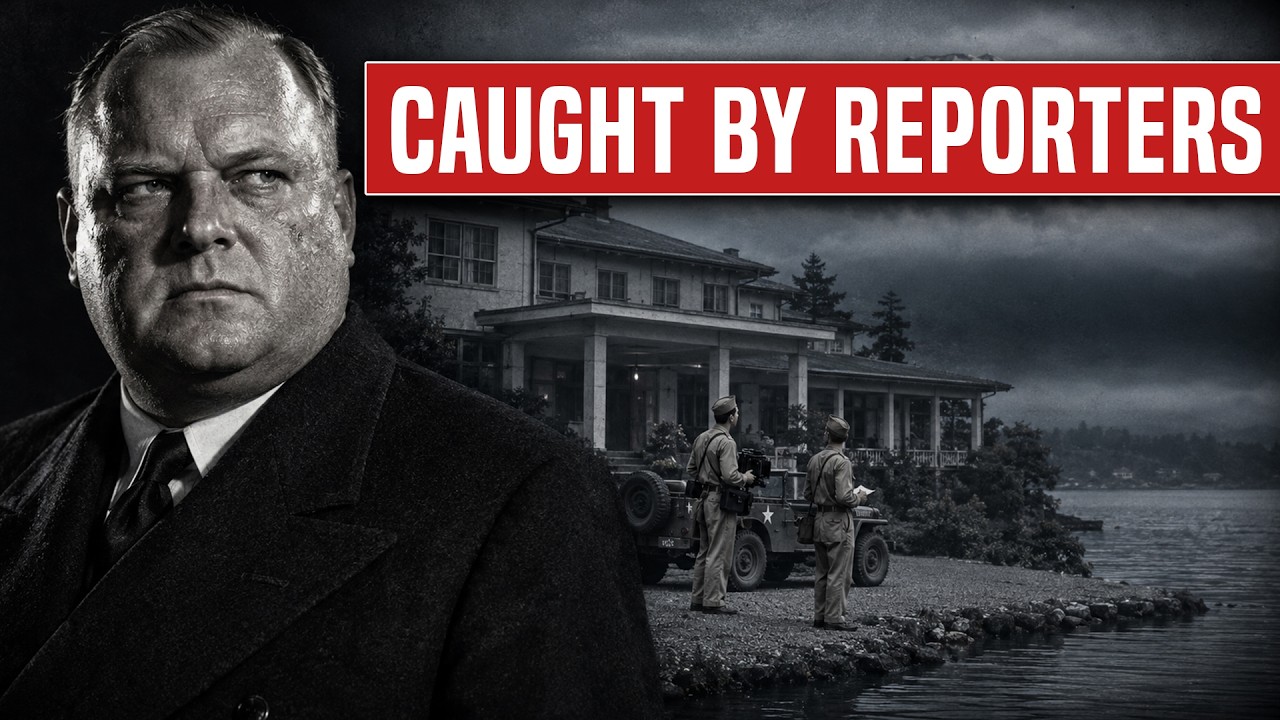
In September 1945, days after Japan’s formal surrender, an American war correspondent named Clark Lee told an Army colonel that he was going to drive to a lakeside resort hotel the next morning to bring in the butcher of Warsaw, the number one Gestapo man in the Orient. The colonel replied that he had never heard of any Misinger. Lee went anyway. The man he sought was Josef Meisinger, a colonel of police and of the SS, a Bavarian in his mid-forties who spoke neither English nor Japanese.
He had been sent halfway around the world to a country whose language he could not follow. The question of why he was there at all had puzzled and outraged people for years. Meisinger came out of the Munich criminal police. Through the 1920s he worked counterfeiting cases and the moral squad, the files on homosexuality and abortion.
When Reinhard Heydrich took the Bavarian political police to Berlin in 1934, Meisinger went with him, along with Heinrich Müller and Franz Josef Huber. Historians later called them the Bavarian Brigade. From 1936, Meisinger ran the Reich office for combating homosexuality and abortion. In 1938, he found the file that was supposed to finish the army’s commander-in-chief, Werner von Fritsch.
He brought Heydrich a witness who swore he had seen the general in a compromising act years before, and the regime seized on it to force him out. At the military court that followed, the witness turned out to have confused him with a retired cavalry officer named von Frisch. The difference between the two names was a single letter. Meisinger had traveled as far as Egypt hunting for evidence, and none of it led anywhere.
Fritsch never got his command back. In September 1939, Meisinger went into Poland behind the army as deputy commander of one of the SS killing squads, the Einsatzgruppen, and then as security police chief for the Warsaw district. The judgment against him, reported in the press in March 1947, lists the places where his office did its work: the headquarters building on Szucha Avenue, the Pawiak prison, the deportations to the camps, the torture. Between December 1939 and the summer of 1941, the Palmiry forest outside the city took the shootings of the so-called AB operation.
Politicians, lawyers, teachers, and athletes were driven out from the city and shot among the trees. Poland’s National Remembrance Institute later counted some 1,700 dead. Walter Schellenberg, who ran foreign intelligence for the SS, later wrote that Heinrich Himmler had once wanted Meisinger court-martialed and shot. Schellenberg’s version is that he assembled a thick file on Meisinger’s behavior in Warsaw, that Himmler ordered the man executed, and that Heydrich stepped in because Meisinger knew too much.
The cure was distance. A post as police attaché in Tokyo would put him five and a half thousand miles from anyone he could embarrass. Schellenberg wrote all this after the war with his own name to protect, and he was not a neutral witness about anyone. The files in Berlin show the other half of the story.
On the 5th of March 1941, Himmler presented the appointment to the Japanese ambassador in Berlin, General Hiroshi Ōshima, describing Meisinger as a man trained for the struggle against Bolshevism. Instead of a firing squad, he got an embassy. He arrived in Tokyo while Ambassador Eugen Ott was away, and a State Department report written in 1946 says that early in 1941 he took up residence with Ott. His job, as he explained it to the Kempetai, the Japanese military police, was to be Himmler’s representative in the country.
His interpreter told American investigators after the war that Meisinger described his task as finding the anti-Nazis among the German residents and reporting them to the police. Some of his telegrams to Berlin went out under two names, his and the ambassador’s. One from July 1942 survives in the Foreign Office archive with both names at its head. He also made a friend.
Richard Sorge was a German newspaperman with a desk in the embassy, the ambassador’s confidant, a famous drinker, and, as it turned out, the most successful Soviet spy in Asia. Schellenberg says he briefed Meisinger about Sorge’s past before he left Berlin, and that his reports on the man were always favorable. The two drank together. One of Sorge’s biographers writes that the policeman moved into a suite that had belonged to Sorge’s lover, the harpsichordist Ama Ishii, and that Sorge kept a key and went through the reports the Gestapo man was writing about him.
Tokyo police arrested Sorge on the 18th of October 1941. According to the State Department report, Ott and Meisinger at first tried everything they could to get him released. Then a telegram arrived from Manchuria that made the case impossible to argue, and the Gestapo man, with the ambassador’s agreement, handed the Japanese the file on Sorge’s communist past. MacArthur’s intelligence chief, Charles Willoughby, put it in harder words: Meisinger got the dossier from Berlin, gave it to Tokyo, and saved his own political skin.
Ott lost his post over the affair. Meisinger kept his. Inside Japan, his work on the German community is well documented. In the autumn of 1942, the historian Hakan writes, he handed the Japanese authorities a list of anti-Nazis that included every Jew in Japan holding a German passport.
An industrialist named Willie Förster was arrested in May 1943 at his instigation. A journalist was denounced as another Sorge. In July 1944, the Japanese police picked up a Jewish businessman named Hugo Frank at Gora in the Hakone Hills, and Frank died after torture and imprisonment. Historians count the case among the work of Meisinger’s office.
In the summer of 1944, with American bombing coming, most of the embassy moved out of Tokyo to the Fuji View Hotel on Lake Kawaguchi, a western-style resort at the northern foot of Mount Fuji. When Germany surrendered in May 1945, the Japanese Foreign Ministry stopped all embassy business, and the staff, about seventy of them, were held at the hotel. Meisinger was among them. Willoughby wrote later that he was still the Gestapo’s representative in Japan on the day Germany capitulated.
The story most often told about Meisinger concerned Shanghai, where some 18,000 Jewish refugees from central Europe were living under Japanese occupation. The claim is that in the summer of 1942, he went to Shanghai with a proposal to kill them. It appeared in a 1979 book, The Fugu Plan, and has been repeated in many places since. Whether it is true is a real question.
The extermination story rests in the end on one witness, a former Japanese vice-consul named Mitsugi Shibata, interviewed by the book’s authors in the 1970s. In his telling, Meisinger proposed rounding up the refugees on the Jewish New Year and either setting them adrift on old ships, working them to death in salt mines, or holding them on an island for medical experiments. The money is real, too. On the 13th of August 1942, 20,000 Reichsmarks were sent to Meisinger for special expenses in Shanghai, and in November he asked for funds for what he called his Shanghai apparatus.
What happened to the refugees is documented as well. On the 18th of February 1943, the occupation authorities ordered stateless refugees into a designated area in the Hongkew district, a ghetto in all but name. A 2024 study in the journal Holocaust Studies concludes that the Meisinger plan probably did not exist. The historian Kenji Kano, who went through the files in Tokyo, calls it fiction.
The historian who found the money says it has not yet been proven beyond doubt. The ghetto is in the proclamation itself. In the first week of September 1945, Lee took with him Bob Brumy of the Mutual Broadcasting System, a newsreel cameraman named John Bochhorst, and two Army photographers who spoke German, one of them Fred Malwitz. It was a four-hour drive, and they lost half an hour on the wrong road around the lake.
At the local Japanese police headquarters, the police captain knew exactly whom they were after and warned them the man was dangerous. At the hotel, the embassy counselor in charge of the Germans came out to meet them. He was Dr. Boltze, the same man who had signed the telegram announcing Meisinger’s arrival four and a half years before, and he told them the Germans meant to stay there for the winter.
Lee said they had come for Meisinger. The counselor’s face, Lee wrote, went white, and his teeth chattered. Their man was downstairs. The Americans wrote out one note in English and another in German.
A Japanese room boy carried both down the stairs to his room, and Malwitz took a place behind a pillar on the porch roof with the stairway covered. Then, sooner than any of them expected, Meisinger walked into the empty dining room, and Malwitz searched him at the head of the stairs. The Army photographers filmed what came next, and the footage survives in the Signal Corps collection under a title that calls him the butcher of Warsaw and dates it to the 6th of September 1945. Lee asked him whether he knew he was called the butcher of Warsaw.
Yes, I know. But he began to talk about the killings. He said he had heard that a few people were killed. Then he signed a note saying that he had surrendered that day to Lee, Brumy, Bochhorst, and a party of Americans, and through the interpreter he began to talk about American justice.
On the drive back he was chatty and good-fellowish, in Lee’s phrase, and Lee found that he could not stand to sit beside him. He had the jeep stopped and rode the rest of the way perched on the hood on top of the prisoner’s cheap suitcases, three thousand feet up in the hills. In Yokohama, they handed him to the Counter Intelligence Corps. What Thorp’s men did with him for the next two weeks is the part of the story where skill met skill.
Meisinger had spent twenty years asking the questions. In Warsaw, his office had run the interrogation cells on Szucha Avenue, and in Tokyo he had built the lists that sent men to the Kempetai. Now the questions came from the other side of the table. Two correspondents, Frank Kelley and Cornelius Ryan, reported that the Counter Intelligence Corps had him in the chair every day for two weeks, twelve hours a day.
Thorp told them there was not a thing on his mind that the Americans did not know, and added that Josef had lost a little weight but was much happier now. Time magazine listed him that month among the first war crimes suspects in the Yokohama jail. On the 13th of November 1945, an Army film crew recorded him being taken across the airfield at Atsugi to an Army cargo plane guarded by two Counter Intelligence officers. Kelley and Ryan describe a man of about 260 pounds, half carried and half dragged, trembling and weeping.
He was flown to the United States and then to Frankfurt in 1946. The Americans handed him to Poland. The trial opened before the Supreme National Tribunal in Warsaw on the 17th of December 1946. Beside him in the dock sat Ludwig Fischer, the German governor of the Warsaw district, and two other officials of the occupation.
A newspaper reporter in the courtroom described Meisinger under the film lights as perfectly at ease, his eyes moving between the floor and the judge’s bench. The verdict came on the 3rd of March 1947. It found him guilty of membership in the SS and the Gestapo in the Reich, in Poland, and in Japan up to the 8th of August 1945, which the court took as the end of the war with Japan. It sentenced him to death.
On the morning of the 8th of March 1947, at the prison on Rakowiecka Street in the Mokotów district of Warsaw, the prison staff hanged the three condemned men in the order the protocol set out. Fischer first, then Meisinger, then the former Warsaw police commander Max Daume. The protocol gives Meisinger’s death at 7:35. Some sources give the date as the 7th, and the protocol held by Poland’s National Remembrance Institute gives the 8th.
A camera filmed the execution, and no one has ever released the film. No one has found his grave.






