The morning of November 14th, 1877, began with a humidity that settled over the Great Lakes Canal construction site like a warning. Henry Marian stood by his flagship steam shovel, watching condensation form on 114 individual steel wires that made up the hoist cable, each one part of a system European engineers swore would collapse in catastrophic failure. The machine had run for over 300 consecutive hours without a single breakdown, and its distributed load cables had moved more than 1,200 tons of earth daily, triple what the best European chain-driven shovels could manage before their rigid links snapped under stress. James McCarthy, the construction supervisor who had kept the crew accident-free through three chain system failures, stood beneath the lift trajectory coordinating ground crews.
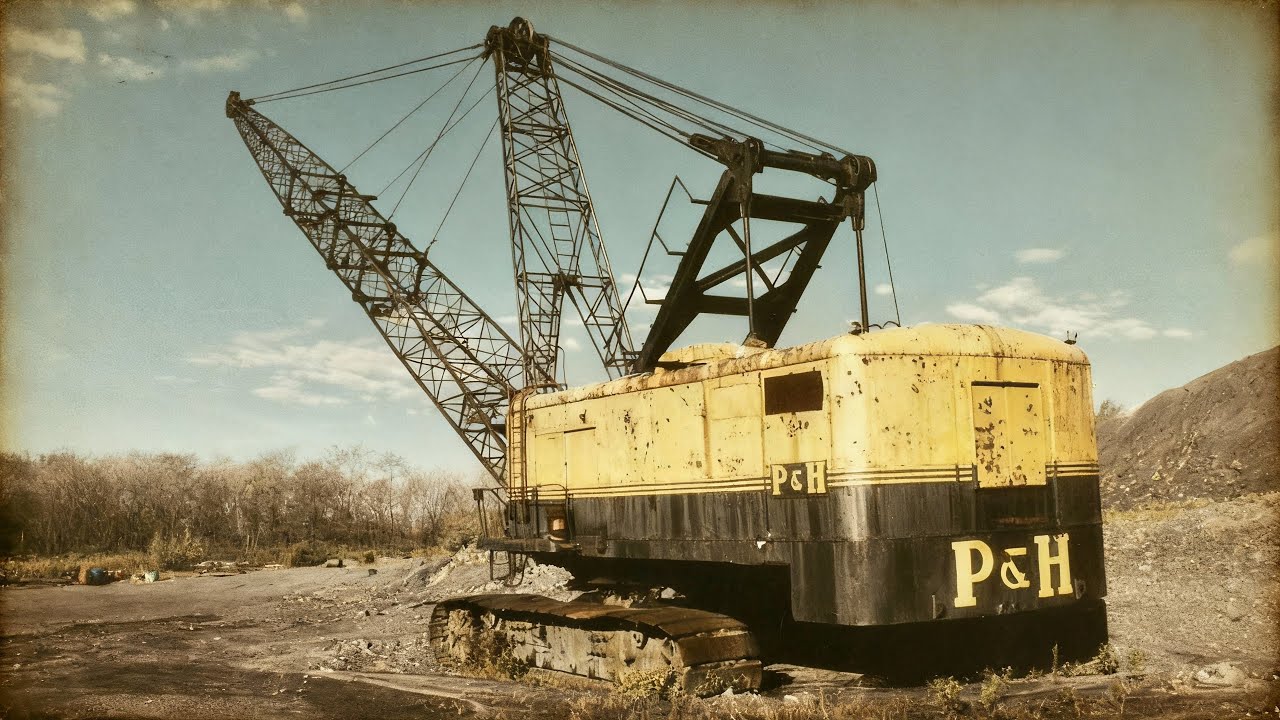
The limestone ledge before them extended 47 feet horizontally and rose nearly 12 feet above the canal floor, the hardest material the wire rope technology had ever encountered. Geological surveys revealed internal fractures that made conventional excavation hazardous, and the chunks breaking free weighed far more than normal bucket loads, some approaching four tons. At 10:47 in the morning, Timo Sullivan positioned the bucket to engage a limestone chunk estimated at approximately four tons. Sullivan had operated steam shovels longer than anyone on the project, his hands reading vibrations and stress patterns through the controls like a musician feeling rhythm.
The wire rope handled the load normally at first, 114 individual strands sharing the stress exactly as John Roebling’s engineering principles intended. Cable tension gauges showed readings within normal parameters while steam pressure remained steady as the bucket began its upward movement. The failure came in three seconds. Sudden geological shifting caused the limestone chunk to twist during extraction, creating lateral forces the terminal connections were never designed to handle.
The load concentrated on the cable end fittings rather than distributing across the full rope circumference, and terminal stress exceeded the rope’s rated capacity by nearly 30 percent. All 114 wires failed simultaneously as the fittings pulled apart. The four-and-two-tenths-ton limestone chunk plummeted 37 feet into the canal bed, carving an impact crater eight feet across and penetrating 18 inches into bedrock. The massive bucket followed, adding to the destruction.
James McCarthy was standing directly in the path of the falling debris. He was crushed beneath limestone chunks with enough force to cause instantaneous death, the worst accident in the canal’s construction history. Henry Marian had built his entire career on the belief that American wire rope technology could outperform the European chain systems that had dominated excavation for decades. The canal project itself was America’s boldest engineering gamble, a waterway that would connect Lake Erie directly to Ohio’s richest coal fields, bypassing the expensive railroad monopolies that strangled industrial growth.
Eight hundred forty-seven tons of coal needed to move through that channel daily to fuel the expanding railroad network stitching the continent together. But the European steam shovels that dominated American construction could barely manage 340 tons before breaking down completely. Their rigid chain systems failed catastrophically under the constant stress of moving Ohio’s stubborn clay and limestone. Traditional chain-driven shovels from Boston’s finest manufacturers collapsed every six weeks.
Marian had watched three men die in a similar chain failure during his Pennsylvania railroad days, crushed when a locomotive hoist gave way without warning. The memory drove him to question every piece of equipment that depended on single point of failure designs. The source of his confidence was a letter from John Roebling’s wire rope factory in Trenton, New Jersey. Roebling had revolutionized suspension bridge construction by replacing hemp ropes with twisted steel cables, and his latest innovation promised to transform excavation machinery.
Instead of solid chains that failed completely when any single link broke, Roebling’s wire rope distributed loads across 114 individual steel wires woven into six strands of 19 wires each. If ten wires snapped, the remaining 104 continued carrying the load. Sullivan had been skeptical when Marian first showed him Roebling’s technical drawings. “Looks complicated, Henry.
More parts means more things to break. ”
“Or more ways to stay working when something does break,” Marian countered. European engineers built systems that worked perfectly until they failed completely. American innovation might build systems that degraded gradually, giving operators warning and time to react.
It was a principle Sullivan himself would feel through the controls, wire rope providing continuous feedback about system stress levels while chains offered only binary feedback: they either held or broke. The opposition to Marian’s methods was formidable. Wilhelm Hoffman, the Prussian-trained engineer whose encyclopedic knowledge of classical engineering principles commanded respect at every inspection, had declared wire rope systems mechanically unsound for excavation work. “The flexibility that makes them suitable for static bridge applications becomes dangerous under dynamic loading,” he told gathered supervisors after examining a broken chain hoist.
“When, not if, these overcomplicated cables fail, they will kill workers and bankrupt this project. ”
Sir Charles Peton, the Cambridge-educated project supervisor with institutional authority to approve or reject any technical modification, aligned himself naturally with European methods. “The double drum chain hoist system pioneered by established manufacturers represents proven technology,” he declared when Marian presented his wire rope proposal with detailed cost analyses and performance projections. “I cannot authorize experimental methods when worker safety and project completion depend on reliable equipment.
”
His report to the canal’s financial backers described Marian’s wire rope idea as dangerous improvisation by contractors unfamiliar with proper engineering principles. Within 48 hours, Marian’s financial supporters began withdrawing their commitments. By month’s end, he faced $23,000 in debt, 200 unemployed workers, and a half-built canal that European engineers called impossible to complete with American methods. Marian converted every remaining asset into a single catastrophic gamble: the largest wire rope order in American industrial history.
Forty-seven thousand feet of steel cable would either vindicate his engineering vision or complete his professional destruction. Roebling’s factory operated with methodical German precision. Marian watched six separate wire drawing operations feed raw steel into the twisting mechanism that would create his revolution. The new 80-ton wire rope machine dominated the main production floor, its massive spools capable of producing 30,000 feet of continuous cable without the weak splices that had plagued earlier attempts at long-span construction.
“Your specifications call for 1 and 1/2 inch diameter cable with six strands of 19 wires each,” Roebling said, consulting the engineering drawings. “The 6×19 construction creates perfect hexagonal strand patterns, but I must warn you about the cost implications. This represents more steel cable than my factory typically produces in 3 months. ”
The wire rope would cost three times more than equivalent chain systems.
But Marian had calculated that if his performance projections proved accurate, the investment would pay for itself within six months through reduced downtime and increased excavation capacity. “Can your machine produce the full order as continuous lengths? No splices, no weak points? ”
“Continuous production up to 10,000 feet per cable run,” Roebling confirmed.
“But I need your guarantee that these cables will be properly terminated. Wire rope strength depends entirely on end fittings that distribute loads across the full cable circumference. Improper termination can reduce rope strength by 30 percent or more. ”
Marian spent three days at the Trenton factory learning every aspect of wire rope construction and installation.
Each wire strand consisted of 19 individual steel wires twisted in a precise helical pattern with three different wire gauges combined to create maximum strength and flexibility. The six strands were then twisted around a steel core in the opposite direction, creating a rope structure that became stronger under load rather than weaker. The first shipment arrived on a muggy July morning, 23,000 feet of steel cable coiled on massive wooden spools. Sullivan and the remaining crew gathered around with the mixture of curiosity and skepticism that greeted every departure from established methods.
“Looks like ship’s rigging more than excavation equipment,” Sullivan observed, running his hands along the cable surface. “How’s this supposed to handle two-ton bucket loads when it bends like hemp rope? ”
Marian rigged a test apparatus using the factory’s strongest overhead beam, suspending a three-ton load from a single wire rope sample. The cable stretched slightly under load but showed no signs of distress.
When he added an additional half-ton, the wire rope continued holding steady, showing measurable but manageable elongation. The conversion of Marian’s first steam shovel took 18 days of precise mechanical work. Every chain component required replacement with wire rope equivalents, from the main hoist cables to the auxiliary drag lines. The drum systems needed modification to accommodate wire rope’s different winding characteristics, and operators required training to recognize the subtle performance differences between cable and chain systems.
The prototype shovel’s first operational test began at dawn on August 15th. Marian positioned himself at the controls while Sullivan and McCarthy monitored the wire rope systems for any signs of stress or malfunction. The initial bucket load, one and a half tons of Ohio limestone, lifted smoothly with none of the jerking motion that characterized chain-driven systems. The wire rope’s inherent flexibility absorbed shock loads that would have stressed metal chains to their breaking point.
By noon, the performance differences had become undeniable. Marian’s wire rope shovel lifted 2. 3 tons per bucket, 40 percent more capacity than European chain systems. The distributed load structure eliminated the sudden stress spikes that caused chain failures, allowing operators to work at maximum capacity without fear of catastrophic breakdown.
After six hours of continuous operation, the wire rope system showed no signs of fatigue. Word spread through Ohio’s industrial community. Railroad contractors, canal builders, and mining engineers began arriving at the site to witness wire rope technology firsthand. By September, the prototype had achieved 73 consecutive operating days without system failure, a performance record no chain-driven shovel had ever approached.
The arrival of Hoffman Engineering’s Model 1876 steam shovel transformed the Great Lakes Canal project into America’s most watched industrial competition. The massive European machine dominated the construction site like a mechanical cathedral, its 3. 5 cubic yard bucket dwarfing Marian’s wire rope prototype by nearly 50 percent. Wilhelm Hoffman had designed this machine specifically to demonstrate American methods’ inferiority, incorporating every refinement that Prussian engineering could devise.
Its double drum hoist system featured hardened steel links manufactured to tolerances measured in thousandths of an inch, and its main boom stretched 68 feet from pivot to bucket. “This machine will settle the question permanently,” Hoffman announced to the crowd of engineers and contractors gathered for the public demonstration. “European chain systems represent mature technology perfected through generations of practical application. American wire rope experiments cannot compete with proven engineering principles.
”
Sir Charles Peton had approved the demonstration as a definitive test of excavation methods, positioning both machines side by side in the canal’s deepest section where 83 feet of limestone and clay awaited removal. Spectators lined the canal banks while newspaper reporters documented every detail of what industry publications called the Great Excavation Trial. The competition began at sunrise with both machines attacking the limestone face simultaneously. Hoffman’s European shovel initially demonstrated clear advantages.
Its massive bucket bit deeper into the rock while generating digging forces that Marian’s smaller machine could not match. But the performance gap became measurable as working days accumulated. Hoffman’s machine initially moved more material per hour, but increasing chain wear began reducing operational efficiency. Stretched chain links created alignment problems that required constant adjustment, while worn pivot points introduced mechanical sloppiness that affected digging precision.
By the sixth week, the European machine required daily maintenance that reduced actual working time to fewer than eight hours per day. Marian’s wire rope shovel maintained consistent performance throughout the competition period. Individual wire breaks occurred occasionally, visible as slight fraying at stress points, but the distributed load system continued operating without performance degradation. The machine typically operated ten hours daily with routine lubrication and tension adjustments that required minimal downtime.
The catastrophic moment arrived during the competition’s eighth week. Hoffman’s main hoist chain, stressed by weeks of maximum loading cycles, reached its fatigue limit while lifting a 2. 1-ton load of broken limestone. The failure began at a single link that had developed microscopic cracks invisible to visual inspection.
Once that link snapped, the entire chain system collapsed instantly. The loaded bucket crashed into the canal bed with enough force to crack the underlying bedrock, while the sudden load release damaged steam engine components and bent the main boom structure. Marian’s wire rope shovel continued operating through the European machine’s destruction. European chain technology had failed catastrophically while American wire rope methods continued working without interruption.
By autumn’s end, Marian operated his wire rope shovel for 318 consecutive hours, moving 1,247 tons of material while Hoffman’s European machine sat disabled, awaiting replacement parts that would require months to manufacture and ship from German factories. The limestone ledge that would destroy Marian’s reputation had been resisting excavation for three weeks, its crystalline structure harder than any material the wire rope shovels had previously encountered. The flagship shovel had been operating flawlessly for eight months, its performance record silencing European critics. Industrial observers from across America made regular pilgrimages to witness wire rope technology firsthand, and Marian’s order books filled with contracts that represented the future of American excavation.
The morning of November 14th brought the humidity that McCarthy recognized as dangerous. He postponed the day’s most challenging lifts until conditions improved, but the limestone ledge continued blocking canal completion with each passing day, costing the project hundreds of dollars. Financial pressure from investors demanded progress while construction crews waited for resolution before beginning final grading operations. Marian made the decision to proceed with excavation despite environmental concerns, calculating that wire rope’s distributed load advantages would overcome the marginal increase in operating risks.
When the terminal connections failed and James McCarthy died, the tragedy transformed a routine excavation operation into the worst accident in canal construction history. Wilhelm Hoffman arrived at the disaster site within hours, his engineering team documenting every detail of the wire rope failure for a comprehensive report that would vindicate European chain technology. “American wire rope systems fail more catastrophically than chains,” Hoffman declared in his official report. “This technology is fundamentally flawed because it concentrates terminal stresses beyond safe engineering margins.
When distributed load systems reach their failure point, they collapse without warning in ways that endanger every worker in the immediate area. ”
The aftermath brought complete work stoppage as state investigators examined every aspect of the accident. Marian faced criminal charges for criminal negligence, with prosecutors arguing that his experimental wire rope technology created unnecessary risks for workers. The canal’s financial backers withdrew support immediately.
But the detailed engineering investigation that followed revealed the true cause of the catastrophe. Wire rope failure had occurred not because of inherent technology flaws, but because improper terminal connections had reduced the cable’s effective strength by exactly 30 percent. The mechanical sockets that Roebling had specified for proper load distribution had been modified during installation to reduce costs, creating weak points that concentrated stress on inadequate end fittings rather than distributing loads across the full cable circumference as designed. The letter from Charles G.
Roebling arrived at Marian’s temporary office three weeks after James McCarthy’s funeral. The younger Roebling had spent months analyzing the canal disaster, applying metallurgical principles his father had developed for suspension bridge construction to the specific challenges of excavation equipment. His proposed modifications addressed the terminal connection failures that had killed McCarthy and destroyed Marian’s reputation. The improved sockets eliminated the cost-cutting modifications that had reduced cable strength by 30 percent, replacing them with mechanical sockets that gripped the full rope circumference and distributed terminal loads across every individual wire strand.
The new system required precision machining that would double terminal connection costs, but Roebling’s calculations showed the result would maintain 100 percent of the cable’s rated strength under any loading condition. Criminal charges still hung over Marian’s head while European engineers proclaimed wire rope technology permanently discredited. Hoffman’s comprehensive report had convinced most American contractors that distributed load systems represented dangerous experimentation that sacrificed worker safety for theoretical performance gains. Sullivan remained loyal despite offers from established contractors who used proven chain technology.
“The cable itself never broke, Henry,” he reminded Marian during their planning sessions. “Every wire held until the end fittings pulled apart. Fix the terminals and you fix the problem. ”
Marian invested his remaining resources in the terminal connection upgrades, working with a skeleton crew of volunteers who believed wire rope technology could overcome its initial setback.
The improved sockets required custom machining at Roebling’s Trenton facility, where each fitting was manufactured to tolerances measured in thousandths of inches and tested under loads exceeding operational requirements by 50 percent. The modified wire rope system underwent extensive testing before returning to canal construction. Marian personally supervised every lift, gradually increasing bucket loads while monitoring cable behavior for any signs of stress concentration or terminal slippage. The improved sockets performed flawlessly, maintaining full cable strength under dynamic loading conditions that had previously caused catastrophic failure.
Public rehabilitation began slowly as the upgraded shovels demonstrated consistent reliability throughout the winter months. Marian’s machines excavated the remaining canal sections without system failures, their performance gradually rebuilding confidence among contractors who had witnessed the earlier disaster. The wire rope shovels completed challenging geological formations that had defeated European chain systems, proving that proper terminal connections eliminated the safety concerns critics had raised. The breakthrough came during the canal’s final construction phase when Marian’s improved wire rope system achieved performance records that vindicated American engineering innovation.
The upgraded shovels operated from December 1877 through completion in July 1879, 583 consecutive working days with routine maintenance but zero system failures. This operational reliability exceeded anything chain-driven systems had ever accomplished, establishing wire rope technology as demonstrably superior to European methods. Industrial observers who had dismissed wire rope technology after the terminal connection disaster returned to witness the completed canal’s opening ceremonies. The waterway moved 1,200 tons of coal daily, triple the original design requirements and four times the capacity that European chain systems had achieved before their breakdown.
The completed Great Lakes Canal became a showcase for American engineering innovation, its success leading to wire rope adoption throughout the construction industry. Within two years, virtually all major American excavation manufacturers were converting their steam shovel designs from chain to cable systems, while European companies struggled to compete with outdated technology that could no longer match American performance standards. The Marian Steam Shovel Company, founded in 1884, became one of America’s dominant excavation manufacturers by building exclusively wire rope machines. Marian’s shovels later helped dig the Panama Canal, where 77 Marian machines outperformed European competitors using chain technology that had become obsolete.
The limestone ledge that had killed James McCarthy was finally removed using Marian’s improved wire rope system. Its extraction was completed without incident through proper terminal connections that distributed loads as Roebling’s original design intended. The tragedy that had threatened to end wire rope development ultimately led to engineering refinements that made distributed systems safer and more reliable than the chain technology they replaced.
