During the summer of 1908, Abertridwr, a tiny Welsh mining village, was the sort of place where every resident followed everyone else’s affairs, and the Lawrence family of five Aberffwr Terrace was certainly no exception. Seven people squeezed into just two bedrooms, yet the household was both comfortable and decent. The father, William Lawrence, worked aboard ships out of Cardiff docks and was frequently at sea. To keep the household afloat, his wife Alma let rooms to two young lodgers: John Donovan, a railway porter, and a restless youth by the name of Noah Patrick Collins, whom everybody called Percy.
Percy Collins’s early years had been hard. Born in 1883 at Cadoxton, near Barry, he was orphaned as a boy and at the age of eight was placed in Ely Industrial School, a harsh institution for destitute children where warmth and kindness were in short supply. He remained there for roughly a decade and received nothing more than a rudimentary education. Afterward he went down the coal mines, which he loathed, and he quit at the earliest opportunity.
He signed on with the crew of a steamship and saw the world, serving during the Boer War in South Africa, where he won a medal he would wear afterward with considerable pride. He picked fruit in India, found work in Boston, and roamed across Canada. By 1907 he was back in South Wales, where his brother still lived, and he took lodgings with the Lawrence family. Dorothy Lawrence, born on the 11th of August 1889, was the daughter of the house.
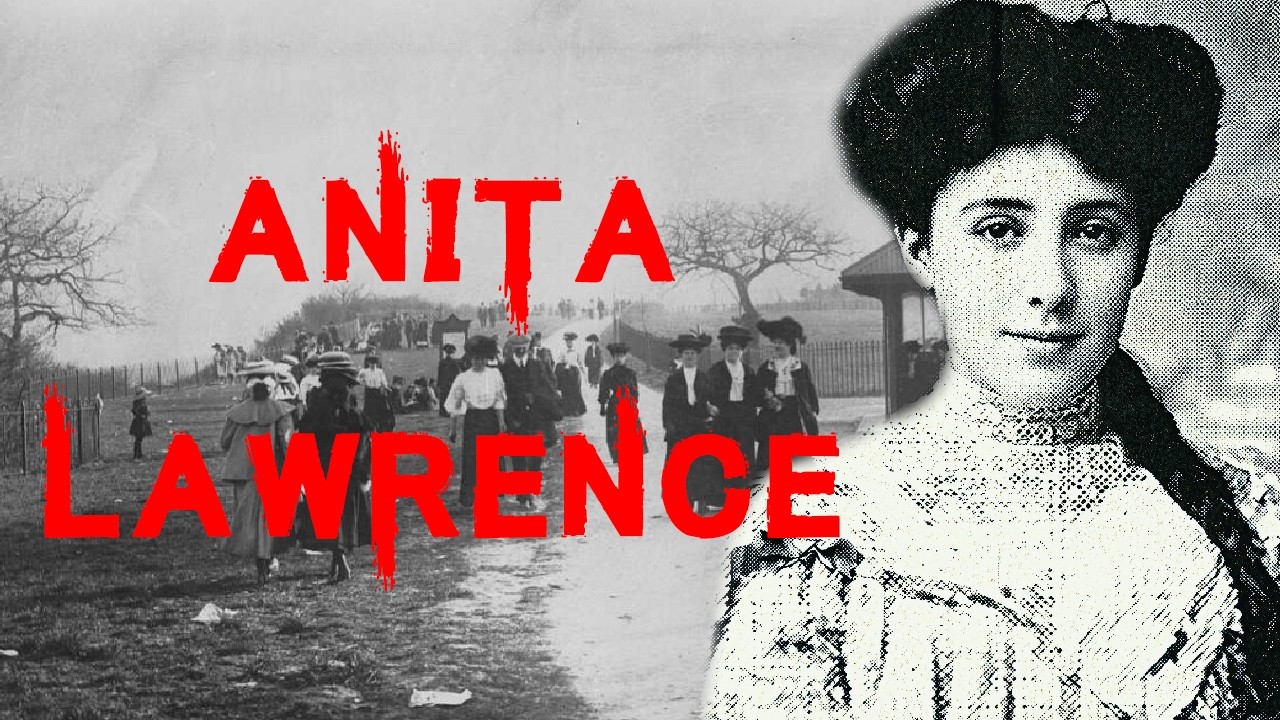
She was pretty, well-mannered, and charming, and all who knew her thought highly of her. At the outset she paid the new lodger scant attention. But Percy had seen far more of the world than anyone she had ever encountered, and he regaled her with tales of India, South Africa, America, and Canada. She was captivated by him, and in time she consented to walk out with him.
Her mother made no objection, provided he behaved himself properly. Dorothy had a studio portrait taken of herself, a fashionable thing for young women to do at the time. Percy asked her for a copy again and again, and though she hesitated at first, she finally gave him one. From that day on he kept it with him always and cherished it.
For all his feelings, Percy could not settle. He hated mining and felt certain his future was abroad. He told Dorothy he meant to go back to America and would return for her once he had established himself. She let it be known she would prefer him to remain in Wales.
In November 1907 he went to Liverpool to board a ship bound for New York, but for reasons that have never been made clear, he never sailed, and he came back to Abertridwr. The relationship did not outlast his return. Dorothy started going out without him, which Percy bitterly resented. When he discovered she had given one of her photographs to another young man, jealousy consumed him.
They quarreled often, and his temper turned aggressive. Dorothy’s friends cautioned her to be on her guard, telling her that Percy Collins was not a man she ought to keep company with. When she began walking out with another young man, Percy told her that if he ever saw the two of them together, he would shoot them both. Frightened, she started avoiding him as much as she could, even though they still shared the same house.
The summer of 1908 was an eventful period in Britain. London was playing host to the Olympic Games, and industrial unrest was simmering in the mining districts, where wages had stalled while prices climbed. In the Lawrence home, Dorothy gave such matters little thought. She was far more concerned with an approaching holiday, and she ordered a new dress for the occasion.
She never said exactly where she meant to go, but the idea of her enjoying herself in a place full of young men tormented Percy. On Saturday the 15th of August, Percy went to Cardiff in a state of mounting despair. Certain he could not endure seeing Dorothy with another man, he tried to buy a revolver, but short of the necessary money, he bought two knives instead. Over the next two days he brooded on his life and on what he still regarded as a promise of marriage.
On the evening of Sunday the 16th, the Lawrence family assembled in the sitting room. Dorothy had passed the day with friends and cheerfully recounted what she had done, again and again naming a young man she had lately met. Percy sat in silence, becoming more and more distressed as the evening drew on. By the time he climbed the stairs to bed, he was certain he had lost her for good.
The next morning, Monday the 17th of August 1908, Percy did not go to the mine. He lay in bed late, and when he came down, Dorothy was in the kitchen making breakfast. Her brother William and the other lodger, John Donovan, had already gone to work, and Mrs. Lawrence was upstairs.
Percy asked Dorothy for a kiss. She refused. He asked a second time, and again she refused, laughing nervously and saying that Mr. Donovan might come back at any moment.
Percy would not let it go. He insisted that she kiss him. She kept refusing. He then walked calmly to the kitchen door and locked it.
Dorothy grew alarmed. She told him to unlock the door and warned that if he did not, she would call for her mother. She tried to get past him around the kitchen table, but Percy backed her into a corner. He drew out one of the knives, ordered her to give in to his advances, and tried to frighten her into submission.
Dorothy wept, covered her face with her hands, and started to scream. Aware that Mrs. Lawrence was upstairs, Percy panicked. In a frantic effort to quiet her, he stabbed her.
She let out a low cry and sank toward the floor. He stabbed her once more, then pulled out the second knife and kept going until one of the handles broke off. Upstairs, Mrs. Lawrence heard her daughter’s scream and hurried down.
Finding the kitchen door locked, she forced her way inside. Dorothy lay bleeding on the floor while Percy stood close by. The neighbor Mr. Trowbridge was sent for, but before he could arrive, Percy had already fled the house.
He ran through the streets, clambered over a fence, and followed the railway line. A signalman named Lewis Greenway spotted him and saw the blood on his hands. Percy looked up and said calmly, “Fetch the police when you like. I mean to give myself up.
“
The police came quickly and arrested him. Percy made no effort to conceal what he had done. He gave a detailed statement laying out the murder, confessing that he had locked the door, threatened Dorothy with the knives, and stabbed her after she refused him. He was then informed that Anita Dorothy Lawrence had died of her injuries.
The killing sent a shockwave through the little village. Dorothy had been seen as a popular and decent young woman, and the savagery of the crime left the community appalled. Papers throughout Wales printed accounts of the murder and the admission, dwelling on Dorothy’s frantic struggle and on Percy’s jealousy and fixation. The trial of Noah Patrick Collins began on Friday, the eleventh of December 1908, at the Glamorgan Assizes in Swansea.
He faced a charge of willful murder. Despite having put his name to a confession, he entered a plea of not guilty on grounds of insanity. The prosecution produced the confession, which was read out in its entirety, and brought in medical experts who unanimously stated their belief that Collins had grasped the nature and consequences of what he was doing and was legally sane when the offense took place. They characterized him as sullen, self-absorbed, stubborn, and withdrawn from others.
The defense, headed by Mr. Ivor Bowen, contended that Collins had been pushed by jealousy, emotional turmoil, and inherited mental instability. Witnesses from Cadoxton were summoned. Ellen Cronin, aged seventy-seven, told the court she had known Collins’ grandmother and called her peculiar, recalling that she would discard sound potatoes as she peeled them.
She added that his father was “not altogether there.” A further witness, Mary Ann Matthews, offered comparable testimony, stating that although the grandmother and father were harmless, locals knew them to be insane. The defense maintained that Collins’ deeds sprang from emotional disturbance and hereditary mental weakness rather than calculated intent. When a medical witness for the defense, Dr.
Goodall, was pressed to define insanity, he answered that he could not do so even with a week to attempt it, which provoked laughter in the court. Following closing arguments, the judge delivered his summary of the case, and the jury withdrew. They came back after merely seven minutes with a guilty verdict. Before sentence was handed down, Collins was given the chance to speak.
He showed no remorse. Rather, he declared that a girl ought not to break a promise of marriage to a man because of her mother’s influence, and he insisted the relationship had ended because Mrs. Alma Lawrence disliked him. The judge remarked that Collins had been convicted of one of the most heinous murders ever tried in his court and observed that the prisoner had received a fair trial and that everything that could be said in his favor had been put forward.
He sentenced Noah Patrick Collins to death. At the time of Percy’s original arrest, police had found Dorothy’s photograph among his belongings. The image had remained profoundly meaningful to him, and after sentencing the judge directed that the photograph be given back to him while he waited for execution. A plea for mercy went to the Home Secretary, Herbert Gladstone, but he declined to commute the sentence.
In his final days behind bars, Collins penned a long confession seeking to justify what he had done, veering between regret, self-pity, and efforts to excuse the killing. He passed his last night at Cardiff prison restless and sleepless. Early the next morning, a priest administered the sacraments. As the town hall clock chimed eight on Wednesday, the thirtieth of December 1908, Percy stepped onto the trapdoor.
The white hood was pulled down over his head, the noose fitted around his neck, and within moments the execution was complete. Public interest in the hanging proved surprisingly muted. Fewer than fifty onlookers had assembled outside the prison walls. Collins was laid to rest in an unmarked grave inside the prison grounds.
On the gallows he wore the South African medal he had won during the Boer War and carried a locket holding Dorothy Lawrence’s photograph, the very picture she had reluctantly consented to give him in the happier days of their acquaintance. Whether the photograph was buried with him has never been determined.
