In 1988, 1. 2 million people paid to walk the reconstructed colonial capital of Williamsburg, Virginia. They watched blacksmiths hammer at real forges, wig makers dress real hair, printers run real presses—an entire town performing the 18th century for an audience born two centuries too late. It was the single best year the reconstruction would ever have, the peak of nine decades spent rebuilding one town twice over.
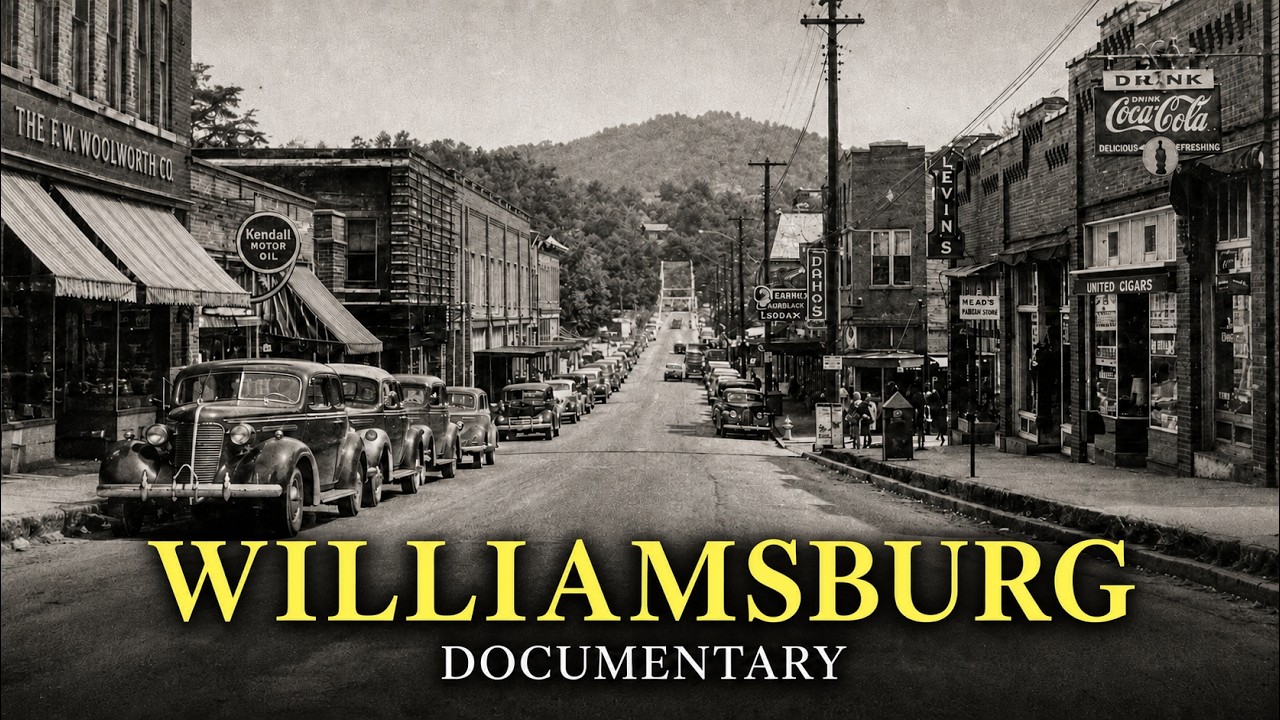
Twenty-eight years later, the nonprofit foundation that owned that town was losing an average of $148,000 a day, every day, for an entire year. By 2017, paying visitors had fallen by roughly half from that peak. And the foundation behind the reconstruction, one of the wealthiest historical nonprofits in the country, was drawing down reserves it had spent generations accumulating faster than anyone standing on that record afternoon would have believed possible. Nobody had torn down the governor’s palace.
Nobody had bulldozed Duke of Gloucester Street. What follows is the account of a capital rebuilt twice—once by oil money, once by nostalgia—and the point at which both fortunes stopped being enough. Before it was a museum, before it was a foundation with an endowment and a payroll and a balance sheet, Williamsburg was a solution to a fire. In 1699, the settlement stood on a strip of high ground five miles inland from the James River and roughly the same distance from the York, a patch of Virginia known plainly as Middle Plantation, a name that described exactly what it was and nothing more.
It had no harbor, no cathedral to its name. What it had was elevation, dry air, and distance from the water—three things that in 1699 mattered more than almost anything else a town could offer. Jamestown, seated directly on the James River since 1607, had burned once in 1676 during Bacon’s Rebellion and been rebuilt. In 1698, its state house burned again, the second fire in a generation.
This time, Virginia’s colonial leaders did not rebuild on the same ground. Jamestown’s location was low, swampy, and mosquito-ridden, prone to the fevers that had killed a large share of its earliest settlers, and a colony that had already lost one capital to fire was not eager to lose a second. The Burgesses looked inland toward the high ground at Middle Plantation, and in 1699 they moved the seat of government there for good. They renamed it for the reigning monarch, King William III, and handed the design of the new capital to Francis Nicholson, an English-born career colonial administrator who had already governed Virginia once in the early 1690s before returning in 1698 to oversee the very relocation he had spent years arguing for.
Nicholson was not a modest planner. He laid out Williamsburg on a deliberately grand scale: a mile-long thoroughfare running from the college at one end to the future capital at the other, wide enough for the pageantry of a royal government, engineered to announce importance before a single brick was set. It was not a village pretending to be a capital. It was a capital built to look like one, for a colony that in 1699 was already the largest and most populous in British America.
That population was the reason the design mattered. Virginia in the early 18th century held more people, more tobacco wealth, and more political weight than any other English colony on the continent, and Williamsburg was built to be the room where that weight got exercised. For 81 years, it was exactly that: the political nerve center of Virginia, home to the House of Burgesses and the Royal Governor’s Court, the place where Patrick Henry argued against the Stamp Act, and where Thomas Jefferson, George Washington, and George Mason walked the same mile of packed dirt between the capital and the palace. Twice a year, when the legislature and the courts came into session, the town swelled with planters, lawyers, and servants, then emptied again when the session closed.
Williamsburg was never a large town. It mattered a few weeks a year and coasted on that importance the rest of the time. Then, in 1780, with a British invasion fleet threatening the tidewater during the Revolutionary War, Virginia’s government did what it had done to Jamestown 81 years earlier. It moved.
Richmond, further inland and further from the reach of British ships, became the new capital. The move was made for the same reason Williamsburg had been founded in the first place: geography and the threat of an enemy on the water. Except this time, Williamsburg was the town being left behind rather than the town being built up. What followed was not a collapse.
There was no fire, no siege, no single afternoon that ended it. Williamsburg simply stopped being necessary. Stripped of its government, stripped of its crowds of legislators and litigants, stripped of most of the population that had only ever passed through for business, the town settled into a quiet that would last the better part of a century and a half. Duke of Gloucester Street, built wide enough for a royal governor’s procession, carried farm wagons instead.
The capital building Nicholson had designed to project imperial authority burned in 1747, was rebuilt, and burned again in 1832. By then, almost no one in Virginia thought it worth rebuilding a third time. For 150 years, nobody came to Williamsburg to see anything. That would not start changing until an Episcopal minister arrived to take charge of a half-empty parish church in 1903, with no plan yet for anything larger than fixing a leaking roof.
William Archer Rutherford Goodwin was a Virginia-born clergyman, educated at the College of William and Mary and at the Virginia Theological Seminary, who had spent the years before 1903 tending parishes too small to leave much of a record. He arrived in Williamsburg in 1903 to take charge of Bruton Parish Church, a colonial-era congregation in a town that, outside the state that had once governed from it, almost nobody in America had heard of. The church itself was in poor repair: a roof that leaked, brick that had gone soft with a century and a half of neglect, a graveyard slowly losing its headstones to weather and weeds. Goodwin raised the money, hired the workmen, and put the building back into a shape its 18th-century builders would have recognized.
It was, by any reasonable measure, the whole of his job. He did not treat it that way for long. Somewhere in the years that followed, walking the same mile of Duke of Gloucester Street that Jefferson and Henry had once walked, Goodwin began to see the restored church not as an end point but as a fragment. Bruton Parish had been one building among hundreds that had stood in Williamsburg during its 81 years as a capital, and most of the others were still there.
Not preserved, not celebrated, just standing—repurposed as gas stations, boarding houses, and hardware stores, their colonial bones buried under a century and a half of additions, paint, and neglect. Goodwin started to imagine restoring not a church but a town. Not a monument, not a single building rescued for its own sake, but an entire 18th-century capital brought back building by building, street by street, until a visitor standing on Duke of Gloucester Street could no longer tell what year it was. The idea required money that no Virginia parish could raise, and Goodwin knew exactly where money at that scale lived.
In 1924, Goodwin approached John D. Rockefeller Jr. , heir to the largest oil fortune ever assembled in the United States, with the idea of restoring what remained of colonial Williamsburg. Rockefeller was not an impulsive man.
He toured the town, listened to Goodwin’s case, and did not commit to anything immediately. But the idea took hold, and when Rockefeller agreed to fund the restoration, he attached one condition that would shape the project for years: total secrecy. His name could not appear anywhere near a single deed, a single purchase, a single negotiation. The reason was arithmetic, not vanity.
A run-down colonial house in a sleepy Virginia town sold for one price when the buyer was an anonymous local minister and an entirely different price once the seller learned the Rockefeller fortune was behind the offer. So Goodwin became the buyer of record, parcel by parcel, house by house, negotiating with owners who believed they were selling a decaying property to a persistent local clergyman rather than surrendering a piece of a multi-million-dollar restoration. Rockefeller’s money moved behind Goodwin’s name quietly, for property that would otherwise have tripled in price the moment the truth got out. On November 27, 1926, Rockefeller secretly authorized Goodwin to commission formal restoration plans—not preliminary sketches, not a survey, but real architectural plans for real reconstruction.
It was the moment the project stopped being a minister’s ambition and became a Rockefeller undertaking in every sense but name. The secrecy held for less than a year. By late 1927, word had gotten out across Williamsburg and beyond it: Rockefeller had committed millions of dollars to rebuild an entire 18th-century capital from the ground up, house by house, block by block, on a scale no one in the sleepy tidewater town had thought possible. The minister who had wanted his church fixed now had the resources to rebuild an entire vanished government.
What he needed next were the men who could tell him exactly what that government had looked like. Those men turned out to be a Boston architecture firm hired in 1927 for a job that had no real precedent in American practice. Perry, Shaw, and Hepburn had built a reputation restoring early American landmarks before Williamsburg ever crossed their desk, but nothing in that portfolio matched the scale of what Rockefeller was now asking for: not one building, not a district, but an entire 18th-century capital rebuilt from whatever fragments of it still survived under a century and a half of paint and additions. William Perry took the title of chief architect and held it for 26 years, until 1953—long enough to see the town he was hired to imagine finished, opened, and settled into its second life.
Before a single brick could be laid or removed, someone had to know what was standing. That work fell to the contracting firm of Todd and Brown, and it was, by the standards of 1927, exhaustive. Every building on every block of the old colonial footprint was photographed, measured, and cataloged, porch by porch, chimney by chimney, before Perry’s office made a single decision about what to do with it. Some structures were colonial to the studs and simply needed uncovering.
Others were colonial underneath a Victorian porch or a 20th-century storefront, and had to be peeled back layer by layer to find the building that had stood there in 1780. A third category had no 18th-century bones at all, and for those, the survey existed for exactly one purpose: to confirm they had none and could go. That third category went first. The Peninsula Bank came down, and so did the Peninsula Garage.
Bell Hospital went the same way. None of the three had existed when Jefferson and Henry walked Duke of Gloucester Street, and none of the three survived the survey that proved it. Other buildings were not demolished but relocated—lifted off foundations that put them in the wrong place on the 18th-century street grid, and moved to where they would do no harm to the reconstruction. Williamsburg’s modern commerce—its banks, its garages, its 20th-century hospital—was being told, block by block, that it did not belong.
The two buildings the town needed most were also the two that no longer existed in any form Perry’s crews could photograph. The Capitol, where the House of Burgesses had argued against the Stamp Act, and the Governor’s Palace, where royal authority had lived until 1780, were both long gone—burned, demolished, or simply erased by a century and a half of disuse. Rebuilding them meant rebuilding from paper: insurance records, archaeological excavation of the original foundations, surviving architectural drawings, and the patient cross-referencing that turns a scrap of a 1740s land deed into a floor plan. Both buildings were completed in 1934, full-scale reconstructions standing on their original footprints, built from evidence rather than memory.
Colonial Williamsburg opened to the public in 1935. What visitors walked into that year was not a scattering of restored houses along a pretty street. It was roughly 85 percent of the original 18th-century town’s footprint, either genuinely colonial or rebuilt to match colonial evidence exactly—a completeness no other American restoration of the period had attempted. The money behind it kept moving long after the ribbon was cut.
By the end of the 1960s, Rockefeller family support for the project totaled more than $79 million, spent across four decades on a town that had never once turned a profit and had never been asked to. What Goodwin and Rockefeller had built by 1935 was not a museum in any sense either man would have recognized from a Sunday-afternoon gallery visit. It was a working town: forges that produced real iron, print shops that ran real presses, tradesmen in 18th-century dress practicing 18th-century skills for a living. An entire local economy built on the premise that history itself could be sold as something you walked through rather than something you read about.
That premise would carry Colonial Williamsburg through decades of growth, past a roller-coaster park that would open a few miles down the road, toward a single year, still three decades off, when more people would walk Duke of Gloucester Street than ever had before or ever would again. Through the 1950s, the 1960s, and into the 1970s, Colonial Williamsburg grew into one of the most visited historical sites in the United States, on the strength of a single unchanging street. Duke of Gloucester Street, laid out by Francis Nicholson in 1699 and rebuilt board by board under William Perry’s direction three decades earlier, now carried more foot traffic in a single summer month than it had carried during any full year of the colonial government it was built to house. School trips came by the busload, several hundred children at a time filing past the blacksmith’s forge and the wig maker’s bench.
Honeymooners came by the carful, drawn by brochures that promised a version of American history gentle enough for a first vacation together. Sitting presidents came too—Eisenhower, Kennedy, Johnson, and Nixon among them across those same decades, walking the same mile of restored street that Jefferson and Henry had walked two centuries earlier, for cameras rather than for legislative session. In 1975, Anheuser-Busch opened Busch Gardens: The Old Country a few miles down the road from Duke of Gloucester Street, a theme park built around European village facades and roller coasters rather than 18th-century forges and print shops. It did not compete with Colonial Williamsburg so much as extend it: a second attraction close enough to fold into the same trip, drawing families who might stay in the area a day or two longer than a single museum visit would have justified on its own.
Two very different versions of the past, one manufactured and one reconstructed from insurance records and archaeological foundations, now sat within a 20-minute drive of each other, both selling the same stretch of Virginia real estate to the same arriving buses. What those buses of schoolchildren, those honeymooners, and those presidents walked through for more than four decades after the reconstruction opened in 1935 was an 18th century missing more than half its population. Williamsburg’s colonial-era residents had been, by a clear majority, enslaved. The blacksmiths, the cooks, the coachmen, the field hands, and the household staff who had done the physical work of running a capital city for people who owned them—the restoration reproduced their forges, their kitchens, and their quarters down to the brick.
For most of its first half century, it did not reproduce them. Costumed interpreters staffed the wig maker’s shop and the printing office. Black Virginians who appeared in the foundation’s tours and exhibits at all were most often described as servants, a term that supplied a role without the legal fact behind it, or they were not presented as a category of person on Duke of Gloucester Street in the 18th century at all. The foundation staged its first costumed interpretation of enslaved and free Black life in 1979, 44 years after the museum had first opened its gates.
It began as a single program, expanded gradually over the years that followed, and was not formalized into a dedicated department—African-American interpretation—until 53 years after visitors had first walked through the reconstructed capital, believing they were seeing the whole town. The interpreters hired into that department researched names, trades, and family relationships from surviving plantation records and county court documents—work that had simply not been commissioned in the decades when Perry’s crews were deciding which buildings were old enough to keep. The budget that paid for that new department and for the research behind it was drawn from the same endowment that had spent those same decades covering a widening distance between what Colonial Williamsburg earned in ticket sales and what it cost every year to keep several hundred acres of the 18th century standing and staffed. That year, nobody at the foundation was yet asking how much longer that endowment could keep making up the difference.
By the 1980s, Colonial Williamsburg’s payroll read like a census of vanished trades. Hundreds of costumed interpreters worked the reconstructed streets in overlapping shifts. Blacksmiths hammered at real coal forges. Printers ran the same style of iron hand press that had once turned out Virginia’s newspapers and pamphlets before the Revolution, while wig makers a few doors down dressed real hair over wooden blocks.
Coopers built barrels. Silversmiths worked hallmarked silver. Carpenters framed buildings with hand tools, the way Perry’s original crews had insisted the restoration itself be built decades earlier, on the theory that a reconstruction done with power tools would somehow announce itself as false. By the middle of the decade, the foundation employed more people performing 18th-century trades than the actual colonial government of Virginia had ever employed doing them for real.
Two hotels anchored the economy that made all of it profitable, or close enough to profitable. The Williamsburg Inn, which Rockefeller had opened in 1937, and the Williamsburg Lodge, opened two years later and expanded repeatedly since, sat within a short walk of the reconstructed capital. Neither existed simply to house visitors; they existed to keep them close. A guest who stayed three nights at the inn spent on tickets, carriage rides, tavern meals, and souvenir pewter in a radius the foundation itself largely owned—an economy built deliberately to keep the money from leaving the fence line.
Picture Duke of Gloucester Street on a Saturday afternoon in the summer of 1988. The Capitol’s cupola catches full sun at the east end of the mile-long street, the way it has caught it every clear day since the reconstruction opened in 1934. At the far end, the Governor’s Palace gates stand open, its brick facade the same red-orange Perry’s office had left it, worn now by 50 years of hands that had no business touching 18th-century brick, and touched it anyway. Horse-drawn carriages move up the unpaved lane at a walking pace, wheels loud against the packed dirt the foundation had refused to pave on principle.
A blacksmith’s hammer rings out through open forge doors. Fife and drum practice drifts down from near the Raleigh Tavern—the same instruments that had once called Virginia’s militia, now calling tourists to a demonstration on the hour. The street smells of wood smoke, horse, and fried chicken from taverns running lunch service for busload after busload. Before the year is out, 1.
2 million paying visitors will have walked this street—more people moving down Duke of Gloucester Street in 12 months than had lived and worked in Williamsburg across the entire 18th century combined. It is, by every number the foundation can produce, the best year Colonial Williamsburg will ever have. Outside the museum gates, the rest of the region had reorganized itself around that same number. Motels ringed the highways leading into town.
Souvenir shops sold pewter and powder horns to visitors who had already spent a full day inside the fence, and outlet malls went up on cleared farmland to catch whatever spending the ticket price and the hotel bills had left behind. A few miles down the road, Busch Gardens had grown into one of the most attended theme parks in the country, its roller coasters and European village facades pulling a different but overlapping crowd off the same interstate exits. By 2007, the park was drawing an estimated 3. 2 million guests a year, ranked 15th among the most visited theme parks in America—nearly three times the number Colonial Williamsburg itself had ever managed in a single season.
Proof that the region could still fill parking lots even when the history next door could not. But the number that would matter most to Colonial Williamsburg’s future was not written on a ticket stub. And that summer, nobody on Duke of Gloucester Street was looking for it. Two miles from the fence line, on a stretch of Richmond Road that had once been farmland, the Yankee Candle Company opened a flagship store built to a scale no candle retailer needed on its own merits: 45,000 square feet, aisle after aisle of wax and wick.
A building sized not for candle demand but for the overflow of a much larger business next door. Colonial Williamsburg was still pulling more than a million visitors a year through its gates in the years the store went up, and every one of those visitors had to eat, sleep, and shop somewhere within driving distance of the reconstruction. The candle store was not a competitor to the museum. It was a parasite of a very specific and profitable kind, built on the confident assumption that the crowds on Duke of Gloucester Street were a permanent resource—the way a mill town assumes its river will keep running.
The other river kept running too, at least on paper. Rockefeller money had never really stopped flowing into Colonial Williamsburg, even decades after John D. Rockefeller Jr. ‘s death.
By the early 2000s, the foundation’s endowment had grown past $700 million—one of the largest endowments held by any museum in the United States, ahead of institutions with far larger public profiles and far smaller streets to maintain. On paper, that endowment looked like security. In practice, it was the only thing standing between Colonial Williamsburg and a widening gap that ticket sales alone could no longer close. A nonprofit museum with 301 acres, dozens of 18th-century structures requiring specialist maintenance, and a payroll of costumed tradesmen cost far more to operate each year than paying visitors were willing to cover.
The math had always depended on the endowment’s income filling that gap. For most of the 20th century, it had. Then, starting in 2001, the foundation began taking more. The standard rule for an endowment of that size—the rule that finance committees at universities and museums treat as close to inviolable—is to withdraw roughly 5 percent a year, a rate calculated to let the endowment’s investment returns replace what is spent and keep the principal intact indefinitely.
Colonial Williamsburg abandoned that rule beginning in 2001. Withdrawals climbed past 5 percent, and in some years reached as high as 12 percent—more than double the sustainable rate—spent to cover operating losses that ticket revenue and hotel income were no longer large enough to absorb. Financial analysts who later reviewed the foundation’s filings calculated what a withdrawal rate like that meant on a spreadsheet: at 12 percent a year, with market losses factored in, the entire $700 million endowment could be exhausted in as little as eight years. By 2014, the foundation was losing $62 million annually—$175,000 every single day, weekends included.
By 2016, the endowment that had stood past $700 million a decade earlier had fallen to $664 million. Total foundation debt by the same year had climbed past $300 million. The arithmetic that had underwritten Colonial Williamsburg for 90 years—endowment income covering the distance between what a working 18th-century town costs to maintain and what visitors are willing to pay to walk through it—had quietly stopped balancing. Nobody announced the moment it happened.
There was no single board meeting, no single bad year, no fire or flood to point to. There was only a withdrawal rate that crept upward one budget cycle at a time, and a debt figure that crept upward with it, until the foundation that Rockefeller’s oil fortune had built was carrying more than $300 million in liabilities against an endowment that was shrinking by tens of millions of dollars a year. Two miles away, the candle store was still open, still selling wax to visitors who had not yet noticed that the crowds around them were thinner than they used to be. The number that mattered most to Colonial Williamsburg’s future, the one nobody on Duke of Gloucester Street had been looking for that summer, was not a dollar figure and not an endowment balance.
It was a gate count, tallied one paid admission at a time, and for years it moved slowly enough that nobody mistook the drift for a trend. By 2017, the drift had a name. Annual attendance stood at roughly 600,000—less than half of the total the turnstiles had recorded in the year they counted their highest number ever, three decades earlier. The fall had taken 29 years.
It had not taken a single bad headline to produce it. The causes were not local to Williamsburg, and that was, in a very real sense, the trouble. Educators across the country were teaching less American history than they had a generation earlier, a shift measured in curriculum hours and standardized test requirements rather than any single policy, and a colonial capital built to teach that history through costume and craft had no way to reverse a decision made in school boards a thousand miles away. Family vacations were changing shape at the same time, and not in Williamsburg’s favor.
A week once spent walking a reconstructed capital, sleeping at the inn, eating at the taverns, increasingly became something else. It meant three days at a theme park instead. It meant a week at the beach instead. It meant a long weekend bought on a discount airfare instead of a multi-day museum trip that asked more of a family’s patience and delivered less of what a child could photograph.
None of these choices were made against Colonial Williamsburg specifically. They were made in favor of something else, by families who had never heard of the endowment or the withdrawal rate. And the aggregate of a few million such choices, repeated year after year across the country, was the number the turnstiles recorded every December. Busch Gardens, a few miles down the interstate, fell along the same curve.
The park that had drawn an estimated 3. 2 million guests in 2007 was pulling under 2. 5 million by the middle of the following decade—a decline steep enough that by 2016 it had dropped out of the top 20 most attended theme parks in America, the first time in years the industry had bothered to rank it. If the region’s newer, flashier attraction was losing ground this fast, the reconstructed colonial town beside it—older, slower, harder to sell to a 10-year-old—was never going to hold its own share of a shrinking pie.
The hotels felt it first, because hotels always feel it first. Over the following 20 years, nearly 20 of them across the greater Williamsburg area closed for good, one after another. Each closure was a small local story that added up to a regional one. Between them, the closed properties erased 2,745 rooms and an estimated one million room-nights of business every year—a whole industry’s worth of beds the market no longer needed filled.
The oldest motor courts went first, low single-story buildings with doors that opened straight onto the parking lot, built in the 1950s and 1960s for a driving public that no longer stopped the way it used to. They came down mold-damaged and unwanted, structures that had been serviceable for 40 years and then, in the space of a single bad decade, were not. None of this arrived as a single crisis. It arrived as a gate count that crept downward, a theme park that slipped out of a ranking, a motel sign that went dark on a stretch of highway that used to be full.
The foundation’s leadership had spent the early 2000s treating the endowment as the fix for a revenue problem. By the middle of the following decade, the revenue problem had become large enough and public enough that the fix itself was running out. The man who had to decide what came next had been in the job less than a year. His name was Mitchell Reiss, and by June of 2017 he had been president of the Colonial Williamsburg Foundation for less than a year.
Reiss had arrived from a career built on institutions in the middle of a crisis rather than on retail or hospitality—a stretch as the United States special envoy to Northern Ireland and the presidency of a small Maryland college among them. What he inherited in Williamsburg was not a museum in trouble so much as a museum whose trouble had a number attached to every line of the budget: debt past $300 million, an endowment that had shed tens of millions of dollars in a single year, a gate count cut nearly in half since the reconstruction’s best year. Reiss did not have the luxury of treating the foundation’s finances as a long-term project. He had been in the job for less than a year, and the deficit had already been running for over a decade.
In June of 2017, Reiss announced what the foundation called a restructuring and what employees on Duke of Gloucester Street understood more plainly as an exit from businesses the foundation no longer believed it could run at a profit. Colonial Williamsburg would no longer operate its own retail stores or its own golf courses, and it would no longer manage its own real estate. All three functions were handed to outside companies, contractors whose entire business was running gift shops, fairways, and rental properties at a margin a nonprofit museum, weighed down by the cost of maintaining 301 acres of 18th-century buildings, had stopped being able to match. The restructuring had a headcount.
Seventy-one employees were laid off outright, their positions eliminated rather than transferred. Another 262 were moved to the new outside contractors, keeping their jobs in name but leaving the foundation’s own payroll for good. Combined, 333 positions changed status in a single announcement—roughly 16 percent of the entire foundation workforce, cut or handed off in one afternoon. For an institution that had spent 90 years describing itself as a town, not a company, the number read like something closer to a plant closing: a fixed share of the workforce gone or reassigned because the arithmetic no longer supported keeping them on the foundation’s own books.
The retail clerks, the golf course groundskeepers, the property managers. None of them had built the deficit. They were simply the line items closest to it. Two miles away on Richmond Road, a different arithmetic was reaching the same conclusion on a different clock.
The Yankee Candle Company’s flagship store—45,000 square feet, built at a scale no candle retailer needed on its own merits, opened on the strength of a crowd that was supposed to keep growing forever—closed for good in April of 2021. The building did not sit empty for long. Local planners approved it for conversion into a family entertainment center built around an indoor slide and a bowling alley, an attraction built around exactly nothing that had drawn the original store there in the first place. Where aisles of wax and wick had once counted on the overflow from Duke of Gloucester Street, a slide and a bowling alley now counted on nothing connected to candles or colonial history or Colonial Williamsburg at all.
The building was the same. What it was for had been replaced entirely. Reiss called the restructuring a success before its first full year was finished. By 2018, he had numbers to point to.
The outsourced retail stores, golf courses, and spa were all turning a profit for the companies now running them, and in the first quarter of that year alone, the foundation reported running $800,000 ahead of its own budget—the clearest sign yet that handing off 333 jobs and three lines of business had done what it was supposed to do. What the restructuring had not touched, and could not touch, was the debt. More than $300 million of it sat on the foundation’s books in 2018, exactly as it had sat there before Reiss signed anything. A restructuring can fix a leak.
It cannot pay off a mortgage. The gate count told its own version of the same story. In 2019, the last full year before a pandemic shut the reconstruction down entirely, Colonial Williamsburg sold 533,700 tickets—a respectable number for a nonprofit museum on 301 acres, and still less than half of what the turnstiles had recorded at the peak three decades earlier. Thirty-one years had passed since that peak.
The foundation had laid off workers, outsourced three divisions, and drawn its endowment down by tens of millions of dollars. And the gate count in the best pre-pandemic year it would ever see again was still a rounding error above half of where it had started. The hotel market told the story from a different angle, and it did not need the pandemic to make its point. Room sales across the greater Williamsburg area fell another 4 percent between 2019 and 2023—a decline that would have looked unremarkable on its own, except for what was happening 30 miles away.
Virginia Beach and Norfolk, over the same four years, saw hotel demand rise. Local officials in Williamsburg, asked to account for the gap, did not reach for the pandemic or for gas prices or for any of the usual regional excuses. They pointed directly at Colonial Williamsburg and Busch Gardens, and at the attendance both had been losing for a decade, as the cause. Some of the buildings that emptied out of that market found second lives that had nothing to do with tourism at all.
The George Washington Inn and the Quarterpath Inn, both built to house visitors who no longer came in the same numbers, were converted into apartments. The College of William and Mary bought at least two of the shuttered properties outright for student housing. One motel became home to the Copper Fox Distillery. None of these were failures exactly.
They were proof that the buildings had outlasted the business they were built for, and that Williamsburg’s economy, whatever it was going to be next, was no longer going to be built entirely around the 18th century. The clearest evidence of that arrived in the form of a number with no colonial content in it at all: $80 million, the cost of the region’s newest bet. A sports and event center built not around Duke of Gloucester Street but around youth sports tournaments, projected to generate 42,000 room-nights a year on its own. A town that had spent 90 years selling Americans their own founding story was now selling soccer tournaments to fill the rooms history used to fill, and doing it, by the projections, more reliably than history currently could.
Walk down Duke of Gloucester Street today, and none of that shows. The reconstruction still stands exactly as Rockefeller’s architects built it in the 1930s: the Capitol, the Governor’s Palace, the wig maker’s shop, and the blacksmith’s forge. All still there, all still open, all still staffed by tradesmen working the same methods with the same tools. The crowds that once numbered in the millions are thinner now, spaced out along a mile of brick and clapboard built for a density of visitors that no longer arrives most afternoons.
Two miles away along Richmond Road, the empty motel lots and the dark windows of the shuttered candle store are the part of the 18th century nobody thought to rebuild—because nobody in 1926 was reconstructing the tourism economy of the next one. Duke of Gloucester Street is still lit each evening, the way it has been lit for 90 years, one gas lamp at a time. Small flames set into iron fixtures along a mile of buildings that were rebuilt from seller holes and property deeds. The flames are only a few inches tall, and by the time the last one catches, the street has settled into the particular blue-gray the tidewater dusk turns before real dark arrives.
Two miles away on Richmond Road, the sign that once read Yankee Candle is gone, and the building beneath it—45,000 square feet, built to catch an overflow that stopped arriving—waits behind a fence for its second life as a bowling alley and an indoor slide. Duke of Gloucester Street still burns real flame after dark, lamp by lamp, in a town that has run out of nearly everything except that.
