The weight of a Matchbox car is a thing almost everyone who grew up in Britain between the 1950s and the 1970s remembers. The little box, made up to look like a box of matches, sold for the price of a bar of chocolate, sat by the till where fathers bought their cigarettes. At its height, the company that made it, Lesney, in the East End of London, was turning out a million cars a day. It was the largest diecast toy maker in the world, shipping to more than 120 countries, and the biggest single employer in the London Borough of Hackney.
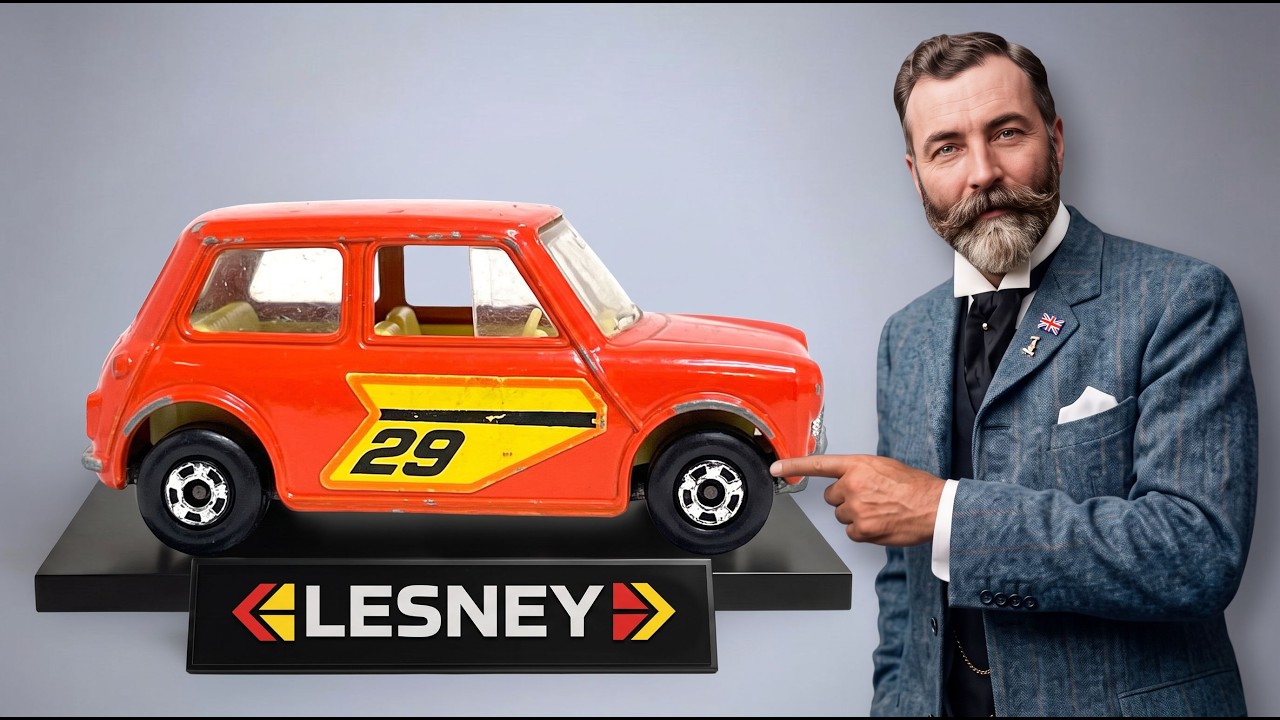
Thousands of people, most of them women, walked through the same gates every morning to build the childhood of the Western world. By the summer of 1982, it was gone. The gates padlocked, the molds crated up and shipped to the Far East. Today the name belongs to Mattel, the American giant that makes Hot Wheels, the very rival usually blamed for starting the collapse.
That story, that an arrogant English company laughed at a flashy American toy and was destroyed overnight by a single stubborn mistake, is a good one. It is not the true story. Lesney fought back within a year and survived for another fourteen. What killed it in the end was not arrogance but the slow grinding economics of a country quietly getting out of the business of making things.
The company began in the winter after the war. On the 19th of January 1947, two men who shared a surname but were not related pulled their savings, around six hundred pounds between them, and bought a wreck. Leslie Smith and Rodney Smith had been at school together and then at war together in the Royal Navy. Leslie understood die casting and exporting.
Rodney had the appetite for a gamble. They took the Les from Leslie and the Nay from Rodney and stuck them together: Lesney. What they bought was the Rifleman, a derelict public house on the Edmonton and Tottenham fringe of North London, knocked about by the Blitz. Into it went surplus government die casting machinery, and out of it came whatever anyone would pay for: electrical fittings, parts for fishing tackle, bits for toy cap guns.
Then, in that same first year, a third man walked in, and he mattered most. Jack Odell had been expelled from school at thirteen. During the war he had served as a sergeant, keeping tanks and lorries running across North Africa and Italy, learning at speed and under fire exactly how machines break and how you fix them. He brought his machines to Lesney and asked for space.
Leslie Smith got in the bargain an engineering genius who could design a mold for anything. To fill the dead hours between industrial orders, they started making toys. Odell’s first was a diecast road roller, an improvement on a design already sold by the market leader, Dinky. Here was the clever part.
A Dinky toy could only be bought at an authorized retailer. Lesney’s roller could be sold in any shop that would take it, a corner shop, a tobacconist, anywhere. Then the young company nearly died. In 1950, the Korean War prompted a government ban on using zinc for toys, and zinc was precisely what Lesney’s toys were cast from.
It should have finished them. It did not, only because they had stockpiled the metal and could pivot back to industrial work until the ban lifted. But it rattled Rodney Smith badly. In 1951 he walked away, convinced there was no future in it, sold his share, and eventually emigrated to Australia.
The breakthrough came by royal accident. In 1953, the country was gearing up for the coronation of Elizabeth II, and Odell designed a miniature coronation coach, the golden state coach in the palm of your hand, complete with tiny horses. It sold more than a million. Around this same moment the actual Matchbox was born.
The tidy version Lesney liked to tell was that Odell’s young daughter was allowed to bring toys to school only if they fit inside a matchbox, so he cast her a tiny brass road roller. Odell’s own, less tidy version was that she kept smuggling spiders into school in Matchboxes, and the tiny toy was a bribe to make her stop. Whichever is true, the result was the same: a toy scaled to fit a Matchbox, sold in a box cut up to look like a box of matches. The first four models came out in 1953, working vehicles all of them, the muck and machinery of post-war Britain shrunk to pocket size.
Matchbox was not the grand vision of an entrepreneur. It was a side hustle to fill the quiet afternoons, and it was about to conquer the world. What Odell understood in his bones was that a toy car did not have to be a luxury. Dinky had built its reputation on being just slightly out of reach, sold through approved dealers, the sort of thing a child received at Christmas.
Lesney turned that on its head. When the Matchbox 1 to 75 range launched, a model cost roughly a third of a Dinky’s price, cheap enough that even the poorest child could afford one, not for Christmas but for a Tuesday. That single decision democratized the toy car. Make it small, make it good, make it cheap, and sell it absolutely everywhere.
The range grew fast. By 1959 there were 75 numbered models, and something new came out roughly every fortnight, which turned buying into collecting. A child did not want a Matchbox car. A child wanted the next one and the one after that.
In 1956, Odell launched a second line aimed squarely at adults, Models of Yesteryear, veteran cars and steam engines rendered in loving detail. It told the world that Matchbox was a serious maker of serious miniatures. In September 1960, Lesney floated on the London Stock Exchange, and the share offer was wildly oversubscribed. Within four years the company’s value had multiplied five times over.
It became the fourth largest toy maker in Europe, turning out a million vehicles a week and climbing. Then came America. The man who cracked it was an importer named Fred Bronner, who built the American business so successfully that Lesney bought out his operation in 1964 and made him head of its US division. By the start of the decade, something like seventy million Matchbox vehicles had crossed the Atlantic.
To make a million cars a week, though, and soon far more than that, you needed hands, thousands of them. By 1963, the firm raised its great landmark, an enormous concrete factory on Lee Conservancy Road beside Mabley Green, an instant fixture of the local skyline. By 1966, 3,600 people worked there, and in 1967 Lesney earned its place in the Guinness Book of Records when its annual output reached one hundred million models. More than 150 automatic die casting machines ran on the site, designed and built in house by the company’s own toolmakers, to Odell’s specifications.
The models could not be fully automated. Each one was designed to a strict average of 13 components, and fitting those parts together took nimble, fast, skilled hands. The women who did it were very good at it. Leslie Smith had bought up a fleet of redundant London Transport double-decker buses, repainted them in Matchbox blue and yellow, and put them on the road to ferry his staff to and from work, making Lesney, in all likelihood, the only toy company in the world running its own private bus service.
The company’s tooling and engineering manager later put the feeling of the place plainly: Lesney was like a family, not so much a job as a way of life. Mothers worked alongside daughters. The children of Hackney were, unofficially, the best supplied children in Britain. By the mid-1960s, Matchbox had become the largest diecast toy brand in the world, outselling Dinky itself.
In 1966, Leslie received the Queen’s Award for Export Achievement. Two years later, both founders were appointed OBE. For a brief and shining stretch, they were national industrial heroes. And this is the cruel part.
At the precise moment Lesney reached the top, a million a day rolling off the lines, the thing that would undo it was already being built, not in Hackney, not by any British rival, but in a design studio in Southern California. Elliot Handler, one of the founders of Mattel, watching his son push Matchbox cars around the floor, became fixed on a single idea. The little English cars were beautifully made, but they were slow. Push one and it trundled a few inches and stopped.
Handler assembled a team from the edges of the aerospace world, including an engineer who had worked on missiles for Raytheon, and built a car that would actually race. Hot Wheels launched in the United States on the 18th of May 1968, carrying three innovations that together made the Matchbox car look, overnight, like something from another era. The paint was a deep candy metallic finish that caught the light. The wheels had bright red stripes.
But the third innovation, the one that mattered, was hidden. Where Matchbox used a relatively thick steel axle, Hot Wheels ran on thin, hardened wire axles turning in low-friction plastic bushings. The result was a car that rolled and rolled and kept rolling. Set it on Mattel’s bright orange plastic track and it flew.
Mattel had built one more advantage in from the beginning: it made Hot Wheels cheaply in Hong Kong, while Lesney cast and hand-assembled its cars in high-cost East London. The market response was volcanic. The precise figures vary, but they all point in the same direction. In the American market that Fred Bronner had spent a decade building, the floor gave way.
Here, though, is where the familiar story starts to come apart. The myth says the Englishman laughed and did nothing. They did not do nothing. Within a year of Hot Wheels landing, Lesney had its answer on the shelves.
It was called Superfast. Launched in 1969, it was Lesney doing exactly what its rival had done: thin, polished, low-friction axles, free-spinning wheels, brighter colors. Mattel had never patented the design, so Lesney was perfectly free to copy it, and it did. Every base in the range had to be re-tooled, thousands of molds altered by the same in-house toolmakers who had built the machines in the first place.
Inside twelve months, a hand-assembly manufacturer in East London had matched the innovation of an aerospace-backed American giant. That is not the work of men who were laughing. But Jack Odell was appalled, not by the wheels themselves, but by what chasing them would cost. Every pound spent retooling for speed was a pound not spent on the detailed realism that had made Matchbox great.
Once you had agreed to fight Mattel on Mattel’s ground, you had committed to a race that never ended and that you were structurally worse at running. The traditional collectors began to drift away. Lesney was winning a war by becoming more like its enemy. Then, in 1973, the ground itself began to move.
That year, the Essex plant that made Models of Yesteryear, Odell’s beloved line, caught fire and was then flooded, halting production for as much as two years. That was also the year the wider world turned against every manufacturer in Britain. The oil crisis sent inflation tearing through the economy. That winter brought the three-day week, when factories were rationed to three days of electricity.
And underneath it all, sterling kept shifting in ways that punished an exporter. By 1975, falling sales were forcing Lesney to reorganize shifts and make redundancies. When the firm cut the night shift, a group of machine setters saw their pay drop by roughly a third, a dispute that went all the way to the Court of Appeal in 1976 and is cited in employment law to this day. And in that same year of 1973, Jack Odell stepped back, resigning as a director and leaving Leslie Smith as the last of the founders running the company alone.
There was no single fatal mistake. That is the hardest and truest thing about the fall of Lesney. There was instead a chain of decisions, each one defensible on the day it was made, that together pulled the company under. The first was about where to make things.
Mattel was building Hot Wheels cheaply in Hong Kong, and the logic of the age pointed one way: move the work East, cut the labor bill, survive. Leslie Smith looked at that logic and turned away from it. The workforce was loyal, and Lesney was loyal back. The idea of shipping the work to Asia and putting the neighbors out of work was not merely difficult, it was close to unthinkable.
But loyalty does not appear on a costing sheet. A car hand-built in East London simply could not be made as cheaply as one built in Hong Kong. And here is the cruelest turn. The loyalty that kept the jobs in Hackney for all those years is exactly what made the eventual collapse total.
Because when it finally went, there was no offshore arm to fall back on. Everything went at once, and the work left for the Far East anyway, just years later and with the company dead instead of alive. The second decision was to fight the arms race on Mattel’s terms, spending every pound on a defensive war chasing a market, fantasy speed, that Matchbox had always been worse at. The third decision was to diversify and do it badly, buying the American model kit maker AMT, launching plastic construction kits, taking on a doll brand.
Most of it failed, draining away management attention and cash at precisely the moment the core business needed both most. The fourth decision was the sheer crushing weight of the operation itself. The group workforce peaked somewhere north of 9,000 people. A vast plant and a huge hand-assembly workforce is a magnificent thing when demand is climbing, and a millstone the moment it falls.
In 1980 alone, the group lost 17. 6 million pounds, suffered a steep drop in sales, and cut its workforce from 9,213 to 5,470. Nearly 4,000 jobs in a single year. And the fifth force was the one they could do least about: the British economy itself, the oil shock inflation, the savage recession of the early 1980s that was tearing the guts out of British manufacturing wholesale.
Here is the proof that this was never one firm’s single blunder. In the very same window, Britain’s other great toy makers died too. Dinky, gone. Corgi, gone.
When three of a nation’s proudest names in a single trade all fall together, you are not looking at three separate acts of arrogance. You are looking at an industry being killed by the country around it. By the early weeks of 1982, Lesney had posted an operating loss of around fifteen million dollars, and the creditors would wait no longer. In the summer of 1982, the receivers came, two insolvency men who took what was left and reformed it into a new entity called Matchbox Toys Limited.
Around 1,100 workers lost their jobs, most of them from the streets around the factory, many of them the women who had sat along those assembly lines for years. The blue and yellow buses would not be needed. There was no longer any work to carry them to. In September 1982, control passed to a Hong Kong toy maker, the Universal Group, and UK production of the Matchbox range ceased that month.
The molds, the dies, the in-house built machinery, every part of it that Odell and his toolmakers had designed and cut and assembled over thirty years, was crated up and shipped to Macau, and later on to mainland China. The offshoring the board had refused to do while the company lived was done to its corpse within months of its death. The founders scattered. Rodney Smith, who had walked away back in 1951, emigrated to Australia and lived until 2013.
Leslie Smith, who had run the firm till the last, lived until 2005. But Jack Odell could not let go. He was, to the very end, an engineer, and an engineer needs to make things. In 1982 and 1983, even as Universal was shipping the old Lesney tooling out toward Macau, Odell bought a great deal of it back.
With it, at an age when most men retire, he set up all over again. He called the new firm Lledo, Odell spelled backwards, and the new range was called Days Gone, launched in 1983, a deliberate echo of the Models of Yesteryear he had always loved best. Lledo shipped in real volume, but the economics that had killed Lesney had not gone anywhere and would not spare its founder a second time. Lledo went bankrupt in 1999.
Jack Odell died on the 7th of July 2007, aged 87. He had left exact instructions for how he wished to be remembered. Not as a tycoon. Not as the man who conquered the toy world.
He asked that his obituary say one thing and one thing only: that he was a damn good engineer. He was. There is one last turn to the story he would have appreciated. Matchbox, under Universal, was sold on to Tyco Toys in 1992.
Then, in 1997, Tyco’s toy division was itself bought by Mattel. The rival that Elliot Handler built to beat the little English cars now owns the little English cars. The factories are gone. The great concrete works on Lee Conservancy Road was demolished, and the ground it stood on is a housing estate now.
Walk those streets today and there is almost nothing left to tell you that the childhood of the Western world was once manufactured here by the women of the East End. Almost nothing, but not quite nothing. The cars themselves have become a thriving global collector’s market, and the brand lives on. But the true memorial is in that shoebox in the attic, the biscuit tin, the drawer that sticks when you pull it.
It is in the weight of a small car in a grown adult’s palm, forty or fifty years on, and the way the chipped paint and the little lifting bonnet can pull a whole vanished world straight back into the room. That is what Lesney really made in the end. Not toys.
Memory.
