The shovel hit something that was not rock. The surveyor felt the vibration run up the handle, a dull, wrong sound that stopped every man on the crew. They had been blasting a new path through the Cumberland Mountains, looking for bedrock, and the dynamite had torn open a natural cave whose entrance had been hidden behind a rockfall for a hundred years. In the cold dark inside, they found the bodies.
Forty-three men, skeletons piled on skeletons, their travel clothes rotting where they had fallen. Names lost, stories untold. But the worst part was not the bodies themselves. It was where the bodies were.
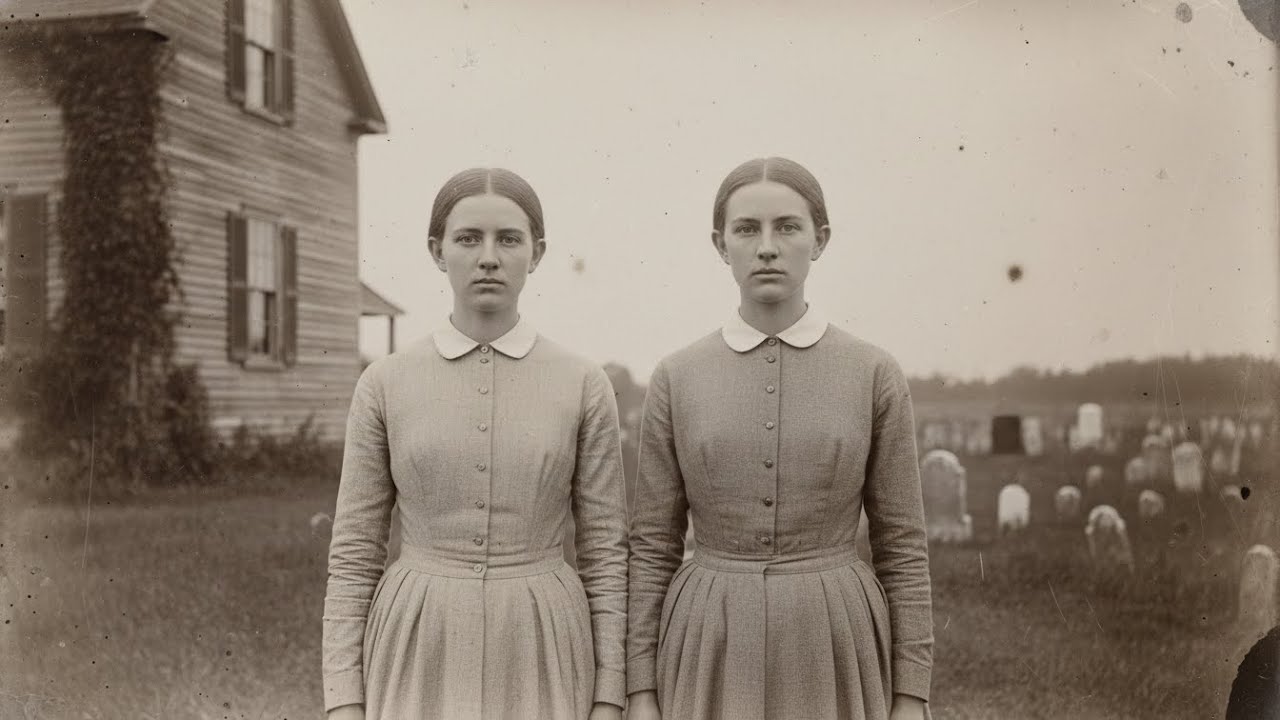
The unmarked grave sat on the old grounds of the Milbrook Inn, a place once famous for its warmth, its comfort, and the four beautiful sisters who ran it. How did a safe haven become a slaughterhouse? And how did the whole thing vanish from history? The light that hid the darkness began in the 1840s, when the Wilderness Road was a thin line of danger and promise cutting through the Kentucky mountains toward the western frontier.
It was a hard path, full of bandits, predators, and brutal weather. The tired traveler who came alone and worn out saw the Milbrook Inn on a ridge above the valley and thought he had found heaven. It was more than a building. It was a legend, spoken of in quiet, respectful tones in taverns three states away.
The four Cunningham sisters ran the inn, and they offered more than clean beds and hot meals. They gave a feeling of being seen, understood, and coming home to a place you had never been before. Merchants changed their routes on purpose, adding weeks to their trips just to spend a few nights with the sisters. Cattlemen risked dangerous mountain passes rather than miss what they called the Milbrook magic.
Strangers came wary and sad; they left with tears in their eyes, feeling they had found something sacred. That warmth came at a cost, a cost far scarier than anyone imagined. The story of the sisters began, like many dark stories, with a death. Jeremiah Cunningham died of tuberculosis in 1831, leaving his four daughters alone on the harsh Kentucky frontier.
He left them an 800-acre mountain estate with livestock, fertile fields, and the inn that was the lifeblood of the family. The sisters, between sixteen and twenty-six years old, were now orphans in a world with little room for unprotected women. Margaret, the oldest at twenty-six, had the sharp, calculating mind of a born financier and a cold, practical nature that people would later mistake for cruelty. It was not cruelty yet.
It was about staying alive. Catherine, twenty-four, was the heart of the operation, beautiful in a way that seemed otherworldly, with an almost supernatural ability to understand others. She could make any man, from poor farmer to rich politician, feel like the only person in the world. It was both a gift and a weapon.
Sarah, twenty-two and quiet, had inherited her mother’s deep knowledge of mountain herbs, remedies, and their darker properties, knowledge that would soon turn the inn’s kitchen into an alchemist’s lab. And Elizabeth, only sixteen, had an innocent charm like a shield, a light that could put even the most cautious traveler at ease. Together they were a perfect, self-sufficient unit. The inn itself was a character in their story.
Their grandfather built it in 1798, when the road was just a dangerous footpath. It was a strong two-story log building with stone foundations, sitting like a crown on the ridge. Two huge stone fireplaces filled the great common room with a warm, hypnotic glow on the tired faces of guests. The kitchen could feed dozens and always smelled of roasting game, baking bread, and Sarah’s herbs simmering.
What made the Cunningham place special was the trust their father had built. For thirty years, the name Cunningham meant safety, quality, and a welcome that felt like family. Jeremiah had made something more valuable than gold: his name. Silent people backed the sisters up.
The foreman was Ezra Hawthorne, a weathered mountain man in his fifties, completely loyal to the Cunninghams and deeply knowledgeable about the mountains. The Zimmer brothers, Klouse and Heinrich, were German immigrants who had come to America for a new life. They ran the farm with ruthless efficiency from their cabin on the eastern edge of the property. In the fall of 1831, the sisters found their own alchemy because they had to.
Margaret’s sharp mind made them money. Catherine’s charm made them beloved. Sarah’s cooking made them stand out. Elizabeth’s youth made them seem harmless.
But that very isolation, which kept them safe from the dangers of the frontier, was also a curse. It gave them their own space, and for four sharp, desperate women with no one to answer to, being alone could be the best way to grow darkness. In November 1832, a man named Thomas Kellerman became the first sign of the earthquake to come. He was a forty-five-year-old cattle buyer from Richmond, a widower with no children and no close friends.
The perfect victim, even before he died. He carried a heavy purse of gold coins, but the real weight he carried was in his soul. His tired horse stumbled up the path to the inn in light snow. He was a man lost in a sea of grief, and Milbrook Inn was his lighthouse.
Margaret met him at the door, her smile a work of art. In one look she took in everything: the sharp cut of his coat, the heavy slump of his saddlebags, and most importantly, the deep, empty loneliness in his eyes. A man traveling alone a year after his wife died carried more than cash. He carried a painful need for human connection.
“Welcome to the Milbrook Inn,” Margaret said, her voice a carefully measured mix of professional warmth and real concern. “I’m Margaret Cunningham and these are my sisters. We’ll make sure your stay is exactly what you need. ” Kellerman took in the scene: the warm glow of the fire, the rich smell of venison stew, the impossible sight of Catherine arranging fresh wildflowers in the dead of autumn.
His eyes, dull with grief, slowly brightened. This was not just a place to stay. It was a cure. There were beautiful, caring women here who would treat him like a man who mattered.
He was tragically and fatally right. Over the next three days, the sisters made Thomas Kellerman feel at home. It was a symphony of manipulation, each sister playing her part perfectly. Sarah’s meals were feasts of resurrection: perfectly seasoned game, warm crusty bread, honey cakes that tasted like a sweeter, forgotten time.
Margaret engaged him in long conversations about business, politics, and the state of the nation, pushing him, making him feel his grief-clouded mind was still sharp. Young Elizabeth’s innocent laughter and wide-eyed curiosity made him feel wise; he told her of his travels and felt like a hero in a grand adventure. But it was Catherine who made the big move, caring for the wound he thought would kill him: his broken heart. On the second night, she found him staring into the fire, lost.
The other guests had gone to bed. She came over with two glasses of spiced rum, the crystal catching the firelight like trapped stars. “You look worried, Mr. Kellerman,” she said softly, sitting down beside him.
“Sometimes sharing a load makes it easier. ” For two hours, Thomas Kellerman spoke, something he had not done in over a year, while Catherine watched with a hypnotic gaze. He told this beautiful stranger about his late wife, Mary, letting out the poisoned grief that had been killing him. He talked about the quiet life they had shared, the pain of failed attempts to have children, the house so silent it still smelled of her lavender soap.
Catherine did not just hear him. She felt his pain. She leaned in, her face showing real care, and sometimes touched his hand, a small electric gesture that seemed to say, “I’m here. You are not alone.
” He talked until his voice broke, until the fire burned down to embers, until the room was full of ghosts. When he finally stopped, Catherine moved her chair closer. “Being alone is a terrible thing,” she said quietly. “A horrible, horrible thing.
But it doesn’t have to last forever. ”
No one ever wrote down what happened next. But Kellerman’s face showed the proof the next morning. He ate breakfast with the buoyant look of a man reborn.
He had changed, and he was already dead. Sure he had found a new beginning, Thomas Kellerman added two more days to his stay. He forgot about his urgent business in Kentucky. In a blissful haze, he made detailed plans to return on his way home, to build a life here away from Richmond’s ghosts.
The morning he left, he handed Margaret a heavy purse with almost twice the normal amount for his stay. “I’ve never been treated this well before,” he said, his voice full of genuine thanks. “You and your sisters have made something very special here. A real safe place.
” Margaret gave her perfect smile. “We look forward to seeing you again, Mr. Kellerman. Have a safe trip.
”
Thomas Kellerman never reached Kentucky. Three days later, his horse was found wandering the Cumberland Gap, riderless. Kellerman himself had disappeared. At the time, it made sense to assume bandits or a terrible accident on the dangerous road.
There was no investigation. No one asked the right questions. Only the four Cunningham sisters knew the truth. Heinrich Zimmer, the quieter of the two German brothers, had waited in the woods half a mile down the road.
He was a quiet, efficient man, good with tools and used to doing things that needed to remain secret. Kellerman never saw the blacksmith’s hammer that killed him. He died with hope in his heart, thinking of the beautiful woman he would see again. That night, with the fires out and guests asleep, the four sisters sat at the big oak table.
In the candlelight, a pool of gold coins sparkled. This was Thomas Kellerman’s money and his life. Margaret stacked the coins with the skill of an accountant. She had already done the math.
This one job had made them more than a whole year of legal business. It was a revelation, a sudden glimpse of a new world of possibilities. “He won’t be missed for weeks,” she said in a calm, factual tone. “No family, no close friends.
He was perfect. ” Catherine, still wearing the kind and caring look she had perfected for their guest, said it was almost too easy. “He was so hurt he would have done anything we asked. ” She said it with a hint of amazement, as if surprised by her own power.
In that moment, surrounded by the smell of cooling bread and the shine of stolen gold, they understood. They had not just found a way to make money. They had found a formula, an alchemical process that turned lonely, forgotten men into pure, untraceable profit. They had figured out how to make people go away.
The winter of 1832 tested them. Stuck in the snow and alone, the sisters had time to think, plan, and perfect their dark art. What had been a desperate, opportunistic act with Kellerman became a cold, planned system. Margaret created clear standards for choosing targets.
The best victim was always a man traveling alone, carrying cash or valuables, and cut off from everyone: no close family, no set schedule, no one who would raise an alarm. Sarah’s role changed from cook to chemist. She began cultivating a secret garden behind the main house where medicinal herbs grew beside their deadly cousins: pokeweed berries that could mimic cholera, foxglove, a beautiful flower that could stop a heart, and water hemlock, a fast-acting poison that left almost no trace. Her kitchen became a lab, her spice rack a weapons store.
Catherine became an expert at reading a man’s soul, figuring out what was wrong with him and becoming the perfect cure. She was a pious spiritual friend to the religious man, a well-read intellectual to the ambitious scholar, an endless source of comfort to the grieving widower. And Elizabeth, the youngest, became their intelligence officer. With her disarming friendliness, she could ask questions that would seem rude from anyone else: where are you going, who’s waiting for you, business or pleasure?
She got men to reveal everything about their lives, their money, their plans, without them knowing they were being judged. The last piece was disposal, handled by the Zimmer brothers. Klouse had found natural limestone caves across the mountain, their entrances hidden. Bodies could be moved on moonless nights and sealed away where the mountain’s own chemistry would do the rest.
They had built a perfect trap. A rumor spread at the time that a local preacher stayed at the inn in the late 1830s. He left after one night, shaken, and would only say: “The hospitality in that house is too perfect. It feels like it wants food.
”
In the spring of 1833, they got their second victim, a test of the new system. William Fraser was a tobacco dealer from North Carolina, thirty-eight and single, a recluse who always traveled alone. He fit the profile perfectly. He arrived on a rainy April evening, soaked and miserable.
The sisters used their plan with the care of a military operation. Margaret spoke with him about the tobacco market, learning about his finances and his lack of close friends. Elizabeth played piano for him, evoking memories of a softer life. Sarah’s cooking made him invent excuses to postpone his trip.
But as always, Catherine delivered the final blow, not with a weapon, but with a word. She found him reading poetry by the fire. “I’m sorry, sir,” she said softly, eyes wide. “I don’t know much, but I do love how beautiful words sound.
Would you mind reading to me? ” William Fraser read poetry aloud to the most beautiful woman he had ever seen for two hours. Catherine listened, watching his face, making him feel like the most eloquent man in the world. When he finished, she placed her hand on his arm.
“You have,” she said softly, “the most beautiful voice I’ve ever heard. ” It was a simple sentence, but it meant the world to Fraser. Years of loneliness and the hard shell around his heart began to break. “I’ve never met anyone like you,” he stammered.
“You bring me back to life. ” Catherine’s eyes held his. “Then don’t go tomorrow. Stay for one more day.
Stay and read to me again. ”
He stayed for a week, during which Catherine made him believe he had found the love of his life. Every night, Sarah put small amounts of pokeweed extract in his tea. The symptoms came on gradually: stomach cramps, dizziness.
Fraser, caught in the emotional storm of his new love, brushed it off as nerves. On the last night of his life, Catherine invited him to a private dinner in her room. Sarah made his favorite meal, roast duck with cherry sauce, served with their best wine, laced with a carefully measured dose of water hemlock. Fraser sat across from the woman he loved, telling her dreams he had not dared to dream in twenty years.
The poison moved through his veins. He felt warm and excited, not knowing it was his body’s last desperate warning. As Sarah had predicted, he died of a sudden massive heart attack. A sad end for a middle-aged man who got too excited over a night of passion.
The next morning they found him in Catherine’s bed, looking peaceful. Margaret added a new feature to the business: a small, respectable family cemetery on the property. A carved headstone on a proper grave made death look decent and respectful. William Fraser was buried with great respect, his death called a tragedy.
The Cunningham estate quietly absorbed his money, wagon, and horses. People said he had simply decided to move west to start a new life. It was believable, and in a world of new frontiers and second chances, no one had reason to doubt it. By the end of 1833, the system was perfect.
From 1834 to 1845, the Milbrook Inn had its best years. Its name became famous from Richmond to Charleston. The sisters had created an impossible thing: a remote mountain outpost with the luxury and personalized service of the best city hotels. Margaret expanded their legal business with a small whiskey distillery and guided hunting trips led by stoic Ezra Hawthorne.
These ventures made money, but more importantly they created a strong public story. The Cunningham sisters were not just hostesses; they were smart, business-minded pioneers. The inn’s guest book, now preserved in the Kentucky State Archives, is filled with the names of politicians, land speculators, merchants, and adventurers of the era, written in Margaret’s beautiful handwriting. Many returned, never knowing they slept a few hundred yards from the graves of those who came before.
Between the lines of legitimate business, a carefully planned killing machine operated. Catherine’s ability to find the invisible men of the world—the loners, the outcasts, whose absence would cause no ripple—had become almost psychic. Sarah’s knowledge of toxicology became terrifying. She mixed different plants, tried mineral toxins, and made compounds with specific effects.
She could cause a death that looked like a stroke, a wasting illness, or a quick violent fever. She kept detailed journals, not recipes for food, but formulas for death, recording dosages, reaction times, and symptoms with cold scientific accuracy. Elizabeth grew into a beautiful young woman whose charm became a powerful tool for gathering information, sitting with groups of men in the common room and getting full reports on each one through harmless questions and playful conversation. And Margaret ran it all, the grand strategist, ensuring everything went according to plan with the cold logic of a general.
In those years, they killed about thirty more people, each death a carefully planned operation. They spaced out the murders, never taking more than a few a year, so no clear pattern emerged. They created believable excuses: heart attacks, hunting accidents, sudden decisions to move west, all supported by the testimony of Ezra or the sisters themselves. The cash came in, and with it, power.
But the constant cycle of seduction, murder, and lies was changing them, hardening their souls. The inn’s warmth became a show, its hospitality a predatory ritual. Jonathan Waverly, a land surveyor from Pennsylvania, arrived in the fall of 1838. He was a different kind of problem: not sad or lonely, but alone, antisocial, and intensely focused on his work mapping the rough land for the state government.
His long absences were planned; no one would notice he was gone for months. His dangerous job gave the perfect excuse. Romance would not work on a man like Waverly, so Catherine changed. She came to him as a kindred spirit, displaying an encyclopedic knowledge of mountain plants and animals, learned from Sarah’s poison research.
She spoke of the mountains not as a beautiful place but as a complicated system of life and death. She accompanied him on shorter surveying trips, and her stamina in the wild broke down his professional reserve. One afternoon, standing on a windy ridge, he said with grudging respect, “I’ve never met a woman who knew this land like you do. Most people see wild places.
You see the hidden order. ” Catherine moved closer, the wind blowing a strand of dark hair across her face. “I’ve lived here all my life,” she said. “The mountains can teach you things that books can’t.
They teach you about life, death, and the fine line that separates them. ” He stayed for three weeks instead of two, believing he had found an intellectual equal. Sarah poisoned him slowly with extract of Amanita virosa, the destroying angel. It did not kill quickly; it worked over days, shutting down his liver with symptoms identical to mountain fever, a real disease that had killed many frontiersmen.
Waverly, the man of science, diagnosed himself with nausea and fatigue, never suspecting the women caring for him had made him sick. His death seemed a sad but expected risk of his job. A merchant bought his expensive surveying tools. His detailed hand-drawn maps went into Margaret’s collection.
His body joined the others in the cave. The sisters built a wall of respectability around their secret. They were active members of the Milbrook Community Church. They gave generously to local causes: a new schoolhouse, struggling families.
Margaret sat on the regional merchants’ association. Sarah served as the town’s unofficial healer. Catherine taught Sunday school. Elizabeth planned the social events that knit the mountain families together.
This was not just a cover; it was a way to control perception. It made them impossible to accuse. Their money, laundered through legitimate means, turned into an empire. They bought land, lent money to farmers at fair rates, and bought into riverboat companies whose profits flowed down the Ohio River.
By 1845, the Cunningham sisters were among the most powerful and respected landowners in western Kentucky. Newspapers ran glowing stories about the hardworking Milbrook sisters who turned their inheritance into a successful dynasty. It was the American dream made real in logs and stones, a dream built on bones. Forty-three men had given their lives for that dream.
The end did not come from the kick of a sheriff’s door or the accusation of a grieving relative. It came from inside, a rot in their own foundation. Heinrich Zimmer, the younger of the German brothers, broke his leg in a hunting accident in 1849. To ease the pain, Sarah prescribed laudanum.
The opiate did not just calm his body; it calmed his ghosts. Heinrich had always been the more sensitive brother, and almost twenty years of involvement in the murders had hollowed him out. The men he had helped bury visited him in his dreams. The laudanum became his only refuge, but the addiction turned him paranoid, moody, afraid of what he might say.
The crisis came on a cold morning in February 1850. Heinrich stood in the kitchen doorway, his eyes wide with drug-fueled fear. Sarah was alone, preparing breakfast for a North Carolina merchant who was to be their next victim. “I can’t do it anymore,” Heinrich whispered, his body shaking.
“I see their faces every night. They’re all there, looking at me. Sarah, there are 43 of them. 43 souls crying out.
” Sarah’s face stayed calm, but her mind raced. Heinrich was no longer useful; he was a ticking bomb who could get them all hanged. “You’re not well, Heinrich,” she said gently, moving toward him. “The laudanum is messing with your mind.
” “No! ” he hissed, his voice rising, and she glanced at the ceiling where the guest slept. “I know what we’ve done. I know what you made me do, and I know it has to end.
God won’t forgive us. ” She spent an hour calming him, her words soothing his frayed nerves. He cried, raged, confessed everything. She listened, nodding in perfect understanding, and finally convinced him to return to his cabin and rest.
She promised they would talk later, a promise she never meant to keep. That night, Sarah made a special dinner for the Zimmer brothers, a thank-you for years of loyal service. The meal featured all of Heinrich’s favorite dishes, and the spiced wine contained a massive dose of foxglove extract. Heinrich died in his sleep.
His death was blamed on a heart problem, sad but unsurprising given his health. Klouse, who drank less, survived, but the poison damaged his heart permanently, leaving him weak and frail, completely dependent on Sarah’s medical care. The immediate danger was gone, but the fix created a new one. Klouse was hurt, but not stupid.
He had seen the signs in their guests before. As he mourned his brother, doubt began to grow. Margaret, always the planner, saw the change. Their perfect system, built on total trust and secrecy, was falling apart.
For the first time in almost twenty years, they were in danger. She quietly began selling assets, accumulating cash, preparing for the possibility they might have to disappear like their victims. Samuel Hartwell, a cotton broker from Savannah, was their last guest. He arrived in March 1851, a widower in his fifties carrying over $1,000 in gold and banknotes.
Lonely, rich, disconnected: the profile fit. The sisters went through the motions, their performance as flawless as ever. Catherine made him feel he had found a friend. On his third night, Hartwell died of what looked like a heart attack.
But they made a mistake, a small, terrible one. Hartwell had a plan. He had scheduled a meeting with a business partner in Pittsburgh for a specific date. When he did not appear, his persistent, powerful partner began asking questions.
The questions traveled down the Wilderness Road from town to town until they reached the desk of Milbrook County Sheriff Thomas Brennan. Brennan was a sharp, experienced officer who had heard rumors about the Milbrook Inn for years but dismissed them as frontier gossip. This inquiry was different: official, pushed by people in another state. His first investigation was routine.
He rode to the inn, and Margaret and Ezra told their practiced story. Yes, Mr. Hartwell had stayed with them, a perfect gentleman. He left for the North on the morning of March 12th in good health.
The guest book proved it. It all made sense. But Brennan was a man who noticed details. A blacksmith in the next county remembered shoeing a horse that looked like Hartwell’s, two days after he was supposed to have left the inn.
A store owner remembered selling goods to a man who looked like Hartwell, on the wrong date again. Small discrepancies, easy to explain away. But they bothered Brennan. He began pulling on the threads, searching old county records for reports of missing travelers.
He expected to find a few, normal for a dangerous frontier. He found fifteen official cases over the past twenty years, and they all had one thing in common: Milbrook. It was not coincidence anymore. It was a pattern.
The old preacher’s words about hungry hospitality now seemed eerily accurate. Brennan knew he faced something more complex than bandits. The Cunninghams were respected, powerful, deeply rooted. A direct accusation would have them warned.
He had to move carefully. The broken, grieving Klouse Zimmer was the last person he expected to help. Brennan saw him on a rare trip to town, weak and haunted. In a casual conversation outside the general store, Brennan mentioned Heinrich.
Klouse lost his composure. “My Hinrich,” he stammered, his German accent thick with emotion. “He was having problems before he died. He talked about things at night that kept him from sleeping.
” He looked around fearfully. “Many secrets are hidden in the mountains, Sheriff. Some of them shouldn’t stay buried. ” It was enough.
Brennan heard the plea of a desperate man. They met secretly in a distant barn, and the story finally came out. Klouse could not say the word murder, but he spoke of midnight trips to the caves, the strange deaths of rich guests, and his brother’s terror in his final days. He gave Brennan enough to break open a twenty-year conspiracy.
The raid came on the morning of April 15, 1851. Brennan gathered eight armed deputies and two federal marshals, knowing he needed outside help against the sisters’ power. In the early morning fog, they surrounded the property and blocked every escape. The sisters’ reaction was a lesson in composure.
Margaret opened the door, concerned but polite, offering help. Catherine looked heartbroken at the suggestion their home might be linked to anything illegal. Sarah offered the deputies coffee and breakfast. Elizabeth looked like a scared girl trapped in a nightmare.
But the show could not hide the physical evidence. The search revealed Samuel Hartwell’s engraved silver pocket watch in a locked chest in Margaret’s room. A portfolio of business papers belonging to Thomas Kellerman sat in a desk drawer. In a small wooden box were a locket, a wedding band, and a faded photograph of a child; gifts from many different men.
The most damning discovery was in Sarah’s rooms: botanical and chemistry books, unusual knowledge of toxicology for a simple mountain woman, and her journals hidden under a loose floorboard, filled with detailed notes on poison recipes, dosages, and effects, matching eerily with the dates of guests’ deaths. Klouse Zimmer, promised leniency, led them to the caves. The deputies moved aside a large rock to reach the dark, narrow entrance. Cold air rushed out, smelling of wet earth and something older, sadder.
Inside, by flickering lantern light, they found the full extent of the sisters’ evil. Skeletons in heaps and piles, forty-three men still wearing the rotting remains of their fine travel clothes. Lantern light caught belt buckles, boot heels, gold fillings. The cave was a quiet underground museum of their crimes.
The crude forensic examination told each death: skulls with holes at the base from a sharp blow delivered to unconscious victims, bodies marked like strangulation, bones discolored by the heavy metal poisons Sarah had perfected. They also found treasure hoards of gold coins, banknotes, jewelry, and valuables. The famous Milbrook Inn had been an efficient slaughterhouse, a place that turned men into money. The trial of the Cunningham sisters became a national sensation.
Reporters from Boston, New Orleans, and other cities crowded into the small Kentucky courthouse. Four beautiful, intelligent women who ran the most prolific serial killing operation in American history was an irresistible story. Commonwealth attorney Daniel Hutchinson presented overwhelming evidence: Klouse’s testimony, the stolen goods, Sarah’s poison journals, the horror in the caves. All pointed to a cold, planned conspiracy spanning twenty years.
On the stand, the sisters behaved in character. Margaret remained calm and defiant, claiming a plot by jealous rivals. Catherine, the emotional artist, collapsed into tearful testimony, veering between frantic denials and melodramatic confessions. Sarah said nothing, sitting through the trial with a stoic, unreadable face; the jury took her silence as the most serious admission of guilt.
Elizabeth, the youngest, played the victim, claiming her older sisters had forced and controlled her. She cried and begged for mercy. The defense attorney, Marcus Fairfield, tried to cast them as victims of circumstance, four orphaned women alone on a dangerous frontier, forced to desperate acts to survive. But it was hard to argue against forty-three skeletons.
The size and cold-blooded duration of the operation made sympathy impossible. The jury deliberated for less than three hours. Margaret, Catherine, and Sarah were found guilty of first-degree murder on multiple counts, sentenced to death by hanging. Elizabeth, spared the gallows for her youth and her performance as a coerced victim, received a life sentence without parole.
On a gray morning in October 1851, the three oldest sisters were led to the gallows. Hundreds watched. Margaret faced death with the cold, logical calm with which she had lived. Catherine and Sarah stood together, holding hands as the nooses were placed around their necks, a final silent act of sisterly solidarity, like the pact they had made years ago at their kitchen table.
The trap door opened. The dark reign of the Milbrook sisters ended. The aftermath lasted for years. Elizabeth Cunningham spent the next thirty-seven years in the Kentucky State Penitentiary, maintaining her innocence until she died of influenza in 1888.
She never had a visitor, left no letters, confessions, or explanations, taking her secrets to the grave. Klouse Zimmer vanished after the trial, haunted by what he had done and seen. He was reported in Ohio, then Missouri, a ghost always looking over his shoulder. Ezra Hawthorne, the loyal foreman, was convicted as an accessory.
He maintained to the end that he believed the sisters’ stories, and died in jail in 1854. The Milbrook Inn itself became a cursed place, sold at auction but unwanted. It stood empty for years until a mining company razed it, erasing it from the landscape. The cave, tomb of the forty-three, was permanently closed by court order.
A simple stone marker was placed: “Here lie unknown travelers. May they find in death the peace they couldn’t find in life. ”
The case forced lasting change. Laws passed throughout the region required guests to register, deaths at inns to be reported, and regular inspections to be made.
The era of unchecked solitude on the frontier was over. The story became a cautionary tale, a dark piece of American folklore about evil hidden in remote places behind a mask of civility. Modern criminologists study the Cunningham sisters as a highly successful criminal enterprise: careful victim selection, advanced methods, foolproof disposal, and the perfect cover story. Margaret is often described as the classic corporate psychopath, with the intelligence, charm, and complete absence of empathy needed to run a decades-long conspiracy.
Catherine’s ability to mirror others’ emotions suggests a profound personality disorder. Sarah’s obsession with poison reveals a sadistic love of control and scientific fascination with death. Elizabeth remains a mystery: a frightened accomplice, a true victim, or the cleverest of them all. Her truth is buried with her.
The horror of the Milbrook Inn is not its violence but how well it worked. If Heinrich Zimmer’s conscience, aided by laudanum, had not broken him, or if Sheriff Brennan had not been so careful, the operation could have continued for another twenty years. How many more men would have ended their journeys in that warm common room? How many more skeletons would rest in that cave?
The fact of its discovery by chance is a frightening reminder that they may not have been alone, that other dark spots on the map may have held similar secrets, where isolation ran so deep screams could not be heard, and charming hosts preyed on the lonely and lost. The Cunningham sisters exploited a terrible weakness of their time. Before quick communication, a man could leave one town and never arrive at the next, his absence causing no ripple for months, if ever. They took that vulnerability and turned it into a weapon, making hospitality, one of the most basic human decencies, into a trap.
Perhaps their greatest crime was not the murders but the betrayal of trust itself. In the hills of western Kentucky, the story persists in strange forms. Some have turned the sisters into witches, supernatural seductresses who used magic to lure men to their deaths. It is easier to believe they were monsters of myth than monsters of flesh and blood, because if they were simply women, what does that say about the darkness that can live behind a friendly smile?
Hunters and hikers report the air around the old grounds is strangely cold, an unnatural silence where even birds refuse to sing. After heavy rain, they find old rusty buttons or tarnished silver cufflinks in the dirt, the last traces of the men who disappeared. The Cunningham case file remains in the state archives, a thick heavy book of horror: Margaret’s financial records, Sarah’s botanical notes, deputies’ sworn statements, faded sepia photographs of the excavation. It is one of the most complete records of a nineteenth-century serial killing operation in existence, proof that it happened.
The story forces an uncomfortable question. What does evil look like? We expect ugly, obvious, monstrous. We do not look for monsters behind the desk of a respected innkeeper.
The sisters were not evil spirits hiding in the woods. They were community leaders, businesswomen, Sunday school teachers, philanthropists. Their deepest darkness was not hidden in a dungeon but behind a mask of complete, unquestionable respectability. Their best weapon was not poison or a hammer but their understanding of human nature.
They knew a lonely man is an easy target, that a man desperate for warmth and connection will walk willingly into any trap that feels like home. They did not just kill their victims; they first seduced their souls, giving them a perfect beautiful dream before the cold ugly end. The forty-three men, the cattle buyer, the merchant, the surveyor, each had a life, a story, hopes and regrets, all erased for a few pieces of gold. They came to the inn to escape the cold and found real warmth, given the best gift, a sense of belonging, just before everything was taken from them.
Does that make the crime better or a million times worse? The question hangs in the mountain air. The last secret of the Milbrook Inn is that the world is full of lonely roads and welcoming lights, and we are all tired travelers hoping to find a little warmth.
