The humiliation had been grinding and absolute, conducted by three of the finest physicians the South could summon, each probing the frail body of the young man on the examination table with the same clinical detachment. By the time the third doctor had delivered his verdict in March of 1858, Thomas Bowmont Callahan had stopped flinching. The words were always the same, dressed in the polite jargon of medical authority: hypogonadism, arrested development, sterility, a failure of the sexual organs to produce viable seed. The implication was inescapable.
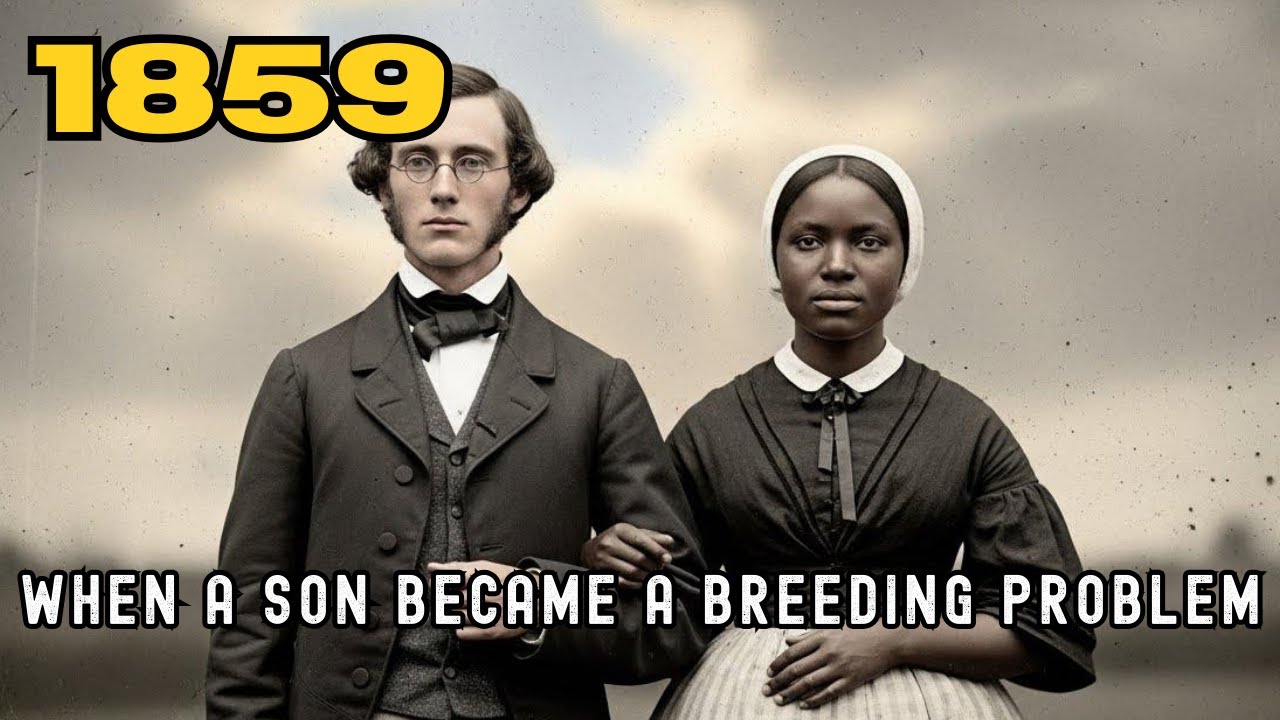
The Callahan line would end with him. At nineteen years old, Thomas stood five feet two inches tall and weighed roughly one hundred and ten pounds, with a chest that caved inward and a constant fine tremor that plagued his thin hands. Thick spectacles magnified his pale blue eyes. His voice hovered in an awkward register between boy and man, and his body remained as smooth and underdeveloped as a child’s.
Three doctors had examined him: the Yale-educated Dr. Samuel Harrison from Natchez, who had been the first to pronounce him sterile; the younger and rougher Dr. Jeremiah Blackwood from Vicksburg, whose conclusion was identical; and the gentle Creole Dr. Antoine Marier from New Orleans, who had studied in Paris and apologized for the intrusion of his examination before confirming the same devastating truth.
Nothing could be done. The condition was permanent. Thomas had been born premature in January of 1840, arriving two months early during one of the coldest winters Mississippi had seen in decades. His mother, Sarah Bowmont Callahan, had gone into labor during a dinner party her husband was hosting for visiting judges and planters.
Mama Ruth, an enslaved woman who had delivered half the white babies in the county, took one look at the newborn and told Judge William Callahan the baby wouldn’t make it through the night. Sarah, delirious with fever, had refused to accept that prognosis, holding the tiny infant to her chest and whispering that she could feel his heart beating, weak but fighting. He survived that first night and all the ones that followed, but survival was not the same as thriving. At one year he could barely sit upright.
The boy’s mother died when he was six, taken by the yellow fever epidemic of 1846. The day before she died, she called him to her bedside and told him he would face challenges his whole life, that people would pity him and underestimate him, but that he had something more valuable than physical strength—his mind, his heart, his soul. She told him not to let anyone make him feel less than whole. She died the next morning.
His father was everything he was not. Judge William Callahan stood six feet tall, with a voice that could silence a courtroom and a fortune he had built from nothing, transforming an initial eight hundred acres into an eight-thousand-acre cotton empire perched on the high bluffs fifteen miles south of Natchez. The Greek revival mansion with its Doric columns and crystal chandeliers sat in stark contrast to the rows of small cabins behind it, home to three hundred enslaved people whose labor made the luxury possible. Thomas had grown up tutored in Greek and Latin, mathematics and literature, history and philosophy, in the quiet of his father’s library of two thousand volumes.
He was too frail for school, too sickly for the boarding institutions where other planter sons went. The path to his ruin had begun in January 1858, when his father arranged a meeting with a potential bride, Martha Henderson of Port Gibson. The meeting lasted fifteen polite minutes before Martha claimed a headache and fled. Thomas overheard her telling her mother that her father couldn’t seriously expect her to marry “that child,” someone who looked like he’d break in half on their wedding night.
After that humiliation, his father summoned Dr. Harrison. The examination that followed was the most humiliating hour of Thomas’s life, involving measurements, manipulations, and comments made aloud about the size and consistency of parts of his body a young man never wished discussed. When it was done, Dr.
Harrison delivered his verdict directly to Judge Callahan: the likelihood of his son producing offspring was virtually non-existent, consummation might prove difficult, and conception would be impossible. The news spread through Mississippi’s planter society with the speed of gossip. The Hendersons withdrew their daughter. The Rutherfords declined.
The Prestons, the Montgomerys, the Fairfaxes all found reasons why their daughters were unsuitable, despite the considerable Callahan fortune. Public comments followed. A woman at church pronounced it a pity about the Callahan boy. A drunken dinner guest opined that the weak ones weren’t supposed to reproduce, that nature had a way of keeping the stock healthy.
A visiting planter examining a horse compared the fine animal to the judge’s son, noting that sometimes breeding just fails. Thomas learned to show no reaction. They were right, in the terms they understood. He was defective merchandise.
His father became distant, spending long hours in his study with bourbon and legal documents. In September 1858, he tried again to find a bride, reaching beyond Mississippi into Alabama, Louisiana, and Georgia, lowering his standards and offering increasingly generous dowries. The responses were variations on a theme, politely declining, with the cruelest noting that they were hoping for a situation with different prospects. By December, his father had stopped trying.
They ate dinner in silence. Then, in March 1859, the explosion came. Thomas was in the library reading Marcus Aurelius when his father, drunk and desperate, laid out his solution. He was fifty-eight years old.
Cousin Robert in Alabama, the nearest male relative, was an incompetent drunk who would sell the plantation within a year. His father had thought creatively about the problem. He was giving Thomas Delilah, a field hand. He planned to have her bred with a suitable male from another plantation, strong stock with proven fertility.
The children she bore would legally be his through careful documentation. On his death, he would will them to Thomas along with papers freeing them and establishing them as adopted heirs. They would inherit everything. Thomas stood up, his hands trembling.
He told his father that what he was describing was evil, that he wanted to use a woman’s body without her consent, that he was treating people like breeding stock. His father dismissed the objection. Delilah was property. Her opinion was irrelevant.
Thomas said no, he would not be part of this, and left the library, his heart pounding. He could not sleep that night. He kept thinking about Delilah, whom he had seen around the plantation but never truly regarded. She was twenty-four years old, nearly six feet tall, with a powerful build from years of fieldwork, skin the color of polished mahogany, and eyes that held an intelligence she had learned to hide.
The overseers called her a prime field hand, worth three regular hands. They also commented, darkly, on the shame of wasting breeding potential like that on fieldwork. Thomas had no authority, no money of his own that he could easily access, no connections to the Underground Railroad. But he could do something.
He could warn her. The next morning he walked down the dirt path to the quarters, twenty small cabins with dirt floors and rough pine plank walls, where the enslaved lived six to ten people per cabin. He asked an elderly woman where to find Delilah and was told she was in the fields until sundown. He waited, walking the grounds to avoid his father, and when the field hands returned exhausted from ten hours of labor, he was standing by her cabin.
The other workers stared. This was highly unusual, the master’s son waiting at a slave cabin. Delilah glanced at the others, then nodded slowly, gesturing him inside. Her cabin was a single room, roughly twelve feet square, with three rough pallets for beds, a crude table, two stools, and a few cooking pots.
Thomas told her everything: his sterility, his father’s desperation, the plan to breed her with a male slave, the legal machinations that would turn her children into heirs. He watched her face cycle through shock, horror, and a kind of weary resignation. “So the judge plans to use me like a broodmare? ” she said.
He told her he wanted to warn her, so she could prepare herself, resist if possible. She asked why he cared, and he told her he had been reading books that made him question everything he had always accepted, and that when his father laid out the plan, something in him could not accept it. She pointed out that he still owned slaves, that his father still owned her, that he was complicit in a system he was starting to understand was evil. He admitted he had no answer for that contradiction, but he could not let the plan happen without at least warning her.
Delilah sat down, suddenly exhausted. She told him she appreciated the warning, but what was she supposed to do with it? She could not refuse. If she resisted, she would be whipped until she complied, or sold to someone worse, or killed.
There was no escape. Thomas heard himself say the words before he had fully thought them through: “There might be. ” He told her about his mother’s trust fund, which he could access. Eight hundred dollars.
He could forge travel passes in his father’s handwriting. They could take a wagon and go north. She stared at him. Did he understand what would happen if they were caught?
He would be imprisoned for slave theft. She would be killed, publicly, as an example. And even if they made it, he would be throwing away everything—his inheritance, his social position, his family name. For what?
To help one slave escape when his father owned three hundred? His answer was the truth: he could not save three hundred people, but maybe he could save one. Maybe he could stop one evil thing from happening. She asked why her.
He said because she was the one his father was planning to hurt, and because maybe they both needed to escape—her from slavery, him from complicity. She studied him for a long time with those intelligent eyes that had been trained to hide themselves. She said she did not fully understand why he was doing this, that part of her thought it was a trap, but if he was sincere, she would take the chance. They agreed on Thursday night, midnight, at the stable.
She asked what he expected from her if they made it north. He told her nothing, only that she would be free, and that what she did with that freedom was her choice entirely. The next two days were agony. He avoided his father, claiming illness.
He withdrew the eight hundred dollars from the bank in Natchez. He packed a bag with clothes and books. He studied maps of the roads north. He practiced his father’s signature until the loops and flourishes were perfect.
He wrote a letter to his father, explaining that he could not be part of the plan for Delilah, that slavery was evil and his participation in it was wrong, that the Callahan line might end with him but it would end with dignity rather than moral bankruptcy. On Thursday night, he lay fully clothed until the house was silent, slipped out through the kitchen door, and hitched a small two-horse wagon in the moonlit stable. At midnight, Delilah appeared, carrying a small bundle that contained everything she owned in the world. She climbed onto the seat beside him.
They headed northeast, avoiding Natchez and its many people who knew him. Every sound in the night made his heart race, but the sounds were only wind and animals. After an hour, she asked him again why he was really doing this, and he told her the real reason: his entire life he had been told he was defective, that he was less than a real man, that he was worthless because he could not produce heirs. His father’s plan would have done to her the same thing society had done to him—reduced her to her reproductive function, treated her as valuable only for what she could produce.
He realized he could not participate in doing to someone else what had been done to him. She said it made perfect sense. They traveled through the night and into the dawn, pulling off the road into a grove of trees to sleep in shifts. Over the next thirteen days, they made their way slowly north, traveling at night, sleeping during the day, avoiding towns.
Three times they were stopped by patrols, and each time Thomas produced the forged travel passes, claiming he was the judge’s son on plantation business, escorting property to Vicksburg for sale. Each time his heart raced as the officer examined the documents, and each time they were waved through and he nearly collapsed with relief. Delilah proved more capable than he was. When a wheel came loose, she fixed it.
When they needed to ford a stream, she went in first to check the depth. When food ran low, she knew which plants were edible and how to set snares. She had learned these things during her years of slavery, knowledge that might mean the difference between surviving and dying. They talked during the long nights.
She told him about her life: born on a plantation in Alabama, sold to his father at fifteen, nine years of fieldwork that should have broken her but didn’t. She told him about watching friends sold away, sisters raped by overseers, mothers separated from children. He told her about his isolation, the loneliness of wealth without friendship, the shame of being called defective, the growing realization that his comfortable life was built on the suffering of others. One night she said, “You’re not defective.
You’re different. There’s a distinction. ” He said society didn’t see it that way. She said society was wrong about a lot of things—wrong about slavery, wrong about women, wrong about him.
By the time they crossed into Tennessee, something had shifted. They had become two people who genuinely cared about each other. They were sheltering in an abandoned barn during a rainstorm when she asked what happened between them when she was free. He said he supposed they would find her a place to live, help her get settled, perhaps stay nearby in case she needed help.
She asked what if her choice was to stay with him. He said she did not owe him anything. She said it was not about owing, it was about wanting. Over the past two weeks she had come to know not Master Thomas, not the judge’s defective son, but Thomas the person, and that person was kind and intelligent and brave in ways he did not even recognize.
She told him she wanted to stay with him, as his partner and companion, not as property or servant, not out of obligation, but out of choice. He told her he could not give her children, that his body was so weak he did not even know if he could offer physical affection. She told him she did not care about children or his body, she cared about him. They kissed there in the abandoned barn, two people from completely different worlds finding something neither had expected.
They reached Cincinnati in early June, having traveled for nearly two months. Thomas used the rest of his money to rent a small house in a neighborhood where interracial couples, while uncommon, were not unheard of. They presented themselves as husband and wife, Thomas and Delilah Freeman—Delilah chose the surname for its symbolism. Money was tight.
He found work as a clerk in a law office; her strong hands, which had once picked cotton, became skilled at creating beautiful clothes as a seamstress. People stared. Some assumed she was his property, others that she was his mistress. They built a life based on choice rather than ownership.
In November 1859, they married legally, or as legally as an interracial couple could manage, in a small church with a Quaker minister who did not care about racial boundaries. It was not recognized by most authorities, but it felt real. When the war came in 1861, neither could fight, but they contributed. Their home became a stop on the Underground Railroad.
Delilah helped newly escaped people adapt to freedom, and Thomas used his legal knowledge to help free Black people navigate documentation requirements. Once, after a lecture in Cincinnati, they approached Frederick Douglass, and Delilah told him their story. Douglass listened, then said they had both taken their freedom in different ways—she from a system that tried to own her, he from a system that tried to define him by physical limitations. He said both had proven that freedom was about choice, not circumstance.
They never had biological children. But in 1865, after the war, they adopted three children who had been enslaved and orphaned. They named them carefully: Sarah, after Thomas’s mother; Frederick, after Douglass; and Liberty, because that is what they represented. They raised the children in freedom, taught them to read and write, sent them to school, and taught them that their worth was determined not by society’s prejudices but by their own character and choices.
Sarah became a teacher who educated freed slaves. Frederick became a doctor serving Cincinnati’s Black community. Liberty became a lawyer who fought for civil rights. Thomas lived longer than anyone expected.
The doctors who had pronounced him unfit for breeding had predicted he would not live past thirty. He made it to forty-two. He died in 1882 of pneumonia, the same illness that had killed his mother. As he slipped away, with Delilah holding his hand, he whispered, asking if he had done right, if leaving everything and bringing her north had been worth it.
Tears streamed down her face. She told him he had given her freedom, dignity, love, a life where she was a person rather than property, and children who would grow up free. She told him it was worth everything. His last words were that he loved her.
Her last words to him were that she loved him. Delilah lived another eighteen years, dying in 1900 at sixty-five. She spent those years working for civil rights, telling the story of slavery and freedom, teaching young people about the importance of choosing justice over comfort. They are buried together in Spring Grove Cemetery in Cincinnati under a shared headstone: Thomas Bowmont Callahan Freeman, 1840–1882, and Delilah Freeman, 1835–1900, married 1859.
In 1920, Liberty published a book titled From Property to Partnership: The Story of Thomas and Delilah Freeman, telling the story of the white man society called unfit for breeding and the enslaved woman society called property, and how both found freedom and love by rejecting the labels others had placed on them. The historical records confirm the essentials. Thomas’s birth in 1840, his medical examinations in 1858, his trust fund withdrawals in 1859. Delilah’s sale to Judge Callahan is recorded in plantation ledgers from 1850.
Cincinnati city directories list Thomas Freeman as a law clerk from 1859 to 1882 and Delilah Freeman as a seamstress from 1859 to 1900. Their marriage, unrecognized by state law, was recorded by the Quaker meeting house. Their children’s birth records and adoption papers survive in Cincinnati archives. The gravestone remains in Spring Grove Cemetery, visited by descendants and historians interested in unconventional stories of freedom and love from the slavery era.
Thomas was not broken because his body did not develop normally. Delilah was not property. They defied labels and built lives based on choice.
Judge Callahan’s plan to ensure his legacy instead catalyzed something more valuable: two people finding freedom, building lives of dignity and love, and proving that human worth cannot be determined by physical ability or social status.
