The axe came down with a single, brutal stroke. Alexander Shubayev buried it deep into the back of Johann Niemann’s head, splitting his skull open. Niemann, the deputy commander of the Sobibor extermination camp and the highest-ranking SS officer on duty that day, died without a sound. It was just after four in the afternoon on the 14th of October, 1943, and the revolt at Sobibor had begun.
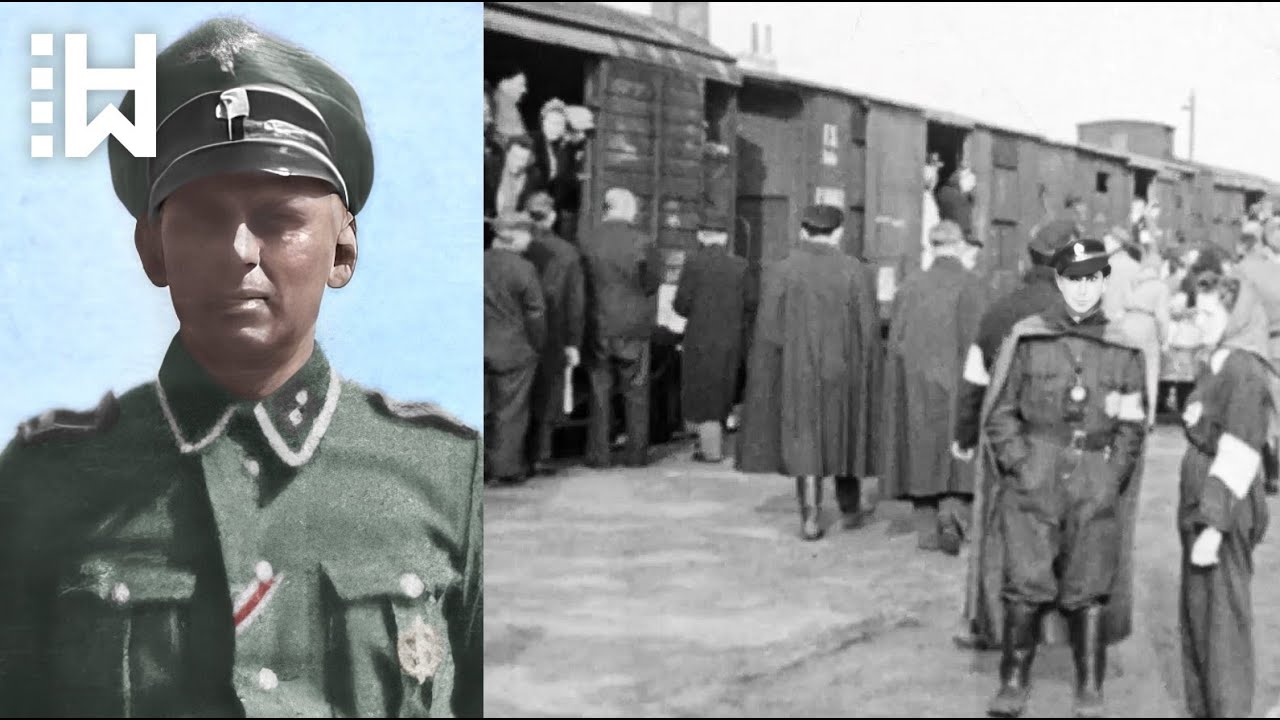
The men and women who carried out that first killing were prisoners marked for death. They had no weapons but their hands, a few blades, and an axe. The camp held about 600 Jews who had been spared immediate gassing only to work under the harshest conditions. For months, they had watched transports arrive, knowing that nearly all of their fellow Jews were dead within an hour of stepping off the trains.
By the autumn of 1943, they had reached a terrible conclusion: Sobibor was about to be closed, and its workers would be murdered on the spot. The plan they formed was desperate—they would kill as many SS guards as possible, seize the camp, and run for the forest. They knew most would die. They went ahead anyway.
This was the end of a long road that began in Germany more than a decade earlier, when the machinery of mass murder was first set in motion. On the 30th of January, 1933, Adolf Hitler, the leader of the Nazi party, was appointed Chancellor of Germany by President Paul von Hindenburg. Within a short time, the new regime began to strip civil and human rights from the Jewish population and opened the first concentration camp at Dachau, near Munich. Between 1933 and 1945, Nazi Germany and its European allies would establish more than 44,000 camps and other incarceration sites, including ghettos.
These places were used for forced labor, for the detention of people deemed enemies of the state, and, ultimately, for the mass murder of millions. One of the men who administered this system was Rudolf Höss, a German SS guard and a fanatical believer in Nazi ideology. Höss was born on the 20th of February, 1910, in Osnabrück, then part of the German Empire. Before he began his criminal career in the concentration camps, he joined the Nazi party and the SS.
The Schutzstaffel, or protection squads, had been established in April 1925 to protect Hitler and other Nazi leaders and speakers at political meetings. Its members swore an oath of complete loyalty to Hitler and were subject to strict military discipline. In January 1929, Heinrich Himmler became head of the SS, and the organization expanded rapidly. By the time Hitler came to power in 1933, Himmler had made the SS the dominant organization within the Reich.
Hitler entrusted the SS first and foremost with the removal and eventual murder of political and so-called racial enemies of the regime. The SS became a state within a state, staffed by men who saw themselves as the racial elite of the Nazi future. To become an officer, a man had to prove his own and his wife’s racial purity back to the 18th century, appear Aryan, and pledge unconditional allegiance to Hitler. In 1939, Himmler created special SS courts that allowed the SS to ignore established German law.
From that year, the SS assumed responsibility for solving the so-called Jewish question, a task that culminated in 1941 when the leadership planned, coordinated, and directed the final solution: the genocide of European Jews during World War II, known as the Holocaust. SS officers directly managed the concentration camps where millions of Jews were murdered by poison gas. Before that genocide reached its full scope, the regime tested its methods on another group of victims. In 1940, a true believer in Nazi racist ideology named Rudolf Beckmann was sent to the Grafeneck T4 facility, the first centralized killing center established by German authorities as part of the Nazi euthanasia, or T4, program—the systematic extermination of institutionalized patients with disabilities.
Grafeneck was a castle, and its secret killing operations began in January 1940, when the recruited T4 personnel arrived. About 100 staff members, including physicians, nurses, and police, were led by the German physician Horst Schumann. Their task was to kill patients with mental and physical disabilities who lived in care facilities across Germany. The patients were gassed in chambers with pure, chemically produced carbon monoxide.
During the year Grafeneck was in operation, more than 10,600 people were killed there through gas and lethal injections. Beckmann’s duties included moving the murdered victims from the gas chambers to the crematorium. The killings at Grafeneck ended abruptly in December 1940, when the castle’s clandestine activities began to attract public attention. Under pressure, euthanasia officials hastily shut the center down.
Shortly before it closed, most of the staff, including Rudolf Beckmann, transferred to the newly established Hadamar T4 facility. There, in the first phase of the killing operations between January and August 1941, around 10,000 men, women, and children were asphyxiated with carbon monoxide in a gas chamber disguised as a shower room. The victims arrived by train and in gray buses. Before they were killed, they were brought before physicians such as Adolf Wahlmann, who identified each person with a colored sticking plaster for one of three categories: murder, murder and removal of the brain for research, or murder and extraction of gold teeth.
The killings became routine. In the summer of 1941, the staff celebrated the cremation of their 10,000th patient with beer and wine. Because the crematorium ovens were often filled with two corpses at a time, the process was less than perfect, and a thick, acrid smoke hung over the town. Between 1941 and March 1945, almost 15,000 men, women, and children were killed at Hadamar through starvation, lethal injections, and gassings.
The victims included mentally disoriented elderly people from bombed-out areas and German soldiers deemed psychologically incurable. Historians estimate that the T4 program as a whole claimed the lives of 250,000 men, women, and children. It predated the Holocaust by about two years. In the fall of 1941, Nazi Germany implemented a plan to systematically murder the two million Jews living in German-occupied Poland.
The plan was code-named Operation Reinhard, and under it three killing centers were established: Belzec, Sobibor, and Treblinka. In the spring of 1942, Rudolf Beckmann helped establish the Sobibor killing center and became the camp’s head of the sorting commands, in charge of sorting the clothing and other possessions taken from murdered Jews. He also handled administration matters and was responsible for tending the horses. German SS and police officials conducted deportations to Sobibor between May 1942, when regular gassing operations began, and the fall of 1943.
Most of the Jews who arrived were gassed immediately with carbon monoxide piped into the chambers from an engine. About 250,000 victims were murdered at Sobibor. The site was run by roughly 50 German and Austrian personnel, generally men of lower middle-class backgrounds. According to survivors, local women from the village of Sobibor were often employed as housekeeping staff and cooks.
These civilians had economic incentives to support the camp’s existence, and it is believed they knew what was going on inside. The Germans built Sobibor as a rectangle, 1,312 by 1,969 feet. A double barbed wire fence woven with tree branches surrounded the perimeter, designed to hide the view of the interior. The camp had two side-by-side gates, one for trains and another for foot traffic and vehicles.
Great attention was paid to the front compound, which held living quarters and recreational buildings for the personnel. The SS officers lived in cottages with colorful names, a detail intended to conceal the camp’s true purpose from new arrivals stepping onto the adjacent ramp. When transports of 40 to 60 freight cars arrived at the Sobibor railway station, only 20 cars at a time were taken into the camp. The rest of the victims remained locked in the rail cars.
Once inside, the Jews were brought to the arrival area, where an SS man gave a welcoming speech. They had reached a transit camp, he told them, on their way to labor camps. Before the next part of their journey, they were to take showers, have their clothes disinfected, and get a meal. The men and women were then separated.
Children went with the women. The Nazis ordered the victims to remove their clothing and hand over their valuables. Then the Jews were marched on the run to the gas chambers. The honking of geese was used to obscure the cries of the victims from those still locked in the rail cars.
Guards beat the prisoners, screamed at them, and fired warning shots. Between 450 and 550 Jews were forced into the chambers at a time. Once the maximum number was inside, the doors were sealed and poison gas piped in. Within 20 to 30 minutes, everyone inside was dead.
Those too ill, weak, or elderly to make the walk were shot in an open pit. The SS personnel at Sobibor lived comfortably. They received higher pay and could visit home every three months for two weeks. They stole the possessions of the murdered—gold, food, hair, and other valuables.
Guards took toys from murdered children home to their families. It is believed that Rudolf Beckmann took part in this plunder, as did colleagues such as Johann Niemann, who made sizable deposits of money each time he went home. Between transports, the staff drank, played music, and enjoyed card and board games—all while thousands of people were being murdered. As an official reward, they were even given a trip to Berlin and Potsdam.
During the year and a half Sobibor was operational, prisoners made several attempts to escape. On one occasion, 72 Dutch Jews organizing an escape were betrayed by a Kapo and executed on the order of Johann Niemann. Then, in the summer of 1943, rumors began to circulate that Sobibor would soon cease operations. The prisoners understood this meant certain death for all of them.
They knew what had happened at Belzec, whose prisoners had sewn messages into their clothing before being killed. One such message read: “We worked at Belzec for 1 year and did not know where we would be sent next. They said it would be Germany. Now we are in Sobibor and know what to expect.
Be aware that you will be killed also. Avenge us. ”
In September 1943, 20 Jewish Red Army prisoners of war arrived at Sobibor on a transport from the Minsk Ghetto and were selected for labor. These soldiers had the expertise necessary to plan an escape.
One of them, Alexander Pechersky, became the leader of the revolt. The uprising began late in the afternoon of the 14th of October, 1943. The targets were carefully selected. The first to be assassinated was Johann Niemann, the camp’s deputy commander.
At four o’clock, Niemann, after a ride on horseback, was lured to the tailor’s barracks with the promise of being fitted for a leather jacket taken from a murdered Jew. Armed with his pistol and whip as usual, he walked in. Alexander Shubayev, a Jewish Red Army prisoner, was already waiting with an axe. When Niemann asked the tailor what Shubayev was doing there with an axe, the tailor replied that he was there to repair the table.
The tailor then asked Niemann to remove his pistol holster, put on the jacket, and turn around so alterations could be checked in the back. Niemann complied. Shubayev snuck up behind him and buried the axe into the back of his head. Niemann was dead on the spot.
The next target was Rudolf Beckmann, then 32 years old. The conspirators had originally planned to lure him to an appointment in the storage barracks, but Beckmann, on his way, suddenly turned around and headed back to his office in the administration building. Chaim Engel, a Polish Jew, together with a Kapo named N. Pozicki, volunteered to kill him there.
They found Beckmann behind his desk. While Pozicki restrained him, Engel stabbed their overseer again and again, crying with each thrust: “This is for my father, for my mother, for all the Jews you killed. ” Beckmann fought back, and Engel’s knife slipped, cutting his own hand and covering him with blood. When Beckmann was dead, the two men, with no time to hide the body properly, pushed him under the desk and took his rifle.
In total, 11 SS officers were killed by the rebels. Then chaos took over. Prisoners had to escape by climbing over the barbed wire fence or running out the main gate through a minefield under heavy machine gun fire. Some stepped on mines.
Some gave up and did not run at all. Chaim Engel, who had killed Beckmann, was among those who ran. He grabbed his girlfriend, Selma, and fled into the woods. The two hid in a Polish farmer’s hayloft for nine months before making their way to Holland.
Approximately 300 prisoners escaped, but most were chased down and killed. Those who had not joined the escape were killed as well. Some 50 of the escapees survived the war. After the revolt, SS chief Heinrich Himmler ordered that Sobibor be closed.
A funeral was held for Beckmann and the other officers killed during the uprising. The widow of Johann Niemann, the first officer to die, was sent her late husband’s belongings, including two photograph albums he had compiled containing images of his Holocaust-era service. The collection became known as the Sobibor Perpetrator Album and was made public only in 2020.
There were no tears shed for Rudolf Beckmann.
