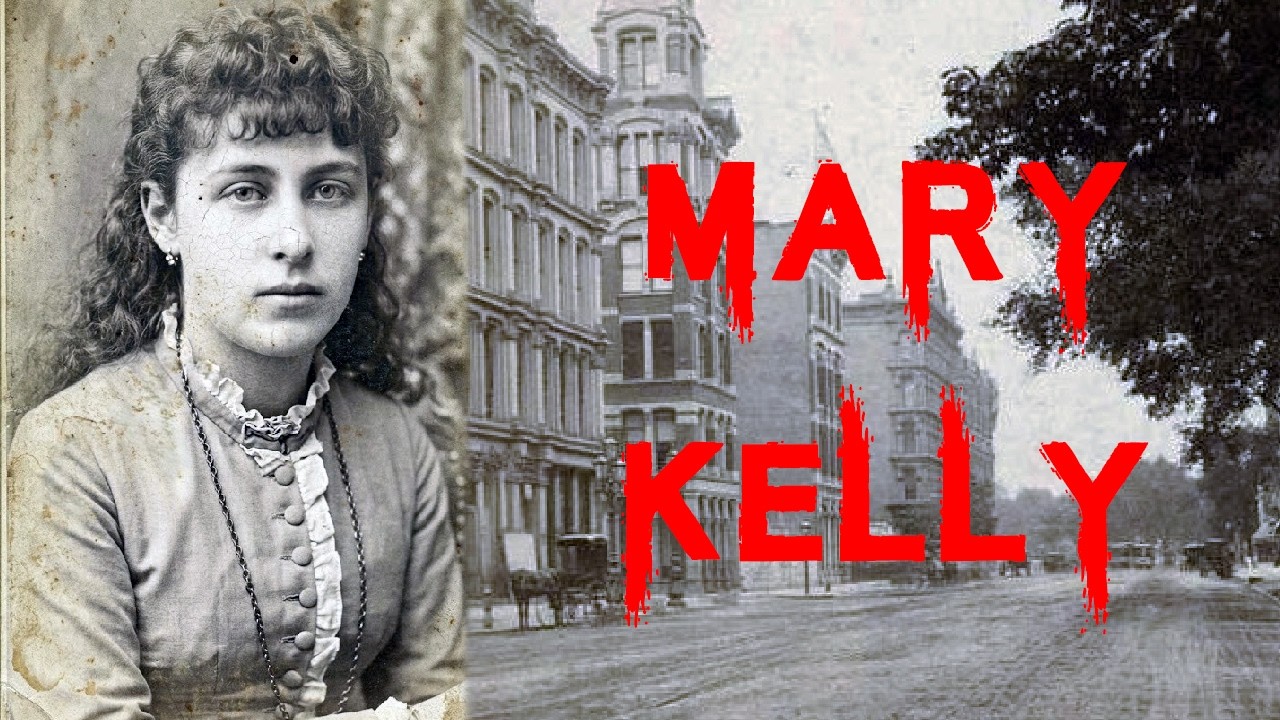
On the 2nd of December 1877, in a room above the establishment at 100 Cross Street in Cleveland, Ohio, a young woman named Mary Kelly lay on a bed. A man who had spent weeks searching for her, a man named Charles McGill, was beside her. She believed he had finally accepted her refusal to return to him. Then he placed his hand beneath her head, took a revolver from his pocket, and fired.
Mary screamed. Charles said, “Forgive me,” and fired again and again until no bullets remained. Mary had been shot in the head and face and was not moving. Charles calmly reloaded the revolver and, after moving her arm to the side, fired again, this time aiming for her heart.
The shots were fired from such close range that the powder set her dress on fire, and twice he extinguished the flames with his hand. When all the shots had been fired, he threw down the revolver and went downstairs. He asked for water to wash himself and told those present to send for the police. When no officer arrived, he went out onto the street to find one.
Finding no policeman near the corner, he returned to the house, went back upstairs, and kissed Mary, staining his face with blood. When a policeman finally arrived, Charles surrendered without resistance. He admitted what he had done and said the only thing he regretted was the sorrow it would bring to his mother. Speaking in a clear voice, he said he was not sorry for killing Mary and would do it again if necessary.
He also asked that she be buried decently, saying he had enough money for that and she should not be stowed away in a pauper’s grave. Mary Kelly was born in 1854. Her mother died while she was young, and her father was placed in a soldier’s home at Dayton, so she was sent to live with an uncle and aunt who cared for her well and ensured she received a good education. At sixteen, she was described as a young lady of pleasing appearance and intelligent manner.
But under the persuasion of her uncle, she married a man named David Lawson, and the marriage soon proved disastrous. He was, by all accounts, a drunken and worthless man. They had one child, who tragically died. When her husband was sent to prison, Mary separated from him.
By 1873 she found work in domestic service in Columbus, Ohio. A year later, in 1874, she met Charles McGill. He was charming, polite, and self-possessed, the sort of person who could easily gain the confidence of others. He had been born on the 11th of May 1850 in Athens, Ohio, and had attended Ohio University until his father’s death forced him to leave his studies and find work to support his mother.
He went to Columbus, learned the trade of wood finisher, and married and became a father. At that time, he was considered a fine and industrious man living a respectable life. That changed on the day he went out with a friend named Elliot Heimrod. When two young women passed by, Mr.
Heimrod suggested they follow them, and Charles agreed. It was a decision made without much thought, but it had great consequences. One of the young women was Mary Kelly, and Charles very quickly became infatuated. Although he had a home, a wife, and a child in Columbus, they began to feel like a burden to him.
He abandoned his family and persuaded Mary to leave her position and travel with him to Toledo. Unable to find regular work there, they moved to Cleveland. Although they were not married, they lived together and told anyone who asked that they were husband and wife. Their circumstances became desperate.
Money was scarce, they lived in an impoverished way, and at times went without food. In the absence of any other means of support, Mary turned to prostitution, and Charles came to rely on what she earned. The arrangement was a source of shame to him and hardship to her, and it placed a growing strain on their relationship. Eventually, following an angry quarrel, Mary left him without telling him where she was going.
Charles returned to his childhood home and lived with his mother again, but found it impossible to live without Mary. He borrowed money and wrote letters to Cleveland, Cincinnati, and Columbus trying to trace her. All were returned. Believing she might be in Cleveland, he traveled there and searched for four weeks.
Finally, he saw her outside the post office in the company of another woman. He followed her at a distance as they walked along Broadway near the central markets, then approached and asked how she had been. Mary did not want to speak to him and went into a saloon to get away. Charles followed her and persuaded her to speak with him for a few minutes.
The conversation soon grew heated, first over the returned letters, then over the way Mary said Charles had treated her, and the fact that he had exposed her past to her relatives. The argument became so loud that the saloon proprietor intervened and warned them to keep quiet. Speaking more cordially, Charles again tried to persuade Mary to return to him. He said they could go to Fort Wayne, that he would find work on the railroad, and promised to be kind to her and provide everything she needed.
Mary refused. When he asked if she would at least return to Columbus, she again said no. Looking straight at him, she said it was too late and there was no going back after everything that had happened. She told him all he could do was leave her alone, and she left the saloon with her companion.
Charles did not abandon his efforts. Later that night, he went to the house where she was living at 100 Cross Street and realized it was a house of ill repute. He told her he had nowhere else to go and asked to stay just one night, promising to go in the morning. Mary reluctantly agreed.
Over the next few hours, Charles did not shout. He remained calm and spoke in a soft voice, even though all he wanted was for her to return to him. In the morning, he urged her to pack her things and leave with him, but she again refused. Believing he had no further chance, he took her hand, said goodbye, and left.
But he did not leave Cleveland. He returned that same day and asked her for five dollars to return to Columbus, saying he had fallen on hard times and had pawned his coat and everything he could spare. He said he cared deeply for her and would rather die than lose her. Mary suggested they talk in her room.
There, she once more told him she would not go anywhere with him. She reminded him of the hardship they had endured, that since he had not worked she had been forced onto the streets for them to survive. She told him she had been living in her current room for five weeks and was earning more than ever before. She mentioned gifts she had received, including fifteen dollars from a gentleman of which she had spent thirteen on a new dress, and insisted her life was good and she had no intention of leaving.
For Charles, this was more than he could bear. Her words made him feel neglected. He told her that her way of life would make her aunt and grandmother ashamed, but Mary ignored him. They continued to lie on the bed.
Because he was not aggressive, she believed he finally understood and would soon go. Then he placed his hand beneath her head, she turned slightly away, and he fired. The inquest began on Monday, the 3rd of December, at the Central Station under Coroner Flightner. The principal witness was a young woman named Mary Campbell, who had known Miss Kelly for three weeks and had seen her with Mr.
McGill on both the 1st and 2nd of December. She testified that he seemed very calm. On the Sunday evening, she heard a noise from Mary’s room, went up, and saw Mr. McGill holding a revolver and Mary screaming.
Frightened, she ran downstairs and went in search of a policeman. Her testimony was confirmed by Laura Lane, the owner of the business at 100 Cross Street. Doctors Adams and Sacrider conducted a postmortem and found the victim had been shot eleven times. In his testimony, Charles McGill said he was twenty-seven years old and the woman he had killed was twenty-four.
He admitted he had a wife and child in Columbus and stated that Mary Kelly had been the cause of their separation. He appeared deeply affected as he spoke, saying he loved Mary with all his heart and that after he killed her he hugged and kissed her again and again. He added that on the Saturday afternoon she had asked for fifty cents to buy ribbons because she had an appointment with a man, and he knew what that meant and it made him feel very bad. The jury found Charles McGill guilty of willful murder and committed him to stand trial.
Newspapers followed the case closely. They tracked down his wife, described her as a neat and respectable-looking woman, and reported that two of his brothers had at various times been imprisoned. On the 2nd of January 1878, Charles’ mother visited him in his cell in a deeply moving reunion. When she left, she was visibly distressed and told reporters she was shocked by what her son had done, though she admitted he could be wild, she insisted he had never before shown signs of violence.
While awaiting trial, Charles’ behavior became erratic. He complained of headaches, spoke of meeting Mary at night, and described dreams in which he walked with her into strange places filled with people dressed in white. The trial began on the 19th of February 1878 before Judge McMath. Nearly three days were spent selecting a jury of twelve men.
Despite previously admitting to killing Mary, Charles pleaded not guilty due to insanity. His defense introduced evidence that he had suffered from sleepwalking and had received blows to the head in childhood. Witnesses who had known him since childhood confirmed the sleepwalking. The defense also produced witnesses who had seen Charles beaten up by two policemen in August 1877 and claimed this beating had seriously affected his brain.
Dr. E. H. Peck, who had visited Charles in prison, testified that his behavior struck him as peculiar and not entirely consistent with a rational man.
But when asked directly whether he believed Mr. McGill to be insane, the prosecution objected, and the judge upheld the objection, refusing to allow the question to be answered before the jury. The defense also stated that Charles had not originally intended to kill Mary but rather to take his own life, believing that by doing so she would suddenly understand her situation and turn away from the life she was leading, a life he regarded as immoral. After nearly a week of testimony, the jury deliberated for six hours and returned a verdict of guilty of murder in the first degree.
Judge McMath sentenced Charles McGill to death and set the 28th of June 1878 for the execution. Efforts to overturn the verdict were initially denied, but eventually the Supreme Court agreed to a new trial due to a technicality. The evidence was reviewed again, the defense again attempted to establish an insanity plea, and the outcome did not change. Charles was again found guilty and again sentenced to death.
As the execution date approached, appeals for clemency were made. A delegation from Cleveland urged the governor to commute the sentence to life imprisonment, but all efforts failed. On Thursday, the 13th of February 1879, Charles Armigel was led to the gallows. His final words were, “Don’t make any mistake on that rope.
” He was then hanged.
