Margaret Tudor entered the world on 28 November 1489 at Westminster Palace, the first daughter and second-born child of Henry VII and Elizabeth of York. She arrived only four years after her father had taken the English crown on Bosworth Field, bringing the Wars of the Roses to a close and leaving the Tudor line fragile and still shoring up its claim to rule. From the cradle, Margaret existed less as a person than as a bargaining chip, a breathing emblem of alliance in a realm still healing from civil conflict. She grew up in the royal nursery with her elder brother Arthur, the heir apparent, and her younger brother Henry, who had originally been marked for a life in the church.
Her schooling was built around turning her into a fitting consort: Latin, French, music, dancing, needlework, strict religious teaching, and the bearing expected of a future queen. Her redoubtable grandmother, Lady Margaret Beaufort, took a hands-on interest in how she was raised, drilling into her the virtues of feminine piety and dignity. By the late 1490s, Henry VII was pursuing an ambitious diplomatic gambit: peace with Scotland, England’s longstanding foe to the north, which had for generations sided with France against the English. In 1502, talks opened regarding a match between Margaret and James IV of Scotland, a ruler seventeen years her elder.
The Treaty of Perpetual Peace was sealed that year, and Margaret, barely twelve, stood at the heart of its provisions. She wed James by proxy in January 1503 at Richmond Palace, and then in person on 8 August 1503 at Holyrood Abbey in Edinburgh. She was thirteen. James IV was a refined Renaissance monarch who greeted her with lavish festivities, yet the union was a matter of state, not of love.
Her task was to produce heirs, stand behind her husband, and keep the lines to England intact. Margaret made her way into Scottish court life, though she never forgot that she was a foreign queen in a land with a long history of enmity toward her homeland. Her first years as Queen of Scots were comparatively steady. Between 1507 and 1514 she bore six children, but only one lived past infancy: her son James, born in April 1512.
Death in infancy and childhood was appallingly routine, even in royal households, and Margaret endured these losses with stoic resolve while continuing to bear heirs. James IV, for his part, was no faithful spouse, keeping mistresses and siring illegitimate children, a situation Margaret had to handle with composure. Even so, the marriage worked as a political partnership. Margaret’s life was changed forever on 9 September 1513, when James IV fell at the Battle of Flodden, one of the bloodiest clashes ever fought between England and Scotland.
James had marched into England to back France, honoring the old alliance in spite of his marriage to an English princess. The Scottish army was destroyed, thousands of noblemen perished beside their king, and Margaret, at twenty-three, was left a widow with a baby son who was now King of Scots. Under the terms of James IV’s will she was appointed regent, but her footing was shaky from day one. She was a woman, a foreigner, and the sister of Henry VIII, the very king whose troops had slain her husband.
Scottish lords eyed her with distrust, and factions quickly formed as powerful nobles scrambled for control of the young king. Her regency came with a condition: remarriage would cost her the position. In August 1514, Margaret secretly wed Archibald Douglas, Earl of Angus, a Scottish nobleman. The match proved a political catastrophe.
It voided her regency, turned both English and Scottish factions against her, and handed Scottish lords the excuse they needed to strip her of power. The regency went to John Stewart, Duke of Albany, a nobleman aligned with France who arrived from that country in 1515. Margaret’s standing crumbled. She fled to England with her children in 1516, hoping for shelter from her brother, but her political clout had already vanished.
Her marriage to Angus soured into mutual loathing; he controlled her income and curtailed her movements. In 1527, she obtained a papal annulment on questionable grounds and married Henry Stewart, later Lord Methven. This third marriage did further harm to her reputation. Her remaining years were defined by money troubles, political sidelining, and estrangement from both her son and her brother.
Margaret Tudor died on 18 October 1541 at Methven Castle in Perth, at the age of fifty-one. Her passing drew little notice in England, eclipsed by Henry VIII’s marital and political upheavals. Her legacy, though, reached far past her troubled life. Her son James V married Mary of Guise, and their daughter grew up to be Mary, Queen of Scots.
Mary’s son, James VI of Scotland, took the English throne in 1603 as James I, joining the crowns and bringing to fruition the dynastic promise of Margaret’s marriage a century before. Every British monarch since has been descended from Margaret Tudor, which makes her one of the most pivotal figures in royal history. Mary Tudor was born in March 1496 at Richmond Palace, the fifth child and third daughter of Henry VII and Elizabeth of York. By that point, the Tudor dynasty stood on firmer ground than it had when Margaret arrived seven years earlier.
Contemporaries described Mary as lovely, spirited, and charming, traits that raised her worth on the European marriage market. She stayed at the English court into her teens, growing into a central presence in courtly entertainments and pageantry, and was trained in French, Latin, music, and dance. After Henry VIII came to the throne in 1509, Mary became an ever more valuable diplomatic instrument. She was promised in marriage several times during her teenage years, each betrothal mirroring a shift in political calculations.
By 1514, Henry VIII required an alliance with France. Louis XII, a widower in his fifties, was looking for a new wife. Henry put his sister forward. Mary was eighteen; Louis was fifty-two.
The match was politically convenient but personally unappealing, and Mary is said to have resisted it. Royal daughters had little say in such affairs. The marriage was settled, and Mary wed Louis XII by proxy in August 1514, then formally at Abbeville on 9 October. She was crowned Queen of France at Saint-Denis on 5 November.
Her reign as queen lasted under three months. Louis XII died on 1 January 1515, probably from illness rather than any exertion connected to his young bride, despite the lurid gossip. Mary was a widow before she turned nineteen. French custom demanded that a dowager queen stay in seclusion for a time to confirm she was not with child.
Through those weeks, Mary realized her future was being decided without her. Her brother Henry VIII was working out how best to deploy her in upcoming marriage negotiations, and the new French king, Francis I, had his own political designs. It was during this stretch that Charles Brandon, Duke of Suffolk, reached France. Brandon was Henry VIII’s dearest friend, a handsome courtier and soldier dispatched to bring Mary back to England.
There is evidence that Mary and Brandon had grown attached before her marriage to Louis XII. Now, with Louis gone and Mary exposed, they made a choice that would send shockwaves through the Tudor court. In late February or early March 1515, Mary Tudor and Charles Brandon were secretly married in France. The union was rash and politically hazardous.
Mary was a king’s daughter and a dowager queen, while Brandon was a duke of comparatively humble origins. Their marriage broke royal protocol and challenged Henry VIII’s authority, putting both at risk of exile, imprisonment, or something worse. According to reports, Mary told Brandon that if she went back to England unwed, her brother would simply arrange another political match for her, and she was adamant that the marriage take place.
When word got out in England, Henry VIII was enraged, seeing himself as betrayed by his friend and humiliated by his sister’s defiance. Mary and Brandon sent him letters begging forgiveness and recalling a promise he had supposedly made: that if she wed Louis XII, she would be free to pick her second husband. It is still uncertain whether that promise was ever truly given or simply invented, but it gave them a rhetorical basis for their case. They also handed back Mary’s large dowry and jewels, a financial concession that helped mend relations.
Henry’s fury cooled over time. In May 1515, Mary and Brandon were formally married once more at Greenwich, with Henry’s grudging approval. Mary lost her French title but kept her rank as Duchess of Suffolk. The couple was hit with a heavy fine, yet they were permitted to stay in England.
For the remainder of her life, Mary served as Duchess of Suffolk, mostly kept away from the heart of political power. She and Brandon lived mainly on their estates, though they made occasional appearances at court. Mary gave birth to four children, two sons and two daughters. Both sons died young; her surviving daughters were Frances and Eleanor, and both made marriages into the English nobility.
Mary’s bond with Henry VIII stayed friendly but never close. Her defiance had stripped her of political importance, but it had also given her a degree of personal independence seldom seen among royal women. Mary’s elder daughter, Frances, wed Henry Grey, Marquis of Dorset, later Duke of Suffolk. Their daughter, Lady Jane Grey, arrived in 1537, four years after Mary had died.
Jane’s place in the line of succession, traced through Frances and therefore through Mary Tudor, would thrust her into the middle of a succession crisis in 1553. Mary Tudor passed away on 25 June 1533 at Westhorpe Hall in Suffolk, at the age of thirty-seven. What killed her is not conclusively established. She was laid to rest at Bury St Edmund’s Abbey, although her tomb was later destroyed during the dissolution of the monasteries.
Her granddaughter, Lady Jane Grey, was declared queen in July 1553 after Edward VI died, a reign that survived only nine days before Mary I took the throne. Jane was put to death in 1554, a casualty of the same succession politics that had molded Mary Tudor’s own existence. Elizabeth Tudor was born on 2 July 1492 at Sheen Palace, the second daughter and fourth child of Henry VII and Elizabeth of York. Court records noted her birth, but it lacked the weight carried by her older siblings.
Arthur was the heir, and Margaret was already being groomed for a marriage to Scotland. Elizabeth grew up in a royal nursery that was carefully supervised yet always overshadowed by the reality of infant mortality. She passed her short life in the royal nursery with her siblings, looked after under the crude medical and hygiene practices of the day. Illness lurked as a constant danger.
Even among noble families, roughly one in three children did not reach the age of five. Infections, respiratory ailments, fevers, and digestive problems were frequent killers, and the treatments given often caused more damage than relief. Elizabeth Tudor died on 14 September 1495 at Eltham Palace. She was three years old.
No surviving document records what caused her death. She was buried at Westminster Abbey, the customary resting place of English royalty, but no grand monument was raised over her grave. Beyond the bare fact that she existed, she left no imprint on history. Her loss helped shape how her family understood grief and survival, yet she is the least remembered of the four sisters.
Katherine Tudor was born on 2 February 1503 at the Tower of London, the eighth and last child of Henry VII and Elizabeth of York. Her arrival came at a time of deep crisis. Her mother, Elizabeth of York, was thirty-seven, an age the Tudor era regarded as old for childbirth. The pregnancy had been hard, and Elizabeth of York had come down with puerperal fever, a bacterial infection that frequently followed childbirth in the days before antibiotics.
The illness was nearly always deadly. Katherine’s earliest days were spent in a household seized by the knowledge that the queen was dying. Elizabeth of York died on 11 February 1503, her thirty-seventh birthday, only nine days after Katherine’s birth. The queen’s death shattered the Tudor court.
She had been a steadying force, and her abrupt passing left the king grief-stricken and the kingdom in mourning. Katherine Tudor did not live long. The historical record is thin, but it is widely believed that she died soon after birth, probably within days or weeks. Neither the precise date of her death nor its cause was written down.
She was never publicly christened, never granted a formal position in the royal household, and no contemporary sources describe her burial or any mourning for her. She was probably laid to rest at Westminster Abbey close to her mother, though no specific record verifies it. No monument stands over her grave. Henry VII had lost both his wife and his newborn daughter in quick succession, and despite political pressure, he never took another wife.
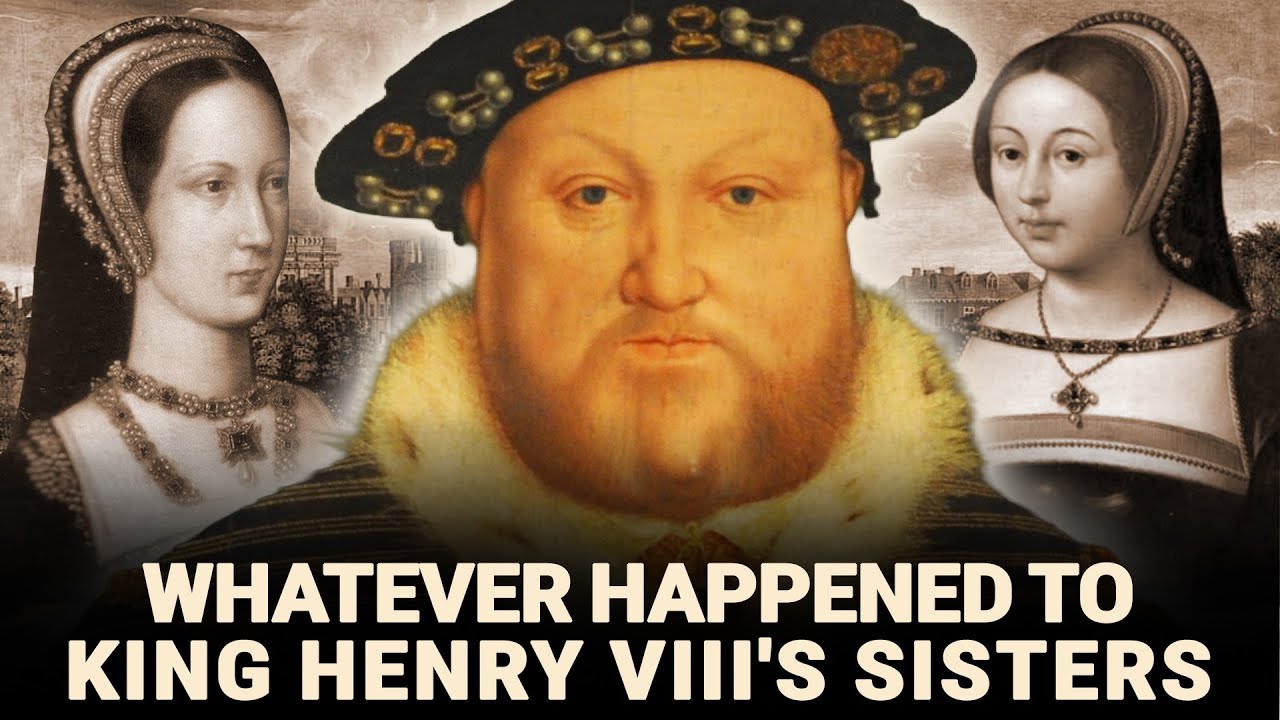
Four sisters of Henry VIII. Four lives formed by the same royal household, yet each moved in a completely different direction. Margaret Tudor became a queen, a regent, and the matriarch of a line destined to join the crowns of England and Scotland. Mary Tudor broke with convention, put love ahead of duty, and became the grandmother of Lady Jane Grey.
Elizabeth Tudor lived only three years and slipped into history’s margins. Katherine Tudor entered the world amid tragedy and died within days, leaving nothing behind but a name in a genealogy. Their stories lay bare the fragile reality of royal womanhood in the Tudor age: political survival, restrained defiance, quiet loss.
Dynastic history rested not only on kings and their ambitions, but on the women whose lives, decisions, and deaths formed the lineages that came after them.
