In December 1978, a crew of men moved through the winter dark at John F. Kennedy Airport with rehearsed precision. Inside the Lufthansa cargo building, fluorescent lights hummed over routine paperwork. The men who entered did not rush.
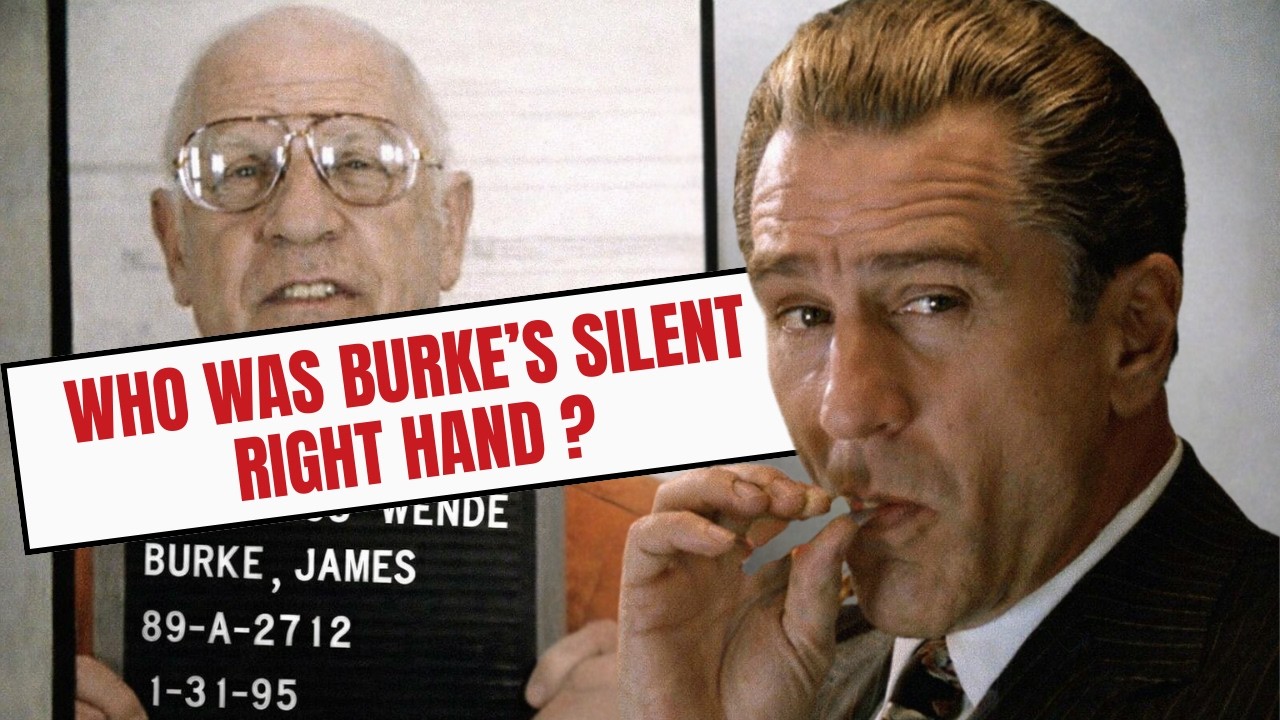
They did not shout. They gathered employees quickly, issued firm commands, and located the cash. Within minutes, they had removed more than five million dollars in American currency and foreign bills, the largest cash robbery in American history at that time. No shots were fired.
No alarms were triggered in time. The trucks rolled away before the full weight of the theft registered inside the terminal. The man most people never noticed stood among those who made the night work. Thomas Frenchy McMahon did not issue threats or crack jokes under pressure.
He watched hands, eyes, and breathing, reading the small movements that revealed whether fear would turn into resistance. He had learned that skill years earlier collecting debts in Queens. That night, it mattered more than ever. Long before the heist, McMahon had built his reputation in the quiet spaces between headlines.
Born into the Irish American neighborhoods of Queens, he grew up watching older men conduct business without raising their voices. He learned early that the loudest man in the room was rarely the most powerful. In the 1950s and 1960s, New York’s underworld was evolving, with Irish and Italian crews mixing through gambling, loan sharking, and hijackings. McMahon did not chase attention.
He ran numbers slips, collected modest debts, and stood beside older associates during conversations that required subtle pressure. Every time he showed up on time, delivered money intact, and absorbed an insult without reacting, his reputation grew. By his early twenties, he had built something more valuable than cash: trust. That trust brought him into the orbit of Jimmy Burke, a rising figure who was building a structured, disciplined operation.
Burke did not tolerate recklessness. He needed men who could execute without improvising themselves into trouble. McMahon’s reputation preceded him. He was steady, he did not scare easily, and he did not talk.
Burke valued those traits above all else. Their first significant interaction came after a hijacking went sideways in Queens. A young associate panicked at the sight of a patrol car and abandoned a vehicle in the wrong place. That night, Burke sat at the head of a table in a back office while others offered excuses.
McMahon did not dramatize the mistake. He explained it in simple sentences and suggested a quiet correction. Burke studied him and saw something rare: an absence of ego. From that night forward, McMahon was included more directly in planning sessions.
The crew that gathered around Burke was layered. Henry Hill was the charismatic connector, moving easily through restaurants, airports, and nightclubs. Tommy DeSimone was volatile, carrying violence like a reflex. Angelo Sepe and Louis Caffer played their parts in the machinery.
McMahon operated in a different lane. He was not the face of anything. He was the stabilizer, the man who translated strategy into discipline. When Burke asked how long they could hold a room, McMahon answered practically.
When tensions flared, he did not take sides emotionally. He aligned with structure. The Lufthansa plan came together over months. An employee on the inside provided the spark: knowledge of unguarded cash shipments and a system that trusted routine more than security.
Burke did not get excited. He analyzed. He wanted timetables, guard rotations, key holders, bad habits. McMahon absorbed the discussions.
He visited the airport area as an observer, noting shift changes and blind spots, carrying the information in memory rather than on paper. As the date approached, tension thickened. The inside contact grew anxious, rambling about potential complications. Burke asked direct questions and forced clarity.
McMahon watched the man’s breathing and judged his nerves manageable. The crew rehearsed mentally, walking through scenarios: what if a guard resists, what if an employee triggers an alarm, what if a vehicle stalls. Each answer was deliberate. The night itself passed with surgical control.
The robbery was only the beginning. Burke had drilled one rule into the crew: no spending, no sudden lifestyle changes. You live the same way you lived yesterday. The rule was simple, and human nature made it difficult.
In the days that followed, newspapers exploded with coverage. FBI agents swarmed the airport. Inside the crew, meetings became smaller and phones were used sparingly. Burke watched for deviations with growing paranoia.
He saw them everywhere. The first serious crack came from Parnell Stacks Edwards. He had been given a simple task: dispose of the getaway van. He did not complete it.
The van was found, traceable. He had also bought an expensive car and flashed money too soon. In Burke’s mind, that combination was lethal. Stacks was summoned under the guise of a casual meeting.
He walked in expecting conversation and was met with finality. Tommy DeSimone pulled the trigger, but the decision had been made long before the room. McMahon was not the one delivering threats. He was close enough to understand that the elimination had been authorized and structured.
Stacks’ disappearance did not reduce the tension. It intensified it. The murdered him marked the moment paranoia became policy. Next came Mory Krugman, who had helped facilitate the inside connection and believed he was owed his full share immediately.
His repeated phone calls irritated Burke, not because the money was missing, but because pressure from inside the circle was dangerous. A man who felt cheated was unpredictable. Krugman was invited to a meeting under the pretense of resolution. He left alive.
Then Angelo Sepe disappeared. Then Louis Caffer. One by one, men connected to the robbery were removed. Publicly, explanations varied.
Privately, the pattern was clear. Burke was eliminating variables before law enforcement could apply pressure to them. Each disappearance served two purposes: remove potential exposure and reinforce obedience. The inner circle grew smaller.
Trust became heavier. McMahon survived the purge because he had never created a problem. He did not spend recklessly. He did not talk loosely.
He did not react visibly when others vanished. He absorbed the atmosphere and kept working. Burke had trusted him before the heist. That trust deepened because McMahon demanded nothing.
He did not ask whether he was safe. He waited and executed. The trust was built on measured honesty. When Burke asked whether someone would crack under pressure, McMahon did not offer false guarantees.
He gave probability: solid, but under real pressure, hard to say. That honesty mattered because false certainty was dangerous. Burke leaned on him during tense periods, not emotionally but operationally. When rumors surfaced about potential informants, McMahon helped evaluate credibility.
He did not amplify Burke’s fear or dismiss it. He absorbed it. The arrests came in waves by the early 1980s. Federal prosecutors built the case like architects, slowly, using financial records, associations, and timelines.
Henry Hill’s cooperation provided context, but his knowledge was compartmentalized. He was not in every room. The quiet enforcement layer, the one that included McMahon, operated partially outside his awareness. When the federal case unfolded, prosecutors framed McMahon as a trusted participant in the conspiracy.
He was convicted and sentenced to years in prison. He did not flip. He did not become a cooperating witness. He served his time and maintained the same composure inside prison that had defined him on the street.
By the time he was released, the world had changed. Burke was serving life and would die in prison. Hill was in witness protection under a different identity. The crew that once felt indestructible was scattered.
McMahon stepped back into a city that had moved on, and he chose distance. He did not grant interviews. He did not publish a memoir. He did not seek to correct the public record.
The movie Goodfellas would eventually compress the crew into familiar arcs: the charming narrator, the explosive psychopath, the glamorous downfall. McMahon walked through the frame as a background figure and disappeared. Viewers assumed he was muscle. They did not see the years of accumulated trust that placed him in Burke’s inner orbit.
They did not see the rooms where decisions were weighed. They saw a silhouette. That silhouette was not accidental. It was his design.
Invisibility had kept him off the front page during the purge. It kept him from being overexposed in Henry Hill’s testimony. It kept him from becoming a caricature in cinematic retellings. The trait that preserved him also diminished his public legacy.
But the structure remains visible if you look closely. He was not an extra. He was ballast, present in the rooms that mattered, trusted when trust was scarce, silent when silence was survival.
And in that silence lies the truest portrait of the man Hollywood almost erased.
