The label on the census form was just a box, but for millions of people it forced a choice that did not fit their lives. In the United States, a person of mixed white and Indigenous heritage selected the “American Indian” box alone roughly seventy percent of the time. A person of mixed Black and white ancestry would often mark themselves solely as African American. And a person from Mexico, who might carry European, Indigenous, and African blood in nearly any combination, was offered no category that described them at all.
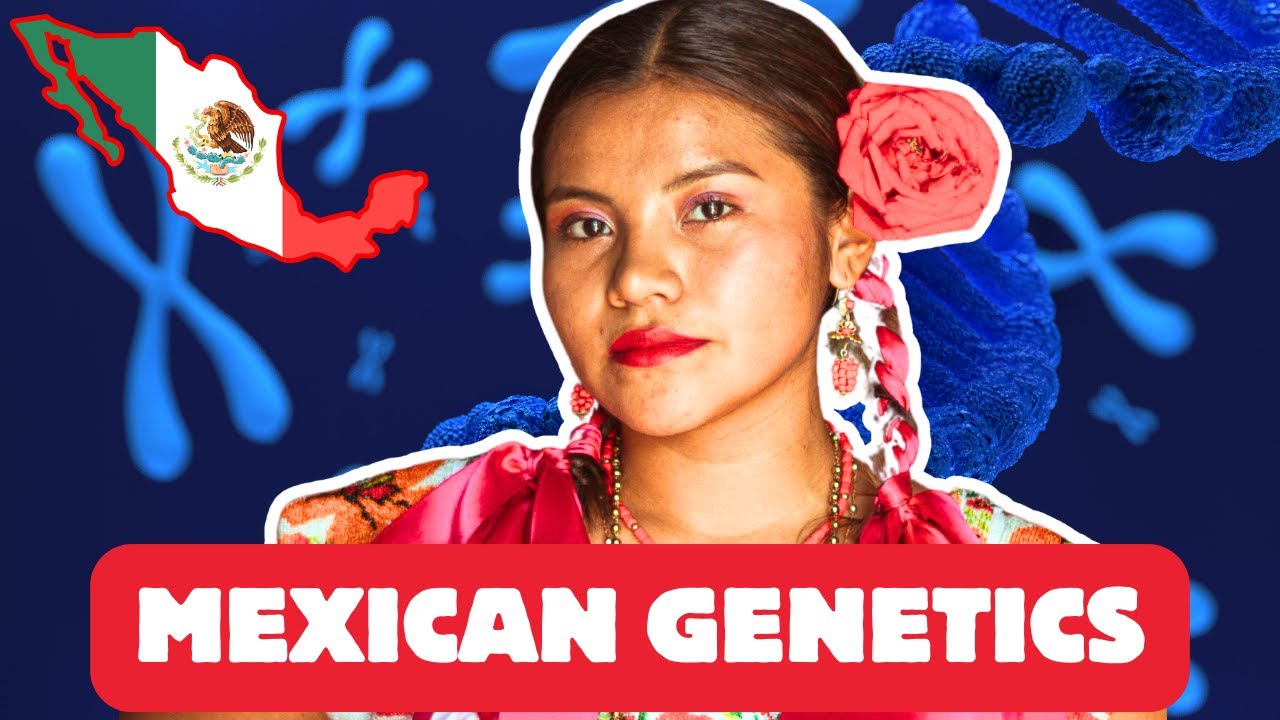
Instead, the government grouped everyone from Spanish- or Portuguese-speaking regions of the Americas under the broad term Hispanic or Latino, and declared it an ethnicity, not a race. The result was a system that could not account for the people it counted. The problem was not new. It stretched back centuries, to the moment Europeans first arrived in the Americas, and to the elaborate hierarchy they built to sort the populations they found and the populations they brought.
That system would leave a permanent mark on how Latin Americans see themselves, how they are seen by others, and why a word like “Mexican” cannot possibly describe a single race. The roots of the confusion lie in the colonial era. When Christopher Columbus landed in the Americas in 1492, he set in motion a demographic upheaval without precedent. Depending on who tells the story, he is remembered as a daring explorer or a figure driven by greed, but regardless of the interpretation, the colonization that followed permanently transformed the human landscape of the continent.
Europeans migrated in massive numbers. Indigenous peoples were decimated by disease and conquest. And Africans were brought in chains to work the colonies. Over the generations, these populations mixed extensively, producing a society of extraordinary racial diversity, a diversity that defies the simple labels so often applied to it today.
To manage this complexity, the Spanish and Portuguese colonizers imposed a strict social hierarchy known as the casta system. The term echoed the caste systems of South Asia, and like those systems, it was largely hereditary, assigning people their roles and status in society based on birth and lineage. The Spanish were explicit about their place at the top. Below them, the hierarchy descended through a series of categories designed to account for every possible mixture of the three main racial groups: European, Indigenous, and African.
The Spanish did not merely rank these groups. They gave each new combination a specific name. A person of mixed Indigenous and European ancestry was called a mestizo, a term that literally means “mixed. ” A person of mestizo and European ancestry was a castizo.
A person of mestizo and Indigenous ancestry was a cholo. The classifications multiplied into dozens of distinct categories, each reflecting a precise degree of racial mixture and each carrying its own social weight. At the top sat the Europeans of Spanish descent, who enjoyed the most privileges. But within that elite group there was a further distinction: those born in Europe were considered superior to those of pure European blood born in the colonies.
Birthplace mattered as much as blood. The preference for European-born individuals over criollos, the American-born whites of pure Spanish lineage, shaped access to opportunity and status for generations. Even at the bottom of this hierarchy, the groups were not treated equally. People of African descent, because of their historical association with slavery, were placed at or near the very bottom of the social order.
Above them were the Indigenous peoples, who, while originally the majority population, gradually became a minority in their own homelands as European settlers arrived and as many Indigenous individuals assimilated into the growing multiracial society. The various mixed-race groups, such as those who were half Indigenous and half European or half African and half European, sat in the middle. They had more rights than the full-blooded groups below them, but they were still far from the top. The Spanish sense of superiority over all these categories had deep roots.
For centuries, the Iberian Peninsula, which encompasses modern-day Spain and Portugal, had been occupied by the Moors, a Muslim people of North African origin. The long occupation by a non-European, non-Christian group drove the Christian kingdoms of Europe to unite in an effort to reconquer their territories, a period known as the Reconquista. That history, historians believe, may have contributed to a heightened sense of racial and religious superiority among the Spanish, an attitude they carried with them to the New World and encoded into the casta system. Even after most Latin American territories won their independence in the mid-1800s, the logic of the casta system did not disappear.
It persisted in attitudes, in politics, in culture, and in racial relations for decades and even centuries. Slavery was abolished relatively early in most Latin American countries, but the large population of African descent remained socially anchored near the bottom of the hierarchy. The old categories endured, transformed but not erased. The legacy of this history is visible in the faces of modern Latin Americans.
The region exhibits an incredible range of physical traits, to the point where members of the same family can appear to belong to different racial groups. This is because there is no single Latin American appearance. The population is composed of a multitude of racial and ethnic backgrounds, and the lines between them are fluid and overlapping. Centuries of intermarriage and cultural mixing have made it difficult, often impossible, to assign individuals neatly to specific groups.
The largest demographic group in Spanish-speaking Latin America is the mestizos, people of mixed Indigenous and European ancestry. Theoretically, the term mestizo refers to someone who is fifty percent European and fifty percent Indigenous. In reality, genetic composition is far more complex, because the mixing has continued across generations. A person who identifies as mestizo might have anywhere from forty to sixty percent European or Indigenous ancestry.
Studies conducted in countries like Mexico and Chile have found correlations between socioeconomic status and genetic ancestry. Mestizos of lower economic status often have a higher percentage of Indigenous DNA, while wealthier individuals tend to have a greater share of European ancestry. The social hierarchy of the colonial era, it seems, continues to echo in the genetic makeup of its descendants. But the picture becomes even more complicated when other populations are added to the mix.
Latin America is home to the largest number of people of Middle Eastern descent outside of the Middle East itself. Countries like Brazil, Argentina, Chile, and Mexico have significant communities of Palestinians, Lebanese, and Syrians, populations that exceed those found in Europe or the United States. There is also a major presence of East Asians. Brazil has the highest number of ethnic Japanese outside of Japan, surpassing even the United States.
In Peru, up to fifteen percent of the population has some Chinese ancestry, often integrated into mestizo communities. Mestizos from countries like Mexico, Panama, Colombia, and Venezuela may also carry a small degree of African ancestry, a remnant of the relatively smaller number of Africans brought to those regions. Because of the mixing of so many groups, the distinction between self-identified Europeans and mestizos is often blurred. Genetic studies show that the average Latin American who identifies as white carries approximately seventy-five to eighty-five percent European ancestry.
The remaining percentage is typically a mix of Indigenous, African, or Middle Eastern DNA. This overlap means that a significant number of individuals could legitimately identify as either white or mestizo, which explains the wide variations in estimates of the white population across Latin America. In Mexico, for instance, estimates of self-identified whites range from as low as five percent to as high as thirty percent. The same fluidity does not apply everywhere.
The Southern Cone countries, including Brazil, Uruguay, Argentina, and Chile, received large numbers of European immigrants, and there remain substantial populations of full European descent in those nations. Middle Easterners, Jews, and Romani people in the region may or may not self-identify as European, depending on the cultural context and the country they live in. When immigrants from Latin America arrive in the United States, they enter a society with a very different set of racial rules. The United States has traditionally maintained a stricter, more rigid definition of whiteness, while applying a more flexible standard to those who identify as racial minorities.
This contrast becomes clear in the census data. Latin Americans who belong to multiple ancestral streams do not fit the conventional boxes. The U. S.
census defines Hispanic or Latino as an ethnicity, not a race. It allows individuals to choose from primary racial categories such as white, Black, Asian, or American Indian, but there is no specific option for mestizo. Although the census offers a choice of “two or more races” for those of mixed ancestry, this does not fully solve the problem. The majority of Latin American mestizos in the United States do not perceive themselves as multiracial.
Rather, they see themselves as a distinct race, the mestizo, just as modern Central Asians do not consider themselves mixed race despite having ancestors from East Asia, the Middle East, and Europe. Their gene pool has blended into a coherent identity. Most mestizos do not think of themselves as simultaneously European and Indigenous, but as a completely separate racial group. This explains why only about six percent of Latinos and Latinas in the United States choose the “two or more races” option.
Many with mestizo ancestry select a different single race category, or they may not be familiar with the term mestizo at all, instead using words like moreno, commonly used to describe Latinos with darker skin tones. The U. S. census officials, historically unaccustomed to handling large numbers of individuals with such varied racial backgrounds, responded by categorizing everyone from Spanish- or Portuguese-speaking regions of the Americas under the broad labels Hispanic or Latino.
That generalization overlooks the complex reality of these identities, especially considering that people from Spain are included in the Hispanic group despite being European, while people of Portuguese descent are often classified differently. The term Hispanic, in the American context, became a catch-all for a population that spans nearly every racial category known to humanity. Because of this tangled history, the common tendency to use a word like “Mexican” to refer to a person’s race is not merely a simplification. It is an inaccuracy.
The category ignores the fact that Mexico, like the rest of Latin America, contains a population made up of Indigenous peoples, Europeans, Africans, Asians, Middle Easterners, and every combination of these groups. It overlooks the reality that no single racial group in the region constitutes more than forty percent of the total population. And it erases the centuries of history, from the casta system to the waves of migration from every corner of the globe, that created this diversity. The casta system is gone, but its legacy remains embedded in the identities of hundreds of millions of people.
The Census Bureau may still struggle to find a box that fits them, but the people themselves know who they are. The complexity of their histories, and the richness of their mixed ancestries, cannot be reduced to a single word.
