The phone rang in the Galveston County District Attorney’s office on a Saturday afternoon in March, and everyone on the task force knew what it meant before the caller finished the sentence. Clyde Edwin Hedrick had been admitted to a Houston hospital three days earlier, placed on a ventilator, and now he had reached up and removed the tube himself. He was seventy-two years old. He died within hours, in a hospital bed, before a single indictment could be filed.
Four murder charges—one of them capital—had been prepared against him, ready to go before a grand jury. They would never be filed. The man Tim Miller had suspected since the autumn of 1984 was gone, and the case that had consumed his life for forty-two years would have to run its course without him. Tim Miller was furious.
The entire prosecution team was furious. But they had a choice to make, and they made it quickly: they would go to the grand jury anyway, with everything they had, on both files. The file against Hedrick would never produce a conviction now. But the file against his friend still could.
To understand what had been assembled in that courthouse—and how it had taken more than four decades to get there—you have to go back to a payphone outside a convenience store in League City, Texas, on a September evening in 1984. League City sits about twenty-eight miles southeast of Houston, between Interstate 45 and the Gulf Coast. In 1984 it was a small town of strip malls and ranch houses spread thin along the highway. The Miller family had just moved there.
Tim Miller worked as a general contractor; his wife, Georgian, ran the house. Their sixteen-year-old daughter Laura was a sophomore at Clear Creek High School, musically gifted and a former member of the choir, until debilitating seizures had forced her to miss too much school. The medication kept the seizures under control, but it could not bring back what they had cost her. On the evening of September 10th, the home phone had not been connected yet, so Laura’s mother drove her to a convenience store to use the payphone.
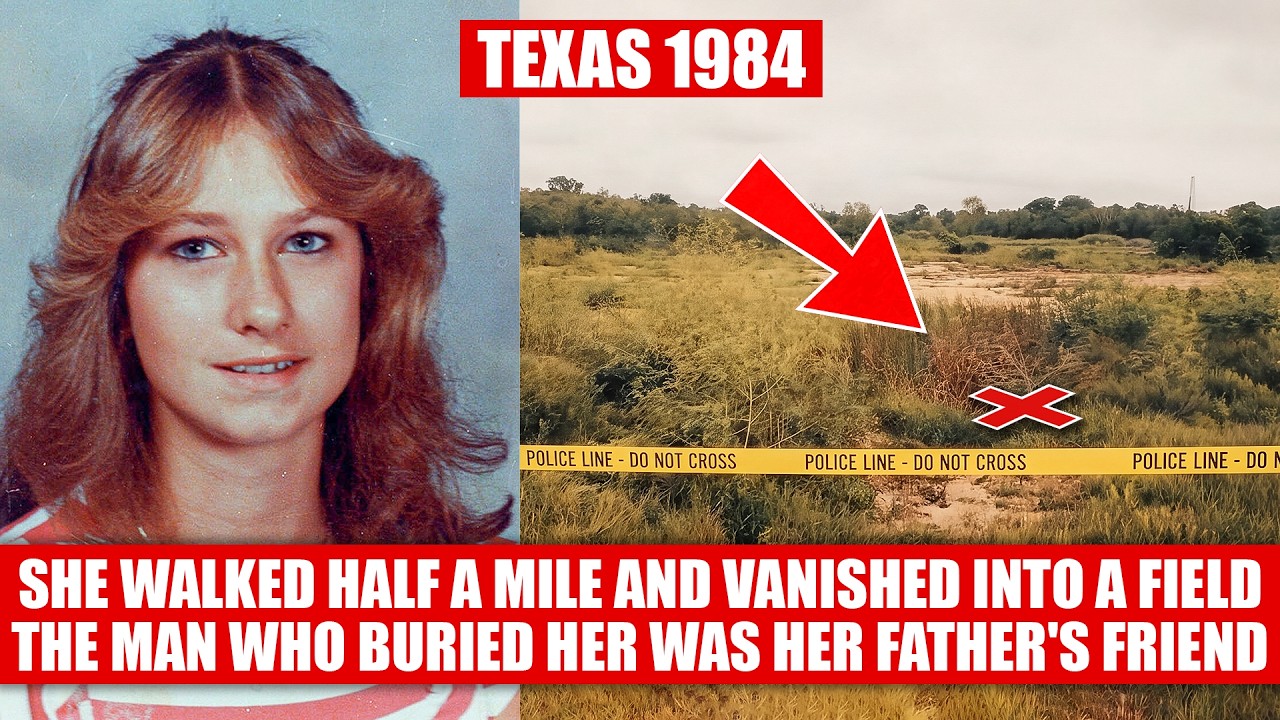
Laura wanted to call her boyfriend. She made the call. She hung up the receiver. The walk home was half a mile, a route she had walked before, and she told her mother she would walk it.
It was a routine errand on an unremarkable suburban evening, the light fading but not yet dark. She never made it back. What none of the Millers knew when they moved into that neighborhood was that the same payphone had been used by another young woman a year before they arrived. Heidi Fye was a twenty-five-year-old bartender who lived with her parents three blocks from the Miller’s new home.
She worked at a club called the Texas Moon. On the night of October 10th, 1983, she had used that payphone, walked out, and was never seen alive again. The following April, a dog carried her skull home to its owner. It had come from an oil field off Calder Road.
Tim Miller arrived home that evening with Laura’s boyfriend and her mother. The house was empty. The doors had not been opened. Nothing inside suggested Laura had come back and gone out again—just an empty house and a daughter who had said she would walk half a mile and instead had walked into nothing.
The family started calling around immediately. They tried the convenience store, friends from school, the boyfriend’s house, the police. Laura’s boyfriend, who had been waiting at the house for her arrival, drove the route between the store and the house, looking for any sign of her. Tim drove the side streets.
They found nothing. Whatever had happened between the receiver and the front door had left no trail anyone could follow. By the next morning, the search had widened to teachers, friends, anyone who might have seen her. Tim walked the route his daughter had taken at first light—a normal stretch of suburban pavement with no shoulder, no witnesses, no answers.
He walked it a second time that evening and a third time the day after that. After a week, he stopped counting. The League City Police Department classified Laura Miller as a runaway. The detective assigned to the case looked at a teenage girl who had failed to come home from a phone call, and that classification became the file’s permanent designation.
A runaway gets posters and a phone number to call. A missing person gets canvassing and witness interviews. A suspected abduction gets the FBI. Laura Miller got the lowest tier of attention from the day she vanished.
Tim rejected the runaway theory immediately. He knew his daughter had not left voluntarily. He pushed the department, and he told them about Heidi Fye. Two young women, one small town, the same payphone, both vanished into the same five-mile stretch of road.
He asked them to look at the patch of land where Heidi’s body had been found. The department brushed it aside. The list of parallels went into Tim’s notebook, where he started keeping his own notes on a daughter the official file had already written off. Seventeen months passed.
On February 2nd, 1986, two boys were riding dirt bikes through the brush near the 3000 block of Calder Road when they smelled something rotten and figured it was a dead animal. They walked over to look anyway. The body they found had been there about two months—a woman, naked, propped against a tree with a small-caliber bullet through her back that had severed her spine. She carried no identification and matched no missing person report in the county.
Investigators assigned her a placeholder name: Jane Doe. When police arrived to process the scene, they found a second skeleton sixty feet away. This one had been there much longer. The remains were identified through dental records that afternoon.
Laura Miller had been lying in that field, four miles from the payphone, for almost a year and a half. The field itself was an abandoned twenty-five-acre oil patch, the ground marshy in places and choked with brush, cut through by dirt roads that ran through tall weeds. No houses overlooked it. No streetlights touched it.
Heidi Fye’s body had been recovered from that same field, in the months after the dog brought the skull home. Three women in one stretch of brush, two of them found within sixty feet of each other on a February afternoon. A fourth body turned up five years later. On September 8th, 1991, passersby spotted another body off Calder Road—another woman with no identification, dead about six weeks, her upper spine crushed.
Investigators called her Janet Doe. The locals already had a name for the area by then. The broader stretch of Interstate 45 between Houston and Galveston had been collecting bodies since the 1970s—roughly thirty women, most of them young, most of them never connected to any one perpetrator. Reporters dubbed the stretch “the highway to hell.
” The field itself, the locals called something blunter: the Texas Killing Fields. The four bodies off Calder Road were the tightest cluster in that broader stretch, sitting together in the same brush, on the same dirt road, within sight of each other on the map—a pattern that pointed to a single mind, or a small group that kept coming back to the same ground. Investigators had been treating the field as a single case since the second body was recovered in 1986. Forty years later, they still were.
Tim Miller had a suspect early. A man who lived two streets over from the Millers’ previous home, the one they’d left when they moved into League City. He was a roofer who worked construction jobs around Galveston County and drank at the same bars Heidi Fye worked. A few years older than Tim.
His rap sheet read like a casting call: trespassing, theft, attempted arson, sexual assault, enticing a child, aggravated kidnapping, terroristic threats. The entries stretched back through the 1970s, fifteen years of them by September 1984, and none of them had cost him more than a few months at a stretch. He was a free man that night. He had been a free man almost every day of his adult life.
His name was Clyde Edwin Hedrick. In July 1984, two months before Laura disappeared, a twenty-nine-year-old woman named Ellen Ray Beason left a League City bar called the Texas Moon with Hedrick. She told her friends she was going swimming with the man she’d just met. Her body was found later, dumped on a roadside in Galveston County under debris and trash.
He told police she had drowned and he had panicked and hidden her. The medical examiner couldn’t determine a cause of death. Hedrick was convicted of abuse of a corpse and sentenced to a year in jail. In 2011, his ex-wife went to the Galveston County District Attorney.
She told prosecutors that Hedrick had said things over the years about Beason that didn’t match the story of an accidental drowning. The District Attorney’s office exhumed the body. A second examination found severe skull fractures consistent with a blow to the back of the head. In 2014, twenty-eight years after Ellen Beason died, Hedrick was convicted of involuntary manslaughter and sentenced to twenty years in prison.
While Hedrick was in prison, an inmate told investigators that Hedrick had bragged about killing four or five women, naming Laura Miller and Heidi Fye among them. The investigators couldn’t corroborate the statement, and in Texas, a jailhouse confession alone cannot carry a conviction. The brag went into the file. Hedrick served eight years of his twenty-year sentence, and in October 2021 he was released to mandatory supervision at a Houston halfway house, a short drive from the League City neighborhood where Laura Miller had grown up.
Tim had filed a civil suit for the wrongful death of Laura Miller in 2014, the same year Hedrick was convicted in the Beason case. The suit sat on the docket through the eight years Hedrick served. In July 2022, ten months after Hedrick walked out of prison, a Galveston County judge entered judgment against him by default—Hedrick had not appeared for the hearing. The amount came to $24,365,471.
The civil court could not put Hedrick in prison, but for the first time in thirty-eight years, a court had attached his name to Laura Miller’s death. No criminal prosecutor had been willing to do that. After Laura’s body was found, Tim worked her case the only way he knew how. He pulled paperwork from courthouses.
He drove to neighboring counties to interview people the police had not. He wrote letters to prosecutors who didn’t write back. The man he believed had killed Laura was somewhere in Galveston County going about his life. The state had decided otherwise.
In August 2000, sixteen years after Laura disappeared, Tim founded Texas EquuSearch. The name came from the horseback teams that ran the early searches across pastures and brushland that police helicopters could not cover. The organization grew. By the time Tim filed the civil suit against Hedrick, EquuSearch had worked more than two thousand cases, brought 428 missing people home alive, and recovered the remains of 326 others.
Tim never stopped working Laura’s case, and the notes he had started in 1984 kept growing—not for a year, not for a decade, not for four decades. In 2016, the League City Police Department learned about a Virginia company called Parabon NanoLabs, which had developed a technique called Snapshot DNA Phenotyping. It could read genetic markers off old samples and generate a composite of what a person had looked like in life. The department submitted samples from Jane Doe and Janet Doe.
The composites came back in May 2016 and May 2017. They didn’t produce a name on their own, but they gave investigators something to work with. In April 2018, the department started building family trees through a public genealogy database called GEDmatch. An FBI agent named Richard Rennison offered access to FamilyTreeDNA, a larger database.
The investigators worked the matches backward through birth records and marriage certificates. On January 29th, 2019, the results came back. Jane Doe was Audrey Lee Cook, born in Memphis, Tennessee on November 25th, 1955—a mechanic, last seen by her family in December 1985, three months before her body turned up in the field. Janet Doe was Donna Gonsoulin Prudhomme, born in Port Arthur, Texas on April 23rd, 1957—a mother of two, last seen in July 1991, six weeks before her body was found.
Cook’s family had been waiting thirty-three years to learn what had happened to her. Prudhomme’s family had waited twenty-seven. In April 2022, the same spring Tim Miller won his civil judgment, a man from Bacliff reached out to him and said he had things to say. He was Hedrick’s age and had known Hedrick for decades.
He told Tim he wanted to get some weight off his chest. Tim agreed to meet. The man started talking. He knew details about the Calder Road killings that had never been released to the public.
He knew where bodies had been placed, how they had been positioned, what had been done to them. On one of their early drives out to the field, the man asked Tim to stop the car. “We dumped something right there,” he said, looking out the window. Tim looked at the ground.
The spot was the exact location where Laura had been found. On a different drive, the man took Tim past a house in their old neighborhood. Hedrick had lived there, the man said, in the early 1980s. The Millers had lived two doors down.
The man Tim had been suspecting for almost forty years had lived two doors down from his daughter. Over the next three years, the two men met twenty or thirty times. They drove the back roads. They sat at restaurants.
They walked through fields. The man from Bacliff told Tim things that fit with everything Tim already knew, and things Tim had never heard. He gave names of women Tim hadn’t connected to Hedrick before. He gave details of trips that nobody outside the inner circle would have known about.
Tim had no reason at the time to doubt that this was a witness—a former friend of Hedrick’s who had carried a load too heavy to keep carrying. Every conversation made it feel more true. “You don’t think this guy could be involved,” Tim later told reporters. “You’re thinking, here’s somebody who wants to help.
”
What the man from Bacliff was actually doing was harder to admit out loud. He had been there. A vial of cocaine he had prepared in a lethal dose had gone from his hand to Hedrick’s hand to the inside of Laura Miller on the evening of September 10th, 1984. He had helped dump her body in the field, and Audrey Cook’s body in the same field a year and a half later.
Some of what he was telling Tim was a witness account. The rest was something else. When Kenneth Cusick took office as Galveston County District Attorney in October 2025, he inherited a task force that had been quietly assembling for over a year. Chief Assistant District Attorney Kate Willis was running it.
The FBI had assigned Richard Rennison, the same agent who had handled the genetic genealogy in 2019. Galveston County Sheriff’s deputies were at the table, and so were the League City detectives who had carried the file from the beginning. They had decades of evidence and the running record of what the Bacliff man had been telling Tim Miller for nearly four years. Old evidence boxes had been pulled from county storage.
Witness statements from the 1980s had been reread. The investigators sifted through that material until they had a case they believed would survive a grand jury. By the beginning of 2026, the office was preparing four murder indictments against Hedrick: one for Heidi Fye, one for Audrey Cook, one for Donna Prudhomme. The fourth, for Laura Miller, would be capital murder.
A Galveston County detective sat down with Hedrick in early March to interview him about the Calder Road cases. He didn’t admit to anything. A short time later, Hedrick complained of breathing trouble. On Friday, March 20th, he was admitted to a Houston hospital and placed on a ventilator.
On Saturday, March 21st, around two o’clock in the afternoon, he removed it himself. He was seventy-two years old. He died before any of the indictments could be filed. “They let a serial killer die peacefully in his damn bed when they had everything in front of them,” Tim Miller told reporters.
“I’m pretty angry. ”
On March 31st, 2026, ten days after Hedrick’s death, the grand jury returned an indictment on three felony counts: manslaughter in the death of Laura Miller, felony tampering with evidence for the disposal of Laura Miller’s body, and felony tampering with evidence for the disposal of Audrey Cook’s body. The defendant was sixty-one years old and lived in a house on 18th Street in Bacliff. His name was James Dolfs Elmore Jr.
Elmore was arrested the same day and booked into the Galveston County Jail. A magistrate denied his initial bond; bond was later set at $1. 5 million. The trial date was scheduled for August 24th, 2026.
On April 1st, District Attorney Cusack stood at a podium inside the Galveston County Commissioners Court Building on Moody Avenue in downtown Galveston, Kate Willis beside him. The audience behind them filled with people in yellow Texas EquuSearch shirts. Tim Miller was in the front row. Cusack announced the indictment of Elmore and confirmed the office had been preparing capital murder charges against Hedrick when he died eleven days earlier.
He said the broader Killing Fields investigation remained open. “Due to the concerted efforts of the law enforcement agencies in this county,” Cusack told the room, “this 40-year cycle of violence by these defendants against women, we’re trying to make headway on it. ”
Heidi Fye’s niece, Nina Yeager, spoke after the press conference. She had spent her entire adult life waiting for an answer that finally arrived too late.
“It’s sad that Clyde didn’t get to pay for what he did,” she said, on the one hand. On the other, she said, she was glad he no longer breathed the same air as the families he had destroyed. Tim Miller spoke too. He told the reporters he had probably met Elmore twenty or thirty times over the previous four years and had trusted him the whole way.
The conversations meant something different now. Tim kept running them back in his head. “Was he telling me what he did? ” Tim asked.
“I trusted him. I really did. ”
Six days before the indictment came down, Elmore had told Tim that a body might be buried on his property in Bacliff. He hadn’t said whose.
On April 16th, two search warrants were served on Elmore’s Bacliff property. The first looked for human remains in the soil around the house. The second looked for digital evidence on devices already seized during the arrest. Cadaver dogs walked the yard.
Investigators worked the ground. No remains were recovered. The phone investigators had taken off Elmore the night they arrested him contained images of child sexual abuse. On May 1st, two additional felony charges were filed.
Elmore’s combined bond rose to $4. 5 million. He remained in the Galveston County Jail through the spring, awaiting trial. The four-decade pattern Calder Road represented was not assumed to end with one defendant.
“I’m almost 80 years old,” Tim Miller told reporters. “I’m going to stick around and face James Elmore in a courtroom. I’m going to do that. ”
The payphone outside the convenience store is gone now.
So is the convenience store. The field off Calder Road is greener than it was, and a local church has placed markers at the spots where the four women were found. Tim Miller built a wooden cross at the spot where two boys on dirt bikes found his daughter.
Forty-two years after Laura walked toward home, he still goes there.
