In October 1884, in the dusty town of Frisco, New Mexico Territory, a nineteen-year-old Mexican-American kid carrying a mail-order deputy sheriff’s badge walked into a confrontation that should have ended his life. Elfego Baca was not a real lawman. No one had appointed him. No one had asked him to keep the peace.
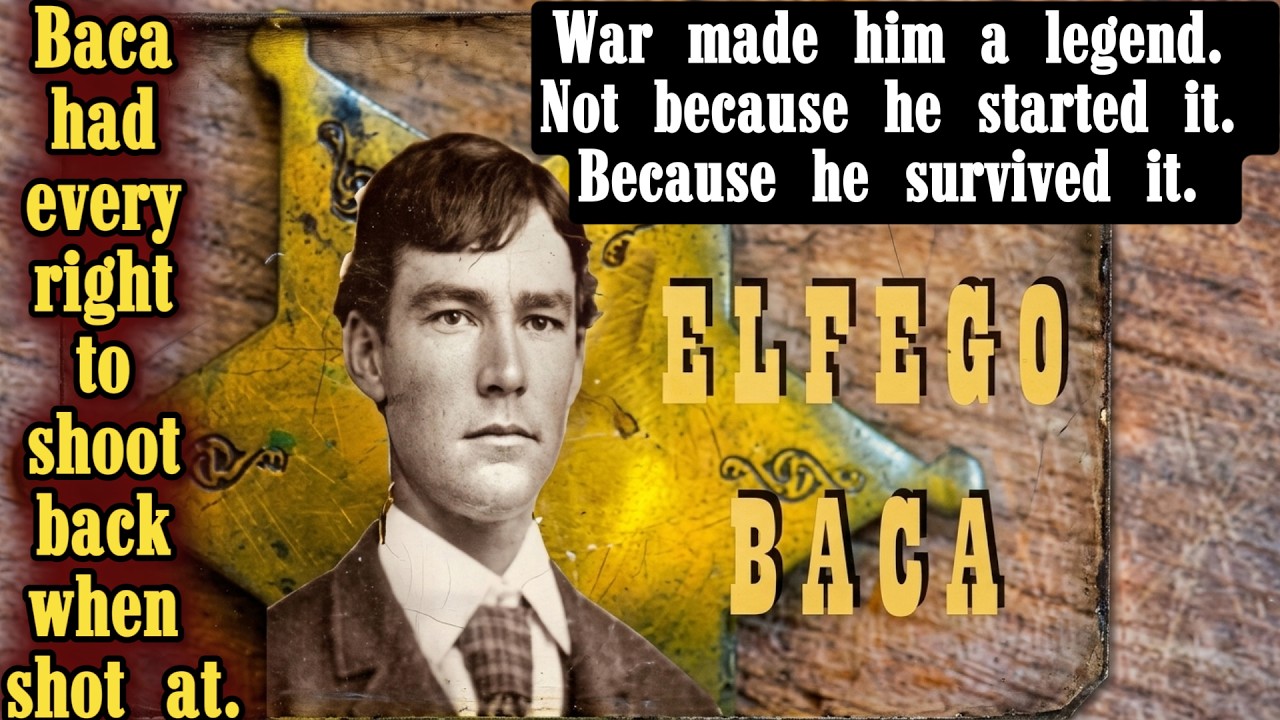
He had simply bought the badge through the mail and kept it in his pocket, tired of watching Texas cowboys ride into town, drink themselves into a rage, and shoot at Mexicans for sport. When a cowboy named Charlie McCarty began using a local vaquero as target practice in the middle of the street, Baca stepped forward. He pulled out the badge and arrested McCarty on the spot. The cowboy’s friends took the arrest badly.
Within hours, roughly eighty armed cowboys from the nearby Slaughter Ranch surrounded the small jacal, a mud-and-stick shack, where Baca had taken shelter. Eighty armed men against one nineteen-year-old with a Winchester rifle and two revolvers. The demands came quickly. Release McCarty.
Surrender. Get out of town. Baca’s answer was shorter. No.
The shooting began. For thirty-three hours, the cowboys poured gunfire into the small structure. Later counts put the number at four thousand rounds fired. Four thousand bullets tore through mud walls barely thicker than cardboard.
The jacal sat on a dirt floor about three feet below ground level, so Baca dug himself deeper with his bare hands while lead screamed overhead. He did not just hide. He shot back. His Winchester found targets.
Cowboys fell, four dead and several more wounded. The siege changed tactics. The cowboys tried dynamite, but the fuse went out. They tried rushing the door, and Baca dropped two men before they reached the threshold.
They tried waiting him out, but Baca had water, ammunition, and no intention of quitting. Day one became night one. Night one became day two. The cowboys kept shooting, and Baca kept shooting back.
The arithmetic made no sense. One man could not hold off eighty, yet he did. Thirty-three hours after it started, the cowboys gave up. They rode back to Texas, left their dead behind, and left Baca standing in the ruins of a shack so riddled with bullet holes that sunlight streamed through in a hundred places.
Officials inspected the damage afterward. Four thousand bullet holes in the structure, eight hundred in the door alone. Baca walked out without a scratch. They arrested him anyway.
Murder charges were filed for the dead cowboys. What followed became legendary. Baca defended himself in court. He pointed out that he was acting as a lawman making a legal arrest.
He pointed out that eighty men had attacked a single person. He pointed out that he had every right to shoot back when shot at. The jury deliberated and returned a verdict. Not guilty.
Elfego Baca went on to become a real lawyer, a real lawman, a detective, and a politician. He lived to the age of eighty, and he died in bed in 1945, sixty-one years after eighty cowboys failed to kill him over the course of thirty-three hours. The Frisco War made him a legend. Not because he started it, but because he survived it.
One Mexican-American kid with a mail-order badge refused to back down when running was the sensible option. Eighty against one. Four thousand bullets. Zero hits.
Some men are simply too stubborn to kill. Baca was one of them.
