The high chest cost $44,000, which in April 1929 was a sum no one had ever paid for a piece of American furniture. It was a Philadelphia high chest, tall and carved, made in mahogany around the time of the Revolution, and it came up for sale at the American Art Association in New York in the last week of that month. The money would have bought about nine ordinary American houses. William Randolph Hearst, who was filling a castle in California, was among the bidders that week.
The buyer was recorded as H. F. Winthrop. The initials were his own.
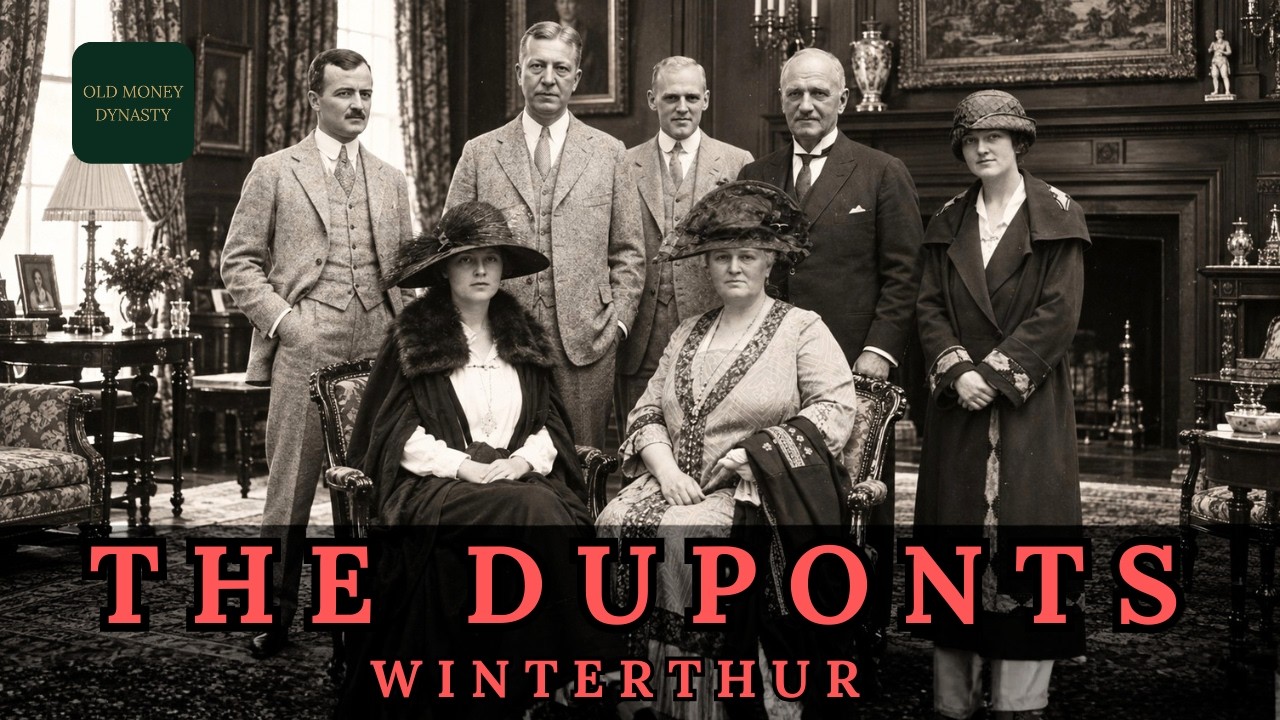
The surname was borrowed. He was the grandson of the man who had bought a whole country estate for the same amount in 1867, and the chest was going there. Henry Francis du Pont was 48 years old, and his family called him Harry. He had been rich from the day he was born, a great-grandson of the Frenchman who had founded the DuPont powder works.
He had been a shy child, a poor student, and a worse athlete. Two years before the sale, his father had died. Harry was rebuilding the house and filling it with rooms taken out of other people’s houses. The house was called Winterthur, and it sat on more than 400 acres of hill and meadow in the Brandywine Valley in Delaware.
The seller of the estate in 1867 had asked $50,000 for the house and the land, and the buyer had talked him down. That buyer was Harry’s grandfather, General Henry du Pont, and he had written down why he was not buying it for himself. He wanted to keep the property in the family, with the possibility that one day it might go to one of his two sons. He also told his son to say nothing until the railroad had laid its tracks across the land.
Harry’s father was that son. Henry Algernon du Pont had finished first in his class at West Point, and at Cedar Creek in 1864, when the Union line broke, he commanded artillery. His Medal of Honor citation says he encouraged his men to stand to their guns, checked the advance of the enemy, and brought off most of his pieces. The colonel, as everyone called him, had not wanted to come home either.
He wrote later that he had been very unwilling, devoted to his profession, and anxious to stay in the army. In the company office, his first job was reading the letters, because his father, as he put it, was unwilling to let any part of the business go out of his hands. Harry had not chosen this life either. Thirty years before he bought the chest, he had arrived at Groton School in Massachusetts in 1893 at the age of thirteen.
Behind him was a childhood of illnesses, bird eggs, and stamp albums. Of the seven children his mother bore, only Harry and his older sister Louise lived past their first year. When the last of the babies died in 1886, she wrote to an aunt that the blow was so terrible she felt almost stunned. She kept Harry close.
Groton was new. Its headmaster, Endicott Peabody, had modeled it on the tough English boarding schools where games came first. Harry was bad at games, and of the sixteen boys in his class, he finished last. In one letter home, he said he was wild to get back.
Back meant a greenhouse. He begged to be allowed to work at a commercial nursery near the school, found space in a greenhouse there, and grew sweet peas. His parents fretted about a son of theirs with dirt on his hands. Franklin Roosevelt arrived at Groton in the fall of 1896, two years younger than Harry.
At home, the colonel took his two children around the gardens. If they could not give a plant its botanical name, they went to bed without supper. Louise was still telling that story to a curator in her old age. When Harry was four, the house had been raised to four floors under a steep roof with dormers and tall chimneys.
The Du Ponts had been making gunpowder on the Brandywine since 1802. General Henry du Pont ran the company for nearly forty years, and in 1867 he bought Winterthur from the heirs of his sister Evelina, who had built it with her husband. The name came from that husband, a man named James Antoine Bidermann, who had written home to France in the late 1830s that he would not feel at home anywhere except near the Brandywine. If business went well, he wanted a little house built on the place he had shown, and timber bought, as occasion offered, for a larger one.
He had married Evelina du Pont, a daughter of the founder of the powder works, and had run the company for a few years after the founder’s sudden death. His own father had been born in Winterthur, a town in the north of Switzerland, and the place took that name. The couple lived in a small farmhouse while the larger house went up. It was finished by the early 1840s, a plain house of twelve rooms.
Evelina died in 1863, and Bidermann, back in France, did not long outlive her. In 1866, their house was advertised in a Philadelphia newspaper for rent, furnished, as a cool and healthy residence. The next year, the general bought it. Harry went on to Harvard.
Two years in, he applied to the Bussey Institution, the university’s school for farmers and gardeners. Its letter of admission also spoke of men who would one day manage large estates. That year, he wrote to his mother that his great desire was to really know something about flowers, and flowers were the only real interest he had. His mother died in 1902.
Harry was twenty-two and still at Harvard. His father summoned him home to take charge of the household, which for a widower of sixty-four meant a staff to direct, a table to keep, and a large house to run. He finished his degree the next year. Long afterward, he told his daughter what he had decided after his mother died.
He would give up feeling. The house went on growing around him. The colonel’s architects in Philadelphia had drawn their plans in 1910. Their work gave Winterthur a marble stair hall, a billiard room, and a large library, the rooms a country house of its standing was expected to have.
Summer after summer until the First World War, Harry traveled in Europe with his father and looked at gardens. In England, he met William Robinson, whose book The Wild Garden argued for hardy plants set loose in grass and woodland as if they had arrived there on their own. He called on Gertrude Jekyll, who planned her flower borders the way a painter plans a canvas. The colonel was a plantsman himself and had started a collection of conifers on the estate.
By 1909, he had handed the grounds and the greenhouses to his son. That year, Harry planted 29,000 bulbs, and the year after, 39,000. The slope below the house, called the March Bank, became the first of his wild gardens, and it still turns blue every March. The man ordering all those bulbs had once been given a D minus in his first course in horticulture.
In 1914, he took over the farm. Winterthur had its own railroad station and post office and, in time, about ninety houses for some 250 people who worked on the place. He also bought six Holsteins from a breeder in Minnesota for $70,000, four bulls and two cows. That was more than a working man of the time could hope to earn in a lifetime.
As the family told it, the colonel approved. It will cost less than maintaining a yacht, he said, and it may result in some good for humanity. Milk cans rode an electric cable tramway from the barns to the creamery, six at a time. The milk went out as better milk for better babies from Winterthur Farms.
When official forms asked for his occupation, Harry wrote farmer. He also bought seventeen small karum azaleas from a nursery on Long Island and set them out under the trees. Over the decades, they grew into the eight acres now called Azalea Woods. Ruth Wales came from Hyde Park, New York.
Her uncle by marriage was Elihu Root, who had been Secretary of State. She met Harry when she was about twenty and came to house parties at Winterthur from 1912, and the courtship took seven years. They were married at Hyde Park on the 24th of June, 1916. Among the guests was the assistant secretary of the Navy, Franklin Roosevelt.
That November, Delaware voted the colonel out of the Senate, and at seventy-eight, he came home for good. The colonel had lost a seat in the United States Senate by one vote back in May 1896, while his son was at Groton. The Delaware legislature had chosen him if one disputed vote was thrown out. That vote belonged to the acting governor, who had cast it from the chair.
The Senate refused to seat the colonel, 31 votes to 30, along party lines. He got there in 1906. Ruth became the hostess at the colonel’s table, and she kept that post for ten years. She was a musician.
In the first year of her marriage, she traveled to Baltimore every week to study at the Peabody Conservatory, where the composer Gustav Strube taught her harmony. Through the 1920s, she wrote ragtime and dance music and part of an opera based on a book by Edith Wharton. The colonel was a difficult man to live with, and by the museum’s own account, her health suffered. From about 1918, she was taking what was then called nerve medicine.
Two daughters were born, Pauline Louise in 1918 and Ruth Ellen in 1922. Past eighty-five, the colonel published a book about the war in the Shenandoah Valley. Cedar Creek, he wrote, was by far the most momentous episode of his whole military career. On the last day of 1926, five months after his son moved into a new summer house at Southampton, the colonel died at Winterthur.
He was eighty-eight. On New Year’s Day 1927, Winterthur belonged to Harry du Pont. He was forty-six. Within months, he had an architect, Albert Ely Ives.
The question was what to do with the place. The family’s money had long since outgrown gunpowder. Between 1917 and 1919, the DuPont Company had bought nearly a quarter of General Motors. The first plan called for rooms from ten old houses.
What went up over the next few years was a new wing that more than tripled the size of the house. Its frame was steel and concrete. Inside, the woodwork of old American houses was fitted over that frame like a thin skin. By one account, it took 500 men two years.
It cost $4,300,000, nearly a hundred times the price of the high chest. One thing of the colonel’s kept its place. He had brought into the house a set of chairs bought for a du Pont parlor in 1800. They are still at the center of the family dining room.
In November 1927, a New York dealer, Lloyd Hyde, found him the paneling and staircase of Readbourne, a Maryland house of the 1730s. They came out the next year. Readbourne still stands, and the first flight of its staircase is a copy. When Harry’s own architect, Thomas Waterman, wrote a history of the house in 1950, he recorded that the old paneling and stair had been removed for Winterthur.
Port Royal stood in the old village of Frankford outside Philadelphia. It had been built in 1762 and plundered by British soldiers during the Revolution. A survey published in 1920 found it abandoned to chance tenants and exceedingly dilapidated. Harry bought its woodwork in 1928, and the house was pulled down soon after.
A few miles away on Pine Street, the same survey had found a merchant’s house of the 1760s in use as a cigar factory. Its best parlor went to Winterthur. The rest of it came down around 1930. From Patuxent Manor in southern Maryland came the paneling of a whole room.
That house survived without it, and by 1970, its owners were trying to reconstruct what had gone. The first of these rooms were bought while the stock market was still climbing. With dealers, Harry often kept his own name out of it. To some, he was Mr.
Francis. Asked once who his agent was, he told the dealer he was looking at him. His closest adviser was a New York collector, Bertha Benkard. He said later that he would telephone her at seven in the morning and stay on the line for about an hour.
The high chest came from the collection of Howard Reifsnyder, a meticulous, well-mannered Philadelphia merchant who had died early in 1929. Three years before, a society of collectors had reported that practically everything he owned was of museum quality. Francis Garvan, who was building the collection he would give to Yale, came ready to bid. The magazine International Studio described the bidders as connoisseurs of practically unlimited means, or agents with unlimited reserves.
The competition, it thought, would probably never be duplicated in an American salesroom. The man bidding against Mr. Winthrop for the high chest was Hearst, and Mr. Winthrop won.
An easy chair went to the Philadelphia Museum of Art for $33,000, and the sale as a whole brought close to $600,000. Harry lost one thing he wanted. Lot 613, an armchair by the Philadelphia cabinetmaker James Gillingham, went to another bidder at $8,500. Harry paid the winner $2,000 more to get it.
In the margin of his catalog, he wrote that he never should have lost it. The high chest stands today in the parlor made from the woodwork of Port Royal. Fire destroyed most of the barns at Farm Hill that year. They were rebuilt smaller, and to save money, the cows went from four milkings a day to two.
In October, the stock market collapsed. The wing kept rising. Henry Sleeper, the decorator whose Gloucester house had inspired Harry to build an American house in the first place, worked on some of the new rooms. When his bill came, Harry wrote back in 1931 that $5,000 should be all he was entitled to.
Sleeper had done less than half as much as at Chester Town House, and Harry had kept count of his visits. The family’s first Christmas in the enlarged house came in December 1931, with trees fourteen to eighteen feet tall banked with poinsettias. A year before that, with the steel still going up, Harry had incorporated the Winterthur Corporation. Its charter gave its purpose as a museum and arboretum for the education and enjoyment of the public.
Days before a dinner, the head gardener, Joseph Feliciani, carried cut flowers up to the house for Harry to choose from. Once he had picked the centerpiece, blooms of the same kind were cleared out of every other room, so the table would be a surprise. Ruth went over the menus with the chef, Emile. Emil then took the plates, the mats, the glasses, and the flowers to her husband.
A man who worked in the house for years said long afterward that nobody lived the way Mr. du Pont did. He cared more about the plates than the food. As many as twenty-five arrangements might stand in a single room, each of one flower or one color.
Curtains and bed hangings changed four times a year, and each carried a sewn label with the number of its season. Curators later counted some seventy-two different greens in the paint of the house alone. New rooms were tried out first in fiberboard mock-ups before any furniture moved. When the formal gardens near the new wing needed a designer in 1929, he brought back Marian Coffin from Southampton.
She praised what she called his near discords of color. The gardener Gordon Tyrer once told him that something he wanted could not be done. Harry told him he was doing it, and did it. Thomas Waterman once sent him a sketch in which a panel under the windows had to be split to open a hidden door.
Harry asked whether the whole panel could not swing open instead, even if it was less correct. Waterman answered that in old work, the panel was cut in this fashion. It was cut. After a visit to Colonial Williamsburg in 1932, which John D.
Rockefeller Jr. was paying to restore, he wrote to his sister. The curtains in the Raleigh Tavern, he told her, were badly made and hung in ugly colors. He had been fooled himself.
The herd had grown past 300 registered cows and reached the top of the Holstein Association’s honor list. In 1933, a cow called Winterthur Boast Ormsby broke the record for butterfat. She gave more than 23,000 pounds of milk that year, about twice the herd’s average. His younger daughter asked him hesitantly whether she might go to college.
He said yes. Ruth Ellen graduated from Vassar in 1943 at the head of her class. By the end of 1935, his cousins were at open war with President Roosevelt, the younger boy from Groton and a guest at Harry’s wedding. Harry took his family on a voyage around the world.
They stayed away until the election of 1936 was over. Before he left, he had bought a staircase. It came from Montmorenci, a plantation house built around 1820 near Warrenton, North Carolina, for a planter named William Williams. The museum says enslaved and free people at Montmorenci helped to design it, build it, and use it.
It is a freestanding stair that curves up through its hall. It went into Winterthur over 1935 and 1936, much of that time with the family at sea. By 1940, the house it came from was gone. In 1936, the owner of the Hart House in Ipswich, Massachusetts, sold two of its rooms.
The Metropolitan Museum took the one downstairs, and Harry took the chamber above it. The house was known by the date 1640 until the rings in its timbers put it at around 1680. In 1950, Harry wrote a letter of complaint to Eugene Grace, the head of Bethlehem Steel. He was building a small house at the foot of the lawn, he explained, and he had ordered the steel long before the war in Korea.
He was getting quite desperate. Then he corrected himself. Perhaps, he wrote, he should call it a big small house. Thomas Waterman designed it in the Regency style, with quarters for more than a dozen servants who lived in.
The family called it the cottage. The move had been coming for years. In 1947 and 1948, he turned his indoor badminton court into a small street. It was lined with the fronts of four old buildings, among them a Delaware inn and a second piece of Montmorenci.
Later he explained that he had done it because he realized the house was soon to become a museum. To one of his staff he gave a plainer reason. In fifty years, he said, nobody would know what a country place was. His sister Louise had gone about things another way.
She had restored the family’s first house at Eleutherian Mills, where the powder works began, and kept it standing where it had always stood. She helped found the National Trust for Historic Preservation in 1949. His first curator, Joseph Downs, told him the collection was unequaled anywhere for a better understanding of our history. The general had bought Winterthur to keep the property in the family.
Eighty-four years later, in January 1951, his grandson deeded the house to the Winterthur Corporation, and the family moved down the hill to the cottage. Harry kept the land, some 2,000 acres of it, with the farm, the herd, and the woods. The museum opened on the 30th of October, 1951. Visitors rode ahead for an appointment.
They came four at a time at most. Volunteer guides from the Junior League took them on long tours. The rules allowed about 6,000 visitors a year. In the dining room, they found six silver tankards on the sideboard made by Paul Revere in 1772.
No other matching set of six by him is known. On the wall hung Benjamin West’s painting of the American commissioners who made peace with Britain in 1783. The British commissioner never sat for it. One side of the canvas is still empty.
Harry had bought it from the Morgan collection three years before the museum opened. Elsewhere stood part of George Washington’s own dinner service, decorated with the Cincinnati badge. This time, the badges were real. By the museum’s count, it holds seventy-four pieces, more than anywhere else.
Harry described his own position with some care. He was only a visitor at the museum, he said, but still head gardener. A sundial garden went in on the old tennis courts in 1956. When he was past eighty, a garden of primroses filled an abandoned quarry.
The museum began training graduate students with the University of Delaware in 1952. The first five fellows were chosen that spring. Its graduates went on into museums all over the country. In February 1961, a telegram from the White House reached Winterthur.
Harry, eighty years old, had said yes. Cold stuffed eggs, a young guinea hen, asparagus and carrots, and apple pie with ice cream. That was lunch at Winterthur on the 8th of May, 1961. The guest was Jacqueline Kennedy, thirty-one years old.
Harry, who was eighty, had gone down to the airport at New Castle to collect her himself. She brought three friends, among them the collector Jane Wrightsman. He had barred photographers. His curator, John Sweeney, sat at her right at lunch and then took the first lady through the rooms for two and a half hours.
She kept reaching for French words. Where anyone else would have said andirons, she said the French word for fireplace. Sweeney remembered what Harry wanted her to see, that a really fine house could be made with American furniture. The idea had come from Winterthur.
Its director, Charles Montgomery, had proposed a committee of experts to find furniture for the White House. On the 23rd of February, the White House named Harry its chairman for the first lady. He said later that of course he had known her mother. Jacqueline Kennedy left Winterthur in a hurry without her handbag.
An assistant curator, Charles Hummel, and his wife drove it after her along Route 52. Her thank-you note came within days. An American astronaut had been launched into space that same week. She wrote that it was marvelous the country could produce the astronaut, and more awesome still to have someone like Harry du Pont.
He had walked the rooms for the first time that April. That September, Congress gave the rooms of the White House the legal character of a museum. Anything the president declared to be of historic or artistic interest became, in the words of the law, inalienable and the property of the White House. That November, he and Jacqueline Kennedy set up a second committee for paintings.
The curator on the spot was Lorraine Pearce, a graduate of Winterthur’s own program hired on Harry’s recommendation. The decorator was French. Stéphane Boudin of the Paris firm of Jansen worked on the state rooms quietly, because a French decorator in the White House was thought a political risk. The Washington Post exposed his part in September 1962.
Boudin and Harry were seldom in the building on the same day. A young member of the curatorial staff said Mr. du Pont would not come when Boudin was there, and the other way around. When Harry did come, he moved the furniture, and the next day it was moved back.
He was hard to hear, too. His speech had always been a nervous mumble, and a member of the staff remembered putting an ear right up to his mouth. In the Green Room, he found only two pieces he thought decent, a pair of card tables. They had been given to the White House years before by his own sister Louise.
For the Green Room walls, he wanted a green-on-green stripe. Boudin proposed a plain moss-green watered silk. Jacqueline Kennedy chose Boudin’s, and the silk was woven in France. Harry wanted the Red Room furnished by the New York cabinetmaker Duncan Phyfe.
It ended with American and French pieces side by side. Of one imported mirror, the first lady wrote to him that as long as it had the eagle, it did not matter if it was French. In the Oval Reception Room on the ground floor, a French scenic wallpaper of the 1830s went up with his advice. It shows views of America.
She handled the two men by hearing both out. The chief usher remembered a yellow pad with each expert’s name at the top of a list. She picked their brains, he said, and then did things the way she wanted. A young curator put it in figures.
On a given visit, she might take 15 percent from Boudin and 25 percent from du Pont. In February 1962, tens of millions of Americans watched her lead a television tour of the rooms. That summer, Lorraine Pearce resigned. She said afterward that she had worked with no backup, no staff, and no real money.
Boudin’s Blue Room, with walls of cream-striped silk, troubled Harry at first. The Wrightsmans, who were paying for the room, had Boudin make a model to settle the doubters, and by the time the press saw the room, he seemed content. President Kennedy walked in and asked the chief usher whether they could not get a big blue rug and cover the floor with it. The curator of Winterthur’s 2022 exhibition on Harry and the first lady believes the feud has been overstated, and that he was deeply honored to serve.
In her last letter to him as first lady, she told him that she had never wanted anything from him but his heart and his time. The work outlived the president. In March 1964, an executive order made the post of White House curator permanent. It also set up a standing committee for the rooms, and Harry, at eighty-three, was still involved.
Two hundred and nineteen presents were ready to be handed out at his last Christmas in 1968. For decades, the estate had given a Christmas party for the children of the people who worked there. The staff called it Mr. Harry’s party.
There was a magician one year, a ventriloquist or marionettes or trained animals in others, and afterward ice cream and cake. He chose the entertainment himself, and he bought the presents himself, first at Bloomingdale’s and later at Wanamaker’s. He was eighty-eight that winter, and his sister Louise had been dead ten years. Ruth had died in November 1967, after fifty-one years of marriage.
She had played the piano for the family into old age, through the arthritis in her fingers. When the two of them were apart, they had written to each other every day. That year, he sat for the painter Aaron Shikler, who would later paint John Kennedy’s official White House portrait. In a foreword for a book about the garden, he wrote that anyone planting has to know just how big and tall the shrubs are going to be.
In 1965, he had written to the executors of his will and the directors of the museum. It had taken many years of careful planning, he told them, to put every piece of furniture, every rug, picture, and mirror, and every small object exactly where it stood. He wished them to remain precisely as he had placed them. On no condition was the arrangement to be changed, not even by an inch.
After several months of illness, he died at Winterthur in April 1969, a few weeks short of his eighty-ninth birthday, the age his father had reached. He was buried in the family cemetery near the old powder mills on the Brandywine. On his instructions, the herd was sold at auction, and Winterthur Farms closed that year. The summer house at Southampton went its own way.
Some of its contents came to Winterthur. Many went to his daughters, and the rest were sold. The house passed through other hands, and in 2009 the designer Calvin Klein had it torn down. His younger daughter published a book about him thirty years later.
She described an aloof and controlling father and a museum that had become a kind of surrogate son. At his fiftieth Harvard reunion, he had given a shorter account of himself. He had not, he said, wandered very far afield. The rooms Harry built did not stay exactly where he put them.
Curators after him moved and changed them. Beside the Carolina stair, there now hangs a quilt by Sharon and Jemica Williams of Gee’s Bend, Alabama. The quilters of Gee’s Bend descend from people enslaved in Halifax County, North Carolina, the next county to Montmorenci. It was the first quilt by a known Black maker to enter the collection.
For its seventy-fifth year in 2026, the museum opened an exhibition built on the recorded memories of the people who worked the estate. By the end of his life, one historian judged he cared less about the rooms than about the grounds. In 1961, he had set down what he hoped visitors would find outdoors. The gardens themselves would be a museum of a country place, with sunlit meadows and shady wood paths to enjoy as he had.
He hoped people would feel the peace of a place that had been loved and cared for over three generations.
