In 1941, a young woman was taken to an operating room in Washington, D. C. She was twenty-three years old, and she had been given a mild sedative. She was awake.
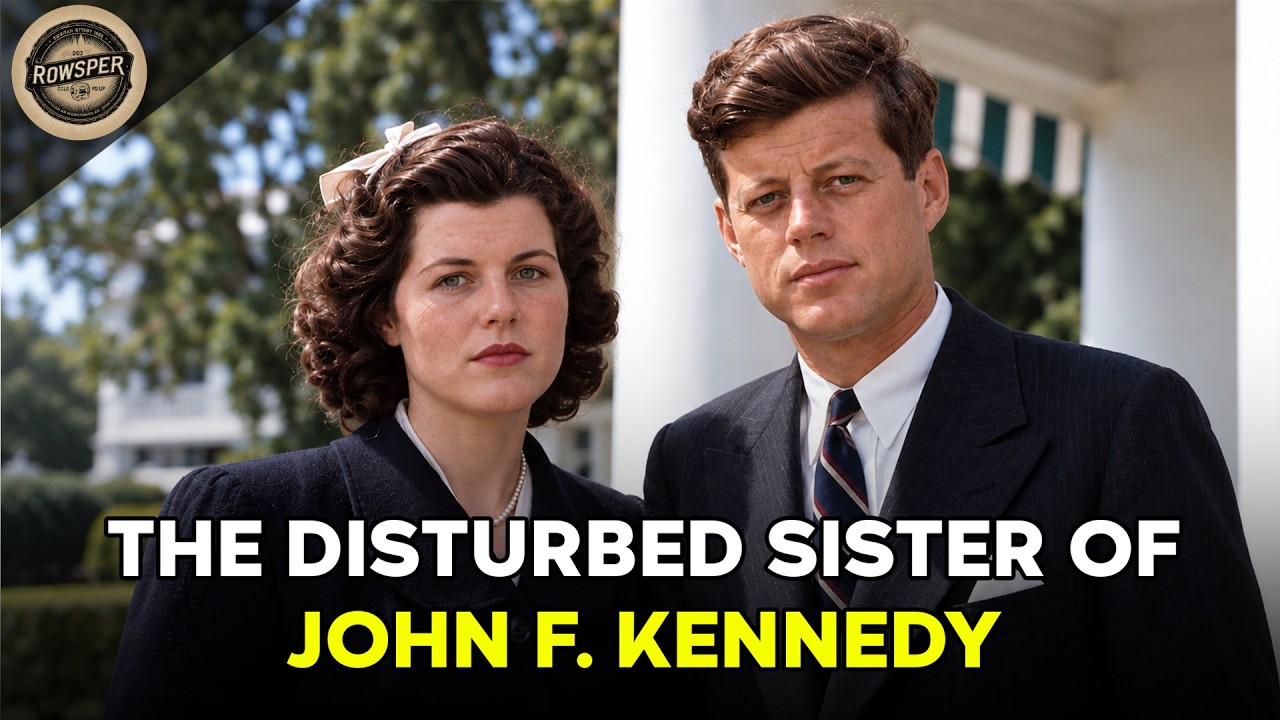
An incision was made through the top of her skull on both sides, and an instrument resembling a blunt knife was inserted into the frontal lobes of her brain and swung back and forth to cut the tissue. The surgeons talked to her while they worked. They asked her to recite prayers, to sing, to count backwards. The purpose was to gauge how far to go.
They were using her own voice as the measure of the damage they were doing. She kept answering. She kept singing. Then her words began to slur and lose their sense.
That was when they stopped cutting. She had no idea what was being done to her, and the family member who could have stopped it did not know it was happening. Three years earlier, this same woman had spent hours practicing a curtsy in a house in London. She had been chosen to be presented to the king and queen at Buckingham Palace, and she was determined to get it right.
After that afternoon in the operating room, she would disappear from public life completely, and it would be almost half a century before anyone outside the family learned why. Brooklyn, Massachusetts, September 13, 1918. She was born at the family home on Beals Street, the third child and first daughter of Joseph P. Kennedy and Rose Fitzgerald Kennedy.
Two brothers had come before her: Joe Junior, born in 1915, and John, born in 1917. Seven more children would follow. They named her after her mother, Rose, shortened almost immediately to Rosemary. But something happened in that room on Beals Street, and it happened before Rosemary was five minutes old.
The autumn of 1918 was the worst moment of the influenza pandemic that killed somewhere between fifty and one hundred million people worldwide. Boston was one of the hardest hit cities in the United States. Doctors were run off their feet, moving between houses, and Rose’s physician was delayed getting across the city. Rose went into labor anyway.
The nurse was there, and she was capable of delivering the baby herself. She did not do it. The reason came down to money and status. The doctor was owed his fee for the delivery, and a nurse who delivered a baby without him created an awkward situation.
So she told Rose to keep her legs closed and hold on. Then she physically held the baby’s head inside the birth canal to stop the birth from progressing. She kept it there for around two hours. An infant in that position is being deprived of oxygen.
Rosemary was eventually born, alive, looking like a perfectly healthy baby. But something had already been done that could not be undone. Nobody at the time connected the two things. The delivery was not discussed.
The family did not know, and would never really know, what had happened in those two hours. The nurse’s reasoning was ordinary. She was not cruel. She was protecting a professional relationship in a city where doctors were owed their fees and nurses did not overstep.
She had almost certainly done something similar before. On any other day, with any other baby, the delay would have meant nothing at all. On that day, it cost a child the rest of her life. The first signs came slowly.
At two years old, Rosemary was having difficulty sitting up, difficulty crawling, and difficulty learning to walk. Things her two older brothers had done without anyone having to think about it. She was slower to speak. She was slower at everything.
Rose Kennedy noticed. She had two children to compare against, and a third arriving soon after. The pattern was unmistakable to her long before anybody put a name to it. In 1920 there was essentially nothing anyone could offer a child like Rosemary.
There were no early intervention programs, no therapies, very little research, and almost no public conversation about childhood disability at all. Beyond the widespread assumption that a child like this should be sent away somewhere and not spoken of. Rose was told by more than one specialist that this was exactly what she ought to do. She refused, and she kept refusing for twenty years.
The Kennedys were not a family with much patience for slow. Joseph Kennedy had made an enormous fortune before he was forty, in banking and shipbuilding and Hollywood and the stock market, and he had a plan for what came next. The money was the foundation. The children were the point.
He intended his sons to reach the highest levels of American public life, and he raised all nine of them in an atmosphere of relentless competition. Sailing races, touch football, arguments at the dinner table, and an absolute expectation that a Kennedy came first. Into that household came a daughter who could not keep up with any of it. She tried.
That is the part that comes through most clearly in what survives. She went out on the boats. She played in the games. Photographs from the 1920s and 1930s show her right in the middle of the group on the lawn at Hyannis Port, in the swimming costumes and the sailing clothes, indistinguishable from her sisters.
Rosemary was tutored privately. She worked hard by every account. She was not lazy and she was not indifferent, and the letters she wrote as a young woman are full of effort. But reading and writing were a struggle, and the gap between her and her siblings widened every year rather than closing.
Her mother’s response was to manage the appearance of it. Rose Kennedy did not confide in her friends. She did not tell the extended family. Relatives outside the immediate household knew nothing about Rosemary’s difficulties at all.
In the world Rose came from, Irish Catholic Boston, socially ambitious, watched by everybody, a daughter like this was a private matter, and she kept it private with considerable determination. Her father’s response was different and in its way more revealing. He got her a tennis court. When Rosemary was sent to a convent school where two nuns and a dedicated teacher worked with her all day in a classroom of her own, the Kennedys donated a new tennis court to the school in return for the trouble.
That was the pattern. A problem existed. Money was applied to it, and the problem was contained. There is one thing in this stretch of the story that is genuinely warm, and it involves Jack.
Rose arranged for her older brother Jack to take Rosemary to a tea dance. He did it, and by the accounts that survive, with him beside her on the floor, she seemed no different from anyone else in the room. That was the whole point of the exercise, and it worked. Her siblings did that for her repeatedly over the years.
Took her to dances, walked her in, made sure she was never standing alone. Joe Junior did it. Jack did it. Eunice, who was six years younger, seems to have taken it on as a permanent job almost from childhood.
There was real affection in that family, and it ran in both directions. Rosemary wrote to her father constantly. The letters that survive are simple and often labored, but they are unmistakably the letters of a daughter who adored the man she was writing to and wanted very badly for him to be pleased with her. She apologized in them for not doing better.
She promised to work harder. By her mid-teens, her reading and writing were assessed at roughly the level of a nine- or ten-year-old. That was where they stayed. And then in 1938, her father was made an ambassador, and the whole family sailed for England.
The London years were the best years of Rosemary Kennedy’s life, and everybody who has written about her agrees on that. Joseph Kennedy was appointed United States Ambassador to the United Kingdom, and the family moved into the ambassador’s residence in Kensington. For the first time, Rosemary was somewhere the local press did not know her history and had no reason to look for it. She was placed at a Montessori-run convent institution outside London, where she trained to work with young children.
The Montessori method suited her exactly. It was structured, practical, and hands-on. It worked through physical materials rather than through pages of text, and it did not depend on the reading speed that had defeated her in every American classroom. For the first time in her life, Rosemary was in a system that had not been designed around the things she could not do.
She was reportedly happier there than she had ever been, and she was good at it. She spent her days with small children who do not care whether an adult reads at a ninth-grade level and who responded to her warmly. She wrote home about the work. She had something to report that was hers.
She was also given a degree of independence. Her own routine. Her own responsibilities. An ocean between her and the household where she had always come last.
She was also, at twenty, a striking young woman. Dark-haired. Round-faced. With a smile that photographed beautifully.
And the London social season did not require anybody to sit an examination. It required good manners, good clothes, and the ability to be pleasant to strangers for several hours at a time. Rosemary could do all three. In 1938, she was presented at court alongside her younger sister Kathleen to King George VI and Queen Elizabeth at Buckingham Palace.
She practiced the curtsy for hours. It was an elaborate thing involving a long train, a specific sequence of movements, and no margin for error in front of a room full of people who would notice. On the day, she stumbled. She caught herself before going down, she stumbled, and nothing happened.
The crowd gave no sign. The king and queen smiled as though it had not occurred. Her mother never mentioned it again and treated the whole evening as an unqualified success. The photographs from that night are among the best ever taken of her.
Two Kennedy sisters in white court dress with feathers in their hair, being presented at the palace at the exact high watermark of their father’s career. Rosemary is twenty years old in them, and she looks entirely at home. It is the last period of her life in which she was allowed to be a person in public. In 1939, the family traveled to Rome for the coronation of Pope Pius XII.
Rosemary was there. She had visited the White House. She kept a diary in these years, later published, and what it describes is an unremarkable young woman’s social calendar. The opera, tea dances, dress fittings, luncheons.
The diaries are one of the few places where Rosemary speaks for herself without anybody editing her. They are not the writings of someone with the mind of a small child. They are the writings of a young woman with limited education recording an enjoyable life. Where she went, who she saw, what she wore, what she ate.
Plain, cheerful, and entirely her own. Meanwhile, back in America, the family was carefully managing a public story about her. Magazine profiles were told she was studying to be a kindergarten teacher. One publication was informed that although she was interested in social work, she secretly wanted to go on the stage.
When a Boston newspaper asked for an interview, her father’s assistant wrote out an answer for her, a polished statement about having serious tastes, understanding that life is not merely for enjoyment, and having taken a teaching qualification in the Montessori method. Rosemary copied it out in her own handwriting, slowly and with difficulty, and it was sent off as though she had composed it. Then the war came, and the Kennedys went home. The family returned to the United States in 1940, and everything that had been working stopped working.
Rosemary was pulled out of the environment where she had been thriving. The school was gone. The routine was gone. The work with children was gone.
And her sisters, who had been her constant company, were moving on into their own adult lives. She was twenty-two, and by her sister Eunice’s later account, she became increasingly irritable and increasingly difficult. It is not hard to imagine why, even leaving the medical questions aside. She had found the one place where she was competent at something, and it had been taken away by a war she had no part in.
Her sisters were being courted and married. Her brothers were heading into uniform and into public life. She was being moved from institution to institution, with no role and no future that anybody had bothered to describe to her. There are two things tangled together in that description.
The first is medical. Rosemary began experiencing convulsions. She had periods of violent temper during which she could lash out and injure people around her, including family members. This was new.
It had not been part of her life before, and nobody has ever established with certainty what caused it. Some of the doctors who later looked at the case believed she was suffering from a psychiatric illness rather than an intellectual disability, that what was happening to her in 1940 and 1941 was a mood disorder emerging in a young adult, which is exactly the age at which such conditions typically appear. The second thing is social, and it is uglier. Rosemary was moved from place to place.
She was asked to leave a summer camp in western Massachusetts. She lasted only a few months at a boarding school in Philadelphia. Eventually, she was placed at a convent school in Washington, D. C.
, which had the advantage, from her father’s point of view, of being somewhere he could keep an eye on. And there she began going out at night on her own. She would leave the building after dark and return in the early hours, and the nuns did not know where she went. They became seriously alarmed.
Their fear was that a young woman with her difficulties, out alone at night in a city, was in real danger of being taken advantage of. And beyond the danger to Rosemary herself, they were frightened of what it might mean for the family. Her father was frightened of exactly the same thing. And it is here that the story turns.
Joseph Kennedy was building something. Joe Junior was being prepared for national politics. Jack was behind him. The entire architecture of the family’s future rested on a spotless public reputation.
And in 1941, an unmarried daughter who might be exploited, or might become pregnant, or might simply be talked about, represented a threat to all of it. He needed the problem to stop. It should be said that he was also, on the available evidence, a frightened father. His daughter was having seizures.
She was lashing out at people. She was disappearing at night into a city he could not control. Doctors were telling him they could help. A man in 1941 with those facts in front of him did not have the vocabulary or the medical literature that would have let him think about it properly.
That is an explanation. It is not much of a defense, because of what he did next and how he did it. Somebody told him about a new operation. November 1941.
The procedure was called a prefrontal lobotomy, and in 1941, it was being presented to the American public as a genuine medical breakthrough. The idea had come out of Portugal a few years earlier, developed by a neurologist named António Egas Moniz, who would go on to receive a Nobel Prize for it in 1949, an award that has been an embarrassment to the committee ever since. The theory was that severing certain connections in the frontal lobes of the brain could relieve severe agitation, anxiety, and violent behavior. Nobody could explain precisely why it should work.
There was almost no long-term data. It was being performed anyway. Its two leading advocates in the United States were both at George Washington University in Washington, D. C.
Walter Freeman was a neurologist and the great promoter of the technique, a man who would eventually perform thousands of these operations and travel the country demonstrating them. James Watts was a neurosurgeon who did the actual cutting. By their own reckoning, roughly a third of their cases were failures. That is their own published assessment of their own work, not a critic’s number.
In some of those cases, the patient died. Freeman had a talent for publicity that a modern public relations firm would envy. Newspapers wrote up the operation as a miracle cure for the incurably disturbed. It was described as a way of giving people their lives back.
Very few reports dwelt on what a third meant. Joseph Kennedy went to them. He did not tell his wife. Rose Kennedy was not consulted and was not informed until it was over.
Neither were Rosemary’s brothers and sisters. Rose later wrote that she had heard about lobotomies and had made inquiries of her own and had been told by a specialist that it was not something to consider. Whether the two of them ever discussed it beforehand is disputed. What is not disputed is that the decision was made by one man alone, about an adult woman who was not in a position to weigh it herself.
The operation took place in November 1941. Rosemary was twenty-three. Watts described how it was done years later, and the description is difficult. She was given a mild sedative and was awake throughout.
An incision was made through the top of her skull on both sides, and an instrument resembling a blunt knife was inserted into the frontal lobes and swung back and forth to cut the tissue. While Watts cut, Freeman talked to her. He asked her to recite prayers, to sing, to count backwards. The purpose was to gauge how far to go.
The surgeons were using her speech as the measure of the damage they were doing. She kept answering. She kept singing. Then her words began to slur and lose their sense.
And then they stopped. That was when they stopped cutting. There is no way to describe that scene without it sounding worse each time you think about it. A twenty-three-year-old woman, awake, singing to a doctor she had met days earlier, while another doctor cut her brain and used the fading of her own voice as a ruler.
She had not agreed to it in any sense the word would normally carry. It became obvious very quickly that something had gone badly wrong. The Rosemary Kennedy who came out of that operating room was not a calmer version of the woman who went in. She could not walk.
She could not speak in a way anyone could understand. She was incontinent. She could no longer read or write. Her capacity in the assessments that followed was compared to that of a very small child.
She would stare at a wall for hours. One arm was left useless. The woman who had curtsied to a king could not get herself out of a chair. Freeman had a standard reassurance for families whose relatives came out of these operations changed and childlike, that this was a temporary phase on the way to recovery and that the person they knew would return in time.
For Rosemary, that phase never ended. There was no later stage. What she was in the weeks after November 1941 is broadly what she remained for the next sixty-three years. Everything the London years had built, the Montessori training, the work with children, the social poise that had carried her through Buckingham Palace, was gone in an afternoon, and it did not come back.
Her father, by every account of the people around him, was devastated. He had authorized it. He had chosen the surgeons. He had kept it from his wife.
And his response to the devastation was not to bring his daughter home. She was institutionalized almost immediately, and the family closed over the space where she had been. The younger children were simply not told. Ted Kennedy was nine years old in 1941.
He grew up with an eldest sister who existed as a name and a set of photographs and an absence at the table, with no explanation offered for any of it. She spent the first several years at Craig House, a private psychiatric hospital in the countryside about ninety minutes north of New York City. It was expensive and discreet, which were the two requirements. In 1949, she was moved to Wisconsin.
The Archbishop of Boston, Richard Cushing, had told her father about St. Coletta’s in Jefferson, a Catholic institution caring for more than three hundred people with disabilities, run by nuns. A very long way from Massachusetts. Rosemary would live there for the next fifty-six years.
Her father paid for a private house to be built for her about a mile from the main campus, near a residence for adults needing lifelong care. The nuns called it the Kennedy Cottage. The care she received there appears to have been genuinely kind, and that matters enormously because it is the only comfort available in this part of the story. Two nuns, Sister Margaret Anne and Sister Leona, looked after her.
A student helped. A woman came three evenings a week to do ceramics with her. There was a car for taking her out for drives, and there was a dog she could walk. She had a house rather than a ward, people who knew her name and her preferences, and a routine that belonged to her.
Set against what happened to most institutionalized people in mid-century America, the vast state hospitals, the overcrowded wards, the neglect that would be exposed by journalists in the decades afterwards, that was an extraordinary standard of care, and it was paid for without interruption for fifty-six years. She relearned some things. Slowly, over years, she learned to walk again, though she was left with a limp and one arm that never fully worked. Her speech never came back properly.
Her father never visited her at the institution. Not once in the remaining twenty-eight years of his life. He paid every bill, and he never went. Her mother did not visit for twenty years, and her brothers and sisters were not told where she was.
The lobotomy was concealed from them entirely. For two decades, the Kennedy children, including a man who would become president of the United States, did not know what had been done to their sister or where she had been sent. The public version evolved as the family’s needs changed. Through the 1940s and 1950s, Rosemary was simply not mentioned.
She was left out of the family photographs that went to the newspapers. She was absent from the campaign literature that listed the Kennedy children by name. When Jack was campaigning for reelection to the Senate in 1958, and somebody asked why his eldest sister never appeared, the explanation given was that she was reclusive and preferred to stay out of public life. It was a good answer.
It was polite, unremarkable, and invited no follow-up question. In 1961, with Jack in the White House, the family finally acknowledged publicly that Rosemary lived in an institution. The reason given was that she had an intellectual disability. The operation was not mentioned.
That framing was a deliberate choice. A former aide to President Kennedy, who later became director of the National Institute of Mental Health, said so plainly: describing Rosemary as intellectually disabled rather than mentally ill protected Jack’s political prospects. Because in the America of 1960, a family history of mental illness was considered disqualifying in a way that a disabled sibling was not. Then in December 1961, Joseph Kennedy had a severe stroke.
It left him unable to speak or walk. The man who had made every decision in that family for forty years was suddenly unable to make any, and the arrangements he had built, including the silence around his eldest daughter, began to come apart. It was at that point that Rosemary’s siblings were finally told where she was. Grown adults in their thirties and forties, a president, two senators to be, four sisters, being informed that their eldest sister had been living in Wisconsin for twelve years, that she had been operated on in 1941, and that this was the reason for everything they had been told and not told since they were children.
Eunice spoke about her sister’s condition publicly in a magazine interview in 1962, but the operation itself stayed buried for another quarter of a century. It was not until 1987, when the historian Doris Kearns Goodwin published her book on the Fitzgeralds and the Kennedys, that the American public learned there had been a lobotomy at all. By then, almost everyone who had made the decision was dead. Joseph Kennedy died in November 1969.
After that, his children brought their sister back. It was gradual, and it was real. Rosemary was taken to visit relatives in Florida and in Washington. She was brought to Hyannis Port on Cape Cod, to the house where she had spent the summers of her childhood and where her brothers and sisters had taught her to sail and taken her to dances.
She was in her fifties by then. She limped. She could not hold a conversation. But she was in the room, in the photographs, at the table.
The younger generation grew up around her. Nieces and nephews who had never known the family silence took her for walks, sat with her, learned the small vocabulary of sounds and gestures that she used. To them, she was simply Aunt Rosemary, an elderly relative who needed help. And there was nothing shameful or complicated about her at all.
That is what her parents had been unable to manage, and their grandchildren did it without effort. Eunice in particular took her sister on as a lifelong responsibility, and so later did Eunice’s children. There is a widely repeated claim that Rosemary was the inspiration for the Special Olympics, which Eunice founded in 1968. It is worth being accurate about this because Eunice herself pushed back on it.
Asked about it directly by a newspaper in 1995, she said Rosemary had been one of a number of people with disabilities she used to invite to swim at her house, and that the games should not be presented as being about any single individual. What is beyond dispute is the shape of the family’s public work. In 1963, President Kennedy signed legislation that fundamentally changed how the United States dealt with intellectual disability and mental illness, moving away from warehousing people in large state institutions and toward community-based services and research. He talked about it as a national obligation.
He had a sister in Wisconsin who nobody was allowed to ask about. The legislation he signed would eventually help thousands of families avoid making the kind of decision his own father had made in 1941. Whether that was hypocrisy or grief or both is not really a question that can be answered from the outside. What can be said is that the family that hid Rosemary also spent decades and a great deal of money changing the conditions for people like her, and that both of those things were true at once.
She outlived nearly all of them. Joe Junior was killed on a bombing mission in 1944. Kathleen died in a plane crash in 1948. Jack was assassinated in 1963.
Bobby was killed in 1968. Her father died in 1969, her mother in 1995. Rosemary was still in the cottage in Wisconsin. By the early 2000s, she was in her eighties and in declining health, still in Wisconsin, still visited.
She died on January 7, 2005, at Fort Atkinson Memorial Hospital, of natural causes. She was eighty-six years old, older than any of her brothers had lived to be, and older than three of her sisters. She did not die alone. Her sisters Eunice, Jean, and Patricia were there, and so was her brother Ted.
Four of the nine at the end. She was buried at Holyhood Cemetery in Brookline, Massachusetts, the town where she had been born, beside her parents. She had come back finally to within about a mile of the house on Beals Street where the nurse had told her mother to wait. There is one last question that hangs over the whole story.
It is not really the question of whether the operation was a mistake. Everybody agrees it was, including, in his own way, the man who ordered it. The harder question is what exactly was being fixed. James Watts, the surgeon who performed the operation, said many years afterwards that in his view, Rosemary Kennedy had never been intellectually disabled at all.
He thought she had been suffering from a form of depression. A review of the papers he and Freeman published supports that reading. Every patient they operated on was diagnosed with some form of psychiatric illness, not a developmental one. If Watts was right, then the girl who struggled with reading, who was tutored in a separate classroom, who was photographed at Buckingham Palace and taught small children in a Montessori school, was a young woman with real learning difficulties and, later, a treatable illness on top of them.
Treatable is the word that stings. The medications that would have been offered to someone in her position ten or fifteen years later did not exist in 1941. She sits on the wrong side of a line in medical history by about a decade. And in 1941, she was subjected to an operation that a third of the time did not work, for reasons that had as much to do with her family’s reputation as with her own well-being.
Without her mother’s knowledge, and without any meaningful ability on her own part to refuse it. She spent sixty-three years afterwards in institutions. It is also worth noting what came later for the operation itself. Freeman went on performing lobotomies into the 1960s, developing a faster version he could carry out in a doctor’s office in a matter of minutes, and he performed thousands of them.
The procedure fell out of use after effective psychiatric medications arrived in the 1950s, and it is now regarded as one of the gravest errors in the history of modern medicine. Rosemary Kennedy is the most famous person it was ever done to. But the last thirty-five of those years she had her family back. There are photographs of her from the 1970s and 1980s at Hyannis Port, sitting among Kennedys, an elderly woman in a cardigan being fussed over by nieces and nephews who had grown up knowing exactly who she was.
That is not nothing. It arrived thirty years late, and it is still not nothing.
