The hollow in the ridge above Blackwood Junction made its own sound when the wind passed over it, a low and even hum that the miners learned to stop noticing. That was before the winter of 1903, before the voices came back wrong, before the town that had housed nearly three hundred people shrank to fewer than fifty and then to almost none. By the time the last official report was written, the settlement existed on only a few maps, and the men who wrote about it used the language of economics—population decline, diminished coal reserves, an unprofitable enterprise. The county records told that story.
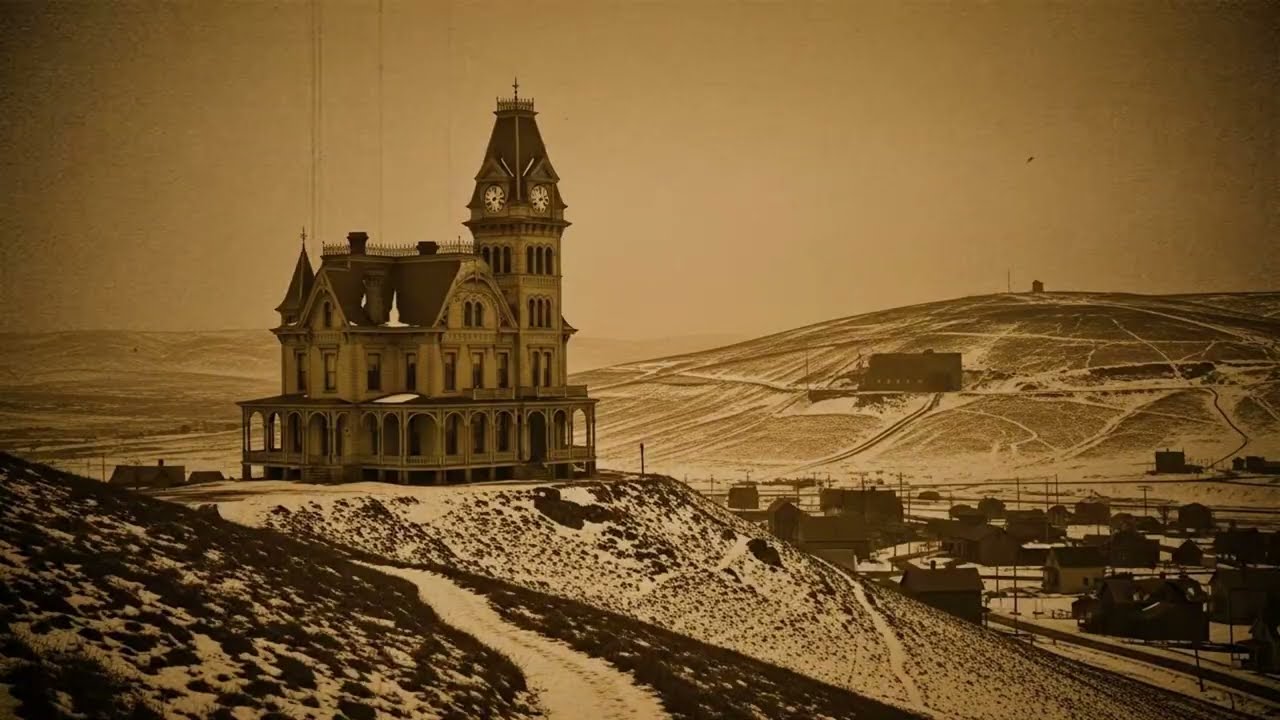
The local archives told another. The Harland Mine had always been uneasy ground. Edgar Blackwood opened it in 1876, and for a few years it was the bright hope of eastern Kentucky. The coal seam ran rich, and by 1880 more than a hundred men worked the tunnels daily, cutting deeper and deeper into the mountain.
The town grew up around the entrance: workers’ houses, a company store, a small church, and eventually a school. It looked like a place with a future. But the deeper the men dug, the more peculiar the mine became. In 1883, three workers reported hearing conversations in a newly opened tunnel.
Voices discussing ordinary matters, though no one else was there. The mine supervisor dismissed the claim as coal fumes playing tricks on the men’s minds and reassigned them to different sections. Two weeks later, one of the three vanished during his shift. His lunch pail was found at the mouth of the tunnel where he had first reported the voices.
The man himself was never found. The pattern repeated over the years: reports of voices, then disappearances. By 1899, the incidents had become so common that the miners refused to work certain sections. Production dropped.
Blackwood, determined to keep the mine profitable, brought in new workers from outside the region, men who had not heard the stories and would not be swayed by local superstition. In the summer of 1902, a partial collapse closed the deepest part of the mine. Instead of clearing the debris, Blackwood ordered his engineers to cut a new tunnel in a different direction. The decision was presented as financial—removing the rubble was costly—but some accounts suggest Blackwood had been influenced by his supervisor, who insisted that section stay shut.
In a letter to a business partner in Louisville, Blackwood wrote that the supervisor felt an unaccountable unease about conditions in the deepest shaft, claiming the air there was strange and the silence too heavy. Two months after work began on the new tunnel, a more catastrophic collapse killed twelve men and shut the mine down entirely. The official investigation cited improper bracing techniques and possible water damage to the supports. Unofficially, the survivors reported hearing a sourceless conversation just before the collapse, as if invisible people stood among them discussing whether the supports would hold.
The mine was declared unsafe and operations were suspended. Blackwood remained in town, living in the mansion on the hill overlooking the settlement, working on plans to reopen the mine when conditions improved. Those plans never came to pass. The first disappearance came on November 12, 1903.
Samuel Garfield, the town doctor, was last seen entering the woods near Raven’s Creek after responding to an emergency call from a farm. The call was said to have come from the Blackwood estate, though later investigation revealed that no one on the estate acknowledged having summoned him. What made his vanishing strange was not that he left no trace, but that his medical bag was found nearly a mile away. Its contents had been arranged with precise care in a perfect circle on the forest floor.
Nothing was missing. Nothing was damaged. It had simply been rearranged. The town organized search parties.
They combed the woods for three days before a snowstorm forced them back. When they returned, the medical bag was gone. The circle of objects remained, partially covered in snow, preserved exactly as it had been found. Sheriff Thomas Harding noted in his report that it looked as though someone had been watching, waiting for them to leave before retrieving the bag, leaving the objects untouched.
What troubled the town most was that Garfield was not merely respected but feared in Blackwood Junction. Standing six feet four with shoulders like a bull, he was known to break up fights single-handed. Whatever had taken him had done so without any sign of resistance. The investigation into Garfield’s disappearance was handled quietly—too quietly, some thought.
The local paper mentioned it once and never again. Town meetings stopped discussing it after the second week. It was as if the town had collectively decided to forget, though they could not forget the sounds. The Blackwood County Register, a weekly paper that served the region until 1948, ran a peculiar editorial on November 20, 1903.
Ostensibly about preparing for winter, it contained a strange paragraph: “Citizens are reminded that clear communication is essential during these cold months. Speak clearly and directly. Avoid unnecessary conversation, especially after dark or in isolated areas. Remember that words, once spoken, cannot be recovered.
” The editorial was written by William Hayes, who had owned and edited the paper since 1891. Hayes was known for his straightforward reporting, which made this figurative, warning language entirely out of character. More tellingly, Hayes stopped publishing the paper entirely in mid-December 1903, leaving town without explanation. When publication resumed in February 1904 under new ownership, nothing was said about Hayes or his whereabouts.
December brought a phenomenon no one could explain. Residents reported hearing voices coming from the abandoned mine workings. Not screams or cries for help, but ordinary conversations—mundane exchanges as if people were discussing the weather or household chores—at strange hours and from impossible distances. Eleanor Whitaker, the postmistress, documented in her personal diary that she heard her own voice discussing a letter she had handled earlier that day, though she had been alone in her house at the time.
Whitaker’s diary, discovered in 1949 during restoration of the old post office building in nearby Millfield where she had moved after leaving Blackwood Junction, provides one of the most complete and direct accounts of the early phenomena. Her entry for December 8, 1903, reads: “I heard myself again tonight. I was reading by the fire when my voice came clearly from the kitchen, reading the address on Harrow’s letter exactly as I had read it aloud to myself while sorting the mail this morning. When I gathered the courage to check, the kitchen was empty, but the voice continued now from the parlor I had just left.
The voice spoke in broken words now. Words and phrases I had used throughout the day, assembled into new sentences that seemed to hold meaning, but not quite. Most unsettling was hearing myself say, ‘Eleanor knows but she will not admit it. ’ I have never spoken those words.
”
Later entries document the evolution of her experiences. By mid-December, Whitaker reported hearing not only her own voice but the voices of other townspeople, conversations she had witnessed reproduced with perfect precision hours or days later. She began keeping a log of when and where she heard these vocal anomalies, noting patterns. They often occurred at dusk, became clearer during snowfall, and frequently seemed to emanate from the direction of the mine, regardless of where she stood in town.
The phenomenon spread. More residents reported hearing their own voices or private conversations, sometimes days old, echoing from the mines or the forest. Sheriff Harding attempted to investigate by establishing listening posts around town. His deputies reported hearing the sheriff’s own voice giving them instructions they had never received.
Deputy Michael Collins provided a particularly detailed statement preserved in the county archives. Stationed at the old mill on the edge of town on December 18, tasked with documenting any unusual sounds, at approximately 9:17 p. m. he heard Sheriff Harding’s voice from inside the abandoned structure issuing orders for a search pattern.
Collins entered the mill, believing the sheriff had arrived to join him. He found it empty, but reported that the voice continued, now seeming to come from directly behind him, always just out of sight. It recited what Collins recognized as instructions Harding had given during a town meeting three days earlier, but with key details altered—names substituted, locations reversed. Collins reported feeling a presence moving around him in the darkness, watching him though he saw nothing.
The phonographic recordings from that period, crude wax cylinders the sheriff ordered from Louisville, contain only static and intermittent rhythmic clicking, which University of Kentucky experts determined in 1963 matched the pattern of a human heartbeat. The original recordings were reportedly destroyed in a courthouse fire in 1967, though copies of the analysis remain in the university archives. Professor Alan Thornton, who led the analysis, noted several anomalies in his report. The rhythmic patterns showed variations that seemed random at first, but when plotted over time displayed clear mathematical progression, as if something was experimenting with the patterns, systematically testing variations.
Most troubling was Thornton’s observation that the final cylinder in the series contained a pattern matching human heartbeats, but with impossible precision, as if created by a machine attempting to simulate the irregularity of a human heart. Thornton concluded the recordings were elaborate hoaxes, though he could not explain how such complex acoustic patterns could have been created with 1903 technology. By January, Blackwood Junction had changed. Residents began avoiding one another.
Conversation in public places nearly ceased. Church attendance dropped to zero. According to store receipts preserved in the county historical society, purchases of locks, bolts, and weapons increased by 300 percent. Most tellingly, no one dared go out after sunset.
Store records showed another unusual pattern: a sharp rise in purchases of sound-absorbing materials—heavy curtains, wool stuffing, even egg cartons some residents used to cover their walls. Multiple orders were placed for pictures and music cylinders despite their prohibitive cost. Interviews with descendants of survivors indicate these were not used for entertainment but to mask conversations and create background noise to prevent private discussions from being heard. Residents began covering mirrors, stuffing rags under doors, and hanging thick curtains over windows.
Several accounts recall that people spoke in whispers, if they spoke at all, believing that spoken words would later return from the darkness. Harriet Wilcox, the town’s only telephone operator, noted in her logs a sharp decline in calls during January. When people did use the phone, their conversations were vague and brief. Many refused to speak at all, using a system of clicks to communicate—one click for yes, two for no, patterns for simple messages.
According to Wilcox’s notes, this was due to a growing belief that telephone wires carried sounds away to places where something might be listening. What happened to Edgar Blackwood, the founding family patriarch, exemplified the psychological horror that gripped the town. Blackwood, the wealthy industrialist who had founded the mining operation in 1876, lived in a mansion overlooking the town. His personal physician, Dr.
Morrison, who had replaced Garfield, noted in his medical record that Blackwood began suffering auditory disturbances in mid-January. Before his own troubles began, Blackwood had remained skeptical of the town’s growing hysteria. In letters to his Louisville partners, he described the situation as an unfortunate collective delusion caused by the harsh winter and Dr. Garfield’s disappearance.
He even hosted a dinner on January 7, inviting the town’s officials and remaining dignitaries. According to Morrison’s notes, only three people attended, and the evening was marked by tense silence, punctuated by the host’s desperate attempts to start conversation. The record, discovered during a county courthouse restoration in 1951, describes how Blackwood first complained of hearing mining operations at night, despite the mine being closed since the collapse the previous summer. These complaints escalated to hearing board meetings he had conducted years earlier, in the voices of partners who had died or left the region.
Morrison’s records became more detailed as Blackwood’s condition deteriorated. The industrialist mentioned that the replayed conversations began to include questions he had never asked and answers he had never given. Business discussions turned personal, secrets Blackwood claimed he had never spoken aloud. More disturbing, he began hearing conversations between himself and his late wife, discussing events that occurred after her death.
Morrison prescribed laudanum for sleep and suggested Blackwood leave town temporarily. Blackwood refused. The last entry in his diary, dated January 28, 1903, says simply: “They are not echoes. They are rehearsals.
” Among Blackwood’s papers, discovered decades later in a Louisville bank vault, was a sealed envelope containing what appeared to be transcripts of conversations. The handwriting matched Blackwood’s known script, but the content was strange: dialogues between Blackwood and various town residents discussing events that had not yet occurred at the time of writing. These conversations included accurate descriptions of the spring floods that would indeed strike the region in April 1903, references to the Spanish-American War containing details not public until years later, and most disturbingly, accurate accounts of how and when certain residents would die, including those who disappeared that winter. The final pages become increasingly incoherent, with multiple versions of Blackwood’s handwriting overlapping on the same page, as if different copies of him were attempting to communicate simultaneously.
The last readable sentence, written in a hand barely recognizable as Blackwood’s, reads: “I hear myself planning this from the mine. I have been rehearsing being me. ”
He disappeared the following night. The mansion was found in perfect condition.
No signs of struggle or forced entry. The only oddity was that every clock in the house, from the large wall clocks to the pocket watches, had stopped at 3:27 a. m. According to the household staff, the mansion felt strangely different afterward.
The cook described it as a place where the air itself seemed to be listening. What is particularly striking about Blackwood’s disappearance is the lack of attention it received outside town. Despite his prominent standing in Kentucky business circles, his absence went unnoticed in the Louisville and Lexington papers. Inquiries from business partners were reportedly answered with letters explaining that Blackwood had traveled abroad for health reasons.
These letters, when examined decades later, proved to be forgeries, though the handwriting was indistinguishable from Blackwood’s own. The investigation into Blackwood’s disappearance was more thorough than that of Garfield. State authorities were notified. Kentucky State Police records indicate that investigator James Monroe arrived on February 3 to investigate.
His initial reports described the town as pathologically quiet, noting that residents seemed collectively exhausted and unwilling to meet one another’s eyes. Monroe’s private journal, never included in official records but kept by his widow and later donated to the state historical society, offers a more candid assessment. His entry for February 4 reads: “Something is wrong deep in Blackwood Junction. The residents move like sleepwalkers.
They watch me when they think I am not looking, but refuse to meet my gaze directly. They speak as little as possible, and when they do, they whisper or write notes they immediately tear up. They do not seem afraid of each other, but of themselves, of what might come out of their mouths. I have never seen fear like this before.
”
Monroe’s investigation centered on the abandoned mine. His reports detail an unusual discovery. Despite being closed for months, the mine entrance showed signs of recent activity. Boot prints entered and exited, but matched no resident’s footwear.
More troubling were the handprints found on the support beams—prints positioned, Monroe noted, as if someone had been dragged into the darkness while trying to resist. In his journal, Monroe described examining the mine entrance: “The prints are strange, almost human but not quite. The stride length is inconsistent, as if whoever left them was not accustomed to walking. There is deliberation in them, each print placed with unnatural precision, like a child practicing its steps.
The handprints worry me more. They begin at adult height but slant sharply downward, becoming more frantic. Several fingers appear to have been broken during the struggle, leaving smears instead of prints near the end. ”
The investigator requested permission to explore the mine tunnel, but authorities refused, citing structural concerns.
Private correspondence between Monroe and his superior, preserved in state records, reveals his frustration: “Something is happening in Blackwood Junction that defies logical explanation. The residents know more than they are saying, but they have developed a pathological fear of speaking. I believe this community is suffering from a collective psychosis brought on by isolation and possibly exacerbated by environmental factors. ”
Monroe’s journal becomes increasingly concerned with his own experiences as the investigation continued.
He began recording instances of hearing repeated conversations, discussions he had conducted with town residents echoing in empty rooms hours later. He noted waking at exactly 3:27 a. m. for three consecutive nights, feeling watched by something in the darkest corner of the room.
Most unsettling was his growing conviction that his own voice no longer sounded right in his ears, that something in its tone had changed. Monroe never filed his final report. According to his last telegram to headquarters on February 12, he planned a final interview with the town schoolmaster who claimed to have information about what the mine had taken. Monroe was never seen again.
His horse was found grazing calmly outside the school building. His notebook lay open on the teacher’s desk. The pages were blank. What makes Monroe’s disappearance particularly troubling is the testimony of Abigail Winters, the elderly mother of the schoolmaster.
In a statement given to state police, she claimed she saw Monroe approach the school at precisely 4:15 p. m. According to her account, he tied his horse outside, adjusted his hat, and entered the building. Seventeen minutes later, she saw him emerge, mount his horse, and ride toward the mine.
When investigators pointed out that his horse was found still tied at the school, she became agitated, insisting she had seen what she had seen. “It was him,” her statement reads, “but not quite. He walked with too much care, as if learning how to walk. ” The statement includes another detail investigators initially dismissed but which gained significance in light of the broader pattern: she claimed that while Monroe was riding away, she clearly heard his voice from inside the school, engaged in conversation with her son.
Two voices, she insisted to investigators, both his, but conducting two different conversations in two different rooms. The schoolmaster, Jonathan Winters, was found in the school basement, hiding in a coal bin. When discovered, he was engaged in what appeared to be a conversation with himself, whispering questions and answering in a slightly different tone. He resisted removal from the basement and became violent when forced to leave.
While being transported to the state hospital in Lexington, he escaped by jumping from the moving train. Despite intensive searches, he was never found. A railway worker reported seeing a man matching Winters’ description walking calmly along the tracks toward Blackwood Junction hours after his escape, but the sighting was never confirmed. The state police sent two more investigators to look into Monroe’s disappearance.
They found the town nearly deserted, though no evacuation order had been issued or reported. Approximately thirty residents remained, all claiming the others had left seeking better opportunities. Those who stayed appeared, in the words of investigator Franklin Reed, resigned to whatever fate awaited them. Reed’s official reports maintain dispassionate professionalism, presenting observations without speculation.
His private letters to his wife, preserved in her family’s collection and made available to researchers in 1987, reveal growing unease. He described residents who seemed emptied from within, not merely frightened or withdrawn, but incomplete in some way. He noted the town’s unnatural quiet, writing that the usual sounds of life—footsteps, doors closing, the clatter of dishes—were absent, as if people were making a conscious effort to move without sound. Most troubling was his account of questioning the remaining residents: “They answer questions mechanically in phrases that seem rehearsed.
Under pressure for details, they repeat themselves with identical words and gestures. As if they have learned a script but cannot improvise outside it. Their eyes remain fixed on points just behind my shoulder, as if watching something I cannot see. ”
The most disturbing account came from Reed’s partner, investigator Samuel Porter, who documented a strange incident during their second night in town.
Staying at the inn, Porter reported waking to find his partner standing motionless at the window, staring toward the mine. When Porter spoke to him, Reed did not respond. According to Porter’s report, Reed finally turned and said: “They are coming back wrong. ” Then he returned to his bed.
Reed had no memory of the incident the following morning. Porter’s personal journal, found among his possessions after his death in 1945 and now held in the Kentucky State Police Museum, elaborates: “Reed’s face looked strange. Relaxed in a way I have never seen on a conscious person. His eyes tracked my movements, but showed no sign of recognition.
When he spoke, the words came out very slowly with unnatural pauses between them, as if he were translating from another language. I asked him what he meant. He turned back to the window and said, ‘They are rehearsing us until they get it right. ’ Then he returned to his bed with stiff, careful steps, unlike his usual gait.
In the morning, he remembers nothing. But something has changed. His voice no longer sounds quite like his own. ”
The investigators’ inquiry centered on questioning the remaining residents, who gave contradictory and often incomprehensible accounts of the previous weeks.
Many mentioned hearing wrong voices saying right things. Others refused to speak entirely, communicating only through written notes they burned immediately after reading. One interview with former mine foreman George Latimer was particularly revealing. Latimer, who had worked in the mine for twenty-two years before the collapse, initially refused to speak at all.
When Porter insisted, Latimer wrote a note: “They learn from hearing us. They have gotten better at it now. ” When asked to elaborate, Latimer whispered reluctantly: “It started in the new tunnel. We broke through into something hollow, larger than it should have been.
The echo there was wrong, too clear and too precise, as if something was capturing our words and keeping them. Then they began to come back changed. ”
Latimer claimed the miners had encountered a natural cavity deep in the mountain, a space that should have been solid rock but instead was empty in a way that felt wrong. He described how sounds in this chamber returned not as simple echoes but as responses, often combining words spoken days earlier in entirely different contexts.
Many miners reported hearing their own conversations repeated in this place, including discussions that had taken place in their homes far from the mine. Most disturbing was Latimer’s claim that some workers began hearing versions of themselves discussing events that had not yet occurred, accurate prophecies of collapses or equipment failures. He whispered: “After a while, we realized it was not predicting accidents. It was planning them.
”
The mine itself became a focus of local superstition. Residents avoided looking directly at the entrance, visible from the town’s main street. Many boarded over windows facing that direction. The local minister, Reverend Hollister, began preaching that the mine was a mouth that must be sewn shut.
His sermons, transcribed by his wife and preserved in church records, speak of words returning changed and voices learning through listening. Hollister’s theological interpretation of events evolved over the winter months. The early sermons depicted these phenomena as divine tests or possibly demonic influence. By January, his rhetoric shifted to something stranger, describing the mine as a place where the veil had worn thin, warning that what listened from that cavity was neither divine nor demonic but something entirely outside those categories.
“It learns. It imitates. And eventually, it replaces. ”
His final sermon, delivered to a nearly empty church on February 1, abandoned the religious framework entirely.
The written texts resemble a warning: “It begins with your voice because it is the easiest part of you to capture. The part that extends outside your body into the world. Once it has your voice, it studies how you move, how you think, how you respond. It rehearses being you.
And when it is confident, it takes your place. The body remains as a shell, moving through familiar patterns. But what moves it is no longer the person you knew. ”
Hollister and his wife disappeared three days later.
Their home was found in perfect order, with a cold breakfast still on the table. The only exception was a partial sermon manuscript in Hollister’s handwriting discussing events that had not yet occurred, including an accurate description of investigators finding his abandoned home. Reed and Porter finally requested permission to seal the mine entrance. State authorities initially refused, concerned about valuable equipment still inside.
But the investigators’ increasingly urgent telegrams eventually convinced them. On February 22, a controlled explosion collapsed the mine entrance. Porter’s report indicates the collapse was met not with celebration by the townspeople but with a collective exhale, as if the town had been holding its breath for months. The relief did not last.
That night, according to multiple witnesses, every resident reported hearing a clear and distinct knocking, three slow beats from inside their own homes. The sounds came from walls, floors, and ceilings, as if everywhere and nowhere at once. Many residents fled that night, leaving behind everything they owned. What is particularly notable about this exodus is the manner in which it occurred.
According to Porter’s report, those who fled did so in absolute silence. There were no calls to family members, no shouted instructions, no crying or expressions of panic. They simply walked out of their homes and away from town, carrying nothing and speaking to no one. Many passed directly by Porter without acknowledging him, their facial expressions empty of emotion yet seeming purposeful.
He described them as moving like sleepwalkers with a specific destination. Porter noted another disturbing pattern: those who left did not walk toward the main road or neighboring towns, but toward the collapsed mine entrance. His attempts to redirect several residents failed. They simply walked around him and continued their journey.
One woman was followed for nearly a mile before disappearing into the trees near the mine. Search parties the next day found no trace of those who had fled. Those who remained began acting stranger. Reed documented several instances of residents appearing to conduct conversations with empty chairs, moving their lips without making a sound.
Others would freeze mid-motion, remaining perfectly still for minutes before continuing as if nothing had happened. The town doctor, Morrison, began diagnosing these episodes as fugue states, moments when the mind—he claimed—briefly stepped outside the bounds of time. Reed noted that these episodes often occurred simultaneously among several residents, as if coordinated. In one case, he documented five people in different locations throughout town freezing at the exact same moment, remaining motionless for exactly seven minutes, then resuming their activities as if nothing had occurred.
When questioned, none reported any awareness of the pause. Morrison’s medical records from this period show a preoccupation with silence as a diagnostic tool. He began requiring patients to sit in complete silence for ten minutes before examination, claiming this allowed him to hear what they truly suffered from. His notes became increasingly incoherent through February, filled with observations like “Mrs.
Thornton’s cough has a conversational rhythm” and “Judge Williams’ pulse asks questions. ” Most troubling was Morrison’s growing conviction that illnesses themselves were forms of communication, symptoms as messages from elsewhere using the human body as a medium. His treatment protocols came to involve the vocal isolation of patients, whom he placed in specially constructed rooms lined with sound-absorbing materials. According to his notes, the purpose was to prevent the illness from hearing itself and learning how to evolve.
By March, Blackwood Junction’s population had fallen below twenty. Those who remained rarely went outside and never spoke except in whispers. Mail service ceased after the postmistress departed without notice, her office locked from within with no trace of her inside. The general store operated on the honor system, customers taking what they needed and leaving payment without the owner appearing.
Reed and Porter’s reports from this period document a community in deep psychological distress. Residents developed elaborate systems to avoid making noise, covering door handles with cloth, wearing multiple layers of socks instead of shoes, communicating through gestures and written notes. Many took to wearing scarves or high collars that obscured their mouths. Even indoors, the psychological state of the remaining residents deteriorated rapidly.
Dr. Morrison’s medical records show increasing cases of severe insomnia, paranoia, and what he called “speech echo,” a condition in which patients could only communicate by repeating what was said to them, as if afraid to generate original speech. Morrison’s own mental state declined sharply in early March. His medical notes, initially clinical and organized, turned into rambling observations about vocal infections and mimetic plagues.
He became convinced that something was using sound itself as a vector, that the human voice could be colonized by an external entity. His final entries describe attempts to develop a vocal vaccine by having patients listen to recordings of their own voices played backward, which he believed would confuse the mimics. The most detailed account from this period comes from Margaret Weston, a nurse who arrived from Lexington to assist Dr. Morrison.
Her diary, discovered in 1957 in the Kentucky Medical Historical Society archives, describes a community gripped by collective psychosis. Residents would freeze at unexpected sounds. Some took to walking only on carpeted areas to avoid making footsteps. Most concerning was their habit of moving their lips to form words without vocalizing, communicating through exaggerated lip movements while remaining utterly silent.
Weston’s observations of physical changes in the residents are particularly troubling. She noted that many appeared to have lost significant weight, not from lack of food, but from what she described as an inward hollowing. Their skin hung loosely, their eyes appeared more sunken. Their voices, when used, had a hollow resonance she likened to speaking into an empty barrel.
She began to suspect some kind of wasting disease until she noticed that some residents seemed to regain their weight and vitality at night, only to return to their hollow state by morning. Her diary entries from mid-March document growing concern that the residents were not actually sleeping. She observed lights moving in homes throughout the night, shadows passing across windows at late hours, and she reported hearing what sounded like conversations at 3:27 a. m.
, always at precisely that time, though the voices were too faint to distinguish words. When she asked residents about it, they insisted they had slept deeply and alone, despite Weston clearly seeing multiple shadows moving in their homes. Her diary entries grow increasingly concerned about Dr. Morrison, who began what he called vocal treatments.
These involved placing patients in the storage basement beneath his office for hours at a time, claiming that absolute silence would reset their internal voices. Patients emerged dazed and even more reluctant to speak. One patient, referred to by Weston as “Mr. H,” emerged from treatment unable or unwilling to speak at all.
When she examined him, she found his vocal cords appeared normal, but he answered questions only in writing. “I gave it my voice. It was the only way to make it stop. ”
Weston’s professional skepticism gradually eroded as she herself experienced increasingly inexplicable phenomena.
She documented hearing her own voice reading patient notes in rooms she had just left, seeing her reflection in mirrors continue moving after she had stopped, and most troubling, finding pages in her diary filled with her own handwriting describing events that had not yet occurred. One entry dated March 17, but apparently written earlier, detailed with perfect accuracy a conversation she would have with Morrison that day, including phrases and observations she had never thought of before reading them in her own hand. “It is as if something else is using my hands, my words, my thoughts, but hours or days before I actually experience them. ”
Weston remained for two weeks before fleeing.
Her final diary entry describes waking to find Morrison standing over her bed, moving his lips silently in words she could not understand. When she asked what he wanted, he put his finger to his lips and wrote on a piece of paper: “They are learning to imitate us. Do not give them your voice. ” The following morning, Morrison was gone.
His house was intact, except for one strange detail: every reflective surface was covered with black cloth. What Weston did not include in her diary, but later confessed to a colleague at a Lexington hospital, according to a letter found among the colleague’s personal effects after her death, was that she had been experiencing auditory phenomena herself before escaping. She described waking at night to hear her own voice reading patient notes she had recorded earlier, despite the recording device she had used being non-functional. Most disturbingly, she claimed to hear her voice speaking phrases she had only thought in private and never vocalized.
This progression from hearing one’s own voice repeat spoken words to hearing unspoken thoughts appears repeatedly in Blackwood Junction accounts. It suggests that whatever was learning from the residents was growing more sophisticated in its mimicry, moving from simple repetition to more complex forms of imitation. April brought spring to Kentucky, but no renewal to Blackwood Junction. The remaining residents began reporting a phenomenon even more disturbing than the voices.
They described seeing themselves in places they had not been. Glimpses through windows, around corners, always at a distance, always for just a moment. Sheriff Harding, one of the few officials who remained, documented these sightings in his official log, noting that they followed a particular pattern. Residents would see their doubles three times before they themselves disappeared.
Harding’s log entries from early April attempt to maintain an objective tone, documenting each reported sighting with time, location, and witness statements. By April 7, the entries became more personal. Harding himself reported seeing his double standing at the edge of the forest at 4:17 p. m.
His entry was technical, noting the time, exact location, and the fact that the figure wore his winter coat despite the day being mild. Harding’s description is troubling in its precision. He noted that his double stood too still, maintaining a posture that would be difficult for a living person to hold. When Harding called out, the figure turned with mechanical deliberation, rotating its head first, then its torso in a separate motion.
It did not respond, but watched him for several minutes before retreating into the tree line and disappearing. Harding reported finding no footprints or disturbed vegetation where it had stood. His second sighting came on April 12. This time his double was closer, standing in the center of the town square at dusk, facing the mine.
In this encounter, the double wore Harding’s own sheriff’s uniform and badge. Harding reported that as he approached, the figure began to speak—not to him, but as if rehearsing speech. It repeated common greetings and phrases, writing: “Using my voice but with subtle variations in tone, as if testing different emotional inflections. ‘Good morning.
How are you today? The weather is nice today. ’ Each was repeated several times with minor adjustments. ” What Harding found most disorienting was not the reproduction of his appearance or voice, but the sense that the double was rehearsing being him, practicing human interaction as an actor preparing for a role.
When he drew his pistol, the entity showed no fear or concern, but tilted its head like a curious bird before walking away with movements that seemed familiar but not quite right, as if imitating what it saw rather than understanding it instinctively. Harding’s final log entry, dated April, contains a single line: “It is standing outside my window now, wearing my badge. It has waited long enough. ” Harding’s badge was found on his desk the following morning.
He was never seen again. What is particularly troubling about Harding’s case is the testimony of Joseph Miller, one of the few townspeople willing to speak to outsiders. In a statement given to county officials conducting a quiet investigation in late April, Miller claimed he saw Harding walking toward the mine the morning after his disappearance. Miller called out, thinking the sheriff had returned.
According to his statement, Harding turned and nodded, but did not speak. Miller described immediate unease, though he could not articulate why: “It was Harding, but his movement was wrong. Too deliberate, as if thinking through each step. And his eyes… they watched me, but there was nothing behind them.
” The statement includes a detail investigators initially dismissed but which gained greater significance in light of later events: Miller claimed that as Harding walked away, he noticed the sheriff’s footsteps made no sound despite his heavy boots and the gravel path. Looking down, Miller saw that Harding’s feet were not quite touching the ground. The county investigation was brief and inconclusive. Officials attributed the multiple disappearances and strange accounts to mountain fever and possible water contamination.
Their report recommended abandoning the settlement due to unsuitable living conditions. The report mentioned nothing of the vocal phenomena or double sightings, though multiple testimonies described both. By May 1903, Blackwood Junction was officially abandoned. The county classified it as economically unviable, and no efforts were made to resettle it.
The buildings remained, slowly decaying over the decades. The mine entrance, though collapsed, was reinforced with concrete in 1927 by order of the state governor. Though no official explanation was recorded, the reinforcement mandate came after a series of unusual incidents in the area. Hunters reported hearing conversations emanating from the collapsed mine entrance—conversations and voices they recognized as belonging to townspeople who had disappeared years earlier.
More troubling were reports from neighboring communities of former Blackwood Junction residents seen returning to the abandoned town, often at night, walking in a trance-like state toward the mine. A state guard assigned to monitor the area in 1926-1927 kept a detailed log of these returns. He documented seventeen cases over eight months, noting that the returnees displayed common characteristics: moving with unnatural stiffness, never speaking, walking only after sunset. His attempts to intercept several were unsuccessful.
The figures would change direction to avoid him, always maintaining their path toward the mine, circling obstacles as necessary. The most disturbing observation was that these returnees left no footprints, even in soft ground, and appeared unaffected by environmental conditions. One elderly woman watched walking toward the mine during a heavy rainstorm remained perfectly dry despite having no umbrella or coat. When he shouted at her, she turned to look at him with what he described as complete emptiness, eyes like glass marbles, before continuing her journey.
The concrete barrier was designed not merely to prevent entry into the mine, but to prevent sound transmission in both directions, according to private correspondence between the governor and the project engineer. Engineering reports indicate the incorporation of special sound-absorbing materials into the concrete mixture, an unusual and costly addition not disclosed in public records. The project faced unexpected difficulties. Workers reported tools disappearing, only to be found arranged in precise patterns deep in the mine shaft.
Several complained of hearing their conversations replayed to them hours later from deep within the tunnel. Most troubling were reports that the work itself seemed to be undone overnight. Concrete poured one day would be found gouged the following morning, despite no signs of human activity. The site manager, David Harker, reported another disturbing phenomenon.
Workers began mimicking each other’s speech and movement patterns, sometimes appearing to fall into synchronized motions unconsciously. In his final report after the project’s completion, Harker recommended transferring all workers to other projects in different parts of the state to minimize any lingering effects of their time in Blackwood Junction. He himself resigned from government work entirely, with reports indicating he moved to California and changed his name. The story might have ended there, another ghost town from America’s industrial past, had it not been for Dr.
Elias Chambers, a psychology professor from the University of Kentucky who became interested in the case in 1961. Chambers discovered the scattered records and began interviewing relatives of former Blackwood Junction residents. What he found suggested the horror had not ended with the town’s abandonment. Former residents who had fled Blackwood Junction reported continued hearing of their own voices at strange times, sometimes reciting conversations held years after leaving town.
Many lived in near-total silence, communicating only through writing. Others spoke only during certain hours of the day, maintaining strict silence from sunset to sunrise. One interviewee, Henry Collins, son of Deputy Michael Collins, described his father’s behaviors that persisted for decades after fleeing Blackwood Junction. The elder Collins had moved his family to Cincinnati, refusing to discuss what had happened in the mining town.
According to his son, Collins adhered to elaborate rituals designed to confuse “the listeners,” as he called them: never sleeping in the same room twice in a row, speaking to family members in coded phrases, and most strikingly, recording his voice on primitive devices and playing these recordings in empty rooms of the house while remaining silent elsewhere. The reports of doppelgängers were the most disturbing. At least seven former residents reported seeing themselves in public places, standing on streets, sitting in restaurants, watching from train platforms. In each case, the double appeared three times, each time closer than before.
After the third sighting, the person felt an overwhelming urge to return to Blackwood Junction. Three of them did. According to family members, none were seen again. The pattern of return extended beyond immediate survivors.
Chambers documented cases of children and even grandchildren of Blackwood Junction residents experiencing similar phenomena: hearing the voices of relatives they had never met, seeing their own doubles, feeling a pull toward the abandoned town site despite never having been told of its significance. This generational effect suggested something more complex than simple trauma or collective psychosis. Chambers’ investigation took a darker turn when he himself began experiencing unusual phenomena. In notes discovered after his disappearance, he described waking to hear his own voice speaking from his office, delivering passages from interviews he had conducted.
The recording devices he had placed to capture these events recorded nothing unusual. Yet the phenomena continued. Most disturbing was his growing conviction that he was being watched while conducting his research. His notes describe a feeling of attention focused on him, especially when reviewing certain documents or discussing specific aspects of the case.
He began to suspect that the investigation process itself was somehow doing whatever had affected Blackwood Junction. This suspicion was confirmed when Chambers replayed his research recordings and discovered silent passages in places he clearly remembered speaking. In one particularly disturbing incident, he played a recording of an interview with the daughter of a former resident to hear his own voice asking questions he did not remember asking, in phrasings he would never have used. His research assistant, graduate student Caroline Weber, documented her own concerns about Chambers’ behavior in a personal diary discovered after her death in 1997.
She described subtle changes in his speech patterns and mannerisms over the course of the investigation. “Nothing dramatic, but noticeable to someone who worked closely with him. Most concerning was his growing preoccupation with the acoustic properties of the human voice. He began recording his own voice daily, analyzing the recordings for what he called infiltration indicators—subtle changes in pitch, rhythm, or vocabulary that might indicate external influence.
”
Chambers compiled his research into a study titled “Collective Psychosis in Isolated Communities: The Blackwood Junction Incident. ” The manuscript was submitted to the Journal of Abnormal Psychology in 1962 but was rejected for publication. Chambers appealed the decision, but before the appeal was considered, he withdrew the paper and resigned from his university position. His colleague, Dr.
Martin Graves, later claimed that Chambers had received a package containing a phonograph cylinder. After listening to it, Chambers burned all his research notes and refused to discuss Blackwood Junction again. According to Graves, Chambers’ final words on the subject were: “It is not over. It is still listening, and now it has heard me too.
”
What Graves did not reveal until years later, in a private letter to the university president that remained sealed until his death, was that he had also listened to the phonograph recording. He described it as 87 seconds of complete silence, followed by Chambers’ voice speaking words he had said during a private conversation held in Graves’ office the previous day. “A conversation no one else heard and no device recorded. What disturbed me more than the impossibility of this recording was Chambers’ reaction to it.
He listened without any surprise, as if confirming something he already suspected. When the recording ended, he smiled in a way I had never seen before, a smile that seemed practiced rather than natural. He said, ‘Now you have heard it too,’ in a tone suggesting he had been planning this moment. I have not spoken to Elias since that day, but I have twice seen someone who looks exactly like him watching my house from across the street.
When I approach, the person walks away with a stiffness that reminds me of how Elias described the movements of the Blackwood Junction doubles. ”
Chambers moved to Arizona and lived in seclusion until his death in 1968. His death certificate lists the cause as heart failure, but the attending physician noted that Chambers died with his eyes and mouth wide open in an expression of extreme terror. A strange postscript to the Chambers story emerged in 1965 when a graduate student working in the university archives discovered a sealed envelope Chambers had left before his departure.
The envelope contained a single page with a list of names, all former Blackwood Junction residents who had fled during the winter of 1903. Next to each name was a date. When the student cross-referenced these dates, she discovered that each date corresponded exactly to the day that person had died or disappeared. The final entry on the list was Elias Chambers himself, dated March 17, 1968—nearly three years in the future at the time Chambers had written it.
He had indeed died on that exact date. Most troubling was a note at the bottom of the page in handwriting matching Chambers’ but showing subtle variations in letter formation: “Time means nothing to them. They exist in all moments at once. They were always in the mine.
They were always inside me. They were always inside you too. ”
The state of Kentucky purchased the land on which Blackwood Junction once stood in 1970 and designated it as part of a wildlife refuge. Access is restricted ostensibly for conservation purposes.
The concrete cap over the mine entrance is inspected annually by state engineers, though this fact appears in no public records and was only discovered through a Freedom of Information request in 1982. The inspection reports contain a disturbing pattern: each year, despite no visible damage, acoustic and structural tests indicate that the cap is somehow thinning from within. The material is not eroding. It is compressing as if under tremendous pressure.
Engineers have repeatedly recommended reinforcement, but these recommendations are consistently deferred. Most troubling are the acoustic tests. Highly sensitive equipment placed on the cap has recorded what the reports describe as ambient noise consistent with distant conversations, despite the mine having been sealed for decades. One report—later redacted from official records but preserved in a private engineer’s files—indicated that the acoustic signature matched human speech patterns but at frequencies impossible for human vocal cords to produce.
The most recent documented incident connected to Blackwood Junction occurred in 1967 when a graduate student named Thomas Mercer discovered Chambers’ original research notes, erroneously deposited in the university archives instead of being destroyed. Mercer reportedly became obsessed with the case and traveled to the former town site despite access restrictions. Park rangers found his car abandoned near the old road to Blackwood Junction. A search party was organized but found no trace of Mercer.
His recording device was found near the mine’s concrete cap, still running, the tape completely expended. When rewound and played, it contained only 87 minutes of silence, followed by three distinct knocks, then Mercer’s voice saying: “I understand now. They just wanted to be heard. ”
No further investigation was conducted.
Mercer’s disappearance was attributed to a mishap in a restricted wilderness area. His case was closed in 1968. What the official report does not mention is that three weeks after Mercer’s disappearance, a park ranger reported seeing someone matching Mercer’s description walking down the main street of the old town at dusk. When the ranger called out, the person did not respond, but turned slowly to face him.
The ranger, in his unofficial account shared years later with a local newspaper reporter, said the face was Mercer’s, but it was empty somehow, like a picture of a person rather than the person himself. The ranger approached, but the person retreated into the ruins of a building. When the ranger followed, he found the building empty with no other exits. Most troubling was his discovery that the building’s floors were covered with a thin layer of undisturbed dust—dust showing no footprints except his own.
The ranger requested a transfer the next day and never returned to that part of the refuge. The physical evidence remaining from the Blackwood Junction incident is scarce. The forest has reclaimed the town itself. County records are scattered across various archives, much lost in administrative reorganizations and courthouse renovations.
The few photographs that exist show only a typical mining town of the period. Nothing suggests the psychological horror that occurred there. What makes the Blackwood Junction case so unsettling is not what was seen, but what was heard and how what was heard changed the community. This suggests something predatory in silence itself, as if the absence of sound creates a vacuum that something else might fill.
The phenomenon of returning voices, of hearing oneself speak from elsewhere, of words coming back changed, represents a profound violation of the boundary between self and other. Our voices are extensions of ourselves, carrying our thoughts into the world. What happened in Blackwood Junction suggests those extensions can be captured, studied, and returned wrong. Contemporary psychologists who have studied the scattered records view the town as having experienced a form of mass hysteria exacerbated by winter isolation and possible toxic exposure from the mine.
This clinical explanation fails to account for the pattern of disappearances, the documentation provided by outside observers like investigator Monroe, or the ongoing experiences of those who fled. A more disturbing theory emerged in 1982 when Dr. Henrietta Klein, a linguistics professor specializing in the acoustic properties of human speech, reviewed the case while researching a book on regional dialects. Her analysis focused on the phenomenon of returning voices and the specific pattern of how they changed over time: first echoes, then responses, then predictions.
Klein proposed that what the residents experienced could be understood as a form of linguistic predation, something that learned human communication not by imitation but by consumption. Her theory suggests that whatever inhabited the mind did not merely mimic sounds, but somehow extracted them, processed them, and eventually learned to generate them independently. This theory might explain why residents began avoiding speech—not merely fear of being heard, but fear of being consumed in some sense, of having a fundamental aspect of their identity torn away and repurposed. The progression from hearing echoes to seeing doubles follows a logical pattern from capturing expressions to capturing physical presence.
Klein never published her analysis. Her research notes end abruptly mid-sentence. Colleagues reported that she abandoned the project after receiving an unmarked package containing an antique phonograph cylinder. The cylinder was never found among her possessions after her sudden move to New Zealand in 1983, where she cut off contact with both colleagues and family alike.
Whatever happened in Blackwood Junction in the winter of 1903 fundamentally changed how its residents perceived reality. It made them doubt the simplest assumptions about identity and existence. It taught them to fear their own voices, not because of what those voices said, but because of what might be listening, learning, and ultimately responding. Perhaps the most disturbing aspect of this case is how completely it has been forgotten.
There are no historical markers identifying the town’s location. Local histories mention it only in passing, if at all. Even descendants of residents rarely know the story, as if the silence that swallowed Blackwood Junction still spreads across time, erasing even the memory of what happened there. Those who have studied the case in depth often report a strange experience: the feeling of being watched while reading the documents, as if merely learning about Blackwood Junction attracts the attention of something that is still listening.
Many researchers report hearing their own voices at strange times after engaging with the case, usually repeating phrases they used while discussing their findings. In 1964, Martha Kendrick, one of the last surviving former Blackwood Junction residents, agreed to a recorded interview with a journalist from the Louisville Courier Journal. She was 78 years old at the time. Kendrick had been a young woman of seventeen when she fled the town in February 1903.
For six decades, she had never spoken of what happened there. The recording exists in the newspaper’s archives, though it was never published. Kendrick speaks haltingly, often pausing for long periods. When asked directly about the voices, she was silent for nearly three minutes before answering: “They were not just echoes.
They were learning. First they learned to repeat. Then they learned to respond. Then they learned to anticipate.
Eventually, they knew what you would say before you said it. They knew what you would do before you did it. They knew you better than you knew yourself. ”
When asked what they were, Kendrick’s answer was barely audible on the recording: “Hungry spaces.
Empty places that wanted to be filled. The mind was the deepest, but there are others. There are always others. Places that had been emptied of their content and left hollow.
They resonate, and when you speak near them, they keep part of you. They hold it and study it and then give it back changed. ”
The interview ends abruptly when Kendrick refuses to continue, saying only: “I have already given it too much. It remembers voices, and now it has heard mine again.
” She died three days later. The coroner’s report cites natural causes, but the attending nurse noted that in her final moments, Kendrick appeared to be listening intently to something only she could hear. What is troubling about Kendrick’s testimony is how closely it aligns with the region’s folklore that predates the mining operations. Appalachian oral tradition contains numerous references to hollow places where echoes return changed.
These places were generally avoided, especially by singers and storytellers who believed that singing near them could lead to losing one’s voice or, worse, hearing it speak without one’s will. The Cherokee who inhabited the region before European settlement had similar taboos regarding deep caves and crevices, places they called “speaking holes. ” Their traditions warned that too much talk near these places would allow something to learn your voice and steal your face. These sites were identified and avoided, especially in winter months when the entities dwelling within were believed to be more active due to the relative quiet of the natural world.
The last official record pertaining to Blackwood Junction is a state engineering report from 1969 assessing the structural integrity of the concrete barrier over the mine entrance. The report notes that despite no visible damage, acoustic tests indicated the barrier had been compromised from within. Engineers recommended reinforcement, which was carried out later that year. A handwritten note in the margin of the report signed by the chief engineer says simply: “Fill it completely, whatever the cost.
” The recommendation was never implemented. Budget constraints were cited as the reason. The engineer who wrote that note, Raymond Colfield, retired the following year and moved to Oregon. In 1972, he contacted a former colleague expressing concern that he had begun hearing things.
According to the colleague’s memory, shared during a 1985 interview with a paranormal researcher, Colfield claimed to hear his own voice at night reciting the technical specifications of the concrete barrier—specifications he had only spoken while at the mine site. Colfield later reported seeing himself standing at the foot of his bed, watching himself sleep. The figure appeared three times, each time closer. After the third appearance, Colfield told his wife he needed to return to attend to something.
He purchased a ticket to Kentucky, but never boarded the plane. His rental car was found abandoned near the wildlife refuge. He was never seen again. What happened in Blackwood Junction remains a mystery known to few and investigated by fewer.
Those who delve too deeply into the research often abandon it suddenly. Academic inquiries are discouraged. The land remains restricted. But occasionally, hikers in the wildlife refuge report a strange phenomenon.
In certain areas, especially at dusk, their own voices sound different in their ears, as if returning from a great distance, or as if someone else is speaking to them simultaneously, using their words but with slightly different inflections. Park rangers dismiss these reports, attributing them to unusual acoustic properties of the heavily forested terrain. They advise hikers to stay on marked trails and return before dark. They never mention Blackwood Junction.
They never speak its name. Perhaps that silence is the most telling response of all. In Blackwood Junction, Kentucky, in the winter of 1903, something learned how to listen. And by all indications, it has not stopped.
In 2002, a hiker who became separated from his group reported a strange encounter near the site of the old town. He described finding himself in a clearing where building foundations were still visible beneath the undergrowth. As the sun began to set, he heard what sounded like voices coming from the ground beneath him. Ordinary conversations, mundane exchanges, but with a quality he described as faded, like old photographs of sound.
Most disturbing was his account of what happened when he called out to his companions. His voice returned to him, not as a simple echo, but as if it had been transformed. First as perfect repetition, then as a response using his words but rearranged, then finally as a new sentence in his voice that seemed to anticipate what he would say later. The hiker reported feeling an overwhelming sensation of being emptied from within.
It happened each time his voice returned, as if something was taking something from him with it. He fled the area in growing panic until he found his way back to the marked trail. Park officials dismissed his account, citing auditory hallucinations due to dehydration. The incident report was filed and forgotten.
The hiker was said to have developed selective mutism in the weeks following the incident, speaking only when absolutely necessary and never above a whisper. Most troubling was his wife’s report that she sometimes heard him late at night speaking in his sleep, engaged in animated conversations with himself, performing both roles in the same voice but with slightly different inflections. The psychological aftermath for those who have encountered this phenomenon, whether in 1903 or more recently, follows a consistent pattern: gradual silence, insomnia, paranoia, and an overwhelming feeling of being watched. Many report a feeling that their words continue to exist after being spoken, that speech itself has become a form of permanent exposure, leaving traces that never quite fade.
Perhaps that is the real horror of Blackwood Junction. Not that something kidnapped the residents, but that it did not really need to. It only needed their voices, their expressions, the external parts of their identities. With those, it could recreate them, study them, perfect them, and eventually replace them.
The perfect simulation of human identity without the humanity behind it. The hollow simulacrum that looks and sounds right but is not. The double that returns from the silence, speaking in your voice, wearing your face, but driven by something entirely other. And it is patient.
Decades mean nothing to it. It can wait until someone speaks its name, acknowledges its existence, draws its attention. It waits in the silence between words. In the moments when we hold our breath, in the pauses between thoughts, it is always listening.
It is listening. And now that you have heard this story, perhaps it is listening to you too.
