In 1999, a New Orleans attorney named John Cummings stood in an empty warehouse on a Louisiana plantation he had purchased as a real estate investment. Flipping through dusty inventory records, he found something that stopped him cold. Listed between barrels of sugar and bales of cotton were names—human names—each with a dollar amount attached. Beside one woman named Mary, valued at triple the others, were two words: good breeder.
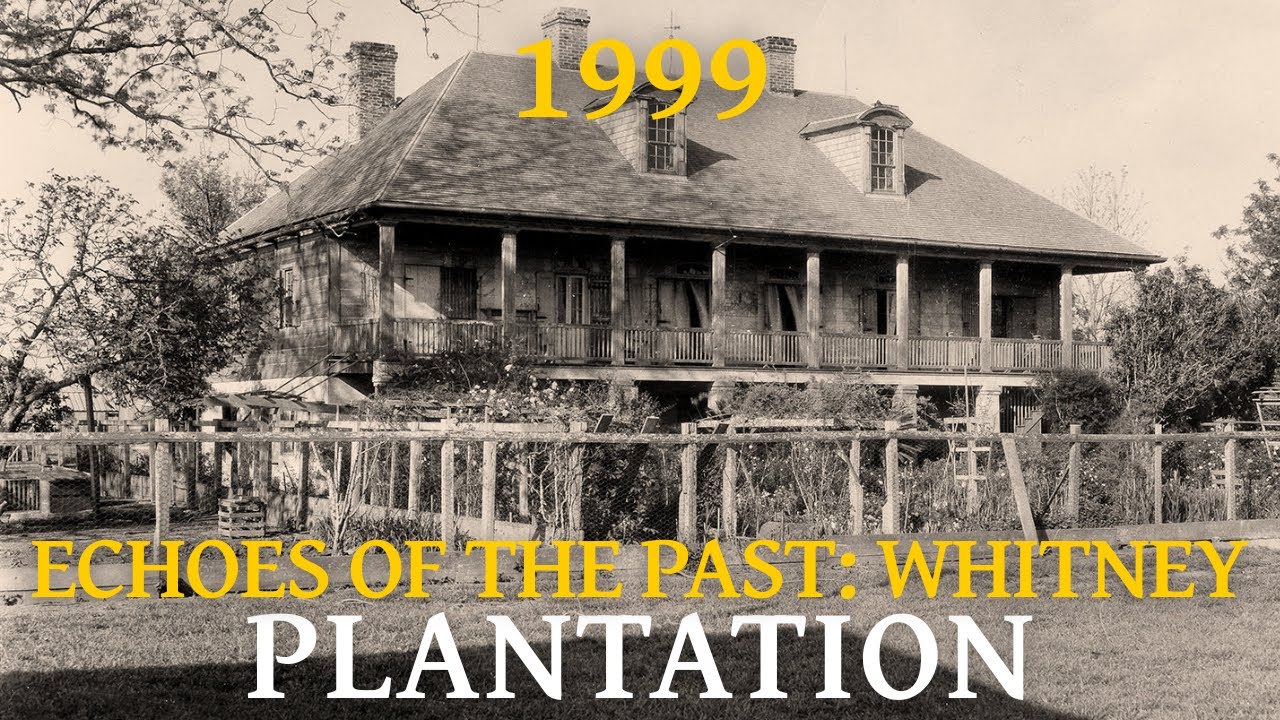
She was priced like livestock. Cummings realized he knew almost nothing about the system that had built the ground beneath his feet, and that discovery would come to define the rest of his life. The land he bought sits on the west bank of the Mississippi River, about an hour from New Orleans, in Wallace, Louisiana. Sugar cane still grows in the fields, and above the green stalks rises a French Creole mansion with its galleries facing the river.
This is Whitney Plantation, and unlike almost every other plantation museum in America, it tells the story most would rather forget. The plantation’s history begins in 1752, when Louisiana was still a French colony. A German immigrant named Ambroise Heidel had arrived decades earlier, in 1721, with his mother and siblings, leaving the Rhineland for promises of land and opportunity. He started with one pig.
By 1752, he had saved enough to purchase his own tract of land and established a small plantation he named Habitation Heidel, adapting his German surname to sound more French. To make the land profitable, he did what every planter in the colony did: he bought human beings—20 enslaved Africans with knowledge of indigo cultivation. Colonial planters specifically sought West Africans with expertise in rice and indigo, and these captive people brought skills that made men like Heidel wealthy. For decades, indigo dominated the fields, though processing it was toxic work.
Enslaved workers stood in vats of fermenting plant material, breathing fumes that damaged their lungs and left their hands permanently stained blue. Then in 1795, a French Creole planter named Etienne de Boré successfully granulated sugar on a commercial scale just outside New Orleans. The discovery changed everything. Jean-Jacques Haydel Senior, Ambrose’s youngest son, converted the operation from indigo to sugar in the early 1800s.
The transition required more land, more equipment, and far more enslaved labor. Sugar was more profitable than almost anything grown in North America, but it was also more brutal. Louisiana’s sugar parishes were uniquely deadly. In every other slave state, the enslaved population grew naturally over time.
But in Louisiana, the death rate exceeded the birth rate. The enslaved population shrank, and the only way plantation owners maintained their workforce was by constantly buying new people at the slave markets in New Orleans. Enslaved people called Louisiana “Lousy Anna. ” They knew it was a death sentence.
The work itself was the killer. Growing sugar cane was brutal—the plants grew tall with leaves sharp as razors, and workers bent over in fierce heat and humidity for hours to cut them by hand. Once cut, cane spoiled within 24 hours, so the grinding season from October through December operated around the clock. Many people worked 16 hours a day or more.
The mills could catch clothing and hands, crushing bones. Workers tended massive iron kettles where boiling syrup could cause burns that killed slowly. One formerly enslaved person recalled that it was rare for a man working at the mill to live more than 10 to 12 years. The cruelty was built into the system itself.
Planters bought predominantly young men, creating a heavily male workforce with fewer families and fewer children. The work was so exhausting that many women lost pregnancies, and some planters forced mothers to stop breastfeeding almost immediately to send them back to the fields. Infant mortality was staggering. At Whitney Plantation, between 1823 and 1863, 39 children died; only six lived past the age of five.
Across the entire St. John the Baptist Parish, 2,200 enslaved children died during those same 40 years. The average age of death was three years old. Some records listed them simply as “a little slave child,” with no name at all.
Yet resistance was constant. In January 1811, enslaved people on Louisiana’s River Road rose up in the largest slave revolt in United States history. On January 8, at a plantation just a few miles from Whitney, a mixed-race overseer named Charles Deslondes led about 25 enslaved people into the home of their enslaver, killing his son and wounding him. They raided the arsenal, taking muskets, ammunition, and militia uniforms.
Deslondes and his followers marched down River Road toward New Orleans, their numbers swelling to an estimated 200 to 500 as more enslaved people joined. For two days, they marched more than 20 miles, burning plantation houses and killing two planters. Inspired by the Haitian Revolution, they moved with purpose and discipline. But the local militia organized quickly.
On January 10, the two forces met near a plantation called Destréhan, and the militia slaughtered them. Between 40 and 45 rebels died in the fighting; the rest scattered. Over the next two weeks, slave patrols hunted them down. Forty-four captured men were tried, convicted, and executed—some hanged, others shot.
But death wasn’t enough for the planters. The executed men were decapitated, their heads placed on pikes and displayed along River Road from St. Charles Parish to New Orleans. Enslaved families, including children, were forced to pass these pikes every day.
It was a deliberate act of terror. The 1811 uprising remained almost unknown for over 150 years because the people who wrote the history books were descendants of the planters, not the enslaved. When John Cummings bought Whitney Plantation in 1999, he didn’t plan to create a museum. He was a successful trial lawyer and real estate investor who had made a fortune representing clients in disaster cases.
But those inventory records shook something loose. He began reading—one book, then another, then hundreds. By the time he opened the museum 15 years later, he had read over 400 books on slavery. The property was in terrible condition when he bought it; the main house, built around 1790, was falling apart.
Cummings poured $8 to $10 million of his own money into the project. He moved a historic church built by freed slaves in 1870 onto the property, commissioned artists to create memorials, and met Ibrahima Seck, a Senegalese historian specializing in the connections between West Africa and Louisiana. Seck joined as director of research in 2013, insisting on centering African agency and resilience, not just suffering. On December 7, 2014, the museum opened its doors for the first time in its 262-year history.
More than 750 people attended. Since then, more than 700,000 visitors have walked its grounds. The tour doesn’t begin in the big house. It begins in the church, where life-sized bronze sculptures of enslaved children sit in the pews, each representing a real person interviewed in the 1930s by the Federal Writers Project.
The artist deliberately sculpted no eyes on the figures because enslaved people were forbidden from looking their enslavers directly in the eyes. Visitors receive a card with the name and story of an enslaved person and carry that story through the visit. They walk through slave cabins measuring 12 by 16 feet, where up to a dozen people might have slept on the floor. They see the Wall of Honor listing more than 350 enslaved people who lived and worked at Whitney.
They visit memorials engraved with the names of 107,000 enslaved people who lived in Louisiana between 1719 and 1820, and the Field of Angels with the names of those 2,200 children. And finally, they enter the big house—not to admire its architecture, but to understand the stark contrast between the lives lived upstairs and those lived in the cabins outside. Every piece of wood, every nail in its foundation, was placed by enslaved hands. After the Civil War ended in 1865, Whitney didn’t close.
The plantation continued under sharecropping systems that trapped Black workers in cycles of debt. Families who had been enslaved often stayed because they had nowhere else to go. The plantation finally ceased operations in 1975, and two of the original slave cabins were still occupied that year by descendants of the people who had worked the land for generations. After the Haydel family sold it in 1867, the property passed through many hands, including a businessman who renamed it Whitney after his daughter.
In 2019, Cummings donated the entire property to a nonprofit organization called the Whitney Institute, wanting it to survive beyond his own wealth and lifetime. Hurricane Ida caused significant damage in 2021, but the museum reopened and the work continues. Cummings, now in his mid-80s, has been asked why a wealthy white man decided to spend his fortune on this project. His answer is simple: “We have not acknowledged our great sin of slavery as a nation.
We must own it. ” Dr. Seck has a saying from Senegal: “Truth is like fire. You may choose to sit on it, but not forever.
” Whitney Plantation is where that fire burns openly, forcing visitors to face the parts of history they would rather forget—and to leave changed, carrying the names and stories of the dead forward.
