Born in 1894 into a mansion with forty bedrooms, three hundred servants, and a trust fund worth millions before he could walk, Cornelius Blake never needed to learn the price of bread. He never applied for a job, never feared a bill, never questioned the source of the endless money that flowed his way. His grandfather had started with a single freight line in 1862, the year Lincoln signed the Pacific Railroad Act, and by 1880 controlled over nine hundred miles of track connecting Chicago to the western territories. When the old man died in 1903, his estate was valued at forty-eight million dollars.
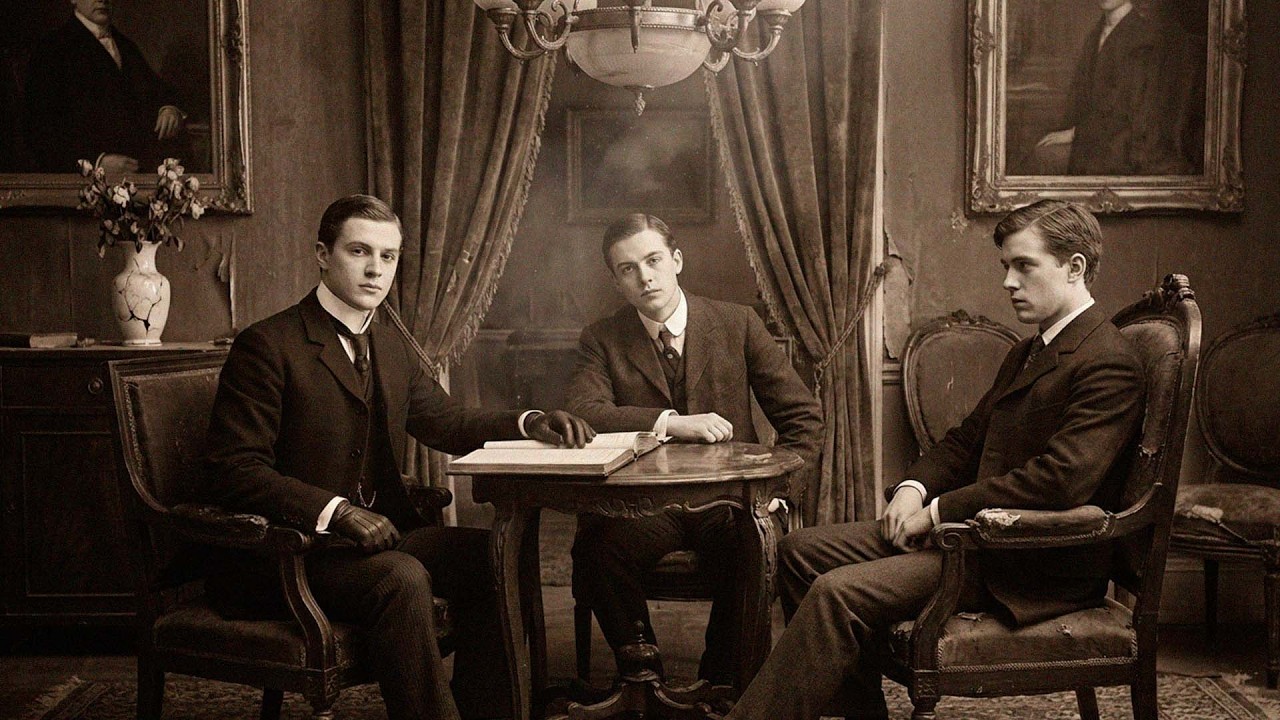
His son inherited a self-running railway empire, married a steel magnate’s daughter, and built a Fifth Avenue mansion with a ballroom that held four hundred guests. Into this world came Cornelius the Third, delivered by the most expensive obstetrician in New York, raised by tutors and nursemaids, never sharing a room, never seeing his parents cook a meal or open their own door. Harvard in 1912 offered two populations: scholarship students who worked nights and studied by lamplight, and boys like Cornelius, for whom the university was a finishing school between childhood and inherited wealth. He joined the Porcellian Club, the same one his father had belonged to, and during his first semester lost over three thousand dollars in a single poker hand.
He signed promissory notes without hesitation, certain his quarterly allowance would cover them. It always did. Over four years he accumulated debts that would have ruined ordinary families: thousands lost at casinos in Newport, thousands wagered on a single horse race, thousands owed to a tailor who made suits Cornelius wore once and forgot. His father paid every bill, sometimes with resignation, occasionally with a sermon that faded the moment it ended.
Cornelius studied classical languages, ancient philosophy, and European literature, subjects designed for gentlemen of leisure. He never took accounting, never learned contract law, never studied the railroad business that financed his existence. His senior thesis examined Homeric heroism in the Iliad, dictated mostly to a paid assistant who corrected his Greek and polished his prose. The professors knew, and still gave him high marks.
The Blake family had funded a library wing. The 1920s arrived as a fever dream. Prohibition became law in January 1920, and for men like Cornelius it was theater. Speakeasies flourished in Manhattan basements, the Stork Club knew him by name, the Cotton Club held his preferred table.
He arrived after midnight with a retinue, spending thousands per night on champagne towers, cognac older than the country, and entertainment that appeared on silver trays alongside the cigarettes. His twenty-fifth birthday party in 1919 was legendary: he rented the Plaza Hotel ballroom, invited four hundred people, hired three orchestras, and installed a fountain that poured champagne. The event cost thirty-eight thousand dollars, roughly two hundred fifty thousand today. Newspapers covered it, editorials condemned it, and Cornelius framed the headlines.
At twenty-five he was known less for his family name than for the size of his champagne bills. He married Catherine Ashford in 1922, the daughter of a banking family, in a sixty-thousand-dollar wedding at St. Patrick’s Cathedral. Neither spouse loved the other.
They occupied separate bedrooms, attended parties together, then sought diversions apart. Within a year Catherine took a lover from their social circle, and Cornelius responded by taking several. On October 29, 1929, Black Tuesday, the stock market lost fourteen billion dollars in a single day. Fortunes evaporated between breakfast and lunch.
Cornelius learned about it from his barber. He listened politely, as one hears about weather in a distant place. His trust fund, protected in railroad stocks, real estate, and bonds that predated the speculative fever, paid out on schedule in January 1930. Five thousand dollars, exactly as always.
The merely rich were destroyed; the extraordinarily rich were insulated. While millions lost jobs and homes, Cornelius continued his rituals unchanged. His father died in March 1931, and Cornelius inherited greater control along with responsibilities he was not prepared to handle. Trustees presented him with reports showing declining income and rising costs.
He signed documents he did not read, attended board meetings and said nothing, delegated every decision to men who knew the business while he knew only how to spend its profits. In May 1936, the scandal broke. Cornelius had traveled to Chicago for the races, staying at the Drake Hotel with his usual entourage of hangers-on and paid companions. The real attraction was an illegal casino near the stockyards, protected by police who received weekly payments to look away.
Cornelius lost eighty-three thousand dollars in three nights, signed promissory notes promising payment in thirty days, and returned to New York confident the matter would resolve itself through the invisible mechanisms that had always solved his problems. But the casino operator, under federal pressure from organized crime investigations, filed a civil suit demanding payment. The case became public immediately. Chicago newspapers delighted in the story: railroad heir refuses to pay gambling debt.
The Knickerbocker Club, where Cornelius had been a member since his Harvard years, discreetly suggested he resign. The Union Club did the same. Invitations to important events stopped arriving. Catherine, his wife in name only, sued for divorce, claiming cruel treatment and public humiliation.
The settlement cost Cornelius another hundred thousand dollars. The Blake name, once synonymous with industrial achievement, was now associated with dissipation and debt. By 1938, the trustees revised the trust terms. Quarterly disbursements were reduced to forty thousand dollars a year, any additional amount required documented justification, and major purchases needed prior authorization.
Cornelius received the notice by letter and read it twice, unable to believe his own family’s money was being restricted. He hired lawyers to reverse the changes. They patiently explained that the trust documents permitted such modifications when the council determined the heir was mismanaging funds. He was being disinherited in plain sight.
For the first time, the world was refusing to bend around him. The decline accelerated. By 1943, Cornelius was consuming a bottle of bourbon a day. He lived in three rooms of the vast Fifth Avenue mansion while the rest of the house rotted around him: leaky roofs unrepaired, frozen pipes bursting in winter, an entire wing darkened and unheated.
He stopped paying property taxes. The city issued warnings, then liens. Foreclosure became inevitable. In November 1944, he swallowed a bottle of sleeping pills in his bedroom.
A neighbor, concerned by accumulating newspapers, contacted authorities. Police broke down the door and found him unconscious but breathing. He survived, waking in a charity hospital ward, the ultimate humiliation for a man born with access to the most expensive medical care available. The incident was not reported in the papers.
He was no longer famous enough to warrant coverage. The mansion remained unsold as costs mounted. Agents estimated it might bring three hundred thousand dollars, a fraction of its construction cost, and even that was not guaranteed. No offers came.
The city moved to confiscate the property for unpaid taxes in 1949. Cornelius had ninety days to leave. He spent them wandering empty rooms, touching walls, remembering parties. On his final night, he sat in the ballroom by candlelight, the electricity long since cut off, trying to remember his grandfather.
The old man had died when Cornelius was nine. They had barely spoken. He knew the answer to what his grandfather would think: only contempt. The old man had survived financial panics, built a railroad empire from nothing, worked until the day he died.
He would see his grandson’s failure exactly as it was, weakness, wastefulness, an inability to adapt. Cornelius checked into the Hotel Roosevelt on January 7, 1951, two blocks from Grand Central Station, a mid-range establishment for business travelers and provincial tourists. Eight dollars a night, room 412. His single suitcase contained three changes of clothes, toiletries, a folder of legal documents he no longer understood, and a water-damaged photograph of his grandfather.
His health was failing completely: cirrhosis had yellowed his skin, his hands trembled constantly, he coughed blood most mornings. The doctors had warned him years before that continuing to drink would kill him. He continued to drink. The trust fund still technically existed, still generated a small income, but legal complications had frozen disbursements while various debts and claims were resolved.
He received small occasional payments, enough to cover the hotel and minimal food, nothing more. On February 3, 1951, a chambermaid found him slumped in the chair by the window. The coroner ruled heart failure, though contributing factors were numerous: cirrhosis, malnutrition, years of alcohol abuse. He was fifty-six years old.
His wallet contained nine dollars and a membership card from a club that had expelled him a decade earlier. His bank account held sixty-three dollars. The trust fund, after legal expenses and creditor claims, distributed approximately forty thousand dollars to distant cousins who had never met him. Seventeen people attended the funeral in Queens, none of them family; some were lawyers, several were former servants from the mansion who came out of curiosity or compassion.
The service lasted twenty minutes. No newspaper reported his death. Harold Pitton had died six months earlier, found in his Dallas hotel room, dead of liver failure at fifty-two. The obituary in the Dallas Morning News was four sentences long.
Eleven people attended his funeral, mostly hotel staff who knew him as a silent, sad man who tipped poorly and drank alone. Richard Sterling survived longer but suffered a different end. His mind deteriorated before his body. By 1952 he showed clear signs of dementia, and his ex-wife reluctantly placed him in an institution outside Pittsburgh.
He died in 1955 at sixty-three, spending his last years in a ward for indigent patients, talking constantly about steel mills he had never worked in, meetings he had never attended, decisions he had never made. The remaining Blake possessions went to auction on May 4, 1953, at Parke-Bernet Galleries. The city was the seller, the public were the buyers, and the Blake family was entirely absent. A Chippendale dining table estimated at six thousand dollars sold for eleven hundred to a restaurant owner furnishing a new establishment.
A John Singer Sargent portrait of Cornelius’s grandfather, estimated at twenty-five thousand, sold for forty-five hundred. A 280-piece sterling silver service with the Blake family monogram sold for two thousand dollars to a dealer who would melt most of it down and sell the metal by weight. The hammer fell one hundred forty-three times that afternoon. Each stroke marked an object sold, a link broken, a piece of history scattered into anonymous hands.
Similar auctions in Dallas and Pittsburgh dispersed the Pitton and Sterling possessions. The three families, collectively worth approximately eighteen million dollars when their heirs came of age, distributed less than two hundred thousand in actual inheritance to the next generation. Sixteen million dollars simply disappeared, not stolen, not lost to markets, not destroyed by disaster, just spent, wasted, consumed over decades of purposeless excess. The Blake fortune survived as a charitable trust, funding engineering scholarships, ironically, since Cornelius had never studied anything practical.
The Pitton foundation continued financing medical research in Texas. The Sterling steel patents entered the public domain and influenced production worldwide. The names persisted, carved in stone above doors, printed on tax forms, pronounced at fundraising galas. But the men themselves were forgotten completely.
The grandchildren died in rented rooms with their pockets nearly empty, their names already fading, the world hardly noticing their departure. They were born in palaces and died in rented rooms. They inherited millions and died with nothing. They carried famous names now forgotten.
The fortune survived, but its heirs had never found themselves in the first place, and that absence consumed them more surely than any external catastrophe.
