On the morning of June 28, 1914, a car carrying the heir to the Austro-Hungarian throne made a wrong turn onto a narrow Sarajevo street. The driver, Leopold Lojka, had been following the car ahead, and now he found himself in front of a delicatessen where a nineteen-year-old tuberculosis patient named Gavrilo Princip stood waiting. Princip had given up. He thought the plot had failed.
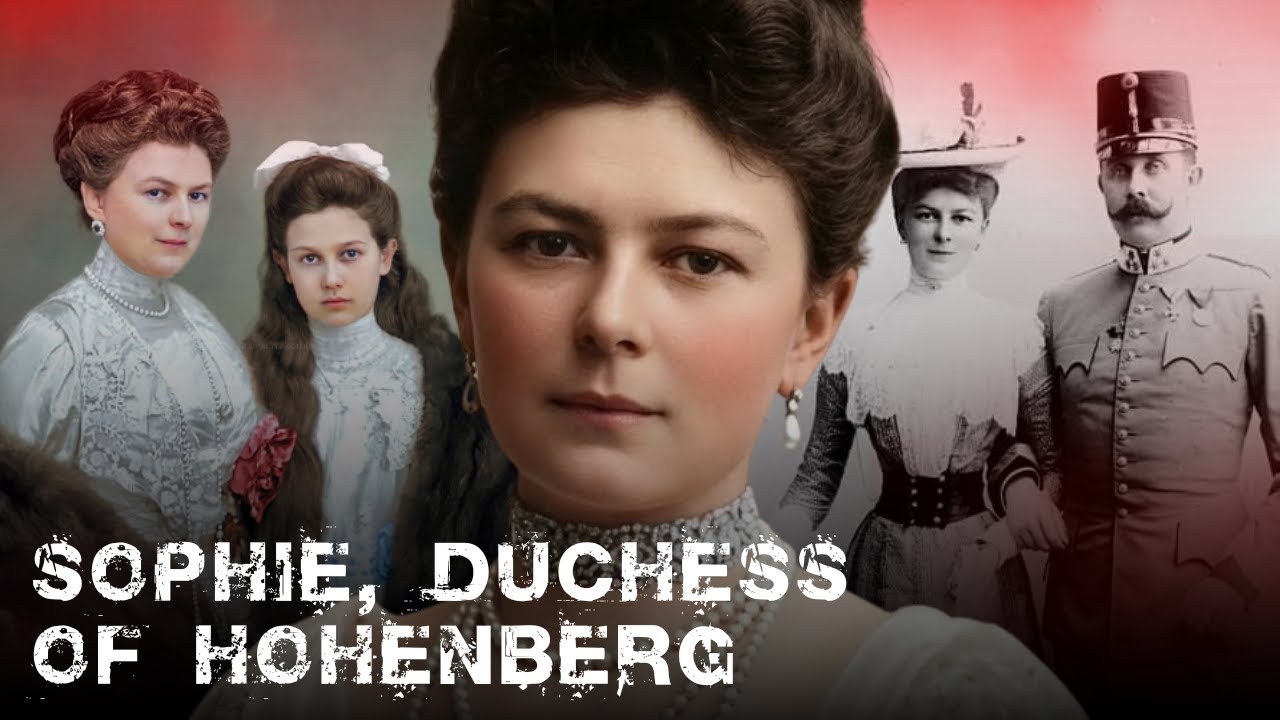
Then he looked up and saw the archduke’s car, recognizable by its distinctive green ostrich feathers, creeping to a halt barely five feet away. Princip stepped forward. He raised a Browning Model 1910 pistol. A nearby detective lunged to grab his arm, but a kick from another conspirator knocked the detective to the ground.
Two shots rang out. They sounded like exhaust pops, nothing dramatic. The bullet that hit Sophie, Duchess of Hohenberg, tore through the car door and pierced her abdomen, severing a stomach artery. The second hit her husband, Archduke Franz Ferdinand, in the neck.
For a moment, neither seemed harmed. Franz Ferdinand sat upright. Sophie stayed beside him. Then she slumped sideways, and the general in the passenger seat assumed she had fainted from shock.
Franz Ferdinand knew the truth. He saw the blood blooming across her white silk dress. He grabbed her shoulders, trying to hold her steady, and witnesses heard him cry out, “Sophie, Sophie, stay alive for our children. ” She was already dying, bleeding internally.
The heir to an empire did not think of the assassin or the Serbian nationalists or his own torn jugular. He thought of his orphans. By the time they carried him inside the governor’s residence and had to cut his uniform open with scissors, he was gone. It was eleven in the morning.
Both were dead. This was the end of a story that had begun fourteen years earlier with an act of defiance that had shocked the imperial court of Vienna. The court had done everything in its power to destroy Sophie Chotek, and it had failed. Only a bullet could do what centuries of Habsburg protocol could not.
But the court was not finished with her. In death, as in life, the Habsburg machine would try to take everything from her, right down to her dignity. Sophie Chotek was born in 1868 in Stuttgart, the fourth daughter of a diplomat from an old but relatively poor Bohemian noble family. She could trace her lineage to the Middle Ages, to knights and diplomats and servants of the crown.
But in the arithmetic of the Habsburg court, she counted for nothing. Her family had never ruled a kingdom. They were subjects, however distinguished. In the eyes of Emperor Franz Joseph, she was no different from the daughter of a merchant or a peasant.
Franz Joseph had ruled since 1848. By the 1890s he was less a man than a living monument, waking at four in the morning, standing at a high desk, reading papers until nightfall. He hated change. He hated telephones and electric lights.
He believed in preserving the dignity of his dynasty at any cost, and the most sacred rule of that dynasty was equality of birth. An archduke could marry only a woman from a ruling royal family, perhaps thirty or forty families in all of Europe. Marrying outside this list was unthinkable, a biological heresy. Franz Joseph had already suffered terrible losses: his brother Maximilian executed in Mexico, his only son Crown Prince Rudolf dead in a suicide pact at Mayerling.
The dynasty was fragile. He would not let another heir destroy it. Franz Ferdinand had never been meant to inherit. He was a nephew, thrust into succession after Rudolf’s suicide and his own father’s death.
The court did not want him, and he knew it. He was intelligent, sharp-tempered, and contemptuous of the flatterers who filled the Viennese palaces. Then, in the mid-1890s, he was diagnosed with tuberculosis. In the nineteenth century, tuberculosis was often a death sentence.
The court wrote him off. They began preparing his handsome younger brother Otto for the throne. Franz Ferdinand was sent to Egypt and the Mediterranean to die quietly. He did not die.
Through sheer will and rage, he recovered, and he returned to Vienna in the late 1890s carrying a burning grievance. He had seen who remained loyal and who had abandoned him. He understood that the court’s affection was based entirely on usefulness. He was finished playing by their rules.
He wanted something real, and he found it in the most unlikely place: he found it in a woman the court had defined as a nobody. She was attending Archduchess Isabella, a powerful and ambitious woman who ran a grand household in Pressburg. Sophie’s job was to be invisible, to carry the archduchess’s shawl, arrange the flowers, speak only when addressed. But Sophie was not a woman who disappeared easily.
She was tall, with strong features and a determined chin, intelligent, widely read, and deeply religious. She had managed a household on a tight budget and cared for sick relatives. She had a maturity that set her apart from the flighty young women who flirted with archdukes. The exact moment they met is disputed among historians, some say at a ball in Prague, others at a tennis match.
What is certain is the chemistry. Franz Ferdinand became a frequent guest at Isabella’s estate. Isabella was delighted. She had six daughters, and she was certain the heir to the throne was courting one of them.
She bought new dresses and organized tennis matches and hunting trips. She watched with joy as Franz Ferdinand returned again and again. But she was blind to where the archduke’s eyes were actually resting. He was not looking at the laughing princesses.
He was looking at the lady-in-waiting standing behind them, the woman holding the towels and picking up the tennis balls. For two years, they kept the secret. It was a dangerous game. If the emperor discovered the affair, Franz Ferdinand would be stripped of his rank and Sophie would be dismissed in disgrace.
Franz Ferdinand left his gold watch at Isabella’s palace to have an excuse to return. He rode for hours just to catch a glimpse of her at a window. The explosion came in 1898, at a tennis estate. After a match, Franz Ferdinand changed and left, but he made a fatal mistake: he left his gold pocket watch behind.
Isabella found it. Her heart must have raced. She assumed the locket attached to the chain contained a miniature portrait of her daughter Maria Christina. She opened it.
The face staring back was her own lady-in-waiting, Sophie Chotek. The insult was absolute. The heir to the throne had ignored her royal daughters for a servant. Isabella dismissed Sophie on the spot, screaming accusations of sorcery and treachery.
Then she wrote to the emperor. The scandal that broke over Vienna was not gossip. It was a constitutional crisis. The emperor summoned Franz Ferdinand and ordered him to end the affair.
She was a nobody. He would marry a princess or he would not marry at all. Most men would have capitulated. Franz Ferdinand met the eyes of the man who ruled fifty million people and said no.
For nearly a year, the two men fought a battle of wills. The emperor stopped speaking to his nephew. Courtiers turned their backs when he entered a room. They tried to bribe him with the most beautiful princesses of Europe, with money, with threats.
Whispers spread that the succession would be changed, passing him over for his handsome, pliable younger brother Otto. But Franz Ferdinand had a weapon the court did not understand: he had already faced death. He had survived tuberculosis when everyone said he would die. He was not afraid of old men in uniforms.
In a letter to a friend, he wrote, as translated, “I have finally found a woman who loves me for who I am and not for my position. Do you expect me to give her up? I will never marry any other woman. I will wait for her until the day I die.
”
The crisis became an international matter. Kaiser Wilhelm II of Germany wrote to Franz Joseph urging him to allow the marriage. Even Pope Leo XIII intervened, sending word that a father should not be so cruel to his son. Pressured from all sides, Franz Joseph relented.
He summoned his nephew and granted permission, then delivered the fatal condition. Franz Ferdinand could marry her, but she would never be one of them, and their children would never matter. The marriage would be morganatic, a term from old German law meaning the wife received only the “morning gift” and nothing more, no inheritance, no rights, no rank. Sophie was forever barred from the title of empress.
Even when Franz Ferdinand ascended the throne, she would remain a duchess, forbidden from wearing the crown or sitting on the platform beside him. Their children would be stripped of the Habsburg name, denied all succession rights, considered legal strangers to the imperial family. Sophie was condemned to a social rank below every other archduchess, forced to fall in behind teenage princesses. The emperor expected Franz Ferdinand to read the document and walk away.
Who would agree to curse their unborn children? Franz Ferdinand read it. He looked at the price of his love, and he picked up the pen. June 28, 1900, the date that would haunt him exactly fourteen years before his death.
The ceremony was a cruel theater. The imperial court gathered in the Secret Council chamber. Franz Ferdinand had to walk alone to a small table in the middle of the room. He had to remove his white glove, a symbol of stripping himself of everything, place his hand on the Gospel, and read the oath, as translated: “I, Franz Ferdinand, declare that my marriage is a morganatic one, and that the children of this marriage will never be eligible for the succession to the throne.
” He signed. With a stroke of ink, he turned his future children into commoners before they were even born. As he left the room, the silence was deafening. His cousins looked at him with pity and disgust.
He did not care. He climbed into his carriage, and he is said to have told his aide, “Now I can go to her. ”
Three days later, on July 1, 1900, they were married in Reichstadt, a small rural town. The emperor did not attend.
Neither did Franz Ferdinand’s brothers. The court forbade any other archduke from attending. The pews where his family should have sat were empty. Sophie wore white satin with a wreath of myrtle, and on her head, a diamond tiara Franz Ferdinand had commissioned for her, designed deliberately to look royal, a private challenge to the court that had called her a commoner.
The most striking detail was not the jewelry but the look in their eyes. Franz Ferdinand, the man who always scowled at cameras, looked at peace. Sophie looked radiant but shadowed with worry. In a letter to her former mistress, she wrote, as translated, “I know the burden I place on his shoulders.
My life will be a compensation for him, a safe haven. ”
The only family present was his stepmother, Archduchess Maria Theresa, and her two daughters. When the priest declared them married, Sophie Chotek ceased to exist. She became Princess of Hohenberg, a title invented specifically for her, a title that sounded grand but meant, in practical terms, foreigner.
The wedding was followed not by a grand reception but by a quiet honeymoon in Bohemia. The scandal faded from the newspapers. The emperor returned to his papers, satisfied that he had contained the infection. The real ordeal was only beginning.
Every day of her married life would be a minefield of protocol designed to remind Sophie that she did not belong. The man tasked with making her life hell was Prince Montenuovo, the Grand Master of the Household. He was the one who decided who stood where, who ate what, and who was permitted in the emperor’s presence. The cruel irony: Montenuovo himself was the product of a controversial marriage.
His grandmother was Marie Louise, the widow of Napoleon Bonaparte, who had run off with a minor count. Because of this, Montenuovo carried a grudge the size of an empire. He was obsessed with proving himself the supreme guardian of Habsburg purity. He hated Franz Ferdinand and despised Sophie Chotek.
Since he could not prevent the marriage, he decided to make Sophie’s life so miserable she would retreat into the shadows forever. He dusted off the strictest, oldest rules of Spanish court etiquette and applied them with sadistic precision. At court balls, the doors opened and the announcer called out names. Franz Ferdinand entered first, bowing to the crowd as the future emperor, walking to the front of the hall to take his place beside the emperor.
Sophie could not walk with him. She had to wait until every archduchess had entered, until every princess of royal blood had entered, until even the eighteen-year-old debutantes had entered. Only then was she permitted to enter alone, at the end of the column of nobles. Hundreds of eyes bored into her.
The whispers followed: “Here she is. The intruder. The servant who thinks she is a princess. ”
At the dinner table, the seating chart was a battlefield.
Franz Ferdinand sat at the head of the table. Sophie was placed at the far end, beside the lowest-ranking secretaries and clerks. They could not speak across the vast expanses of silver and porcelain. If a foreign king or queen visited Vienna, Sophie was forbidden from attending the official dinner.
The court argued that a king could not be expected to dine with a countess. So while her husband hosted monarchs, Sophie ate alone in her rooms like a naughty child sent to bed without supper. Franz Ferdinand’s temper became explosive. He called the courtiers reptiles and scoundrels.
His famous line, as translated: “They think they are despising her, but in reality they are only despising themselves. ” But Sophie was made of steel. She never made a scene. She never wept in public.
She walked into those ballrooms with her head high, smiling politely at the women who refused to speak to her. She followed the rules to the letter. She infuriated them with her kindness. She understood something Franz did not: if she showed anger, they won.
If she showed pain, Montenuovo won. She wore her dignity as armor. Thirty miles south of Prague, they had an escape. The estate of Konopiště.
Here, the emperor’s rules did not apply. Here, Montenuovo had no power. If Vienna was hell, Konopiště was paradise. It was not a cold, formal palace.
It was a home, filled with the latest technology. Franz Ferdinand installed electric elevators, central heating, and modern plumbing. He wanted comfort for his family. In Konopiště, the ogre of Vienna became “Papa.
” Visitors were astonished. They expected the angry archduke. Instead, they found a man rolling on the floor with his three children, Sophie, Max, and Ernst, carrying them on his shoulders, playing hide-and-seek in the hallways, reading bedtime stories. In the imperial family, children were usually raised by nannies and seen by their parents for ten minutes a day.
Franz and Sophie raised their own children. They created a bubble of love to protect them from the reality of their birth. Konopiště was Sophie’s kingdom. She was passionate about gardening, and she established one of the finest rose gardens in Europe, planting more than three thousand varieties.
She spent hours there. The servants adored her, calling her Her Highness regardless of the laws, because they saw how she treated them with respect, asking about their families, caring for them when they were sick. Under her influence, Franz Ferdinand became more patient. He began to dream of a “United States of Greater Austria,” a federation that would break the power of the Hungarian elite and give more rights to Slavs, Croats, and Romanians.
He wanted to break the new world that had hurt his wife. But a shadow hung over the paradise. He looked at his children and saw a terrifying future. Because of the oath he had signed, they could inherit his money but not his rank.
When he became emperor, they would be pushed aside. He became obsessed with money, buying land, investing, saving penny by penny, trying to build a fortress of wealth to protect them after he was gone. By 1913, tensions in Europe had reached a breaking point. The Balkans were on fire.
The emperor appointed Franz Ferdinand Inspector General of the Armed Forces. In the spring of 1914, an invitation arrived from the governor of Bosnia, inviting the archduke to observe military maneuvers in Sarajevo. Franz Ferdinand hesitated. Sarajevo was dangerous.
But he saw an opportunity. The strict rules of the Viennese court applied only at court. They did not apply to the military. As Inspector General, he was the supreme commander in the field, and under military protocol, his wife, if she accompanied him, would be treated according to his rank, not hers.
In Sarajevo, among soldiers and guns, Sophie would not be a nobody. She would be the wife of the commander. She could walk beside him. She could sit beside him in the car.
She could be received with ceremonial cannon fire. He asked her, “Will you come with me? ” It was not an order. It was an invitation.
June 28, the day of the visit, would be their fourteenth wedding anniversary. He saw it as the perfect anniversary gift. He would give her the one thing he could not buy: respect. He would parade her through the streets of Sarajevo, and the world would be forced to bow to her.
Sophie did not care about cannons or salutes. She knew he was walking toward hostile ground. She was said to have told him, as translated, “If there is danger, my place is beside him. I will not let him go alone.
” She packed her finest clothes. They kissed their children goodbye at Konopiště, promising to return in a few days. Max and Ernst were excited. Their parents were going on an adventure.
On Saturday, June 27, 1914, they arrived in Ilidža, just outside Sarajevo. For one brief, bright moment, the gamble seemed to have worked. There was no Montenuovo examining the rulebook, no sneering archduchesses. Local dignitaries bowed to Sophie and kissed her hand.
For the first time in fourteen years of marriage, she was treated not as a mistake but as a wife. That evening, at a hotel dinner, Sophie was radiant. Witnesses described her as looking years younger, laughing, her eyes shining. She turned to one of the guests and said with a wide smile, as translated, “I was wrong in your worries, doctor.
Everywhere we’ve gone, we’ve been received with great warmth. The people are happy to see us. ”
The doctor did not return her smile. He knew what she did not.
A few miles away, in the dark corners of Sarajevo’s cafes, teenagers with tuberculosis and pistols were waiting. The group called itself Young Bosnia. They were not professional soldiers; they were students and school dropouts. Most of them, including the nineteen-year-old Gavrilo Princip, were dying of the same disease that had nearly killed Franz Ferdinand.
They had nothing to lose. They saw the archduke not as a reformer but as a tyrant, the symbol of the foreign occupier who had enslaved the South Slavs. They had chosen their date with deadly precision. June 28.
For Franz and Sophie, it was their anniversary. For the Serbian people, it was Vidovdan, the Day of Saint Vitus, the most sacred day in the Serbian calendar, commemorating the Battle of Kosovo in 1389, when the Ottoman Empire crushed the Serbian kingdom. It was a day of mourning, national pride, and vengeance. Sunday morning, June 28, dawned with a clear blue sky.
Sophie dressed with care. She chose a white silk dress with a red sash and a large hat with a veil. She looked in every detail like the empress she had been forbidden to become. But the security warnings were flashing red.
The governor of Bosnia, General Oskar Potiorek, was responsible for safety, and he was a man of immense arrogance. When warned of possible plots, he scoffed. He refused to line the streets with soldiers because their uniforms were too dirty for a royal visit. Instead, the heir to the throne was guarded by 120 policemen for a city of fifty thousand.
The route had been published in the newspapers days in advance, with exact times. It was an invitation to murder. At ten in the morning, the motorcade entered Sarajevo. Franz Ferdinand and Sophie sat in the back seat of the third car.
The top of the open car was folded down so the crowds could see them. They looked happy. They turned onto Appel Quay, a wide avenue along the Miljacka River. Hidden in the crowd, distributed along the riverbank like beads on a necklace, were seven assassins.
The first, Muhamed Bašić, froze. He saw a policeman nearby and lost his nerve. The second, Čubrilović, froze too. He saw Sophie and felt he could not kill a woman.
The car continued. It approached the Kumura Bridge, where Nedeljko Čabrinović, a nineteen-year-old typesetter with a bomb in his pocket, was standing. He asked a policeman, “Which car is the archduke in? ” The policeman, assuming him to be a loyal citizen, pointed it out.
Čabrinović pulled the pin. He had to wait twelve seconds for the fuse, but panic made him throw too early. The bomb flew toward the royal car. The driver saw the black object.
Franz Ferdinand raised his arm, perhaps to protect Sophie. The bomb bounced off the folded roof and fell into the street behind them. The explosion was enormous. It left a crater in the road, destroyed the car behind them, and wounded two officers and dozens of bystanders.
Franz Ferdinand’s car sped away, then stopped with a screech. He stood up in the car. He looked back at the smoke. He asked, “Is Sophie all right?
” After confirming she was unhurt, he insisted on checking who else was wounded. Only after ensuring the wounded were being cared for did he order the driver to continue to the town hall. He was angry, but he was not a coward. Čabrinović swallowed his cyanide and jumped into the river to drown himself.
The cyanide was old, so it only made him vomit. The river was only four inches deep. The angry crowd pulled him out and beat him. The reception at the town hall was a scene from the theater of the absurd.
Franz Ferdinand stormed up the steps, his face flushed with rage. The mayor of Sarajevo had not been told about the bomb. He stuck to his prepared text. He began to read his welcome speech.
Franz Ferdinand exploded. He grabbed the mayor’s arm and shouted, cutting him off before everyone, as translated: “Mr. Mayor, I came here on a visit of peace, and I was greeted with bombs. This is outrageous.
”
Silence filled the hall. Then Sophie moved. She placed her hand gently on her husband’s arm and whispered something in his ear. We do not know exactly what she said, but the effect was immediate.
The archduke’s shoulders relaxed. He let out his breath. He turned to the trembling mayor and said calmly, “Now you may speak. ” This moment captured the essence of their marriage.
She was his anchor. Inside the town hall, the discussion began. What next? Logic dictated canceling the rest of the visit.
The city was full of assassins. They should stay in the hall until the army arrived to escort them out. But General Potiorek, wanting to save face, made a statement history would record with tragic irony. He puffed out his chest and said, as translated: “Your Imperial Highness, do you think Sarajevo is full of assassins?
That was one madman. I take full responsibility for your safety. ”
Franz Ferdinand was not worried for himself. He asked Sophie to stay in the hall while he went to the hospital to visit the officer wounded by the bomb.
It was too dangerous for her. Sophie refused. She looked at him and said, as translated, “No, I will not leave you. I will go with you.
” It was the most loyal decision of her life, and it was the decision that would cost her life. Franz Ferdinand looked at her and realized he could not change her mind. He nodded. “Very well, but we will change the route.
We will avoid the narrow streets of the city center. We will go directly along the quay to the hospital. Speed is our safety. ”
It was a good plan.
There was only one problem: nobody told the drivers. In the confusion, the chief of police forgot to inform the driver of the lead car that the route had changed. At 10:45 a. m.
, the motorcade left the town hall. The lead car turned right onto Franz Joseph Street, the narrow old route. The second car followed. Franz Ferdinand’s driver, following the car ahead, turned the wheel.
The archduke’s car turned right, leaving the safety of the wide river road and entering the narrow, crowded street. General Potiorek suddenly realized the mistake. He shouted, as translated: “What is this? Stop.
This is the wrong way. We are supposed to go to the hospital. ”
Lojka panicked. He slammed on the brakes.
The cars of 1914 had no reverse gear you could shift into directly. To go backward, he had to stop completely, use the clutch, and shift manually. In his panic, he stalled the engine. The archduke’s car, a large, open, black target, stopped dead, exactly five feet from Gavrilo Princip.
Princip did not even have to aim. Two shots. That was all. In the chaos, it seemed like nothing.
Franz Ferdinand stayed upright. The general thought the assassin had missed. Then the duchess collapsed sideways. Franz Ferdinand knew.
He saw blood on her white silk dress. He grabbed her shoulders and shouted, “Sophie, Sophie, stay alive for our children. ” The count who leaned in asked, “Your Imperial Highness, are you in pain? ” Franz Ferdinand straightened, grabbed his sword hilt, looked with glazed eyes and muttered, “It’s nothing, nothing.
” He repeated it six or seven times, each time weaker. They drove to the governor’s residence, but it was too late. When they arrived, attendants tried to lift Sophie out first, thinking she had fainted. As they raised her, blood poured from the floor of the car.
She was already dead. They carried Franz Ferdinand inside and laid him on a sofa. His uniform was buttoned tightly to the neck, and in the panic they could not undo the buttons. They had to cut the uniform off.
As the gold buttons fell to the floor, the archduke took his last breath. It was eleven o’clock. They were gone. Immediately, the Habsburg machine began to work.
The wire sent to Vienna read: “The Crown Prince and his wife have been assassinated. ” Note the wording: his wife. Not the duchess, not Her Highness, just his wife. The emperor, on holiday in Bad Ischl, read the telegram.
He sat in silence for a moment, then looked out the window and said something that freezes the blood. He did not say “my poor nephew. ” He did not say “what a tragedy. ” He said, as translated: “A higher power has restored that order which I unfortunately could not maintain.
” He believed God had killed Franz Ferdinand to fix the mistake of the unequal marriage. He believed the assassination was divine intervention to purify the bloodline. God had removed the problem. Montenuovo read the news with one thought: how do we bury her without granting her archduchess honors?
He issued his orders with deliberate coldness. The bodies would arrive in Vienna under cover of night to minimize crowds. There would be no official funeral for Sophie. He effectively uninvited the world, asking foreign heads of state, emperors, kings, and princes not to attend.
His most cruel directive was for the children. Sophie, Max, and Ernst, aged thirteen, twelve, and ten, were waiting at Konopiště. Montenuovo sent word: the children were forbidden from attending the funeral procession in Vienna. He wanted to erase them.
He underestimated the people of Vienna. The bodies arrived at ten that night. No emperor waited on the platform. No generals, no bishops.
Montenuovo had arranged the late arrival to avoid public demonstrations, claiming security reasons. The new heir, young Archduke Karl, wanted to meet the train, but Montenuovo prevented him, saying it would be a breach of protocol for a future emperor to receive the body of a morganatic wife. The coffins were loaded onto municipal hearses, not the grand imperial ones, and carried through the back streets to the Hofburg. Even in death, they were separated.
Franz Ferdinand’s coffin went to the Hofburg chapel. Sophie’s was to be sent directly to another church, until Karl intervened and insisted they rest together. Montenuovo agreed reluctantly, with conditions. In the morning, when the chapel doors opened to the public, Viennese people gasped.
The scene was damning evidence of Habsburg cruelty. On the left, Franz Ferdinand’s coffin was large, ornate, silver, draped with the black-and-gold imperial flag, surrounded by six tall burning candles, topped with his archducal crown, military cap, and sword, placed on a high platform, raised toward the heavens. On the right, Sophie’s coffin was smaller, made of plain wood. It had no imperial flag.
But the detail that made visitors weep was the height. Montenuovo had ordered her coffin placed on a lower stand, fully twenty inches below her husband’s coffin. Even in the presence of God, the Habsburgs said: he is above, she is below. On Franz’s coffin they placed the symbols of his power.
On Sophie’s, they placed a pair of white gloves and a black fan. To the uninitiated, this looked like a gentle tribute. In the language of the court, it was a slap. These were the symbols of a lady-in-waiting.
They were reminding the world one last time that she was just a fortunate servant. They did not place the crown of the Duchess of Hohenberg on her coffin. They deprived her of the title she had died bearing. The funeral mass itself was third class, the lowest category available to a noble.
No foreign monarchs were invited, no full military ceremony, a shortened mass. The emperor attended for a few minutes with an expressionless face, then left. Sophie’s children were not there. Montenuovo had succeeded in keeping them away, on the pretext that seeing the orphans would be too painful for the emperor.
The final insult came that night. Franz Ferdinand had known this would happen. He had written in his will, as translated: “I do not wish to be buried in the imperial crypt in Vienna. They will not allow Sophie in.
So bury us at Artstetten, in our own home. ” The bodies had to be moved to Artstetten Castle, fifty miles away. Montenuovo ordered the transfer at two in the morning, wanting no crowds. A violent thunderstorm broke over Vienna.
As the hearses crossed the Danube, the scene was apocalyptic. Rain poured. The horses panicked. At one point, on a muddy slope, the hearse carrying Sophie’s coffin nearly slid off the road.
Gravediggers had to push it through the mud. No honor guard, just a few wet policemen and cursing drivers. But when they reached the small railway station near Artstetten, something changed. There was no trace of the court.
Montenuovo was back in his palace sipping brandy. Here, in the countryside, the people were waiting. Thousands of them: peasants, farmers, shopkeepers. They had walked for miles in the rain.
They did not care about the morganatic oath. They did not care about protocol. They lined the road to the castle and threw wildflowers on the hearses. They wept openly.
They saw what the emperor could not: a husband and wife who died for each other. At last, the children were allowed to say goodbye. Max, Ernst, and little Sophie stood beside the open grave, truly alone now. Franz Ferdinand had done his best in his will.
He left them the castle and his money, but he could not leave them protection. The new emperor Karl was kind to them, but the state was cruel: because they were not Habsburgs, they were not entitled to state protection. As the marble slabs were drawn over the coffins, joining Franz and Sophie together forever, the world outside the crypt was burning. The funeral date was July 4, 1914.
Exactly one month later, the guns of August began to fire. The death of the woman the Habsburgs despised became the spark that burned the Habsburg Empire to ashes. The emperor had sacrificed his nephew’s happiness to save the empire and insulted Sophie to preserve the crown’s dignity. But by treating them with such cruelty, he exposed the rot at the core of his world.
A world that values rules over humanity is a world that deserves to die. And it did. Four years later, the Austro-Hungarian Empire ceased to exist. Montenuovo lost his power and died in obscurity in 1927.
The palaces stood empty. The titles lost their value. But what became of the children? In 1918, the empire evaporated within weeks.
Emperor Karl abdicated. But for the three children of Franz and Sophie, the nightmare did not end; it took a new shape. They were trapped in a cruel legal ambiguity. For the Habsburgs of Vienna, they were not family because of their mother’s non-royal blood.
For the new Czechoslovak government, where their home Konopiště stood, they were Habsburgs and therefore enemies of the state. In 1919, the Czechoslovak government confiscated Konopiště. The castle where they played hide-and-seek, the rose garden their mother planted, everything was seized. The children were expelled, teenagers, orphans, and homeless.
They moved to Vienna, the city that had rejected their mother. History was not done with them. In the 1930s, a new shadow rose over Europe: Adolf Hitler. Hitler hated the Habsburgs.
Max and Ernst Hohenberg, Franz Ferdinand’s sons, became outspoken critics of the Nazis. They had inherited their father’s stubbornness and their mother’s moral compass. When the Nazis entered Vienna in 1938, the Hohenberg brothers were on the Gestapo’s kill list. On April 1, 1938, Max and Ernst were arrested.
They were not treated as political prisoners. They were sent to Dachau. Prisoners number 1455 and 1456. The guards singled them out for special humiliation; they knew exactly who they were.
The royal brothers were forced to clean toilets with their bare hands, to pull heavy loads like horses while SS guards whipped them, screaming, “Where is your empire now? Where are your protocols? ” It is said that Ernst, the younger brother, often stood in front of the whip to protect Max, just as their mother had tried to protect their father in Sarajevo. They suffered hunger, beatings, and illness, but they did not break.
Other survivors later testified that the Hohenberg brothers maintained a quiet dignity that infuriated their captors, sharing their meager rations, holding their heads high. Miraculously, they survived. They were released during the war, broken in health but not in spirit. Ernst died young in 1954 from the lasting effects of the camp’s brutality.
Max lived until 1962. They returned to Artstetten Castle, the only property left to the family, where their parents lay buried. Today, Artstetten Castle is still owned by Sophie’s descendants. It is not a dusty museum of a dead empire; it is a living home.
If you descend into the crypt, you will see two stone sarcophagi. They are identical in size. They are placed at the same height. In death, the morganatic oath has no power.
In death, the Spanish protocol falls silent. Franz Ferdinand and Sophie rest together, equal at last. The empire that insulted her is now dust. The Spanish court etiquette that dictated her every move has been forgotten.
The borders have dissolved. The laws are obsolete. Sophie remains, standing amid the wreckage of the twentieth century not as a victim but as a monument of steel and velvet. The Habsburgs lowered her coffin to humiliate her, but in doing so, they unwittingly elevated her.
By trying to make her small, they made her a giant in the human spirit. She was never an empress on the map. She never wore the crown of Saint Stephen. But in the end, she earned a title no revolution could topple and no protocol could erase.
She was the empress of hearts.






