On the morning of April 2, 1885, at the Frog Lake settlement in what is now Alberta, a young Hudson’s Bay Company trader named William Cameron watched helplessly as the world he knew came apart in gunfire and smoke. Nine white men would be dead within the hour, murdered by the Cree Indians who had lived peacefully beside them all winter. Cameron himself would survive, saved by friendships he had built with men who, minutes earlier, had been killing his neighbors. The trouble had been building for years.
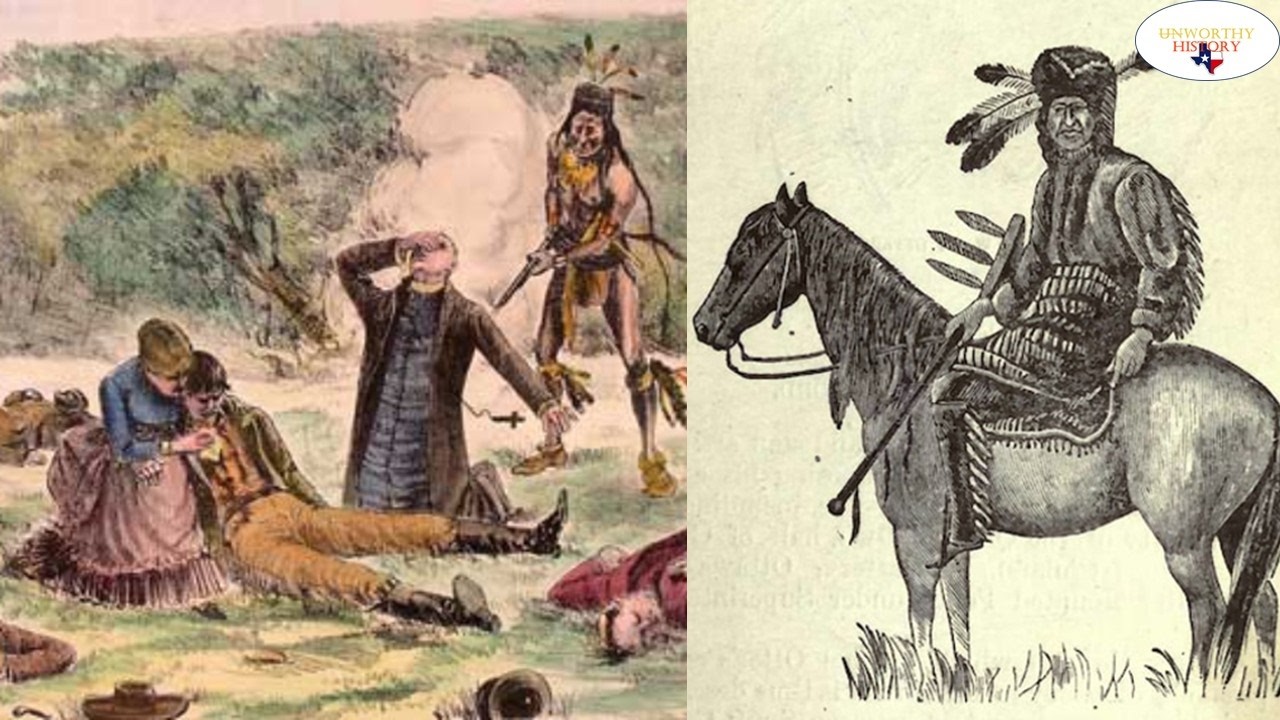
In 1875, when the Canadian government sent commissioners to treat with the Saskatchewan Indians, most chiefs accepted the treaties that surrendered their lands in exchange for reserves and promises of support. Big Bear, the most powerful chief of the Cree Nation, refused. He objected to the white man’s law that permitted hanging, and he wanted to see whether the government would keep its promises before he signed away his country. His defiance drew the independent spirits of his people to him, and he became the strongest voice of resistance among the Crees.
For a time, the buffalo still roamed, and Big Bear’s band lived much as their ancestors had. But the herds were being destroyed by white hunters for their robes, and the Crees were soon starving. Driven back from Montana into Canada, reduced to wretchedness, Big Bear finally put his mark on the treaty in 1879 at Sounding Lake. Even then, he refused to select a reserve, delaying year after year while his people drifted and struggled.
They survived by cutting wood, freighting for the Hudson’s Bay Company, and taking whatever help the Indian agents offered. By the winter of 1884–85, Big Bear’s band was camped along Frog Creek, near the settlement of Frog Lake. Cameron had arrived there that January to take charge of the Hudson’s Bay post. He knew the Indians well, trading with them daily, sharing meals with the old chief, who often came to his house for dinner.
Cameron described Big Bear as perhaps sixty years old, with a deeply lined, intelligent face and a voice so powerful and dramatic that he reminded the young trader of an Imperial Caesar. Cameron liked the Indians, and they liked him. The same could not be said for Indian Agent Thomas Quinn. The Crees distrusted him, and Quinn returned the feeling.
He had spent years among Indians, knew their temper, and did not hide his contempt for those he considered dangerous. That winter, tensions began to spread. The French half-breeds, or Métis, under their old leader Louis Riel, had risen in rebellion at Duck Lake, claiming their land rights had never been recognized. Riel had incited rebellion among them in 1870 and been outlawed for it.
Now he was back, and his agents were moving among the Crees, urging them to join the fight. A half-breed named André Nault, a cousin of Riel, was arrested at Fort Pitt in March on suspicion of carrying incendiary messages from Riel to Big Bear. He was released after a few days and boasted openly that he would have his revenge on the police. Cameron had heard rumors of the unrest but did not take them seriously.
On the evening of March 28, walking through Big Bear’s camp, he found the band in council. The warriors sat smoking the long stone pipe, their faces tense and serious. A war chief rose, spoke in a low, impassioned voice, and then drew his shirt over his head and presented it to a Wood Cree leader. The ceremony was unmistakable: Big Bear’s band was forming an alliance with the Wood Crees.
Cameron felt a premonition of evil and walked home through the slush, uneasy and depressed. Three days later, the news arrived. Constable Billy Anderson rode into Frog Lake from Fort Pitt with dispatches reporting that the half-breeds had risen at Duck Lake. The police and Prince Albert volunteers had met Riel’s rebels and been forced to retreat, losing thirteen men killed and many wounded.
The officer at Fort Pitt suggested the white residents of Frog Lake come in for protection. Indian Agent Quinn urged Cameron to leave with the others. Cameron refused, saying he had furs and stores in his charge and could not abandon his post without orders. You don’t know the Indians as I know them, Quinn told him.
But Cameron was young and smelled adventure. He would come to regret that confidence. That night, the settlers gathered at the home of the farming instructor. Father Fafard, the Roman Catholic missionary, argued that they should stay and show trust in the Indians.
Quinn, against his own better judgment, agreed to remain. Corporal Slay and the six policemen, however, were persuaded to leave. Before dawn on April 1, they slipped out of Frog Lake, taking with them two kegs of powder and eighty pounds of ball that Cameron handed over, keeping only a little powder and a few loose bullets scattered on the floor of his shop. As the sleigh disappeared among the hills, Cameron watched an Indian in a red blanket hurry along the road, tracking the police’s departure.
Here was fresh news for Big Bear’s band. That morning, April 1, the Crees called it Big Lie Day. Wondering Spirit, the tall, fierce war chief of the band, came to the agent’s house in excellent humor, wearing his war bonnet. He told Quinn that the half-breeds had given them bad advice, that they did not wish to join the rebellion, and that they wanted to stay friends with the white men.
Quinn, relieved, shook his hand. Miserable man joked about his earlier threats. But that night, the mood changed. Big Bear returned from a hunting trip, his face darkened by cold and smoke, weary and troubled.
He spoke of a dream he had had in the American country: a spring of blood shooting up from the ground, which he tried to smother with his hand, but it spurted between his fingers and ran over his wrist. As he left, he looked into Quinn’s eyes and said, with deep concern, Good night. Then he was gone. Quinn dismissed the old chief’s unease.
They seem friendly, he said. Guess they’re going to be all right. But Cameron was not so sure. Something’s troubling Big Bear, he answered.
That night, while Big Bear slept exhausted in his lodge, Wondering Spirit held secret counsel. At midnight, he gave an order, and four warriors slipped out into the darkness. They went to the house of Isidore Mondion, a minor Wood Cree chief who was a friend of the whites and had no use for the councils of Big Bear’s band. The warriors accused him of being no true Cree and, when he answered hotly, they seized him, bound him, and held him until near daylight.
At four in the morning, two of Wondering Spirit’s men crept through a window into Quinn’s house. Quinn’s wife, a Cree woman, sprang between the assassins and her husband. Her brothers, Lone Man and Sitting Horse, burst into the room with guns and drove the intruders off. They stayed to guard the agent through the night.
When daylight came, Wondering Spirit forced the front door, took down the guns hanging in the office, and called for Quinn to come down. Quinn laughed mirthlessly. It is useless, he said. And never will they be able to say that Quinn was afraid to face them.
He went down the stairs and was surrounded. Cameron was awakened just after sunrise by a Wood Cree employed at the post. They’ve taken the horses from the government stables, the man said. I think it will be bad today.
Cameron dressed quickly and went downstairs, where twenty young warriors entered, their faces daubed with vermilion, carrying rifles. They demanded ammunition. Cameron tried to stall, demanding an order from the agent. This is no time for idle talk, one of them said.
If you don’t give it to us, we’ll break the shop open and take it. Cameron opened the shop. The Indians divided the small amount of powder he had kept, gathered up the scattered bullets, and helped themselves to butcher knives from the shelves. Big Bear pushed his way in and sternly ordered them not to touch anything without leave.
Cameron was then summoned to the agent’s house. All nine white men of the settlement were gathered in Quinn’s office, surrounded by armed Indians. Wondering Spirit stood in the center, shaking his fist in Quinn’s face and demanding to know who was at the head of the whites in the country. Quinn, calm and self-possessed, answered that the head was Sir John Macdonald, a man at Ottawa.
The Indians demanded beef, and Quinn ordered the instructor to point out an old ox that could be killed. Having gained their point, the Indians allowed the whites to go outside for air. Cameron returned to the shop. The Indians were looting the police barracks and the stores.
Father Fafard had been struck in the eye with a riding whip. Wondering Spirit, his eyelids and lips smeared thick with yellow ochre, ordered Cameron to go to the church, where the whites were gathered. Inside, the priests were celebrating mass. As the congregation knelt, Wondering Spirit entered, moving cat-like on his moccasined feet, a Winchester clutched in his hand, his war bonnet crowned with eagle plumes.
He dropped to one knee and glared up at the altar in grim mockery. Cameron doubted they would ever see the outside of the chapel again. But the prayers ended, the priests warned the Indians against excesses, and the whites were allowed to leave. Back at the shop, Cameron spoke briefly with Quinn.
If we live through this, Quinn said, we’ll have something to remember for the rest of our days. Then Wondering Spirit appeared in the door and ordered Cameron to go to the instructor’s house with the other whites. As Cameron started across the hill, he saw Big Bear talking with Mrs. Simpson, the wife of his chief, in the kitchen of the Hudson’s Bay house.
Yellow Bear, an older Indian who was Cameron’s friend, asked him to return to the shop for a hat. Halfway there, Wondering Spirit intercepted them, furious that Cameron had not obeyed his order. Yellow Bear intervened, saying Cameron was with him to get a hat. The war chief stared darkly at Cameron, then ran on.
At the shop, a warrior called Miserable Man arrived with a note from Quinn: Dear Cameron, please give Miserable Man one blanket. TTQ. Cameron said he had no blankets. Miserable Man, a huge, brutal-looking Indian with a face deeply pitted by smallpox, demanded something instead and took a shawl, tobacco, and tea.
As he was tying up the parcel, three shots rang out, seeming to come from just outside the building. Miserable Man snatched his bundle and dashed out the door. Cameron followed. On the hill before the police barracks lay the body of Quinn, dead.
Dust and smoke filled the air. Whoops and shrieks mixed with the clatter of galloping hoofs, and above it all rose the war chant of the Plains Crees. Cameron heard Wondering Spirit’s ringing voice calling on his followers to shoot the other whites, and burst after burst followed as his friends fell. Big Bear rushed out of the kitchen and shouted at the top of his tremendous voice, Stop!
Stop! But it was useless. The spring of blood from his dream had burst through his fingers. Cameron’s first thought was to seize an axe and fight, but the conspirators had removed it.
An Indian raced up to him, gun in hand, and cried that if he spoke twice he was a dead man. Yellow Bear told Cameron to go with a group of Indian women who were walking toward the camp a mile away. They can’t fire from the other ridge for fear of hitting the women, he said. Cameron went, expecting a bullet at any moment.
He passed the half-breed Louis Goulet, guarded by his brother-in-law. Mrs. Simpson cried out that the priest had fallen. Cameron walked on, his eyes fixed on the ground, resigned to death.
But no shot came. He reached the camp unharmed and was taken into the lodge of a Wood Cree woman, who made him tea. Soon he heard Wondering Spirit boasting through the camp: I killed that Sioux speaker. I met him before the interpreter’s house.
I told him to go to the camp. He refused. I raised my rifle and shot him dead. Three Indians entered the lodge, wearing the watches of the murdered men.
One of them, the murderer of Father Fafard, asked Cameron the time. It was eleven o’clock. The suspense became unbearable. Cameron decided he could not wait for his fate to be decided.
He walked across the camp toward the brush, and a Wood Cree named William Gladue followed him, placing an arm about his shoulder. My brother, he said, you are not to be killed. Before that happens, they will have to walk over my dead body. He took Cameron to the tent of the Wood Cree head chief, where a council assembled.
Yellow Bear, Little Bear, Gladue, and the chief himself spoke of kindnesses Cameron had shown them. They agreed that he should live, and they carried their decision to Wondering Spirit. The war chief rose and held out his hand. He has done me favors, too, he said.
Walk about during the day, he told Cameron, but don’t go out at night. Some young man might kill you. And don’t try to escape. All the white men at Frog Lake had been killed except Cameron.
He survived, he later believed, because he had made friends among the Indians and had appeared impartial between the two sides. Years afterward, he wrote the story of that day in a book called The War Trail of Big Bear, a firsthand account of the Frog Lake Massacre and the rebellion that nearly consumed the Canadian prairies.
