The judgment came on a November night in 1995, and it was handed down not in a courtroom but by the most celebrated woman on earth, addressing twenty-three million viewers from a television studio. For James Hewitt, the decisive question landed almost as an aside, close to the end of Diana, Princess of Wales’s interview with Panorama. Had her connection to him, the interviewer wondered, moved past friendship? The princess hesitated, fixed her gaze on the camera, and uttered fifteen words that would brand him for the rest of his life.
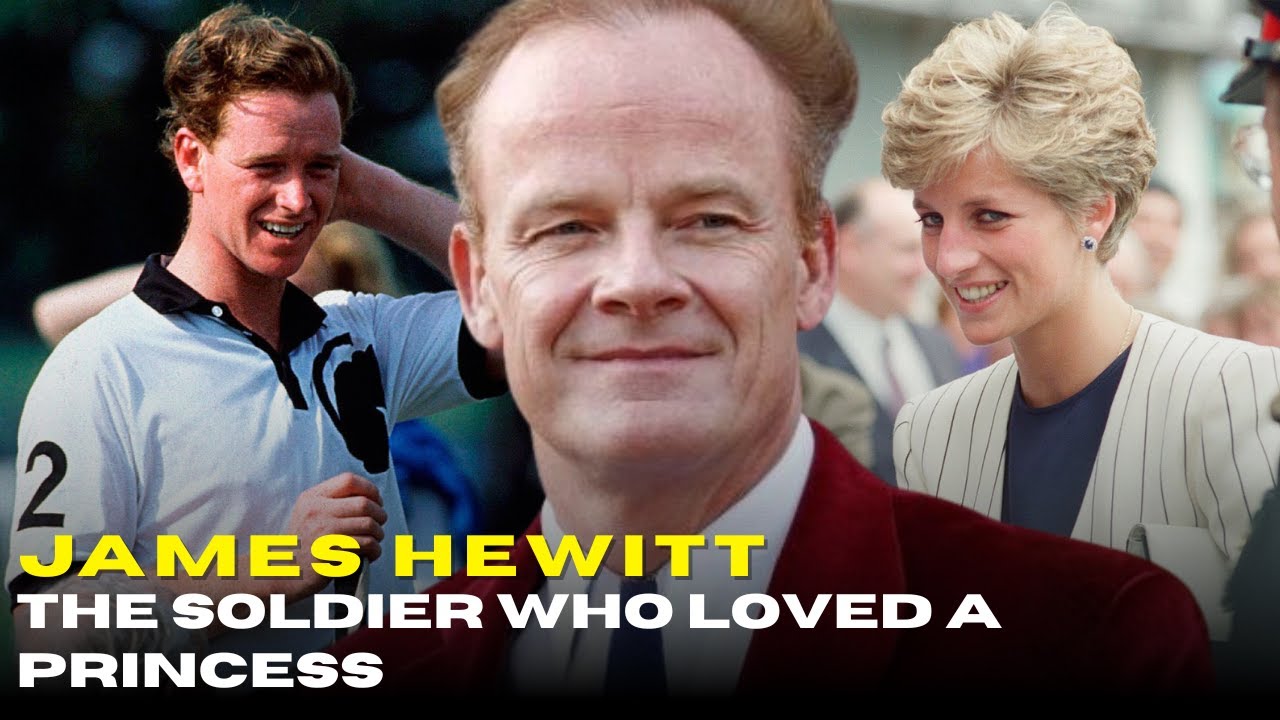
Yes, she replied, she had looked up to him. Yes, she had loved him. But she had been deeply let down. Those closing four words carried the venom.
They validated his account only in order to ruin him with it, casting him as the man who had callously broken her trust. The interview was a disaster for the monarchy, but for James Hewitt it was the collapse of everything. He had been a decorated tank commander, shaped by a world founded on duty, honor, and an unbreakable code of silence. Now he was a betrayer, a figure of national hatred, a permanent footnote in another person’s tragedy.
To grasp the disastrous decisions he would make, one must first grasp the man the army formed and the scandal wrecked. He was born in 1958, a child of the Elizabethan era, into a country still dwelling in the long shadow of the Second World War. This was a society in which military service was not simply a career but a vocation, woven into the very texture of national identity. Men who served their nation were regarded with the utmost respect, living proof of the endurance and sacrifice that characterized their generation.
The watchword of that era was not “follow your passion” but “do your duty,” and duty was a notion grasped with complete precision. His father, John Alfred Hewitt, was a flawless embodiment of this creed. He served as an officer in the Royal Marines, a corps famed for its toughness and adaptability, and saw action in the merciless jungles of the Malay Peninsula during the Malayan Emergency, a thirteen-year covert campaign against communist guerrillas. This was no ceremonial assignment.
It was a savage, perilous counterinsurgency war that demanded enormous courage, physical stamina, and mental fortitude. Men who fought there learned to function in atrocious conditions, to depend on themselves, and to withstand the strains of combat. The experience planted in John Hewitt a deep sense of discipline and a quiet, restrained steadiness. By every account he was a reticent man, a pillar of silent strength, a man of his generation for whom feelings were private, duty was public, and a man’s value was measured by his integrity and service.
After leaving the military, he retrained as a dental surgeon, a career that mirrored the principles of his past: precision, care, and painstaking attention to detail. His mother, Shirley, came from a medical family, further securing the Hewitts’ standing in a world of civic-minded professionals. Theirs was a world of steadiness, predictability, and quiet satisfaction. They settled first in Limestone, Devon, before relocating to the scenic countryside of Kent, preparing for their children a comfortable, if unremarkable, stable life.
The Britain of James Hewitt’s 1960s childhood was a land of contradictions. While London, a short train journey away, throbbed with the rebellious energy of the Swinging Sixties—a cultural upheaval in music, fashion, and social change that challenged every convention—life in Shires, Kent, stayed largely shielded from this new world. Here, old hierarchies and traditions held firm. It was a world of country houses and village fêtes, riding clubs and Sunday church services, deep deference to elders, and steadfast loyalty to the Queen and the institutions she embodied.
This was the setting that molded young James’s character. A world that instilled in him the value of good manners, sportsmanship, and knowing one’s place. He was neither a rebellious child nor an academic standout. He was handsome, athletic, and blessed with an easy, magnetic charm that made him well liked by peers and adults alike.
From an early age, he was instinctively pulled toward the outdoors, and above all toward horses. The realm of equestrianism, with its singular mix of physical daring, rigid discipline, and the silent, nearly telepathic understanding between rider and animal, resonated with him profoundly. It was a rational world, ruled by clear rules, concrete rewards for practice and commitment, and an element of risk that demanded composure. This passion was more than a pastime; it was an early sign of a foreordained course, one followed by generations of young men of his class and temperament: enlisting in the British Army.
His schooling was arranged to guide him steadily along that course. He was sent to Millfield School in Somerset, a stronghold of the British public school system. But Millfield was, and still is, a world apart from austere academic institutions like Eton or Harrow. Founded in 1935 by R.
J. O. Mayer, an eccentric and visionary educator, it was renowned for its distinctiveness. Mayer’s philosophy, revolutionary in its day, did not aim to produce classical scholars and future prime ministers but to uncover and cultivate individual talent wherever it appeared.
It was a refuge for boys, and later girls, who might struggle in a rigid academic setting yet possessed other, often extraordinary, gifts. Millfield swiftly became, and remains, a prestigious British sporting center, turning out a remarkable number of Olympic athletes and international sports stars. For a boy like James Hewitt, more at home on horseback or on the playing field than in the library, the school was the perfect fit. Its culture reinforced the values he had absorbed at home but magnified them within a competitive, all-male environment.
It stressed teamwork, physical courage, resilience when facing hardship, and the importance of sportsmanship in both triumph and defeat. Boarding school life in the 1970s was an all-consuming, round-the-clock experience, a self-contained world with its own old traditions, rigid hierarchy, and unspoken rules of behavior. Here, he would learn to steer through complex social structures, project an air of unshakeable confidence, and hide deep insecurities behind a mask of charm and appeal. The public school system was an assembly line for a particular kind of English male: courteous, charming, outwardly self-assured, but often emotionally guarded, conditioned to regard open shows of strong emotion as a mark of weakness or poor form.
Hewitt flourished in this setting. He was no troublemaker and no brilliant intellect, but he was a leader on the sports field and a well-liked, popular member of the school community. He was learning to lead before he even knew the word for it, absorbing lessons in leadership not from textbooks but from captaining a sports team, the fellowship of the dormitory, and the shared hardships of a demanding physical regimen. The road ahead looked clear, straight, and honorable.
From the immaculate grounds of Millfield, the next step—logical, even inescapable—was the revered grounds of the Royal Military Academy at Sandhurst. This was the institution that would take the raw material of his upbringing, the charm, the fitness, the deeply instilled sense of duty, and hammer it under tremendous pressure into an officer of Her Majesty’s Army. He was not simply moving toward a career but toward a whole identity, one that would grant him purpose, standing, and a definite place in the world. What he could not know, naturally, was that this very identity, constructed on the solid bedrock of loyalty and discretion, would one day be torn down, dramatically and in full public view, by his own hand.
The gates of Sandhurst opened onto another world, a revered institution that had served as the forge of British Army officers for more than two centuries. Admission in the late 1970s amounted to a voluntary surrender to a process of nearly monastic commitment, rituals meant to strip away the vanity and individualism of civilian life and reshape a man into the distinctive mold of the British officer: disciplined, resilient, resourceful, and devoted to an unbreakable code of honor. The training was, and still is, brutally demanding, a systematic, unrelenting process of probing the limits of physical and psychological endurance, a calculated process built to locate a man’s breaking point and then teach him how to push beyond it. The opening weeks hit the system like a shock, a stretch of deliberate disorientation.
Days started before sunrise with a piercing whistle, then a hurried scramble to shave, shower, and get ready for the first parade. Every detail of a cadet’s life was open to inspection and ever-rising standards. Boots had to be buffed to a mirror finish, a job that took hours of patient, repetitive effort. Uniforms had to be pressed with creases as sharp as a razor’s edge.
Beds had to be made with geometric exactness. These apparently minor tasks were a vital element of the psychological conditioning, instilling meticulous attention to detail and unquestioning obedience under pressure. Falling short of these demanding standards brought severe, controlled reprimands from the Colour Sergeants, long-serving non-commissioned officers who had mastered controlled aggression and psychological warfare. They dismantled cadets’ egos with precision, swapping arrogance for humility and a profound respect for the chain of command.
The physical ordeals were even harsher. Cadets were sent on the “Yumps,” military slang for long forced marches across the rugged, windswept terrain of the Brecon Beacons in Wales. They crossed treacherous bogs for days on end, hauling heavy packs through appalling weather, where freezing rain could shift to thick fog within minutes. They learned map reading, compass navigation, and how to function as a team when every muscle screamed in protest and surrender beckoned.
They were driven through punishing obstacle courses, made to endure extended sleep deprivation, and plunged into simulated combat exercises where they had to make weighty decisions while their minds and bodies hovered on the edge of collapse. The aim was not just to build physical strength but to forge unwavering mental toughness. Sandhurst taught its cadets to lead while cold, hungry, and exhausted, to stay calm and logical amid the chaos of simulated battle, and to win the trust of the men they would one day command, not through privilege but through shared hardship and demonstrated competence. For many, this was an ordeal.
For James Hewitt, it was a setting that validated his abilities. The unambiguous hierarchy, the powerful camaraderie forged from shared adversity, the noble sense of purpose, all resonated with the core of his being. He flourished in a world of order and action. Unlike many who buckled under the intense psychological pressure, Hewitt adapted to it with natural ease.
His private school background had readied him well for the academic rigors of Sandhurst, and his lifelong physical fitness let him withstand, and indeed shine in, the grueling physical demands. He was well liked among his fellow cadets. His natural charm and quiet confidence served him well in a setting where arrogance was quickly punished, but genuine leadership was highly prized. At last, after a year of relentless pressure, the training ended with the majestic Sovereign’s Parade, one of the most impressive displays of British pageantry.
The cadets, now officer cadets, marched onto the parade square in their finest uniforms, their movements perfectly synchronized, a testament to the discipline and teamwork drilled into them. The monarch or their representative inspected the parade. For every young man on that square, it was a moment of immense pride and achievement. They had faced terrible trials and had not been found wanting.
They were no longer boys but officers. Standing on that parade square in 1978, the newly commissioned Second Lieutenant James Hewitt embodied the image of the ideal British officer. He was handsome, confident, and deeply steeped in the traditions of service and honor. He was at the height of his youth, a man with a clear purpose and a bright future in an institution he held in the highest regard.
His first major decision as an officer was choosing a regiment, and for a man of his particular gifts, an exceptional horseman and athlete with a natural social grace, the choice was almost inevitable. He applied and was accepted into the Life Guards. This was not simply joining a military unit but entering an elite. The Life Guards, together with their sister regiment the Blues and Royals, made up the Household Cavalry, the elite cavalry of the British Army and one of its oldest regiments, with a history reaching back to the restoration of the monarchy in 1660.
Their role was twofold: they served as the personal bodyguard of the Sovereign and as a formidable armored fighting force. Joining their ranks meant entering the inner circle of the British establishment. For a young officer in the late 1970s and early 1980s, this meant a life of profound duality, a weekly, sometimes daily, transformation between two entirely different realities. One world revolved around the historic Hyde Park Barracks in Knightsbridge, a modern tower overlooking the tranquil green of the park.
The daily routine was ruled by traditions reaching back centuries. The day started before dawn in the stables, a world of its own, smelling of hay and leather, filled with the gentle sounds of care. The horses, known as “Black Horses,” were majestic animals, and the bond between soldier and horse was an essential part of the regiment’s soul. Hours were devoted to their care and the meticulous upkeep of their ceremonial tack.
Saddles, bridles, and sheepskins were all polished to perfection. The remainder of the day was a study in precision. There were riding drills in the indoor school and endless exercises on the parade square to rehearse the slow, intricate movements required for major state occasions like Trooping the Colour or the State Opening of Parliament. To the public, these men were tin soldiers, mere ceremonial statues, a living tourist attraction.
To the soldiers, however, it was a matter of utmost gravity—a performance that demanded flawlessness, since even the smallest slip could bring disgrace to the regiment. Alongside the ceremonial role came access to an exclusive social sphere. The dashing young Household Cavalry officer was among the most coveted figures in London society. The late 1970s and early 1980s marked the close of a more formal age.
Invitations arrived for debutante balls in grand Mayfair hotels, weekend shooting parties on vast country estates, race days at Ascot, and polo matches at Smith’s Lawn in Windsor Great Park. With his easy charm and private-school self-assurance, Hewitt moved through this world effortlessly. He was a gifted polo player—a sport demanding great skill and nerve—which only strengthened his standing. He was living a life most could only imagine, a whirl of privilege, tradition, and thrill.
He belonged to a brotherhood, a closed circle of men who knew its tacit codes, its particular strains, and its rich rewards. But that was only one side of his life. The other side played out three hundred meters away, in the cold, muddy fields of West Germany. While one part of the Household Cavalry carried out its ceremonial role in London, another served as an armored reconnaissance regiment on the front line, a vital element of the British Army of the Rhine.
This was the realm of mud and steel. Here, Lieutenant—later Captain—Hewitt was no social figure on a fine horse. He commanded a troop of Chieftain main battle tanks, each a 56-ton monster of British engineering. This was the Cold War face-to-face.
Through the early 1980s, friction between NATO and the Warsaw Pact was unmistakable. Just across the border, only hours away by car, stood huge divisions of Soviet tanks, ready for a possible invasion of Western Europe. The soldiers were not there for display; they were there to fight, and if needed, to die in the opening hours of what would have been World War Three. Life at a British Army base in places such as Paderborn or Münster was far removed from the glamour of Knightsbridge.
It was a life of plain barracks, Nissen huts, and sprawling, muddy training grounds. The adversary here was not a misstep on a ceremonial parade but the bitter northern weather and the unrelenting demand for combat readiness. Hewitt’s job was to lead his troop of tanks and their crews, to master the intricate craft of armored warfare—from tactics and gunnery to maintenance and communications. Inside a Chieftain tank was a cramped, forbidding space: a tight steel box thick with fumes, loud with the engine’s roar, the turret hydraulics’ whine, and the crackle of orders through the radio headset.
As a troop leader, Hewitt was accountable for this machine worth millions of pounds and, far more crucially, for the lives of the men who crewed it: the driver steering over rough ground, the gunner aiming the huge 120mm gun, and the loader hauling heavy shells in the narrow turret. His leadership here was of another sort. His winning charm, so potent in London’s drawing rooms, counted for little on a freezing training ground at three in the morning. Here, he had to win the respect of his soldiers—mostly working-class men from tough industrial cities—through professional competence, technical know-how, composure under pressure, and a readiness to share their hardships.
He logged countless hours on punishing exercises, practicing concealing his tanks in woods, laying ambushes, and simulating battles against a numerically superior enemy that was always present. The camaraderie was different as well—a fierce, almost coarse loyalty among men who relied on one another to survive. The officers’ mess at the German base was a haven for unwinding, a world of hard drinking, dark humor, and rigid observance of the army’s unwritten rules. What happens in the field stays in the field.
Personal troubles are buried deep. You do your duty. You look after your men, and you never let them down. By the mid-1980s, the newly promoted Captain James Hewitt was a man who could move through both worlds with complete assurance.
He could spend a week commanding a troop of tanks on the bleak Soltau-Lüneburg training area and the next week, splendid in his scarlet uniform, riding in a procession with the Queen. He embodied the modern Household Cavalry officer—warrior and guardsman, a practical man and a social one. Those ten years of service had hardened the identity first shaped at Millfield and Sandhurst. He was a man wholly defined by his uniform and the rules it stood for.
His moral compass was the honor of the regiment. His life had a clear structure, a clear purpose, and a clear set of rules. Discretion was not merely a virtue but a professional necessity. Loyalty was not an abstract idea but the bedrock of his entire existence.
While Captain Hewitt lived this life of ordered, masculine purpose, the woman he was fated to meet inhabited a world that was its exact opposite. By 1986, the life of Diana, Princess of Wales, had become a prison of emotional turmoil. Her fairytale marriage of 1981, watched by 750 million people, had crumbled behind palace walls into a bitter, agonizing tragedy. She felt, with some justification, utterly alone.
Her husband, Prince Charles, had long since withdrawn from her emotionally and physically, rekindling his long-standing affair with Camilla Parker Bowles. For Diana, this was not only a betrayal but a deep denial of her self-worth. She was consumed by a devastating battle with bulimia nervosa, an illness born of secrecy and self-loathing. She suffered from paranoia, constantly anxious about who was watching her, who was reporting on her.
She later admitted to being profoundly unhappy, even contemplating suicide. She was the most famous woman on Earth, her image on every magazine cover, her every move scrutinized by a ravenous press. Yet this global adoration only deepened her isolation. She longed for something simple, something her extraordinary life had made impossible: normality, privacy, and sincere, uncomplicated affection.
She yearned for someone to trust, someone outside the suffocating royal system, someone who could see past the crown to the wounded young woman hiding beneath it. Their first real meeting came in the summer of 1986, at a cocktail party hosted by one of Diana’s former ladies-in-waiting, Hazel West. For Captain James Hewitt, recently returned to London after a tour in Germany, it was a familiar obligation, a social duty integral to his life as a Household Cavalry officer. For Diana, it was just another night of duty, another room full of people who saw the title before the woman.
Hewitt was introduced to the Princess by their mutual friend, Hazel West. Their connection was not a sudden thunderbolt but something quieter and more subtle. In a room full of calculated compliments and hidden power plays, Hewitt’s charm was different. He was straightforward, unpolitical, with the plain, unassuming confidence of a soldier.
Most importantly, she never seemed to unsettle him, and beyond that, he appeared to want nothing from her. He met her gaze directly. His smile was real. He paid attention.
At the start their chat stayed casual, yet Diana, who possessed a striking gift for reading people’s true nature, sensed something she seldom came across: security. As they talked, she admitted to a fear of horses she had carried all her life. For a woman from an equestrian-loving aristocratic background, married into a family where riding amounted to a faith, that was a real confession of weakness. Most men in that room would have responded with a courteous, easily forgotten cliché.
Hewitt, though, was different from other men. He was a skilled rider. His answer was plain, blunt and sensible. Sympathy was not what he gave her; a remedy was.
“That’s a shame,” he reportedly said to her. “I can help you with that.” It was the ideal excuse, a legitimate, nearly therapeutic justification for the Princess of Wales to spend time with a Captain of the Household Cavalry. The lessons started at the Hyde Park Barracks, a domain Hewitt controlled.
To Diana, stepping into the riding school felt like arriving in a foreign land, a place where her title mattered less than her capacity to master a new and frightening skill. Hewitt was in his element. He was no longer merely an engaging man at a party but the authority, the steady, patient teacher. He grasped the psychology of fear in both the anxious horse and the anxious rider.
He picked out a calm, dependable horse for her and began with the fundamentals, speaking in a soft, soothing tone. He showed her how to come up to the animal, how to groom it, how to establish a bond of trust before she ever got into the saddle. Under his patient instruction, something extraordinary took place. Diana, the woman who believed she was failing at her central duty as a wife and future Queen, started to succeed.
She overcame her fear. With each successful circuit of the riding school, she was doing more than learning to manage a 1,000-pound animal; she was recovering a small but essential measure of her independence and self-belief. The stiffness between the Captain and the Princess quickly faded. Once the lessons ended, they would slip away to the officers’ mess, a spot with a degree of privacy, for tea and lengthy talks.
For the first time in years, Diana had found someone she could confide in, a man who was not part of the royal family, not on the palace payroll, and who appeared to have no motive beyond listening. She started to reveal herself. She described the crushing loneliness bearing down on her, the sorrow of her marriage, her worries for her two young sons, William and Harry, and her deep feeling of worthlessness. Hewitt listened.
He never judged her or brushed her off as hysterical or overly sensitive, the way others had. He just listened. And in doing so, he made her feel heard and understood. For Hewitt, this was a part he grasped by instinct.
As an officer, he was a protector. Now he had informally been given the part of confidant and protector to the most exposed and famous woman in the kingdom. Inevitably, and thrillingly for both of them, their friendship became a passionate love affair. It was no calculated arrangement but a relationship born of profound mutual need.
She gave him warmth and laughter, tying him to a world of ordinariness he hardly recalled. She treated him not as an icon but as a man. In return, he gave her access to a world of glamour and fascination, an intoxicating, addictive sensation of being selected, of holding a global superstar’s secrets. Their time together was defined by a deliberate, almost defiant simplicity.
He would make her plain dishes, pasta among them, in his small, unassuming flat, a universe away from the splendour of royal banquets. They would watch television together, curled up on the sofa. They would do the washing up side by side at the sink. To Diana, these everyday domestic rituals were anything but ordinary.
They were a lifeline, a vision of the normality she longed for so intensely. With him, she could laugh a genuine, unforced laugh. Their final refuge was the small Devon cottage belonging to his mother, Shirley. There, far from the prying eyes of London, the press and the palace, Diana could cast off her royal persona completely.
Reaching it demanded elaborate, almost absurd planning. At times she would lie in the boot of a car to be driven out through the palace gates, a desperate step for a desperate woman chasing a few hours of freedom. In Devon, she was not the Princess of Wales but simply James’s girlfriend. She would help with the chores and walk on the beach in a scarf and sunglasses, hoping not to be recognised.
Shirley Hewitt, a dignified and proper woman, welcomed the Princess into her home and gave her unconditional maternal affection. The secrecy, naturally, lent the relationship an extra layer of excitement and thrill. They were forever playing cat and mouse with her royal protection officers, some of whom knew what was happening but looked the other way out of sympathy for the Princess. Every secret meeting was a small triumph, a successful act of rebellion against the system that held her in.
For years, from 1986 to the close of the decade, they sustained their hidden world. He was her anchor, the single fixed point in her unsettled life. His presence gave her the emotional strength to keep up her public duties, to raise her sons, and to bear the emptiness of her marriage. But the bubble was delicate, and the real world, with its wars, duties and consequences, was about to burst in with devastating force.
The very thing that had drawn them together, his role as an army officer, would in the end be what separated them and set them on a road to public ruin. In August 1990, the real world broke in with geopolitical force. Saddam Hussein’s Iraqi army invaded the small, oil-rich nation of Kuwait, and the international community, led by the United States and the United Kingdom, began to prepare for war. For Captain James Hewitt of the Life Guards, it was a direct and personal summons to duty.
His regiment, as part of its front-line role in the British Army, was put on high alert for deployment to the Gulf. The life of secret meetings in Devon cottages and quiet teas in the officers’ mess was finished. The soldier, the tank commander, the man trained for combat, was now being called to do the job his whole career had been building towards. The deployment order was a cruel cutting of ties.
Their goodbye was not a grand ceremonial event but a stolen, tearful moment, weighed down by the unspoken fear that it might be their last. To Diana, the thought of his deployment was frightening. She was not only losing her lover and confidant but sending a man she loved into a war zone. Her position left her unable to voice that anxiety in public.
She was required to keep up the unruffled appearance of a senior royal, touring barracks and speaking words of cheer to the troops, all the while privately eaten up with dread for one soldier lost among thousands. For Hewitt, the shift was jarring and absolute. He abandoned a world of tangled emotions and stepped back into one of stark simplicity. Out in the Saudi deserts, first under Operation Desert Shield and afterward Desert Storm, he had a single aim: to get his squadron of fourteen Challenger tanks and their crews battle-ready.
Late 1990 and early 1991 in the Saudi desert felt like another planet, an endless, featureless expanse of sand and sky. The waiting stretched on without end, a long stretch of drills and acclimatization beneath a scorching sun. Everyone lived with the ever-present danger of Iraqi Scud strikes and the threat of chemical weapons. It was in this unforgiving setting that Captain Hewitt shone.
By every account he was a first-rate commander, steady when things got tense, skilled in the technical side of his job, and held in respect by his men. His existence was pared down to its barest essentials. The tangled threads of his private life were only a distant murmur, reaching him solely through the treasured blue airmail letters, or “blueys” as the troops nicknamed them, that came over from England. For both of them, that correspondence was a lifeline through those months.
For Diana, putting pen to paper was her sole release, the one way to voice her worries and her emotions. She signed off as “Julia,” the alias they had agreed on. To Hewitt, her letters were a cherished, solid tie to the world he had left behind. He wrote back, offering reassurance and sharing whatever he could of his life there without giving away anything that might compromise operations.
None of them could have guessed then that these private, candid pages would someday turn from love letters into a public scandal. When the ground war broke out in February 1991, Hewitt led his squadron into the fight, taking part in the celebrated flanking assault that broke the Iraqi forces. He carried out his duties with bravery and skill. He came home to Britain a war hero, honoured for his service.
Yet the reunion he had dreamed of during the desert heat never really came to pass. Something had shifted, deeply and permanently. The tightly guarded secret world they had built with such care could not hold up against the strain of war and the far-reaching changes it had worked in each of them. While Hewitt was absorbed in military targets in a distant desert, Diana was fighting her own calculated battle back home.
Years of quiet anguish were nearing their end. A bolder, more resolute, more media-wise Princess was coming into her own. The separation had pushed a kind of emotional independence onto her. Above all, while Hewitt was away in the Gulf, Diana had taken a momentous step: she had agreed to work covertly with the journalist Andrew Morton.
Beginning in the summer of 1991, working through a trusted go-between, she started taping her account onto cassettes, laying bare the wretchedness of her marriage, her struggle with bulimia, and her sense of having been betrayed by the royal family. It was an act of extraordinary defiance, a declaration of war on the palace establishment. She was no longer willing to endure in silence. When Hewitt came back, he found a changed woman.
The clinging, fearful, desperately unhappy princess who had first reached out to him had given way to a woman steering her own course. Her reliance on him as a hidden sanctuary had faded, because she was carefully engineering a public escape. The balance of power between them had tilted sharply. He was no longer the hardened guardian, and she was no longer the helpless casualty.
The relationship did not finish with one abrupt, ugly showdown. There was no single act of betrayal, no last bitter quarrel. It merely ebbed away, gradually and painfully, almost humiliatingly, across the year that followed. The phone calls grew rarer.
Getting together became more difficult, more loaded with the danger of scandal at a moment when Diana was herself turning into a divisive figure. The final break in 1992 was a hushed, sorrowful admission that their story had run its course. For Hewitt, it landed as a shattering and bewildering blow. He had lost the thing that anchored him.
He had lost not just the woman he loved but the hidden purpose and gripping importance that had given his life meaning for five years. His world, once so sharply defined, was all at once hollow. Yet the worst still lay ahead. In the years after the Gulf War, Hewitt watched his military career grind to a halt.
In the army’s ruthlessly competitive, rank-conscious world, the road to promotion is a narrow one. For an officer in the Household Cavalry, making Major is an essential rung on the ladder to higher command. In 1994, Hewitt was passed over. Under the British Army’s unforgiving “up or out” rule, that was an unmistakable, clear-cut sign that his career was, in effect, finished.
What part his involvement with Diana played in that outcome is still open to conjecture. Whatever the reason, for Hewitt it was the breaking point. He had lost his two great loves, the army and the Princess, both at once. And so, in 1994, after seventeen years of service, Captain James Hewitt chose to give up his commission.
At thirty-six, he became a civilian for the first time in his adult life. Shorn of his uniform, his rank, the military circle, the sense of belonging to an institution, and the purpose that had defined who he was since his teenage years, he drifted through a world he hardly grasped, battling money worries and a wounded heart. A man who had lost his own story. It was from this place of raw vulnerability that he made the most reckless mistake of his life.
The tale of his affair with the most famous woman on earth was a secret held by only a handful. But murmurs and speculation were starting to swirl in the press. He sensed, perhaps a little paranoidly, that the story would surface regardless. He chose to get out in front of it.
He took the fateful step of working with a young writer by the name of Anna Pasternak on a book recounting their love affair. It would be called A Princess in Love. The reason behind that choice has been argued over ever since. Was it about the money?
The reported figure of £300,000 was a fortune that could change everything for a man who was jobless and out of his depth. Was it small-minded payback from a spurned lover, a means of clawing back some control over a situation in which he held none? Or was it, quite possibly, the frantic, ill-judged, and astonishingly gullible act of a man who sensed the story slipping through his fingers and wanted, in his own foolish fashion, to steer it, to show the world that their love had been genuine, and that he was something more than a lover, that he had worth? For whatever reason, the fallout came swiftly and without mercy.
When the book appeared in the autumn of 1994, it set off a media firestorm. A tsunami of public condemnation came crashing down on him. In an instant, James Hewitt went from a respected, if little-known, war hero to a national hate figure. The press, which had once praised his military service, now pinned him with the label that would cling to him for the rest of his life, a two-word character assassination of brutal efficiency: the cad.
The irony was cruel and devastating. A man shaped by Millfield, Sandhurst, and the Household Cavalry, institutions built on a strict, almost sacred code of honor and loyalty, and above all, discretion, had committed the most heinous, egregious act of indiscretion imaginable. He had not only betrayed a private trust but violated the sacred, unspoken code of his entire class, his profession, and his upbringing. In the eyes of his former comrades in the officers’ mess, his sin was unforgivable.
He had brought shame upon the regiment. What had been private was now public property. The man in uniform vanished forever, replaced by a tawdry stereotype. He had sought to tell his story, but in doing so, he had lost all control of it.
The final confirmation, the last nail in the coffin of his reputation, was yet to come, spoken by the Princess herself in a television interview that would be watched by hundreds of millions around the world. On the evening of November 20, 1995, an estimated 23 million people in the United Kingdom alone, nearly half of the adult population, sat in their homes to watch what was considered the television event of the decade. It was an interview conducted secretly by a then-obscure journalist named Martin Bashir. What followed was an hour of television that shook the British monarchy.
In a stunningly candid performance, Diana dismantled the carefully constructed facade of royal harmony. She spoke of her postpartum depression, her struggle with bulimia, the lack of support she received, and, most importantly, the presence of a third party in her marriage. At the end of the interview, the conversation turned to James Hewitt. Diana paused for a moment, looked directly into the camera, and spoke the fifteen words that would decide his fate in the eyes of the public forever.
She confirmed the essence of Hewitt’s story. The relationship had been real, deep, and of immense emotional significance. But then came the poison: “But I was very let down. ” It was not an angry denunciation but a quiet expression of pain, and in that, it was far more powerful.
It was a public shaming issued by the most famous woman in the world. She had confirmed his story only to use it against him, casting herself as the loving woman who had trusted him, and him as the man who had betrayed that trust in cold blood for money. She had issued her verdict. Now the court of public opinion issued its own, on the testimony of the principal victim herself.
James Hewitt was guilty. His book had made him an outcast. Diana’s confirmation made him a pariah. There was no way back.
He had been publicly judged and condemned by the woman he had once loved and protected. If the Panorama interview had sealed his fate in life, the tragic death of Diana less than two years later cemented it forever. Her violent and horrific end in a Paris underpass on August 31, 1997, plunged the world into an unprecedented wave of grief and anger. In death, Diana’s complex, often controversial character was instantly simplified.
She was elevated from a beloved global icon to a secular saint, a martyr to media intrusion and establishment cruelty. This deification of Diana had grave and dire consequences for James Hewitt. A saint’s story requires a sinner; a martyr’s narrative needs a Judas. In the profound grief of that period, the public had no appetite for complexity or shades of grey.
Hewitt’s role in the story was now fixed irrevocably. He was no longer just the man who had let her down; he was the man who had betrayed Saint Diana. Any memory of the comfort he had offered her, any understanding of his former role as her protector during her time of intense isolation, was completely erased. His sin was now seen not merely as an offense against a woman, but against a cherished and tragic memory.
His life entered a new, desperate phase. Now a celebrity of ill repute, famous only for his infamy, he embarked on a long, often humiliating journey in search of a livelihood and a place in the world of low-rent fame. He was a man without a profession, his only capital his tarnished reputation. He first tried to escape, moving to Spain, to the sunny island of Marbella, a refuge for expatriates, and tried to reinvent himself as a businessman.
He opened a chic bar called the Polo House. For a time, the bar was a success, attracting tourists and a certain type of celebrity. But it was a project built on the shaky foundations of his notoriety, and it ultimately failed. He returned to Britain and drifted into the strange, emerging world of reality television.
He appeared on a series of shows, including game shows where he competed in Olympic-style events, and even a celebrity special of The X Factor. Each appearance was a self-inflicted public humiliation for money. He was no longer a man but a character, a figure of fun to be used for public entertainment. The confident, dignified officer had vanished, replaced by a slightly embarrassed middle-aged man trying to be a good sport while the audience sniggered, remembering who he was and what he had done.
His moment of nadir, which horrified even those who might have retained a shred of sympathy for him, came in 2003. He announced his intention to sell a collection of 64 highly personal letters written to him by Diana during his service in the Gulf War. He asked for £10 million. The public reaction was one of universal disgust.
This was seen as an unforgivable act of betrayal, the act of a grave robber seeking to sell the deepest, truest feelings of a dead woman for vast profit. The letters contained her fears for his safety and declarations of love. The sale never went through, as no reputable buyer would touch such “poisoned goods,” but the damage was immense. He had confirmed his harshest critics in the most appalling way possible.
Throughout this period, a cruel and persistent rumor haunted him, a lie that spread like wildfire, that he, and not Prince Charles, was the biological father of Prince Harry. This rumor, fueled only by a passing physical resemblance, red hair, was biologically and chronologically impossible. Harry was born in September 1984, almost two years before Diana and Hewitt’s affair began. But the truth was no match for the malicious rumor.
For decades the falsehood clung on, a constant background hum to his existence, dragging him again and again into the humiliating ritual of publicly declaring he was not the father of his former lover’s child. In his later years, James Hewitt mostly stepped back from public view. The man who had once stood at the center of London society now leads a quiet, secluded life in Devon, where he shares a house with his aged mother, Shirley. Then, in 2017, his own mortality made itself felt with brutal force.
A major heart attack struck him, and a stroke followed, leaving him battling for survival. He pulled through, yet the experience left him weak and diminished, a faint outline of the powerful, athletic figure he had been. The dashing cavalry officer, the self-assured polo player, had vanished for good, and in his place stood a quiet, ailing old man surrounded by the specters of his history. So what, in the final reckoning, is the legacy of James Lifford Hewitt?
He was, beyond any doubt, the architect of his own ruin. Choosing to sell his story amounted to a devastating breach of trust, a reckless, avaricious and astonishingly foolish move that trampled on the very ideals of honor in which he had been schooled. He chose to break the silence, and the cost was enormous. He was sentenced to a lifetime of unrelenting public scorn, with no hope of release.
Yet his tale carries a warning as well, a vivid illustration of what awaits an ordinary man who wanders into the treacherous terrain of royalty. Here was a man of old-fashioned virtues, bravery, charm and self-discipline, who suddenly found himself caught in an emotional and family upheaval far beyond anything he could grasp. He gave brief shelter to a woman starved of companionship, and was then carried off by the very forces that would in time destroy her too. His life remains a long, solitary proof of how immense and inexhaustible the power of public disgrace has become in the era of modern media, and of how nearly impossible redemption is once the public has made up its mind.
He is a man whose identity was permanently fixed not by the seventeen years he gave to his country in honorable service, but by a five-year stretch of his life that crossed paths with the royal family, and by the disastrous choice he made afterward. Ultimately, the saga of James Hewitt is a chronicle of a lost self, a man who sought to outrun a ghost only to find that the ghost was nothing but a mirror of who he used to be. The handsome young man in uniform, a man of honor and purpose, held forever still in time alongside the most famous woman in the world.
