In December 1894, Minneapolis was a city sure of its own forward march. The flour mills lining the Mississippi had turned it into one of the continent’s great grain-processing hubs, lumber money ran through its banks, and Hennepin Avenue was climbing skyward with theaters, hotels, and apartment blocks. Newcomers poured in from the East and from Europe, pulled by the promise of a better life. At the corner of Hennepin Avenue and 13th Street stood the Ozark Flats, a reputable building owned by William Haywood, a well-off and settled family man.
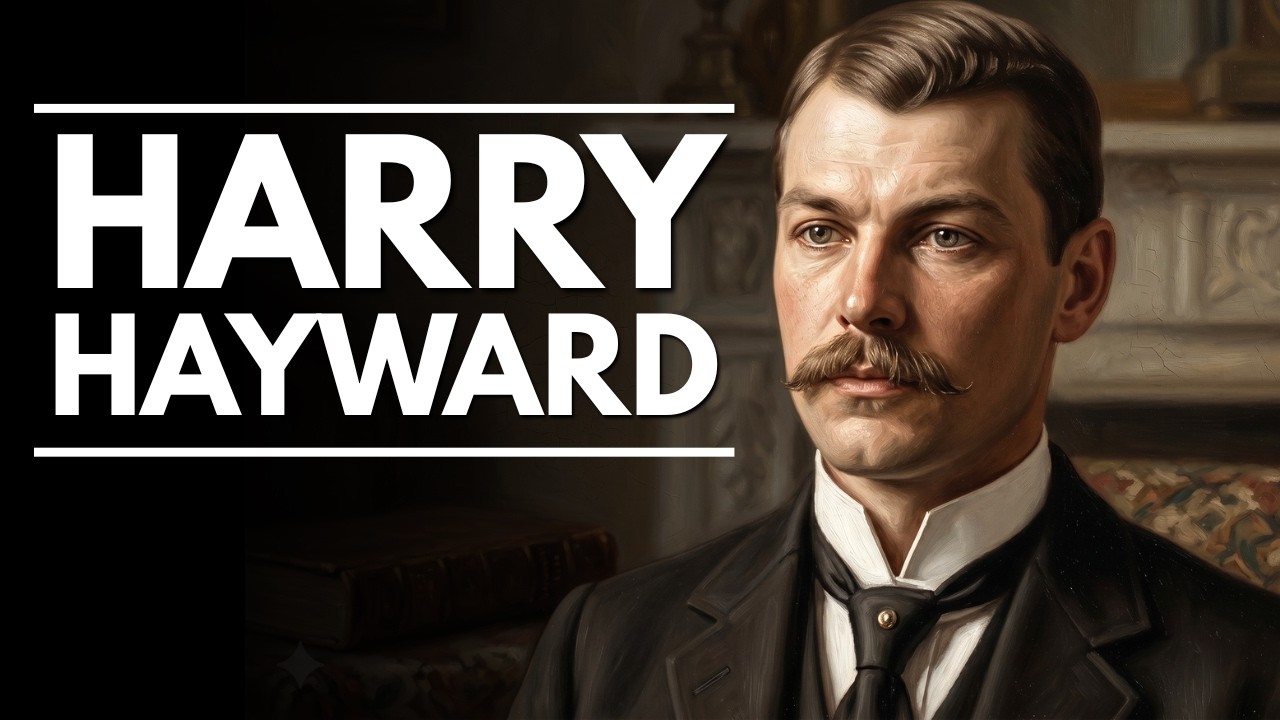
On the ground floor, his son Harry kept an apartment. Up on the fifth floor lived a young dressmaker named Katherine Ging, whom everyone called Kitty. Down in the basement, tending the furnace, lived Claus Blixt, a Swedish immigrant. Three people shared a single building, and only one of them had thought through exactly what would happen inside it.
Harry Hayward had come back to Minneapolis in January 1894 after years away. By his own later confession, those years had taken in three murders and a string of arsons across America and Mexico, crimes that were never solved and never prosecuted. Once home, he cut the figure of a respectable young man: good-looking, charming, well turned out, from a solid family. He said he was in business, which in practice meant gambling, but his father’s properties gave him respectability, and nobody asked too many questions.
Underneath lay something very different. He had tormented animals as a boy. He had fashioned a personal creed out of atheism and self-interest, one in which other people existed to be used. He had been running criminal schemes since his early twenties: counterfeiting, arson for hire, insurance fraud.
Within weeks of his return, he had found Kitty Ging. She was independent, ambitious, financially stable, and open to the blend of charm and financial dreaming that Harry wielded so skillfully. She wanted more than a dressmaker’s wages could ever give her. Harry had plans that needed capital, plans that could make them both rich.
She advanced him money for gambling. When he lost it and she demanded it back, he repaid her in counterfeit bills. When she pressed him again, he proposed a way out: he would set up a loan to grow her dressmaking business. All she had to do was take out a life insurance policy as security, with him named as beneficiary.
A formality, he called it. A normal business arrangement. The policy was worth ten thousand dollars. The instant it was signed, Kitty Ging’s death turned into a financial event.
Harry’s first pick for the killing was his own brother. He asked Adry Haywood, his elder brother, who also lived at the Ozark Flats, to murder Kitty Ging. Adry turned him down, and four days before the murder, on November 30, 1894, he walked to the family lawyer, Levi Stewart, and told him everything. Stewart did nothing.
He did not go to the police. He put the information away and kept quiet. The plan shifted to the basement. For weeks, Harry had been calling on Claus Blixt almost daily, drawing him into petty criminal errands.
Blixt had already burned a barn down for him. Now Harry needed something bigger. He told Blixt it had to be done. Blixt said he couldn’t do it.
Harry looked at him, and by Blixt’s own account, that settled it. He fixed me with his eyes, Blixt said. I couldn’t say no when he looked at me that way. Nobody could.
Harry himself confirmed the trick the night before his execution. No, merely look in his eyes. No charm, no ritual, no theatrics. Just a gaze that did something to certain people.
Whether it was real hypnotic power, the force of a man with no conscience meeting a man who had one, or the piled-up weight of months of threats, Blixt could not tell them apart. He did what Harry wanted. The plan was elegant in the way that plans built by people with no moral resistance tend to be. Harry told Kitty he had arranged a deal to buy counterfeit currency from suppliers on the edge of town.
He needed her to come along, bring some money, meet his contact. He would be there, as he had been in earlier schemes. She agreed. On the evening of December 3, 1894, Harry gave Blixt a
38 caliber Colt revolver and a quart of whiskey, and told him to drink the whole thing before he got into the buggy. That afternoon, Harry made certain he was seen. He met his friend Thomas Waterman in public. Earlier in the day, he had been at a restaurant with Kitty, lending her money in front of the waitress and patrons, showing off a thick roll of bills, establishing for anyone watching that Kitty Ging had been seen carrying serious cash.
At 7:08 that evening, Kitty left the West Hotel in a horse and buggy. She held the reins of a gentle buckskin mare named Lucy, a horse she had asked for by name from the Goosman Livery Stable, one she had driven before and trusted. She believed she was on her way to meet Harry and his counterfeit currency contacts on the outskirts of the city. Beside her sat Claus Blixt.
At that very moment, Harry Hayward was taking his seat in a theater box at the Minneapolis Grand Opera House. His companion was a woman named Mabel Bartleson. The show was a musical comedy called A Trip to Chinatown. He was seen, out in public, and by every account in high spirits.
Blixt drove Kitty along Excelsior Boulevard toward Lake Calhoun. The lake was frozen, and across its surface the sound of ice skaters drifted through the cold air. Somewhere along the lake’s northwestern shore, Blixt raised the revolver and shot Kitty through the back of the head. The bullet went in behind her left ear and came out through her right eye.
He described it afterward in three sentences. After I shot her, her head dropped back against the side of the buggy. She made no sound and was dead. He drove on a short way and pushed her body from the buggy onto the road near the intersection of Excelsior Boulevard and 31st Avenue.
He left the rig behind and slipped into a nearby saloon. Lucy the mare found her own way back to the livery stable, arriving at 9:10 p. m. pulling an empty buggy.
Around the same time, a baggage handler for the Soo Line Railroad named William Erhardt found a woman’s body on Excelsior Boulevard. At first she was assumed to have died in a runaway accident. The body lay in the morgue for more than an hour before a doctor noticed a bullet lodged behind her left eye. While police were still at the Ozark Flats questioning residents, before the body had been formally identified, Harry Hayward arrived from the opera.
My two thousand dollars is gone to hell, he said. It’s nobody but Miss King. She has not been hurt in any runaway accident. She has been done up for her money.
He was right on every point. He was also the man who had arranged the whole thing. The police first suspected people with visible ties to Kitty. Frederick Reed, her ex-fiancé, was questioned for hours before his alibi cleared him.
A woman by the name of Lillian Allen, once a rival of Reed’s for Kitty’s affections, had departed Minneapolis without warning and briefly fell under suspicion. Harvey Axford, a traveling salesman who had known Kitty for seven years and could not wed her because he already had a wife, was also investigated. Both were eventually cleared. All the while Harry proved actively useful, furnishing information, offering analysis, and keeping close to the investigation with the assurance of a man who knows precisely where the evidence is not.
Harry was taken into custody on December 6, three days after the murder. Adry was arrested that same day. Blixt the following one. Under relentless questioning, Adry cracked and told the police what he had already told Levi Stewart a week before.
This time, action was taken. Blixt, interrogated separately, confessed. He informed the police that Harry had held complete control over him, that the eyes had done it. The lawyer Stewart stepped forward with his account of Adry’s warning.
The insurance policy was brought out, with the ten-thousand-dollar beneficiary clause naming Harry Hayward. The whole design of the scheme came into view at once. Harry’s trial for first-degree murder began on January 21, 1895, before Judge Seagrave Smith at the Labor Temple in Minneapolis. It ran forty-six days.
As many as five thousand onlookers crowded outside. One hundred thirty-six witnesses were summoned. Hennepin County Attorney Frank Nye headed the prosecution. Harry’s defense was handled by W.
W. Irwin, called the most distinguished advocate in the Northwest, who devoted ten of the forty-six days to questioning more than two hundred prospective jurors before a panel was finally seated. Irwin sought to have Adry’s testimony excluded on grounds of insanity. The judge turned the argument down.
Adry testified against his own brother in open court. Blixt testified about the eyes, telling the court that he had been powerless to refuse Harry Hayward because of the way Harry looked at him. The press had a label ready, borrowed from the most popular novel in America that year, George du Maurier’s Svengali, the hypnotist who dominated and destroyed an innocent woman through the power of his gaze. The Minneapolis papers attached it to Harry at once.
He became the Minneapolis Svengali before the trial had ended. Harry took the stand in his own defense. He denied everything, blamed his brother and Blixt, insisted the entire affair had been their scheme, that he had been manipulated and used. He was polished on the stand, confident, controlled, precisely what he had always been: a man who could make a room believe anything.
The jury retired at 11:30 in the morning. They deliberated, ate lunch, and came back at 2:15 in the afternoon with a verdict of guilty of first-degree murder. Harry Hayward was sentenced to hang on December 11, 1895, exactly one year and eight days after Kitty Ging drove away from the West Hotel and did not return. He passed the intervening year on death row in a state the press found both fascinating and unsettling.
He joked with reporters about his own execution. He made an escape attempt that cost him his privileges and landed him in isolation. He showed no remorse, no reflection, no sign that the verdict had stirred in him anything like the emotion it stirred in everyone else. The evening before the hanging, he consented to give a full confession to his cousin Edward Goodsall and a court reporter.
It was lengthy and detailed. He admitted to arsons across several states, to insurance frauds, and to three murders committed during his years of travel, including a man in a New York gambling house on Mulberry Street whose skull he crushed with a chair leg, describing the victim with a chuckle as having been kind of thin. He held the Kitty Ging murder for the end of the confession, on the chance that a governor’s reprieve might arrive before he reached it. No reprieve came.
He confessed to Kitty’s murder, withdrew his accusations against Adry, and expressed no remorse for any of it. Not for Kitty, not for the others, not for Blixt, who spent thirty years in prison for the act Harry had engineered. On December 11, 1895, at midnight, a minister visited Harry Hayward and drew from him a promise to proclaim his faith in Jesus Christ from the scaffold. Moments later, he was dressed in a black robe and led toward the gallows at Hennepin County Jail.
Beneath the robe he was neatly dressed, in a cutaway coat and pinstripe trousers. He walked to the scaffold, looked out at the assembled witnesses, and said, Good evening. He asked for three cheers for himself. The sheriff told him to die like a man.
His last words were, Pull her tight. I’ll stand pat. The trap was sprung at 2:12 in the morning. The fall did not break his neck.
He strangled slowly and was pronounced dead at 2:25. Claus Blixt lived until 1925, having served thirty years for pulling the trigger. Adry Hayward lived with what he had tried to stop and failed to stop, with what it had cost him to testify against his brother, and with what the lawyer had done with his warning when it might still have mattered. The Ozark Flats on Hennepin Avenue still stands, called the Bellevue now.
On its first floor, its fifth floor, and in its basement, three people once lived within yards of each other in arrangements that only one of them had fully understood.
