Mary Tobin boarded a ferry in the spring of 1889 with a promise to visit a friend in Jersey City, and then vanished. For twenty-seven days, no one knew where she had gone. Then, on the morning of Sunday, May 12, a boatkeeper named Thomas Armor noticed a bundle drifting in the water near the shore of Clifton Boat Club on Staten Island. Looking closer, he saw it was the body of a woman.
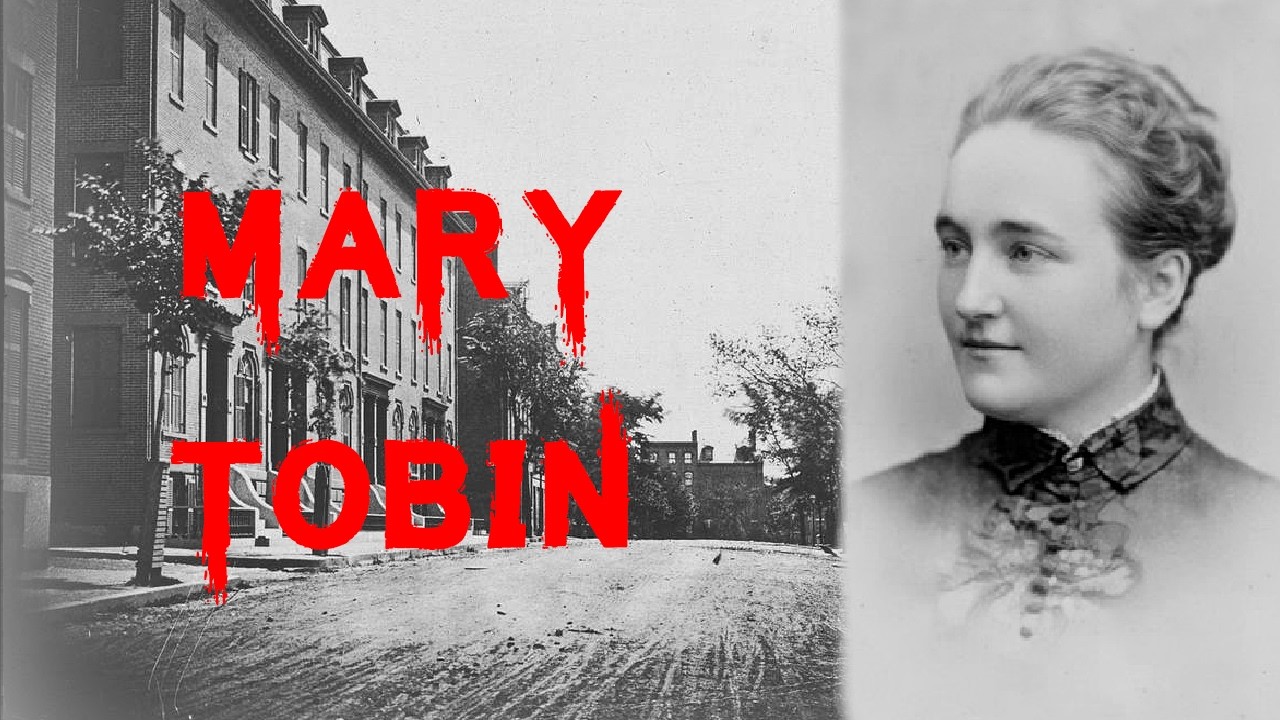
He pulled her to shore and notified the authorities. Mary Tobin had come to West New Brighton under respectable circumstances. Born in Canada, the daughter of a businessman who had lost much of his fortune, she moved with her family to Franklin, Pennsylvania, where she was educated and worked as a schoolteacher. She was intelligent, capable, and well regarded.
In 1885, she came to New York to nurse and teach a sick child, and while staying in the home of Dr. Robinson, she left such a good impression on his mother that she mentioned the young woman might make a fine office assistant. When the position became vacant in April 1887, Dr. Robinson wrote to friends in Franklin to verify her reputation.
The answers were positive, and he hired her. Her duties were bookkeeping, sending bills, and managing the practice. Dr. Robinson soon realized her office skills were weaker than expected, but Mary was kind to his elderly father, and for that reason he kept her on.
She attended the Methodist Church as she had in Franklin, but in late 1887 she abandoned religion entirely, only to return to it months later and announce she wanted to become a nun. That ambition faded. In 1889, she announced she was to be married, but refused to say to whom. On Monday, April 15, 1889, Mary resigned her position.
She said goodbye to everyone, appeared to be in good spirits, and explained her plans: she would visit a friend in Jersey City, then travel to her family home in Franklin to prepare for the wedding. She sent two trunks ahead, one to Jersey City and one to Franklin. Then she left. She never arrived.
Days passed with no word, and her friend in Jersey City, Mrs. McKenna, went to Dr. Robinson to ask if he had heard anything. He had not.
Inquiries among friends and relatives turned up nothing. No one knew where Mary Tobin had gone. When her body was identified the day after it was found, the coroner and police faced a puzzling scene. She was fully dressed, wearing white undergarments, a blue and white striped petticoat, a dark cloth dress and jacket, black stockings, and buttoned gaiters.
On her left hand was a gold ring set with a cat’s eye stone, and on her wrist were two black beaded bracelets. In her pockets was only a prayer book. There were no marks of violence on her body. Decomposition suggested she had been in the water for some time.
The initial theory was suicide. The idea was floated that her marriage had fallen apart, leaving her so distressed that she threw herself into the water. Those who knew her rejected it. Reverend Mortimer of St.
Mary’s Church insisted she was level-headed and not prone to impulsive acts. An autopsy was performed by Dr. John Feeney under the direction of Coroner Hughes, but the results were withheld until the inquest, scheduled for Friday, May 17. When the day came, the coroner’s office on New York Avenue in Clifton was crowded.
The proceedings were chaotic. No stenographer recorded the testimony, and questions from the jury were silenced. No representative from the district attorney’s office was present. Newspapers would soon describe the inquest as a farce.
Thomas Armor testified first, describing how he found the body. Then Dr. Bryan took the stand. He had formerly worked for Dr.
Robinson but had left after a disagreement. His first statement changed the atmosphere in the room: he announced he had been engaged to Miss Tobin. He explained that on April 15 she had been at his house preparing to leave for Pennsylvania. He walked her toward the station, but was called away urgently to see a patient.
When he returned, he found she had left behind a package addressed to Dr. Robinson. Not knowing what it was, he locked it in his office and later sent it by messenger. There was no cross-examination of Dr.
Bryan. The police witnesses who followed were evasive. Dr. Feeney stated the cause of death was drowning, and Dr.
Loomis, a pathologist from the University of New York, confirmed that Miss Tobin had not been in a delicate physical condition. Both believed the body had been in the water no more than nine days. That detail was difficult to reconcile with the timeline. Mary had been missing for twenty-seven days.
If she had died when she disappeared, she would have been in the water far longer. Another physician, Dr. Walter Woods, believed she was already dead when her body entered the water, as there was no water in her lungs, but he was not called to testify. The inquest reopened the next day, and proved no more satisfactory.
A second autopsy was ordered, attended by Coroner Hughes, Dr. Feeney, Dr. Robinson, and Dr. Woods, but its results were not made public due to disagreements over how to interpret the findings.
One juror remarked that nothing useful had been accomplished. The case remained unresolved, marked by contradictory evidence. Suspicion settled on Dr. Bryan.
Word spread that he had become involved with a young nurse named Fanny Warburton, and that on April 15 he had ended his engagement to Mary, leaving her deeply distressed. It was noted that his medical call that day had taken unusually long, leaving a span of about forty-five minutes that could not be accounted for. Many believed he had killed her and hidden her body before putting her into the water. These allegations had their counters.
Miss Warburton said her association with Dr. Bryan was strictly professional, and Dr. Bryan attributed the delay to poor road conditions and two stops made along the way. Mary’s own movements added to the mystery.
She had not gone straight to the station on April 15, but had spent time at Dr. Bryan’s house before leaving. When she left, she was carrying a small purse on a ribbon beneath her dress, which contained a substantial amount of money, including forty-five dollars sent by her brother and a card with her name and address. The purse was missing when her body was found.
Because her clothing was tightly fastened and had to be cut away, it could not have been removed after her death. Its absence suggested robbery. There was also the matter of Dr. Robinson’s index book, which Mary had offered to take and update.
It was returned by a messenger boy, still wrapped in brown paper, never opened. Dr. Robinson said this caused him unease, as he knew it would not have been updated. He also declined to answer whether Mary had intended to be married.
Mrs. McKenna was more forthcoming. She told reporters that Mary had spoken openly of her engagement to Dr. Bryan, had been shopping for the wedding, and was in excellent spirits when she last saw her.
She also said that when she spoke to Dr. Bryan after Mary vanished, he expressed surprise but did not appear deeply concerned, suggesting Mary had probably gone home to Pennsylvania. Mrs. McKenna did not believe it.
The case grew stranger. Mary’s father, a merchant tailor in Franklin, was murdered in his shop on March 22, 1891, and the building was deliberately burned. In the months that followed, new claims emerged, renewing calls to reopen Mary’s case. Mrs.
Glassford, Dr. Bryan’s former housekeeper, said he told her to remember that he had parted from Mary at 8:00 in front of West New Brighton Station, while she insisted it had been 9:00. She also recalled Mary crying when she left the doctor’s house. Dr.
Robinson, who had largely stayed quiet, then stated that he had been convinced Mary was murdered but said the case had been taken out of his hands. He claimed the postmortem had revealed evidence that the woman had been assaulted, but no physician was called to testify to it. He also maintained the body could not have been in the water for more than a week, and that it must have been concealed somewhere on Staten Island before being dumped. The authorities took no further action.
On September 28, 1891, the shop where Mary’s brother, David Tobin, was a partner was deliberately set on fire and destroyed. That crime was never solved either. Most people came to believe that Mary Tobin’s death had been mishandled, and that she, like her father, had been murdered, perhaps by the same hand that later set fire to her brother’s shop. Yet the investigation was never reopened.
The death of Mary Tobin, the murder of her father, and the destruction of her brother’s business all remain unresolved.






