On July 11, 1941, President Franklin Roosevelt put his signature to a lone directive that placed the whole intelligence future of the United States in the hands of a single man: William Donovan. The response across Washington came at once and it was hostile. J. Edgar Hoover of the FBI wanted him destroyed.
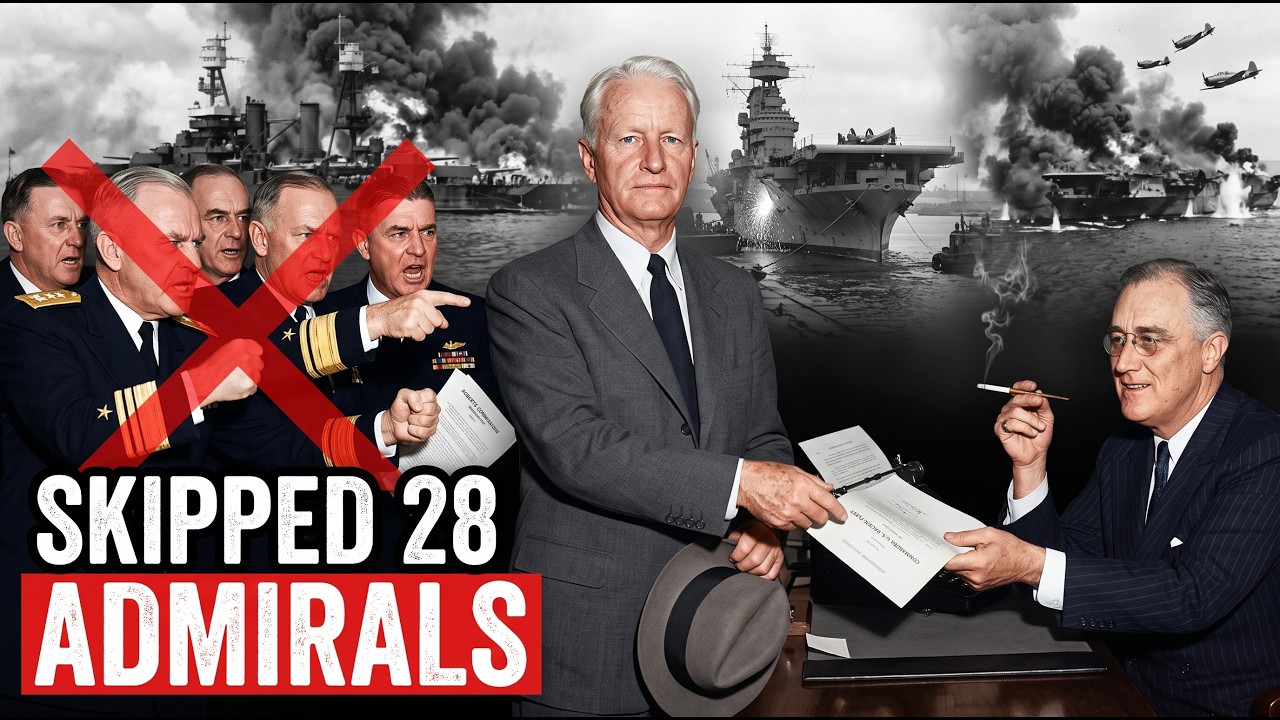
The Army and Navy struggled to curtail his powers. The State Department lodged formal protests. Hardly any senior official in the capital had faith in the appointment Roosevelt had just made. Under three years later, in the dark hours before dawn on June 6, 1944, the first three-man Jedburgh team dropped by parachute into occupied France.
Over the weeks that followed, one of Hitler’s most dreaded armored divisions started rolling toward Normandy. It ought to have gotten there fast. It did not. Between southern France and the invasion beaches, rail lines disappeared, bridges fell, radios crackled to life, and an army designed for speed lost days it could never win back.
In the summer of 1940, the United States watched the world burn from behind a locked door. In six weeks, the German army had accomplished what four years of trench warfare in the First World War had failed to achieve. Poland was gone. Denmark and Norway were gone.
Belgium and the Netherlands fell apart within days. On June 22, 1940, France signed an armistice with Germany. British troops had been pushed off the continent at Dunkirk. Across the Channel, Winston Churchill was bracing his island for invasion.
In Washington, Roosevelt faced a problem that frightened him more than the fall of France itself. The most powerful nation on earth had no way to see. It had no central intelligence service, no single office where a president could ask what was really happening in Berlin, Tokyo, Vichy, or Moscow. What America had instead was a scattered patchwork of small bureaus that hoarded information the way misers hoard coins.
The FBI handled domestic counterintelligence. Army intelligence, known as G2, ran its own network of attachés. The Office of Naval Intelligence did the same for the Navy. The State Department read diplomatic cables.
The Treasury had agents overseas. Even the Federal Communications Commission was intercepting foreign radio traffic. None of them shared. Reports were duplicated, contradicted, and at times deliberately withheld from rival agencies.
In an age of blitzkrieg and radio intercepts, the American intelligence system was still built for the era of the telegraph. Roosevelt needed one trusted man who could go abroad, examine the wreckage of Europe, and bring back the truth unstrained by any bureau chief with a budget to protect. That man could not be a career soldier, sailor, diplomat, or policeman. He had to stand outside every faction in Washington, be someone Roosevelt personally trusted, and someone the British would speak to honestly.
There was exactly one candidate. William Joseph Donovan was 57 years old in the summer of 1940. He was a Wall Street lawyer, a Republican, and a Catholic of Irish descent from Buffalo, New York. Born in 1883 into a working-class Irish neighborhood along Buffalo’s waterfront, he had worked his way through Columbia Law School, where a young man from a wealthy Hudson River family named Franklin Roosevelt sat in some of the same classrooms.
In the First World War, Donovan commanded the first battalion of the 165th Infantry Regiment, the old Fighting 69th of New York, in the trenches of France. He led a bayonet charge across open ground under artillery fire, was wounded twice, refused each time to leave the line, and received the Medal of Honor. His men gave him the nickname Wild Bill because he could outrun and outfight most of the twenty-year-olds under his command. After the war, he built one of the most successful international law practices in New York, served briefly as a United States Attorney and as an assistant attorney general under President Coolidge, and traveled constantly.
In 1932 he ran for governor of New York as a Republican and lost badly. That defeat mattered because it meant Donovan carried no partisan power base. He was a lawyer who happened to know more about the actual condition of Europe than almost any elected official in Washington. In July 1940, Roosevelt summoned Donovan to the White House and gave him a private mission: go to London, talk to Churchill, talk to the intelligence services, and come back and tell him whether Britain could survive.
Donovan sailed with no rank, no title, and no formal instructions on paper. He landed in a country under attack, met King George VI, spent long evenings with Churchill at Chequers, and was granted something no American had ever been given before: the British opened their intelligence services to him. He toured coastal defenses, radar stations, and Fighter Command operations rooms. He returned convinced that Britain could hold if it received American support.
Roosevelt sent him back. In December 1940, Donovan began a second, longer journey, traveling through the Mediterranean, the Balkans, and the Middle East, watching British desert operations, listening to Balkan leaders describe the growing pressure from Berlin, and seeing the raw material of a European resistance that did not yet know it would need American help. When he came home in the spring of 1941, the ideas had hardened into something concrete. On June 10, 1941, he sent Roosevelt a memorandum outlining a single new office that would collect and analyze strategic information for the president, coordinate the intelligence produced by the existing bureaus, and conduct propaganda and irregular warfare against Axis targets.
It was a short document. Its consequences would last for eighty years. When Donovan’s draft was circulated for formal review, the reaction from inside the government was immediate and hostile. Hoover wrote a private memorandum warning that Donovan’s proposal would create a rival secret police and began quietly feeding negative material about Donovan to journalists.
General Sherman Miles, head of Army G2, argued that a civilian agency would duplicate the work of Army intelligence and warned that placing sensitive military information in the hands of a lawyer with no uniform was a security risk. The State Department objected that intelligence gathered abroad was inseparable from diplomacy and belonged inside its own walls. By the summer of 1941, Donovan had managed to unite four of the most powerful institutions in Washington against him. Roosevelt was one of the few willing to publicly support the proposal, and Roosevelt was the only vote that counted.
The president understood something the bureaucracy did not. Every one of the agencies fighting Donovan had already failed to see what was coming in Europe. G2 had underestimated the Wehrmacht. Naval intelligence had misread Japanese naval expansion.
The State Department had put its faith in diplomatic pledges from Berlin and Tokyo that amounted to nothing. The same officials drafting memos against Donovan were the ones whose reports had left the White House blindsided when France fell. On July 11, 1941, without consulting Congress, without any formal legislation, without seeking approval from even one of the offices lined up against him, Roosevelt signed a presidential directive establishing a new post in the executive branch: Coordinator of Information. The office would answer directly to the president, gather and assess information relevant to national security, and be empowered to carry out such supplementary activities as the president might direct.
That final phrase, left intentionally vague, was the opening through which every future covert operation would eventually pass. The directive named William J. Donovan as the first and only coordinator. He took the job without pay.
Donovan established his office in the old National Institute of Health building in Washington. He had no staff, no budget approved by Congress, and no clear legal authority over anyone in another department. He started hiring regardless. He drew from Yale, Harvard, and Princeton.
He brought in Wall Street lawyers, foreign correspondents, professors of history and economics, businessmen fluent in foreign languages, and a smattering of adventurers and eccentrics who fit nowhere else in the American government. The Washington press corps coined a mocking nickname for the new agency from the initials of its office: Oh, So Social. The label stuck. Then, on the morning of December 7, 1941, aircraft from six Japanese carriers struck the United States Pacific Fleet at Pearl Harbor.
The intelligence failure that had permitted the attack was the greatest in American history. It was not chiefly Donovan’s failure; his office had been in existence for under five months and had virtually no capability in the Pacific. But Pearl Harbor transformed the entire debate over central intelligence. The notion that America could wage a global war with a handful of uncoordinated bureaus was no longer defensible before the public.
Through the first half of 1942, Roosevelt fought to keep his coordinator from being absorbed by the Joint Chiefs of Staff. The compromise arrived on June 13, 1942, when Roosevelt dissolved the office and replaced it with the Office of Strategic Services, the OSS. The new agency would report to the Joint Chiefs rather than directly to the president. It retained the intelligence and covert action functions Donovan had built, but lost the propaganda branch.
Donovan received a commission as a colonel in the United States Army, later rising to brigadier general in March 1943 and major general in November 1944. The uniform gave him a rank his enemies could not easily take from him, but it also put him inside a chain of command that included men who would spend the war seeking ways to constrain his organization. General Douglas MacArthur formally shut his theater to OSS operations. Admiral Ernest King restricted OSS activity across most of the Pacific.
Hoover held the line in Latin America. Donovan had a charter, a rank, and a mandate, but he had not yet recruited a single agent behind enemy lines or delivered one piece of actionable intelligence from occupied Europe. Everything the Washington bureaucracy had said about him remained technically true. He was untested.
His new agency existed mostly on paper. The man nobody in Washington trusted now had to prove somewhere in the world that Roosevelt had not made the biggest mistake of his presidency. In the summer of 1942, Donovan set about building the largest secret intelligence organization the United States had ever attempted, and he did it from almost nothing. The OSS charter gave him authority, but not people, tradecraft, radios, safe houses, forged documents, or any of the physical machinery of espionage.
All of it had to be invented, borrowed from the British, or improvised. Within two years, the agency would grow to a wartime peak of roughly thirteen thousand personnel. The OSS moved into research and analysis, staffed with academics who applied social science, economics, and history to the problem of understanding the Axis. Special operations handled sabotage and cooperation with resistance movements.
Counterintelligence, known as X2, was built directly on British foundations after London agreed to share the secret of the double-cross system. Morale operations produced forged German newspapers and false radio broadcasts. Operational groups were uniformed commandos organized along ethnic lines, ready to be dropped behind enemy lines to fight alongside partisans. A communications branch built the radio network that linked every OSS station from Bern to Chungking to Washington.
A field photographic branch led by film director John Ford recorded operations from Midway to Normandy. Donovan understood that intelligence was not merely the collection of secrets but the interpretation of them, and he wanted the finest civilian minds in the country to do that interpretation. He also built forward. He placed Allen Dulles, a lawyer from a family of diplomats and a future director of central intelligence, in Bern, Switzerland.
In November 1942, Dulles set up shop and became the most productive OSS station chief of the war, running networks into Germany itself. To silence the doubters, Donovan needed a battlefield victory that could be measured in enemy dead and downed American pilots recovered. He would find it in the malarial jungles of northern Burma, in a mission that became known as Detachment 101. The detachment made contact with the Kachin, a mountain people who deeply hated the Japanese occupiers, and slowly built an indigenous guerrilla force that eventually numbered close to ten thousand men.
Kachin rangers set ambushes on jungle trails at dawn and vanished before Japanese reinforcements could react. They cut telegraph wires, poisoned wells, and left booby traps in abandoned villages. Their most important mission was the recovery of American aircrew shot down over the Hump, the deadly air route across the eastern Himalayas. Detachment 101 rescued more than 425 Allied airmen from behind enemy lines.
It was credited with about 5,500 confirmed Japanese dead and roughly 10,000 additional Japanese killed or seriously wounded. Twenty-seven Americans in the detachment were killed. General Stilwell, who had once threatened the unit’s commander with disappearance if he failed, later said Detachment 101 was worth a division to him in the field. But Burma was still a sideshow.
The main war was in Europe. By the autumn of 1943, planning for the invasion of France had reached a level of detail that included every foreseeable German response. Allied planners knew that once troops came ashore in Normandy, the German High Command would move armored divisions from all over France to throw the invaders back into the sea. Every day that reinforcement was delayed was worth thousands of Allied lives.
The solution came in the form of a combined effort by the OSS, Britain’s SOE, and the Free French. Jedburgh teams were typically multinational trios of two officers and an enlisted radio operator, recruited from American, British, and French ranks, and every team included at least one native French speaker. Wearing uniforms, they dropped by parachute into occupied France to make contact with the Maquis, organize sabotage, set up weapons drops, and steer guerrilla strikes against German lines of communication. Close to one hundred Jedburgh teams would be sent into the field during the European campaign.
The training was conducted at Milton Hall in England, where recruits were taught parachuting, plastic explosives, radio work, and how to withstand interrogation. One of the American Jedburghs was William Colby, a twenty-four-year-old Princeton graduate from Minnesota who would one day head central intelligence. Aaron Bank, later a founder of United States Army Special Forces, and John Singlaub, who became a major general, also took part in the program. Donovan was set on being there in person when the invasion came.
He was sixty-one, a brigadier general who knew nearly every significant Allied secret. Eisenhower had explicitly barred him from going ashore, afraid he might be captured. Donovan went regardless, reaching Utah Beach on June 7, 1944, a day after the landings. The first Jedburgh team, given the code name Hugh, had jumped in during the early hours of June 6.
In the weeks that followed, more teams came down throughout Brittany, the Massif Central, and the departments of central and southwestern France. The Maquis had been swelling since 1943, when the Vichy regime imposed forced labor conscription and sent hundreds of thousands of young Frenchmen to toil in German factories. Tens of thousands refused and escaped into the countryside. By June 1944 the Maquis counted in the tens of thousands, short on weapons and food, but willing.
What they had been missing was coordination, weapons, and direction. The Jedburgh teams supplied all three. In the forty-eight hours following the Normandy landings, French rail workers and Maquis fighters, steered in many places by Jedburgh and SOE teams, severed hundreds of rail lines throughout France. Telephone and telegraph lines were cut as well.
Bridges were blown up or damaged. Fuel dumps went up in flames. The German plan for rail movement, which depended on rapid reinforcement of Normandy by train, was badly disrupted within days. The Wehrmacht was increasingly compelled to shift heavy units by road, where Allied fighter-bombers threatened them in daylight and Maquis ambushes threatened them at night.
The Germans hit back with savagery. Waffen-SS units carried out ruthless reprisals against villages suspected of sheltering the Maquis. Whole hamlets were put to the torch. Hostages were shot in groups of tens and hundreds.
Yet the sabotage went on. Nowhere would this change count for more than in one disastrous road march made by one of the most feared armored formations in the German army. The 2nd SS Panzer Division, known by its honorific name Das Reich, was stationed in the spring of 1944 near Montauban in southwestern France, refitting after savage fighting on the Eastern Front. It mustered roughly fifteen thousand men and over two hundred armored vehicles, among them Panther and Panzer IV tanks.
By the most direct road, Montauban to Normandy is about 450 miles. The division was ordered to move on the night of June 7, 1944, and was expected to reach the front quickly. It took about two and a half weeks to arrive. Allied air interdiction had wrecked railways and bridges on a scale no single agency could have managed alone.
Marshalling yards had been struck again and again. Rail lines had been severed in dozens of places. The division had to send its tanks north under their own power, burning enormous amounts of fuel. Along the way, Maquis fighters ambushed columns, cut roads, and picked off officers with sniper fire.
The division answered by treating the whole region as enemy territory and punishing it as such. On June 9, its soldiers hanged 99 male civilians in the town of Tulle. On June 10, a company encircled the small village of Oradour-sur-Glane, drove the population into barns and the parish church, and killed 642 civilians, among them 207 children. The village was then set ablaze.
By the time Das Reich finally joined the Normandy battle, it confronted an Allied position far stronger than it had been on D-Day. The division was hurled into the fighting near Saint-Lô and later against the American breakout at Operation Cobra, where superior Allied firepower and air supremacy wore it down. While the Jedburghs were reshaping the ground in France, Allen Dulles was quietly reshaping the war from a small office in Bern. In August 1943, a German foreign ministry official named Fritz Kolbe walked into the Bern station and offered Dulles thousands of pages of classified German diplomatic cables.
Across the next two years, Kolbe handed over more than 1,600 documents, one of the most valuable intelligence streams the Allies received from inside Nazi Germany. In early 1945, Dulles opened a back channel with SS General Karl Wolff, the senior SS commander in northern Italy, to negotiate the surrender of German forces there. The talks, code-named Operation Sunrise, ran from February into April 1945 amid intense political sensitivity. Stalin, once he learned of the negotiations, accused the Western allies of plotting behind Soviet backs.
The negotiations went on in secret. On April 29, 1945, the German commanders in northern Italy signed a surrender that took effect on May 2, ending the fighting on that front six days before the general German surrender on May 8. In Washington, Donovan’s agency had gone in three years from a lawyer’s proposal that every major bureau opposed to a global organization whose officers had helped shape the decisive campaigns of Europe and Asia. But the war was not finished, and the president who had made all of it possible had only ten months to live.
In November 1944, Donovan sent Roosevelt a detailed memorandum proposing a permanent civilian intelligence agency that would answer directly to the president and bring together under one roof the collection, analysis, and covert action functions the OSS had spent three years learning to carry out. It amounted to an early blueprint for what would eventually become the Central Intelligence Agency. The memorandum arrived on Roosevelt’s desk in late November. Within weeks, it had also landed on the front page of the Chicago Tribune.
On February 9, 1945, an isolationist reporter published a leaked account of the plan beneath headlines demanding to know of an American Gestapo. The story was picked up nationwide by newspapers hostile to the New Deal. Editorial writers condemned the proposal. Congressional Republicans and even some Democrats cautioned that a permanent civilian intelligence agency answerable only to the president would be incompatible with American liberty.
Within days, the plan fell apart politically. The source of the leak was never officially established. Suspicion at the time and afterward fell on J. Edgar Hoover, who denied it to the end.
Roosevelt, pushed onto the defensive, quietly set the proposal aside. By that winter he was also a dying man. On April 12, 1945, at his cottage in Warm Springs, Georgia, Franklin Roosevelt suffered a massive cerebral hemorrhage and died within hours. He was 63 years old.
Vice President Harry S. Truman, a onetime artillery captain from Missouri who had been shut out almost completely from Roosevelt’s wartime inner circle, took the oath that evening. Of the atomic bomb he was nearly ignorant, of the fine details of the Pacific war he knew little, and of the personal loyalty Roosevelt had shown Donovan he knew nothing whatsoever. What he did know of Donovan was this: the man was a Republican, a Roosevelt confidant, and the head of an outfit Truman had heard described in the harshest possible terms by officials he trusted.
Germany capitulated on May 8, 1945. Three months later, atomic bombs laid waste to Hiroshima and Nagasaki. Japan surrendered on August 15 and put its signature to the formal instruments on the deck of the battleship Missouri on September 2. The war had ended, and the machinery of American demobilization now turned its attention to the wartime intelligence agencies.
On September 20, 1945, Truman signed Executive Order 9621, ending the OSS as of October 1. Research and analysis went to the State Department. The functions that remained went to the War Department. Donovan gathered his senior staff, wrote his own farewell letter, and on September 28 spoke to the men and women of the OSS at a last gathering in the Riverside Skating Rink in Washington.
His remarks were short and gracious. He gave his people thanks, acknowledged the loss of those who had not come home, and told them outright that they had built something no American had built before. He did not lash out at Truman. He did not defend the agency in political terms.
He simply thanked them and shut the door. On October 1, 1945, the Office of Strategic Services ceased to exist. Yet the clandestine capabilities Donovan had assembled did not disappear. They were compressed, tucked away inside the War Department, and left waiting.
The wait was short. On January 22, 1946, Truman signed a presidential directive establishing the Central Intelligence Group, a small coordinating body headed by a new post called the Director of Central Intelligence. In the summer of 1946, the CIG took in the surviving OSS clandestine networks. The world had made the very case Truman had refused to hear the previous autumn.
On March 5, 1946, Winston Churchill delivered his Iron Curtain speech. Soviet troops would not withdraw from northern Iran. A communist insurgency was battling a British-backed government in Greece. Turkey was under Soviet pressure.
In February 1947, London told Washington it could no longer sustain aid to Greece and Turkey. On March 12, Truman addressed a joint session of Congress and announced what came to be known as the Truman Doctrine. Washington still had no permanent statutory central intelligence structure of the kind Donovan had urged in his 1944 memorandum. On July 26, 1947, Truman signed the National Security Act.
The law established the National Security Council, a unified military establishment, the United States Air Force as an independent service, and, in its most consequential provision for the story of American intelligence, the Central Intelligence Agency. The new CIA inherited key personnel and clandestine capabilities through the CIG and the former OSS strategic services unit. Its structure reflected the broad vision set out in the Donovan proposal of November 1944. Donovan was not named director.
Truman picked Rear Admiral Roscoe Hillenkoetter, who had been serving as the third director of central intelligence at CIG and now became the first director of the new agency. Donovan was told of the decision privately and accepted it without objection. He was 64 years old. He had built the machine.
Others would run it. OSS veterans became extraordinarily influential inside the new CIA. Allen Dulles served as director from 1953 to 1961. Richard Helms served from 1966 to 1973.
William Colby served from 1973 to 1976. James Angleton ran CIA counterintelligence for twenty years. Frank Wisner built the covert operations directorate. The CIA was not simply the OSS restored under another name; roughly one-third of its early personnel were OSS veterans.
The blueprint had prevailed. The blueprint’s author had been left behind in his law office. In 1953, President Eisenhower brought Donovan back for one last stretch of government service, naming him United States Ambassador to Thailand. He served a year before returning to New York.
By the late 1950s, his health began to give way. On February 8, 1959, William Joseph Donovan died. He was 76 years old. He was buried with full military honors in Arlington National Cemetery.
Eisenhower ordered flags at government buildings flown at half-staff. In a private message to the family, the president called him the last American hero of a certain kind, the kind who had built an institution the country would need for as long as it remained a great power. Today, in the lobby of the original headquarters building at the Central Intelligence Agency in Langley, Virginia, a bronze statue of William Joseph Donovan stands against the wall. The inscription is short.
It names him as the founder of American central intelligence and the leader of the Office of Strategic Services in the Second World War. Roosevelt made that choice quietly in a single directive in the summer before Pearl Harbor. It shaped the war in which the United States fought, and it has shaped every war the United States has fought since.
