Dawn had not yet broken over Stinking Springs when Charlie Bowdre stepped outside the stone building to tend the horses. He had no reason to think the night would end any differently than the others that had passed since he and Billy the Kid had gone on the run. But Pat Garrett’s posse had surrounded the hideout in the dark, and when the first shots rang out, Bowdre was caught in the open, struck multiple times before he could even reach for his revolver. He collapsed back toward the doorway, gravely wounded, barely able to stand.
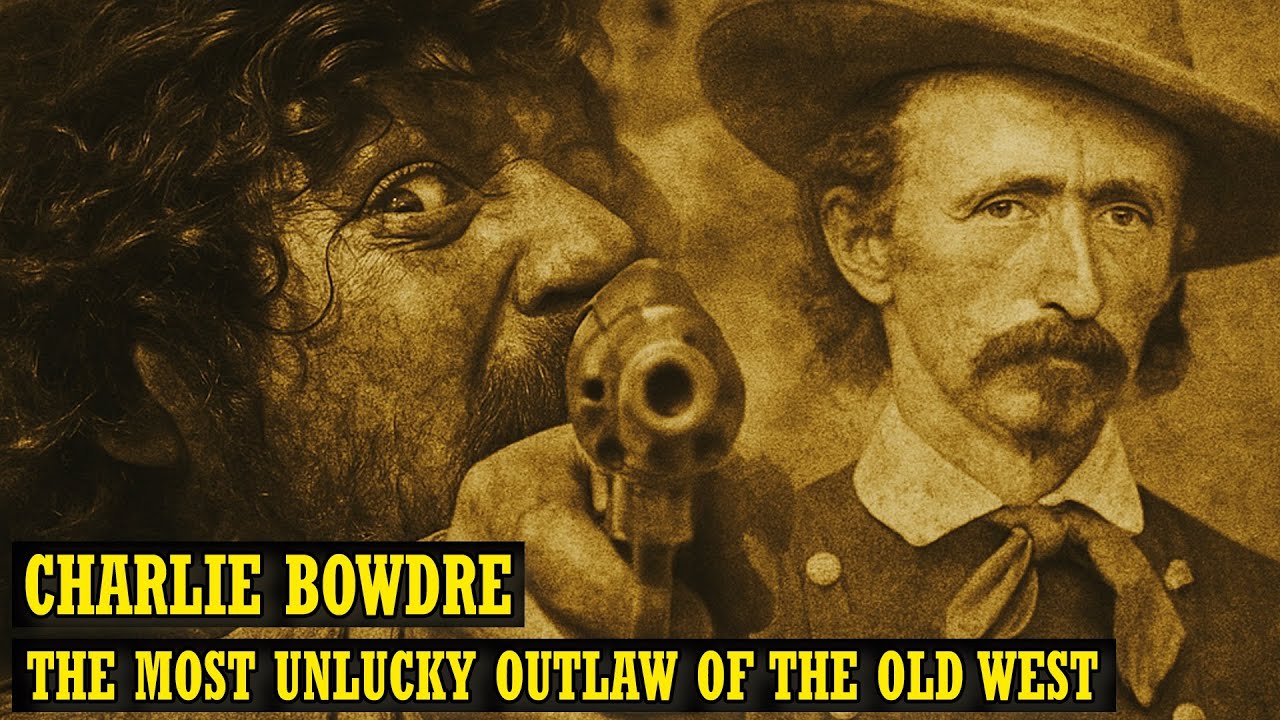
From inside, Billy the Kid urged him to make one last effort, to go down fighting. Bowdre stumbled forward, unable to draw his weapon. According to those who later told the story, his final words were little more than a whisper: “I wish. I wish.
” Then he fell. He was buried in the cemetery at Fort Sumner, New Mexico, alongside his friend Tom O’Folliard. Less than a year later, Billy the Kid himself would be laid to rest in the same ground. Charlie Bowdre had ridden with the most famous outlaw of the American frontier, had survived the bloodiest conflict the territory had ever seen, and had come within months of leaving it all behind.
Instead, bad timing and loyalty to a friend carried him to that lonely death at Stinking Springs. Born in 1848 in Wilkes County, Georgia, Charles Bowdre was the first child of Albert and Lucy Bowdre. When he was about three years old, the family packed up and moved west to Dottot County, Mississippi. It was there that Charlie grew up alongside six younger siblings—Epie, Sally, Vuly, Benjamin, William, and Lucy Lee—born between 1854 and 1863.
By the mid-1850s, young Charlie was already helping with chores on his father’s farm. Over time, he developed into a skilled and dependable farmer, a role that shaped much of his early life. What happened to Bowdre between the birth of his youngest sister in 1863 and his reappearance in the historical record around 1874 remains largely unknown. The records are scarce, leaving a gap in our understanding of his activities before he emerged on the western frontier.
Historians believe that at some point Charlie left the family farm in search of a more adventurous life, likely departing around 1870. By 1874, records place him in Lincoln County, New Mexico. There, Bowdre formed a close friendship with Doc Skurlock, another notable figure of the time. The two even partnered in an unusual business for the frontier: a small cheesemaking operation along the Gila River.
While building this enterprise, Bowdre also became involved in local law enforcement efforts. He occasionally joined posses organized to recover stolen livestock, a common problem in the region. These pursuits sometimes ended without legal proceedings, reflecting the informal and often chaotic nature of frontier justice. One of the most documented episodes occurred on July 18, 1876.
Bowdre, alongside Skurlock, Frank Coe, George Coe, and A. B. Saunders, intervened at the Lincoln jail to remove a captured cattle thief, Jesus Largo, from custody. The group took matters into their own hands outside the town, a decision that went unpunished by formal authorities.
Later, on August 5, 1877, Bowdre and an associate faced arrest after an incident in Lincoln in which both men, reportedly under the influence of alcohol, discharged their firearms recklessly. The conflict that would consume Bowdre’s life can be traced back to a financial dispute over an insurance policy belonging to Emil Fritz, a business partner of L. G. Murphy.
When Fritz passed away in 1874, the executors of his estate hired attorney Alexander McSween to collect the policy payout. After successfully securing the funds, McSween refused to release the money to the executors. His reasoning was tied to suspicions about the House, the powerful mercantile firm led by Murphy and James Dolan. The House insisted the money should go to them to cover an outstanding debt, but McSween believed the executors intended to hand the funds over to that faction.
McSween was also well aware of the House’s dire financial situation and likely wanted to prevent them from gaining any advantage, especially since they were his business rivals. In February 1878, legal proceedings were initiated, but the case was ultimately dismissed. Before that, however, the House managed to secure a court order to seize McSween’s assets. In the process, they mistakenly included property belonging to John Tunstall, McSween’s ally and business partner.
Following this, Sheriff William Brady assembled a posse to confiscate Tunstall’s remaining goods at his ranch, about seventy miles from Lincoln. Meanwhile, Dolan brought in reinforcements by aligning with the John Kinney gang, the Seven Rivers Warriors, and the Jesse Evans gang. Their role was primarily to intimidate opponents and disrupt operations by taking livestock from ranches belonging to Tunstall and John Chisum. These groups essentially acted as hired muscle for the House, escalating tensions that would soon erupt into open conflict.
On February 18, 1878, a posse under the authority of Sheriff Brady encountered John Tunstall and several of his ranch hands as they were moving his remaining nine horses toward Lincoln. Among the men riding with Tunstall were Richard “Dick” Brewer, Billy the Kid, John Middleton, Henry Newton Brown, Robert A. Widenmann, and Fred Waite. Later investigations, including findings by Frank Warner Angel, a special agent for the U.
S. Department of the Interior, concluded that Tunstall was deliberately killed by Jesse Evans, William Morton, and Tom Hill. Several of Tunstall’s cowhands, including Brewer and Billy the Kid, saw the event from a distance but could do little to intervene. Tunstall’s death marked the beginning of what became known as the Lincoln County War.
Outraged by the killing and lacking faith in a territorial justice system largely influenced by Murphy and Dolan, Tunstall’s men and other supporters organized a group that came to be called the Regulators. While the Regulator size fluctuated, the core members—often referred to as the Ironclad—included Billy the Kid, Henry McCarty, Dick Brewer, Frank McNab, Doc Skurlock, Jim French, John Middleton, George and Frank Coe, Jose Chavez y Chavez, Charlie Bowdre, Tom O’Folliard, Fred Waite, and Henry Newton Brown. Initially, the Regulators sought to bring those responsible for Tunstall’s death to justice through legal means. They obtained warrants from the Lincoln County justice of the peace and acted under the authority of Constable Saturnino Martinez.
However, Sheriff Brady defied this effort by arresting Martinez and several Regulators, jailing them despite their legal authority. Eventually released, the Regulators resumed their search for the men implicated in Tunstall’s killing. They soon located Buck Morton, Frank Baker, and Dick Lloyd near the Rio Peñasco. After a prolonged chase spanning several miles, Morton agreed to surrender on the condition that both he and Baker—who had not participated in Tunstall’s death but was riding with the group—would be escorted safely back to Lincoln.
Dick Brewer, then serving as the Regulators’ leader, promised they would be returned alive. However, growing tensions within the group led to disagreement over the prisoners’ fate. William McCloskey, a Regulator and friend of Morton, strongly opposed any harm coming to them, insisting they honor their commitment. On March 9, 1878, during the third day of the Regulators’ journey back toward Lincoln with the captured men, a tragic incident occurred in the Capitan foothills near Blackwater Creek.
Morton, Baker, and McCloskey all lost their lives under circumstances that remain controversial to this day. The official claim by the Regulators was that Morton shot McCloskey and then attempted to flee with Baker, forcing the group to act in self-defense. However, this explanation raised doubts almost immediately. Many found it difficult to believe Morton would have harmed McCloskey, who was known to be his only ally among the Regulators.
Physical evidence further fueled suspicion: both Morton and Baker were found with multiple gunshot wounds. Reports suggest Morton was struck as many as ten times and Baker five times. Historian Robert Utley notes that early accounts implied each Regulator may have fired at least once, casting serious doubt on the story of an attempted escape. McCloskey’s death was also widely believed to have resulted from his objections to harming the prisoners.
Coincidentally, that same day, two of the men involved in Tunstall’s killing—Tom Hill and Jesse Evans—were confronted near Tularosa during an attempted theft from a sheepherder. Hill did not survive the encounter, and Evans sustained serious injuries. Evans was later taken to Fort Stanton for medical treatment, where he was arrested on an outstanding federal warrant for livestock theft from an Indian reservation. Sheriff William Brady, increasingly concerned about the lawlessness in Lincoln County, sought help from the territorial attorney general, Thomas Benton Catron.
Catron referred the matter to Governor Samuel B. Axtell, who soon issued rulings that dramatically altered the situation. Governor Axtell declared that John Wilson, the local justice of the peace who had deputized the Regulators and issued warrants for Tunstall’s killers, had been appointed illegally by the county commissioners. This ruling effectively invalidated the Regulators’ earlier authority, making their actions—once recognized as legal—now considered unlawful.
In addition, Axtell revoked Robert A. Widenmann’s commission as a deputy U. S. marshal.
With this change, Sheriff Brady and his deputies were left as the sole recognized law officers in Lincoln County. Tensions reached a breaking point on April 1, 1878. That morning, several Regulators—including Billy the Kid, Henry McCarty, Jim French, Frank McNab, John Middleton, Fred Waite, and Henry Brown—waited in the corral behind Tunstall’s store. Their target was Sheriff Brady and his deputies as they moved along Lincoln’s main street.
When the shooting erupted, Brady was struck multiple times and died at the scene. Deputy George W. Hindman was also mortally wounded. After the initial gunfire, Billy the Kid and Jim French rushed from cover toward Brady’s body.
Historians debate their intent. Some believe they hoped to retrieve an arrest warrant for Alexander McSween, while others suggest they aimed to recover Billy’s rifle, which Brady had confiscated during an earlier arrest. During this attempt, both men were hit by the same bullet fired by Deputy Billy Matthews, who managed to return fire despite the chaos. French’s injury was severe, forcing him to hide temporarily in a small crawl space at the home of Sam Corbett to recover.
Widenmann was present at the corral during the incident, but whether he actively participated remains unclear. He later claimed he was there only to feed Tunstall’s dog at the time of the attack. Three days after the death of Sheriff Brady and Deputy Hindman, the Regulators left the vicinity of Lincoln and traveled southwest. Their route took them to Blazer’s Mill, a sawmill and trading post that also provided beef to the nearby Mescalero Apache community.
At Blazer’s Mill, the Regulators unexpectedly encountered Buckshot Roberts, a rancher whose name appeared on their list of men wanted in connection with the Tunstall case. What followed was a violent confrontation that became one of the most memorable episodes of the Lincoln County War. During the exchange of gunfire, Roberts sustained fatal injuries, but not before he inflicted serious losses on the Regulators. Richard “Dick” Brewer, their leader at the time, was killed in the fight.
Several others—John Middleton, Doc Skurlock, George Coe, and Billy the Kid—were also wounded to varying degrees. This incident further deepened the conflict and demonstrated the unpredictable and deadly nature of the war, where even a single determined opponent could dramatically alter the course of events. Following the loss of Dick Brewer at Blazer’s Mill, the Regulators chose Frank McNab as their new captain. By late April, tensions in Lincoln County continued to rise.
On April 29, 1878, Sheriff George Peppin led a posse that included members of the Jesse Evans gang and the Seven Rivers Warriors. This group confronted a small band of Regulators—McNab, A. B. Saunders, and Frank Coe—at Fritz Ranch.
In the exchange that followed, McNab was killed, Saunders sustained severe injuries, and Frank Coe was taken prisoner. The following day, four men from the Seven Rivers faction—Tom Green, Charles Marshall, Jim Patterson, and John Galvin—were killed in Lincoln. Although the Regulators were widely suspected of the attack, concrete evidence was never produced. Frank Coe eventually escaped custody under mysterious circumstances.
According to some reports, Deputy Sheriff Wallace Olinger may have assisted him, even providing a pistol to aid in his flight. The day after McNab’s death, the core Regulators moved into Lincoln and fortified defensive positions. They exchanged gunfire with Dolan’s men and, according to some accounts, even members of the U. S.
Army cavalry. During this standoff, George Coe seriously wounded Dolan supporter Dutch Charlie Krling. By allegedly engaging federal troops, the Regulators inadvertently added another powerful adversary to their growing list of enemies. On May 15, the Regulators captured Manuel Segovia, a member of the Jesse Evans gang suspected of killing McNab.
Segovia was fatally shot during what was reported as an escape attempt. Around this time, the Regulators welcomed a new member, a young Texas cowboy named Tom O’Folliard, who quickly became one of Billy the Kid’s closest companions. The largest and most decisive clash of the Lincoln County War began on July 15, 1878, in the town of Lincoln. The Regulators were divided into two main positions.
Some took refuge in the McSween home while others occupied the Ellis store. Surrounding them were forces loyal to the Murphy-Dolan faction, including members of the Seven Rivers group. Inside the Ellis store were Doc Skurlock, Charlie Bowdre, John Middleton, Frank Coe, and several others. Additionally, about twenty Mexican Regulators under the command of Jose Chavez y Chavez were strategically positioned at various points around town.
Meanwhile, the McSween home housed Alexander McSween, his wife Susan, Billy the Kid, Henry Brown, Jim French, Tom O’Folliard, Jose Chavez y Chavez, George Coe, and a number of Mexican vaqueros. For three days, both sides exchanged gunfire and intense verbal challenges. During this standoff, Tom Cullins, a supporter inside the McSween house, was killed by a stray bullet. Around the same time, Henry Brown, George Coe, and Joe Smith left the McSween home for the Tunstall store, where they cornered two Dolan men in an outhouse with rifle fire, forcing them to hide in desperation.
The deadlock continued until U. S. Army troops under Colonel Nathan Dudley arrived. The soldiers brought heavy firepower, including cannons, which they aimed at the Ellis store and other strongholds.
Faced with overwhelming force, Billy the Kid, Doc Skurlock, and their men abandoned their positions, as did Jose Chavez y Chavez and his fighters, leaving those inside the McSween home increasingly isolated. On the afternoon of July 19, the Murphy-Dolan faction set the McSween house ablaze. As the fire spread and dusk approached, Susan McSween, another woman, and five children were allowed to leave safely. The remaining men stayed behind, attempting to fight the flames and prepare for a possible escape.
By 9:00 p. m. , the situation became desperate. Billy the Kid and Jim French devised a plan to break out using covering fire.
French went first, followed by Billy, Tom O’Folliard, and Jose Chavez y Chavez. As they ran, Dolan’s men opened fire, killing Harvey Morris, McSween’s legal associate. In the backyard, chaos erupted when soldiers moved in to capture those still inside. In the confusion, Alexander McSween and Bob Beckwith of the Seven Rivers faction were both killed.
Amid the turmoil, three Mexican Regulators managed to slip away and regroup with the remaining members of the Ironclad nearby. The Lincoln County War ultimately resolved little. Instead of restoring order, it left behind deep mistrust and lingering hostility throughout the region. The surviving Regulators, most famously Billy the Kid, remained fugitives, continuing to live outside the law.
Over time, the group began to fragment. Billy stayed active with a small circle that included Charlie Bowdre, Tom O’Folliard, Dave Rudabaugh, and a few others. Together, they engaged in cattle rustling and other outlaw activities across New Mexico. On the legal side, changes in federal law had an impact on how the war played out.
The Posse Comitatus Act, signed on June 18, 1878, restricted the use of federal troops in civilian law enforcement. However, President Rutherford B. Hayes invoked the Insurrection Act of 1807 later that year, on October 7, allowing soldiers to intervene in Lincoln County. Several key figures also met very different fates.
L. G. Murphy, whose influence had loomed large during the war, died of cancer on October 20, 1878, at about age forty-seven. Susan McSween, widowed after her husband’s death, hired attorney Houston Chapman to press charges against James Dolan and others while also seeking amnesty for the remaining Regulators.
Tragically, Chapman was killed on February 18, 1879—exactly one year after John Tunstall’s death—by Jesse Evans and Billy Campbell, both of whom fled the territory. The crime was widely attributed to Dolan’s faction, though no definitive proof emerged. Dolan himself was indicted for Tunstall’s murder but later acquitted. He managed to acquire all of Tunstall’s former holdings before passing away on his ranch in 1898 at age forty-nine.
Susan McSween, by contrast, built a new life. She established a large cattle ranch at Three Rivers, New Mexico, which became one of the most successful in the region during the 1890s. At its peak, her ranch supported between three thousand and five thousand head of cattle. When she died on January 3, 1931, at age eighty-five, she was regarded as one of the wealthiest and most influential women in New Mexico after the Lincoln County War.
As the war continued, Charlie Bowdre divided his time between working as a cowboy on the ranches of Thomas Yerby and Pete Maxwell and remaining loosely connected to the conflict. Sometime before his death, Bowdre married a young Mexican woman named Manuela Herrera, born Maria Manuela Herrera on April 20, 1866. She was the daughter of Jose Fernando Herrera, a friend and associate of Bowdre, and Maria Juliana Martin. Interestingly, Manuela was also the sister of Maria Antonia Miguela Herrera, known as Antonia, who was married to Doc Skurlock, one of Bowdre’s closest companions.
The timing of this marriage—occurring only months before his death—has led some historians to suggest that Bowdre may have been preparing to settle down and distance himself from Billy the Kid’s activities. However, circumstances pulled him back into the outlaw life. By December 1880, Bowdre was reportedly ready to surrender and leave the gang, even considering turning himself in for his role in the killing of Buckshot Roberts. Despite these intentions, he agreed to ride with Billy the Kid on what would become one of their final missions: an attempt to ambush Sheriff Pat Garrett near Fort Sumner.
The plan failed, resulting in a skirmish, but Bowdre and most of the group managed to escape unharmed. Their reprieve was short-lived. On December 23, 1880, Garrett’s posse tracked the gang to an isolated stone building at Stinking Springs, New Mexico. During the night, the lawmen surrounded the hideout.
At dawn, Bowdre stepped outside to tend to the horses, unaware of the danger. Shots rang out, and he was struck multiple times before collapsing back toward the doorway. Accounts suggest that Billy the Kid urged him to make one last effort, but Bowdre, gravely wounded, could barely stand. He stumbled forward, unable to draw his revolver, and reportedly muttered his final words—“I wish.
I wish. ”—before falling. His body was later returned to Manuela, and he was buried in the cemetery at Fort Sumner alongside his friend Tom O’Folliard. Less than a year later, Billy the Kid himself would join them after his death in July 1881 at the hands of Pat Garrett.
Charlie Bowdre was never the fastest gun in the West, nor the most feared. But his loyalty to Billy the Kid carried him through the bloodiest conflict of the frontier and, in the end, to an unmarked grave in the same ground where the most famous outlaw of them all would come to rest.






