In December 1565, an eighteen-year-old Habsburg archduchess named Joanna of Austria reached Florence, there to wed Francesco de’ Medici, the twenty-four-year-old heir to the Duchy of Florence. Their wedding ranked among the most magnificent spectacles of the age, an elaborately orchestrated showcase of political alliance and dynastic ambition. Yet beneath the triumphal arches and brilliant celebrations lay the start of a loveless, wretched union, one scarred by public degradation, private anguish, and a series of deaths that would trouble the Medici court for years afterward. Joanna had been born on January 24, 1547, in Prague, at that time part of the Kingdom of Bohemia.
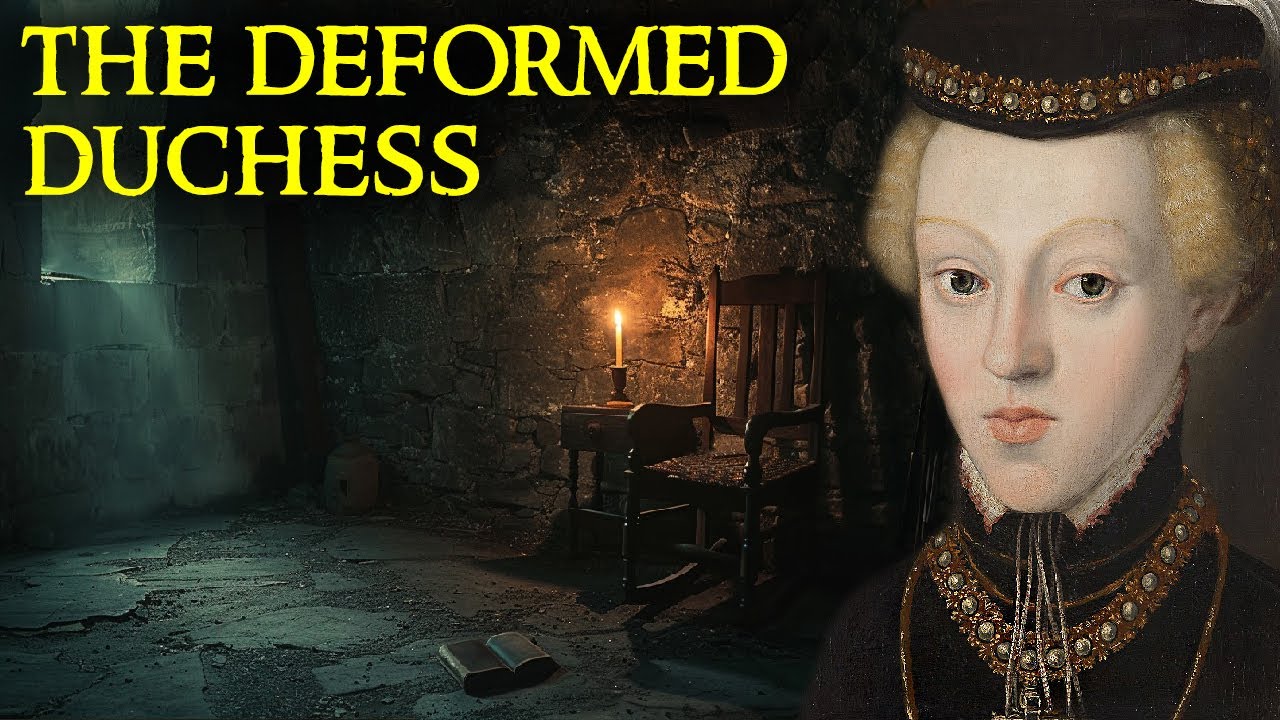
She belonged to one of Europe’s mightiest houses. Her father was Ferdinand I, later to become Holy Roman Emperor. Her mother was Anna of Bohemia and Hungary, whose brother’s death at the Battle of Mohács in 1526 had cleared the way for Habsburg dominion over Hungary, Bohemia, and Croatia. Her uncle was Charles V, sovereign of the Spanish Empire.
Joanna entered a dynasty that held sway over a large part of the continent. Her arrival in the world came at a bitter price. Her mother, already forty-three and weakened by years of childbearing, passed away three days afterward from complications. Joanna’s father, absorbed in the religious wars then convulsing Germany, had scant time to spare for his children.
He entrusted Joanna and several of her siblings to the care of nuns at Innsbruck, where she grew up surrounded by piety and learning. Almost from the beginning, her path was set: she was being prepared for marriage, not for independence. The match with Francesco de’ Medici arose from the shifting politics of mid-sixteenth-century Italy. Cosimo I de’ Medici, Duke of Florence, had reigned for close to four decades and would later assume the title of Grand Duke of Tuscany in 1569.
With the long Italian Wars concluded by the Treaty of Cateau-Cambrésis in 1559, Cosimo looked for fresh alliances to safeguard his family’s future. Talks over the marriage stretched on for years. The project gathered new energy once Joanna’s brother, Maximilian II, ascended as Holy Roman Emperor in 1564. Unlike their father, Maximilian did not enjoy a warm relationship with his Spanish cousin Philip II, and he turned toward Italy in search of new allies.
The union of Joanna and Francesco grew into one of the most politically weighty marriages of the period. The wedding itself was a lavish pageant. Joanna made her way into Italy alongside her sister Barbara, who was to wed Duke Alfonso II of Ferrara at about the same time. Florentine residents thronged the streets in their finest attire.
Works by Giorgio Vasari and other leading artists lined the route for hundreds of meters. Joanna rode beneath twelve lofty arches, each one glorifying victory and divine blessing, until she came to the Basilica di San Lorenzo, which housed the Medici Chapel. There, on December 18, 1565, she met Francesco amid dazzling magnificence. Aristocrats and ambassadors from across Europe packed the city to watch the ceremony.
Yet the wedding’s harmony was an illusion. From the outset, the marriage was riddled with friction. Francesco considered Joanna unattractive and barely bothered to conceal his disdain. He openly mocked what he called her deformities.
Joanna was afflicted with severe scoliosis, a curvature of the spine that had troubled her since childhood and steadily worsened. Her posture deteriorated, walking became an effort, and her step grew uneven. Courtiers gossiped viciously about her hunched back. Her condition had even come up during the marriage negotiations, casting doubt on her capacity to bear children, which counted for everything in the high politics of dynastic unions.
Childbirth further wrecked Joanna’s health. She went through pregnancy after pregnancy, each one harsher than the one before. Her hips and pelvis were distorted by repeated, punishing labor, the consequence of a congenital hip disorder and other grave conditions that made delivery extremely hazardous. In all she bore eight children, but tragedy came close on tragedy’s heels.
Her first daughter, Eleonora, born in February 1567, lived and would eventually marry Vincenzo Gonzaga, one of the last Gonzaga Dukes of Mantua. A son, Don Romolo, born in November 1568, died two weeks afterward. Another daughter, Anna, born on New Year’s Eve 1569, reached her teens but died in 1584. Isabella and Lucrezia, born in 1571 and 1572, both perished in infancy.
Her last children likewise died in childhood or before birth. The single exception was Marie de’ Medici, born on April 26, 1575. Twenty-five years afterward, she became the second wife of King Henry IV of France. She gave birth to King Louis XIII, and through her Joanna became an ancestor of every king of France up to the French Revolution.
Although Joanna was herself a sick and suffering woman, her descendants would reign for centuries throughout Europe. Her marriage, in the meantime, only deteriorated. Francesco was flagrantly unfaithful and hardly tried to hide it. His most conspicuous mistress was Bianca Cappello, an Italian noblewoman from Venice famed for her beauty.
She had wed a Florentine clerk named Pietro Bonaventuri in 1563 and had been at the Florentine court ever since. She and Francesco became lovers in the late 1560s. In 1572, Bianca’s husband was slain in the streets of Florence, an episode possibly arranged by Bianca and Francesco. In April 1574, Cosimo I died at fifty-four.
Francesco rose to Grand Duke of Tuscany, and Joanna became Grand Duchess. Yet the new rank only worsened matters. Francesco wielded his authority to humiliate his wife. He set Bianca up in lavish apartments of her own inside a palace only steps from the ducal household.
Princes of that era commonly kept mistresses, but they generally preserved at least the outward forms of discretion. Francesco made no such pretense. He and Bianca displayed their affection in the open, parading their affair before Florence and before Joanna herself. To the proud Grand Duchess, it was a public shame, a daily reminder of betrayal enacted under the gaze of the whole court.
Francesco still lacked a legitimate male heir, a fact that tormented him. In 1576, Bianca bore him a son, Don Antonio de’ Medici. But Francesco would not acknowledge the boy. Antonio carried his blood, but not his inheritance.
Then, defying every expectation, Joanna gave birth in 1577 to a long-hoped-for son, Grand Prince Philip de’ Medici. For a fleeting moment, the duchy’s future and Joanna’s own precarious position appeared safe. Bianca’s ambitions seemed dashed. But fate had not yet finished with Joanna.
On the morning of April 10, 1578, disaster came to the Palazzo Vecchio. Joanna, pregnant for the eighth time, plunged down a stone staircase inside the Medici residence. The fall was savage. It triggered premature labor, and the infant did not live.
Joanna lingered in torment through the long hours that followed. By the following day, the Grand Duchess was dead, her body destroyed by a ruptured womb. She was thirty-one years old. Whispers of foul play arose at once.
Given Francesco’s well-known philandering and his unconcealed devotion to Bianca, hardly anyone accepted the fall as mere misfortune. Talk raced across Florence that Joanna had been shoved down the stairs, or that poison had done the deed. Yet the reality may have been sadder rather than darker. For years Joanna had been gripped by a worsening scoliosis that bent her spine and robbed her of steadiness, a merciless condition that could easily have brought about the fatal tumble that took her life.
Indignation erupted when, just months after Joanna’s passing, Francesco wed Bianca Cappello in secret. By 1579 he had the audacity to declare her the new Grand Duchess of Tuscany. For plenty of observers, the timing was far too tidy: Bianca’s husband gone, Joanna gone, and now the mistress seated on the throne. Their glory did not last.
In March 1582, Joanna’s sole surviving son, the young Prince Philip, died without warning at the age of four, cutting off Francesco’s line of legitimate heirs. Then, in 1587, calamity came again. Francesco was struck down by a violent illness and died on October 19. Bianca was laid in the grave a single day later.
The paired deaths left Europe reeling and have remained wrapped in enigma ever since. Had they been poisoned? Were they the prey of courtly revenge, perhaps orchestrated by Francesco’s brother Ferdinando, who took the throne as the new Grand Duke? Or was it sickness, malaria maybe, that carried them both off?
Nobody could state it with certainty. Their end brought a bleak conclusion to a chilling run of misfortune, a sequence of deaths that had trailed Joanna, her children, her husband and his lover for more than twenty years.
