In early June of 1872, a saloon owner in Sioux City, Iowa, promised his patrons a Saturday morning spread that defied everything a frontier town was supposed to offer. Lobster salad sat beside oyster soup, deviled ham, and fish with egg sauce. Pickled oysters, salmon, tongue, pickles, lettuce, and radishes filled the counter. The meal was free.
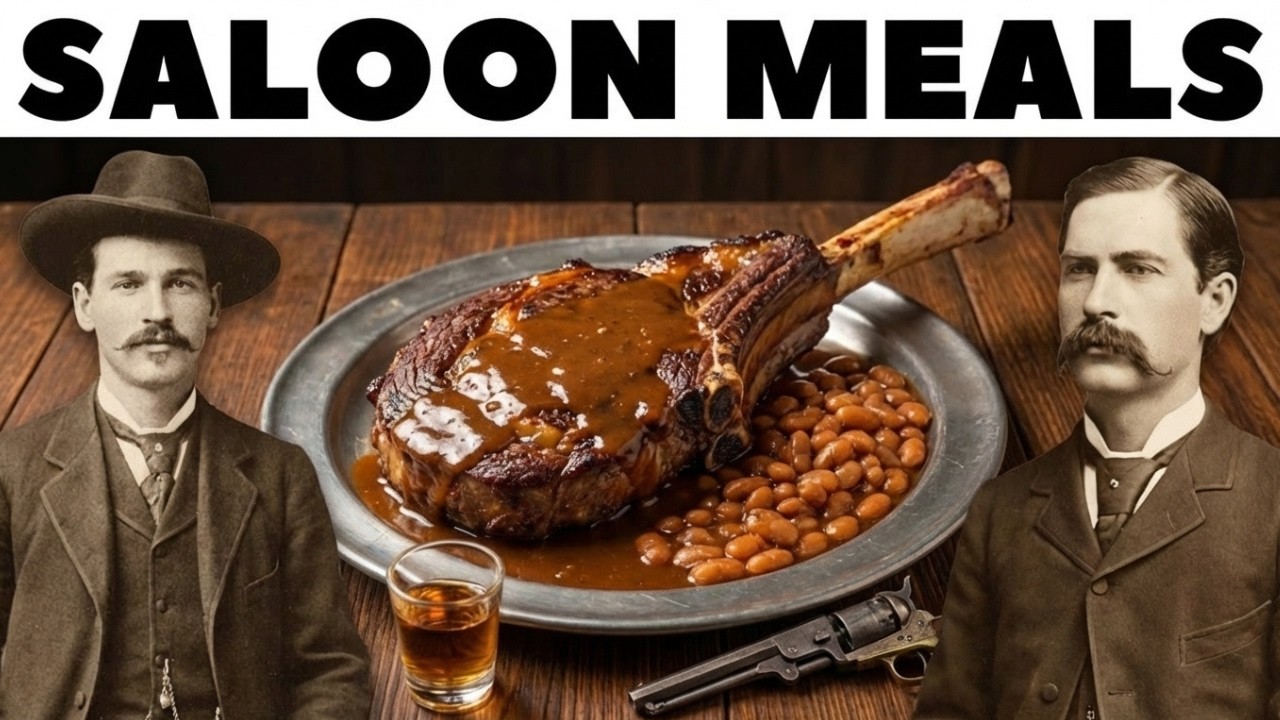
All a man had to do was buy one drink—a julep or a Roman punch, served starting at nine in the morning—and try not to get shot before dessert. The food inside America’s most notorious saloons was wilder than any gunfight Hollywood ever staged. But to understand how a free lobster salad came to be served five hundred miles from the nearest coast in a frontier bar, you have to understand the system that made it possible: the free lunch. Beginning in the 1830s, saloons across the country started offering full meals to anyone who bought a single drink.
In the cheapest dives from the Bowery in New York to the mining camps of Nevada, the simplest version was a plate of soda crackers and a block of sharp yellow cheese, sliced thick and left sitting on the bar under a wire dome meant to keep the flies off. The cheese was intentionally salty. Every bite made you thirstier, and every sip of five-cent beer led to another. Barkeepers called it rat trap cheese because the stuff was cheap enough to bait vermin with.
A block cost a few pennies and lasted days in the heat. Cowboys, miners, and drifters lined up shoulder to shoulder at sticky counters, grabbing crackers with the same unwashed hands that had just been dealing cards or shoveling ore. Nobody complained. In a town where a meal at a proper restaurant cost twenty-five cents and a day’s wage in a silver mine was three dollars, free cheese and crackers were not charity.
They were survival. Just behind the crackers sat a murky glass jar in nearly every dangerous saloon from Deadwood to Dodge City. It held hard-boiled eggs floating in vinegar brine, weeks or sometimes months old, pickling slowly in a solution of salt, vinegar, and whatever spices the barkeep had on hand. Beet juice turned them purple.
Cayenne turned them into punishment. A single egg cost nothing if you were drinking, and they were loaded with enough salt to keep you ordering whiskey all night. In rougher establishments, the jar doubled as a weapon. More than one brawl ended with pickled egg brine splashed across somebody’s face.
The eggs themselves were practically indestructible, preserved well beyond what any modern health inspector would allow. But in a frontier saloon where the nearest doctor was fifty miles away and the bartender kept a shotgun under the counter, food safety was not exactly a priority. In mining camp saloons across California and Colorado, sourdough flapjacks were served morning, noon, and midnight to whoever stumbled through the door. The batter came from wild cultured starters that cooks guarded like gold dust.
Some of those starters had been alive for months, carried in tins strapped to saddlebags across hundreds of miles of open country. The flapjacks were thick, sour, chewy, and fried in enough bacon grease to make them glisten, served with molasses or pork drippings, sometimes canned fruit if the saloon sat near a rail line. Cowboys called them sinkers because they hit your stomach like a stone. That was the point.
One stack could keep a man riding from dawn to dusk. In the rowdiest saloons, a cook working behind a plank counter flipped flapjacks while gunfights erupted ten feet away. The griddle never stopped. No dish defined the American saloon like pork and beans.
Salt pork, a fatty preserved cut cured in heavy brine, could survive months in barrels without refrigeration. Saloon cooks sliced it thick, fried it in its own fat until browned and crisp, then spooned it over beans that had been simmering for hours over a low fire. Pinto beans, navy beans, whatever the supply wagon brought. Molasses, onions, and lard went in if supplies allowed.
If not, you got pork grease and beans, and you were grateful for it. Add a hunk of day-old sourdough or a square of cornbread, and you had the meal that built the West. In Abilene, Dodge City, and every cattle town in between, beans were served by the bowl, the plate, or straight from the cast-iron skillet. For a nickel or nothing at all, a cowboy fresh off a three-month cattle drive could fill his belly before gambling away his wages at the faro table.
In the crowded gaslit saloons of 1880s Chicago, where Irish gangs and German immigrants drank side by side, the free lunch counter groaned under the weight of smoked herring, dark rye bread, liver sausage, strong mustard, and sauerkraut. Chicago spreads were rarely elegant, but they were enormous. Along a four-mile stretch of a single major street in the 1890s, there were 115 saloons offering free lunches, but only five ten-cent restaurants. The breweries bought food in bulk and furnished it to their tied saloons at cost.
The herring was ferociously salty, the mustard hot enough to clear your sinuses, and the rye bread dense as a brick. Working men ate standing up, no tipping required, no ceremony involved. Fights erupted nightly, but the food kept men coming back, and the beer flowed because the herring demanded it. Alongside the sauerkraut and the smoked fish, the cheapest saloons kept vats of peppery hot frankfurters steaming on the bar.
A soiled tablecloth, a bowl of baked beans, forks standing in a glass of water as the only gesture toward sanitation. The franks cost the saloon owner almost nothing, and they moved beer like nothing else. In the roughest joints, where the waiters wore tattoos and could bend a horseshoe with their bare hands, freeloaders who tried to eat without buying a drink risked more than embarrassment. Bouncers were hired specifically to protect the free buffet.
In San Francisco during the Gold Rush aftermath, an 1886 account called the free lunch feed the only landmark of the past, claiming that without the free lunch system, half the idle men in the city would starve. The real capital of the free lunch was New Orleans. There, saloons served spreads that would shame a modern restaurant. Mock turtle soup.
Sliced roast beef weighing nearly forty pounds on a single platter. Buffalo tongue, thinly sliced and highly flavored, laid out alongside dressed salads. By 1875, a New York Times reporter counted thousands of men in New Orleans living entirely on free saloon meals. The price of admission was one drink at fifteen cents.
Punches, cobblers, champagne, and ale all cost the same. The buffalo tongue was a delicacy even in rough establishments, its rich smoky flavor a reminder that the great herds were vanishing from the plains. Men who had hunted bison for a living now ate the last of their tongues at a bar counter, pushing and scrambling to be helped a second time. The reporter noted that a free lunch counter was a great leveler of classes.
Rich and poor stood elbow to elbow, dignity abandoned, reaching for the same plate. Not every free lunch dish was so respectable. Son of a gun stew was the ultimate do-not-ask-what-is-in-it meal of the American frontier, and it was genuinely served in saloons across cattle towns from Dodge City to Abilene. The name was a polite version of what cowboys actually called it.
The stew combined organ meats—tripe, heart, liver, marrow, gut, sweetbreads, and sometimes brain—all simmered in a thick peppery broth with potatoes, onions, and wild herbs. Its origins traced back to trail drives, where cowboys butchered cattle on the move and used every part of the animal out of necessity, not sentiment. In some regions, finishing a full bowl was a rite of passage. A cowboy’s toughness was not measured by his draw, but by whether he could stomach the whole serving.
Cattle towns at the edge of civilization did not have access to prime cuts, but they had guts, fire, and cast iron. For trail-weary men, a hot bowl meant survival. Some delicacies seemed impossible given where they were served. Oysters appeared in dry, dusty mining towns hundreds of miles from any coastline, thanks to new rail lines and canned preservation.
Even remote settlements like Cerro Gordo, California, had access to them. At the Occidental Saloon in Tombstone, Arizona, Sunday dinner featured oysters alongside chicken giblet soup, leg of lamb, fricassee chicken, plum pudding, and custard. Cowboys and miners treated oysters as a luxury, a taste of civilization in the middle of nowhere. Saloons advertised a fried oyster, a clam, or a hard-boiled egg with every drink.
The canned variety survived the long freight wagon journeys. Fresh ones arrived packed in ice, shipped by rail from the coast, and eaten within hours of delivery. The fact that a man could sit in a town where gunfights happened weekly and slurp an oyster told you everything about the contradictions of frontier life. In the most remote outposts, even coffee was a lie.
What passed for coffee was a brew made from brown bread, acorns, dandelion roots, barley, and sometimes even snuff. European visitors recoiled in disgust, but miners, trappers, and fugitives drank it without complaint because the alternative was creek water that might kill you faster than any outlaw’s bullet. The brew was thick, bitter, and faintly medicinal, served in tin cups alongside whatever food the saloon could scrounge. It was the fuel that kept men awake through long poker games and longer nights.
In saloons where the bartender doubled as the town’s only authority figure, that cup of fake coffee was sometimes the only warm thing a man would consume all day. From the saloons of Memphis to the gambling dens of Natchez, biscuits and red eye gravy anchored the southern frontier table. The biscuits were made from lard and flour, heavy enough to stop a bullet, served split open and drowned in gravy made from ham drippings and black coffee. The name came from the red eye of grease that floated in the center of the pan.
A plate cost a nickel in most saloons and could keep a riverboat gambler upright through a twelve-hour card game. In the rough taverns along the Mississippi, where knife fights were more common than handshakes, biscuits and gravy represented the one moment of peace in an otherwise violent evening. The cook would holler that food was ready, and for a few minutes, even the meanest characters at the bar put down their grudges and picked up a fork. The whiskey served in many of the most dangerous saloons was a combination of raw alcohol, burnt sugar, and chewing tobacco.
Barkeepers cut it with turpentine, ammonia, gunpowder, or cayenne. It went by names like tanglefoot, 40 rod, tarantula juice, Taos lightning, red eye, and coffin varnish. Cactus wine was a mix of tequila and peyote tea. Mule skinner blended whiskey with blackberry liquor.
The house rotgut was often a proof, and every salty meal on this list existed for one reason: to keep men drinking this poison as fast as the barkeep could pour it. The food was never charity. It was the oldest trick in American business. Feed them salt, and they will buy your whiskey.
In saloons across Wyoming, Montana, and Colorado, lamb fries and Rocky Mountain oysters were considered a genuine delicacy. For many greenhorns, these were simply animal testicles, slightly seared in a hot pan or roasted in campfire ashes until they popped. They were served on tin plates to men who ate them with relish and washed them down with rotgut. Cowboys and sheep ranchers swore by their flavor, somewhere between sweetbreads and liver, mild and tender when cooked right.
In ranch country saloons, ordering them was an act of belonging. Refusing them marked you as a city man. The dish showed up in some of the most violent establishments in the West, places where the bartender kept a sawed-off shotgun under the bar, and the piano player knew to stop playing when hands went to holsters. In the desert saloons of Arizona, New Mexico, and West Texas, rattlesnake was not a novelty but a genuine food source.
The meat was said to taste like the white meat of chicken, and it was fried, stewed, or jerked, and served alongside beans and cornbread. In places like Tombstone and Tucson, where scorpions crawled across the floor and the temperature topped 110, a rattlesnake killed behind the saloon might end up on a plate within the hour. Some saloon owners kept live snakes in cages as entertainment, betting on which patron would have the nerve to reach inside. The meat itself was lean, mildly flavored, and surprisingly tender.
For men living at the edge of the known world, eating what tried to kill you was not bravado. It was dinner. In the forested saloons of the Pacific Northwest and the mountain towns of Colorado, venison was the default protein. Deer were plentiful, beef was expensive, and a skilled hunter could supply a saloon with fresh game for a share of the bar profits.
The steaks were cut thick and charred quickly over an open flame, served rare with nothing but salt and a splash of whiskey for sauce. In places like Deadwood, South Dakota, where Wild Bill Hickok was shot dead in Saloon Number 10 while holding aces and eights, venison was the last meal many men ate before their luck ran out. The smell of charring meat mixed with cigar smoke and kerosene lamp light—that combination was the authentic perfume of the Old West. In the rough cantinas along the Texas-Mexico border, chili con carne was king.
Chunks of beef stewed with dried chilies, cumin, garlic, and oregano until the mixture turned a deep brick red. No beans, no tomatoes, just meat and fire. San Antonio’s chili queens served it from open-air stalls in the plazas, and the saloons nearby followed suit. A bowl cost a dime, and it burned going down and burned coming back up.
In the border saloons where outlaws crossed between jurisdictions and lawmen stopped at the river, chili was the great equalizer. Bandits and Texas Rangers ate the same recipe, sometimes in the same room, pretending not to recognize each other until the meal was finished. The violence inside these saloons shaped everything about how food was served. At Campbell and Hatch’s billiard parlor and saloon in Tombstone, Morgan Earp was shot and killed while playing pool.
At Saloon Number 10 in Deadwood, Wild Bill Hickok took a bullet to the back of the head during a poker game. His hand, aces and eights, became the dead man’s hand. Bob Ford, the man who killed Jesse James, was shot down in his own tent saloon in Creede, Colorado. John Wesley Hardin was gunned down from behind in an El Paso saloon.
Men ate their dinners with one hand and kept the other near their holster. The food had to be quick. It had to be filling, and it had to be eaten before the next round of trouble walked through those swinging doors. The saloon owner in Sioux City who laid out that 1872 spread was competing in a contest so fierce that owners bankrupted themselves trying to outdo each other’s free lunch offerings.
A lobster salad five hundred miles from the nearest coast, served before noon in a frontier saloon, might be the most American meal ever conceived. Excess, ambition, and absolute disregard for common sense, all on one plate. In the rougher saloons of the cattle trail towns, mutton stew was the working man’s dinner. Cheap, greasy, and filling.
Sheep ranchers were despised by cattlemen, and the range wars between them left dozens dead across Wyoming and Montana. But mutton was cheaper than beef, and a saloon owner who could save a nickel on ingredients could pour another free drink. The stew simmered all day in cast-iron pots, the meat falling apart into potatoes and onions, the broth thick with rendered fat. In saloons where cattlemen and sheep herders drank on opposite sides of the room, ordering mutton was a statement.
Eating it peacefully was an achievement. The most remote saloons in Alaska, the Dakota Territory, and the deep mountain mining camps survived on canned goods. Sardines packed in oil were shelf-stable, protein-rich, and required no cooking. Pilot bread, the rock-hard ship biscuit also known as hardtack, could last years without spoiling.
Together they formed a meal that required nothing but a knife to open the tin and teeth strong enough to crack the bread. In saloons where supply wagons came once a month, if the weather held, this was the only food available between deliveries. Men ate sardines and pilot bread in silence, staring at the same four walls, waiting for spring, or gold, or trouble, whichever came first. In the saloons of the Rocky Mountain mining towns, bear meat showed up on the menu when a hunter brought one in.
The steaks were dark, rich, and strongly flavored, served alongside wild onions and whatever root vegetables could be dug from the frozen ground. Grizzly bear was tougher than black bear. Both required slow cooking or a very hot fire. In places like Leadville, Colorado, where the population exploded from a few hundred to tens of thousands during the silver boom, saloons served whatever walked out of the woods.
The hunter who brought in a bear was treated to free drinks for the night. The rest of the bar ate his kill. It was the frontier economy in its purest form. In the Southwest, dried pale beans earned the sarcastic nickname Arizona strawberries because they were often the only vegetable available for months.
Besides corn and squash, beans were it. Saloons served them boiled, baked, fried, and refried. They appeared at breakfast, lunch, and dinner. They were the foundation of nearly every meal west of the Mississippi River, and cowboys ate them with such frequency that the campfire jokes practically wrote themselves.
A pound of dried beans cost almost nothing. Soaked overnight and simmered the next day, they could feed a dozen men. In the most dangerous saloons, where the cook was often an ex-convict or a wanted man hiding in plain sight, beans were the one thing he could not mess up badly enough to cause a riot. Above all, the free lunch featured salted food.
Pretzels, salted peanuts, potato chips, dill pickles, and smoked fish. The theory was simple, and it was brilliant. A couple of drinks produced appetite. The salty food produced a mighty thirst.
The chain reaction of drinking and nibbling, nibbling and drinking, could go on for hours. Saloon owners understood addiction science a century before anyone gave it a name. In the most violent saloons in America, from the Five Points in New York to the Barbary Coast in San Francisco, that bowl of salted peanuts on the bar generated more profit than the poker table in the back room. The food was never the product.
You were. Judge Roy Bean ran his combination saloon and courtroom in Langtry, Texas, dispensing both whiskey and justice from the same bar. He called himself the law west of the Pecos and held trials between drink orders. The food in his saloon was as rough as his rulings.
Beans, bacon, and whatever a traveling peddler happened to sell from his wagon. A man could be found guilty, sentenced, and fed lunch all without leaving his bar stool. Downieville, California, had a saloon that doubled as the office of the local justice of the peace. In Hays City, Kansas, the first church services were held in Tommy Drum’s saloon.
These were places where food, law, religion, and violence all shared the same roof. From the 1860s onward, food in the remote saloons became grimly standardized. Breakfast was a tin cup of coffee, a slab of salt pork, bread, and syrup. Lunch and dinner were bread and steak.
The steaks were universally overcooked and hard as stone. Travelers described sawing through beef that had been charred beyond recognition, served on tin plates with no seasoning beyond whatever ash had settled on it from the cookfire. The reason was practical. In a frontier saloon, the cook had no thermometer, no timer, and no training.
He had a fire and a skillet. Overcooking killed whatever parasites and bacteria the meat carried. In a world without antibiotics, a well-done steak was not a culinary crime but a medical decision. Men ate it because the alternative was raw meat in a town with no doctor.
Not every saloon was a dirt-floor shack with sawdust soaking up the blood. The Oriental Saloon in Tombstone, Arizona, was a multi-story palace with chandeliers, velvet curtains, and a mirrored bar. Wyatt Earp held a quarter interest in its faro concession. Sunday dinner featured chicken giblet soup, leg of lamb with oysters, fricassee chicken, and desserts like plum pudding and custard.
Champagne was surprisingly common in Wild West saloons. Bottles popped even in remote towns because champagne could not be faked the way whiskey could. The sound of a cork popping meant you were drinking the real thing. In a time when your glass of whiskey might contain turpentine and gunpowder, that mattered.
Even Death Valley had a French restaurant in the 1800s. These high-end meals were served in rooms where professional gamblers like Doc Holliday dealt cards, and the Earp brothers enforced the house rules with revolvers on their hips. The single wildest meal in American saloon history was not one dish. It was the system itself.
Beginning in the 1830s, saloons across the country started offering full meals, sometimes rivaling hotel restaurants, to anyone who bought a single drink. In New Orleans, the tradition reached absurd heights. A reporter in 1875 described a spread of sliced white bread, lettuce salad, oyster soup, potatoes, stewed mutton and tomatoes, and a round of beef weighing nearly forty pounds, all free with one fifteen-cent drink. In Chicago during the 1890s, saloon keepers fed an estimated 60,000 people a day.
During the depression of 1893, the free lunch system fed more hungry people than all the religious, charitable, and municipal agencies combined. Temperance advocates fought to ban it because it kept men drinking. Saloon owners tried to end it because freeloaders ate up their profits. Neither side could kill it.
The free lunch was America’s first social safety net hidden inside its most dangerous institutions. It lasted until Prohibition destroyed the saloons themselves in 1920. The phrase “there is no such thing as a free lunch” was born right there, in those blood-stained, smoke-filled, bullet-riddled rooms where the most dangerous men in American history sat down, ate a meal they did not pay for, and drank until the trouble started again. It was not just food.
It was the taste of a country being built, one dangerous saloon at a time.






