On April 2nd, 1882, a man checked into room 80 of the Glenham Hotel on Fifth Avenue. He sat down at the edge of the bed, raised a Smith & Wesson revolver to his left temple, and pulled the trigger. He was fifty-one years old. He was also the son of the richest man in American history.
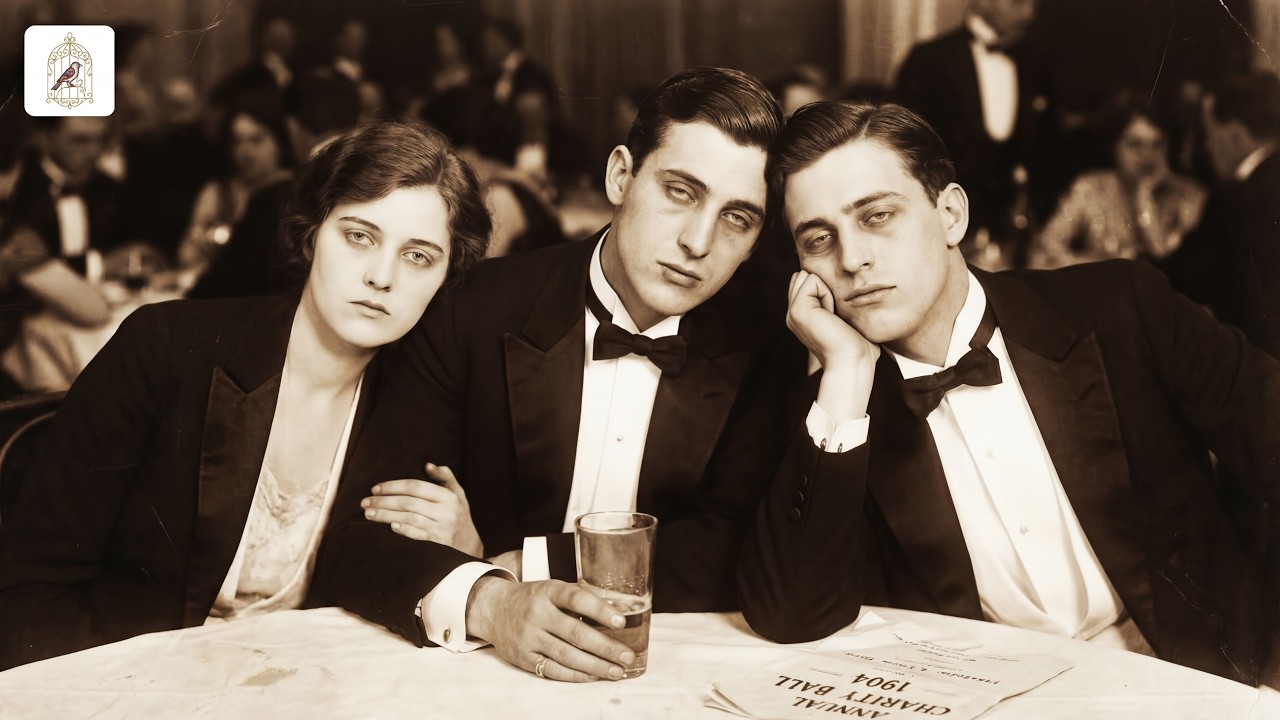
His name was Cornelius Jeremiah Vanderbilt, and by the time he died, his family had spent three decades trying to erase him. He was not the only one. Across the Gilded Age, America’s greatest dynasties produced children they were determined to make disappear. Some were locked behind asylum walls.
Some were buried under false names. One was silenced with an ice pick to the brain. This is what old money did to the children who threatened the brand. In 1877, one hundred million dollars changed hands inside a single family, and every person who did not receive it became a target.
The Commodore was dying. Cornelius Vanderbilt, the man who had clawed his way from a $16 ferry loan on Staten Island to the largest personal fortune in the Western Hemisphere, lay in his bed at 10 Washington Place in Manhattan, and the vultures were already circling. Doctors came and went. Lawyers shuffled papers in the next room.
Outside on the street, newspaper reporters waited for the bulletin that would set the greatest inheritance battle of the century into motion. When Vanderbilt finally died on January 4th, 1877, his estate was valued at roughly 100 million dollars. To understand that number, you must forget modern wealth. One hundred million dollars in 1877 represented between one and a half and two percent of the entire gross national product of the United States.
In today’s terms, that would be somewhere north of 300 billion dollars. No American had ever possessed that much. Andrew Carnegie had not yet built his steel empire. John D.
Rockefeller’s Standard Oil monopoly was still consolidating. The Commodore stood alone at the summit. And Cornelius Vanderbilt left nearly all of it to one son. William Henry Vanderbilt received 95 million dollars.
His brother, Cornelius Jeremiah, received the income from a $200,000 trust. Not the principal, the income, administered by a trustee William controlled. The Commodore’s eight daughters received between 250,000 and 500,000 each. The will was not a distribution.
It was a weapon. It was the old man’s final act of command, a declaration from beyond the grave that said, “I have judged you all, and most of you have been found wanting. ”
But to understand why, you have to understand what these families had become by the 1870s. The Vanderbilts were not a family in any sense that word carries warmth.
They were an enterprise. Their fortune required discipline, public performance, strategic marriage, and above all, control of the narrative. Every Vanderbilt child was an employee of the brand, whether they knew it or not. Their behavior reflected on the stock.
Their marriages were mergers. Their scandals were quarterly losses. The same logic governed every great dynasty of the era. The Astors, whose real estate empire stretched across Manhattan in a grid of tenement houses and grand hotels, treated their family like a holding company.
The eldest capable son inherited. Everyone else was given an allowance and a set of expectations, and God help the child who failed to meet them. The Rockefellers, whose Standard Oil monopoly generated wealth so vast it had to be hidden inside a labyrinth of trusts and shell companies just to avoid the full scrutiny of Congress, built a family culture of secrecy so profound that basic biographical facts were treated as classified information. The Goulds, the Huntingtons, the Kennedys, every one of them ran the same calculus.
The family is the corporation. The children are the assets. And assets that depreciate are written off. The Gilded Age produced staggering numbers that revealed the scale of this world.
By 1890, the top one percent of American families held 51 percent of the nation’s wealth. The 400 families deemed worthy of Mrs. Astor’s ballroom controlled more capital than the bottom 11 million households combined. A single dinner party at Delmonico’s could cost $5,000, the equivalent of a factory worker’s entire annual salary.
A Newport cottage, so-called, might contain 70 rooms, 45,000 square feet of marble floors and gilded ceilings, and a staff of 30 servants who lived in quarters designed to be invisible from the main house. The architect Stanford White charged fees that could have funded a public school for a decade. The champagne flowed at a rate of 500 bottles per party. The excess was not incidental.
It was the point. Wealth existed to be displayed, and display demanded perfection. This was the world that demanded perfection from its children, a world where your bloodline was your brand, your behavior was your balance sheet, and your usefulness to the family was the only metric that mattered. The question was brutally simple.
Could you perform the role assigned to you? Could you marry the right person, manage the trust, avoid scandal, smile for the photographers, and keep the machine running? And if you could not, then the machine had tools for dealing with you. Asylum commitments that required nothing more than a father’s signature and a compliant physician.
Trust instruments that could reduce a hundred million dollar inheritance to a controlled pittance. Social ostracism that could make a person vanish from every guest list, every club roster, every conversation in polite society. And if all else failed, there were walls. Real, physical walls.
Attended by nurses who answered not to the patient, but to the family that paid their salaries. On the same Fifth Avenue where the Astors hosted a thousand guests for dinner, a firstborn son sat behind high walls and was never invited to anything. Consider two images from the same city, in the same decade, in homes streets barely a mile apart. The first, March 26th, 1883.
Alva Vanderbilt opens the doors of her new chateau at 660 West 57th Street for the most lavish costume ball New York has ever witnessed. 1,200 guests stream through the entrance. Alva herself is dressed as a Venetian princess. Her sister-in-law appears as electric light, draped in a gown that literally glows, powered by concealed batteries.
The ballroom overflows with orchids shipped from greenhouses across three states. A quarter of a million dollars has been spent on flowers, costumes, and catering alone. That is roughly 7 and a half million in today’s money, spent on a single party. The purpose of this party is not pleasure.
It is conquest. The Vanderbilts are demanding admission to the old money world of the Astors, and this ball is the battering ram. Every newspaper in the city covers it. The 400 are officially on notice.
New money has arrived, and it has brought more champagne than old money can drink. The second image, a brownstone on 14th Street, quiet, curtains drawn. Inside, a man sits in a room he has occupied for years and will occupy for decades more. He is attended by nurses.
He receives meals on a regular schedule. He does not go out. No one comes to visit him except the lawyers who manage his allowance and the servants who tend to his needs. His name is John Jacob Astor Jr.
He is the firstborn son of John Jacob Astor III, one of the wealthiest men in the country. And he has been effectively imprisoned in this house since roughly his 20s. No costume balls for him. No glowing gowns.
No orchids. These two images are the truth of the Gilded Age compressed into a single frame. On one side, the spectacle. On the other, the locked door.
And the families responsible for both understood with perfect clarity that the spectacle required the locked door. You could not project an image of dynastic perfection if the imperfect were visible. The ballroom and the brownstone were not contradictions. They were two halves of the same system.
Cornelius Jeremiah Vanderbilt was the Commodore’s second son, and from the moment it became clear that he suffered from epilepsy, his father began the process of elimination. Not murder, nothing so clean. The Commodore simply decided that Corneil, as the family called him, was defective merchandise. The seizures were read not as a medical condition, but as a moral failing.
In the 19th century, epilepsy carried a stigma closer to demonic possession than to neurology. A man who fell to the floor in convulsions was not sick. He was weak. He was tainted.
He was unfit. And in the logic of the dynasty, a son who was unfit was worse than no son at all. He was a walking advertisement for bad blood. The Commodore had Corneil committed to the Bloomingdale Asylum for the first time in the early 1860s.
The commitment process required nothing more than a physician’s certificate and a judge’s order. In practice, both were formalities when the petitioner was the richest man in America. Corneil was locked away. Not because he was dangerous.
Not because he was delusional. Because he was embarrassing. Meanwhile, John Jacob Astor Jr. lived out an even quieter form of destruction.
The Astor family’s approach was different from the Vanderbilts in method, but identical in logic. Where the Commodore used asylums and punitive trusts, the Astors used architecture. They simply built a life of permanent comfortable confinement. Astor Jr.
was provided with a house, attendants, and an allowance. He was also provided with an absolute absence of freedom, agency, or identity. He would live to be 78 years old. He would never marry.
Never hold a position. Never appear in the social columns. His entire adult existence was spent inside the perimeter his family drew for him, blocks from where his relatives conducted business, hosted parties, and built hotels that bore the Astor name. What did these families fear more than cruelty?
The answer is exposure. They feared the wrong child saying the wrong thing at the wrong dinner party. They feared a seizure in a ballroom. They feared the newspapers, those great equalizers of the Gilded Age, which could elevate a family to glory in one edition and destroy it in the next.
They feared above all that the public image of dynastic competence and genetic superiority would be revealed for what it was, a performance, a fiction maintained at enormous cost. The cost was paid by the children who could not perform. A father did not need permission to lock away his son, and no one with power had any reason to ask why. The system that enabled dynastic erasure rested on three institutional pillars.
Each was legal. Each was respectable. Each functioned, when operated by wealth, as a machine for making human beings disappear. The first pillar was the law itself.
In the 19th century, the doctrine of coverture and its extensions granted the male head of household near absolute authority over the persons and property of his dependents. A wife could not own property in most states until the Married Women’s Property Acts began to pass slowly and unevenly after 1848. Children were, in the eyes of the law, essentially possessions. A father’s decision to institutionalize a child was a private family matter, and the courts deferred to patriarchal authority with remarkable consistency.
This meant that when Cornelius Vanderbilt decided his son Corneil was insane, the legal system did not challenge him. It assisted him. The process of civil commitment required a petition, typically from a family member, a certificate from one or two physicians, and a hearing before a judge. In practice, the hearing was a rubber stamp.
Wealthy families retained physicians who understood what was expected of them. A doctor who contradicted the Commodore’s wishes was a doctor who lost the Commodore’s patronage, and with it the patronage of every family in the Commodore’s circle. Judges who depended on the goodwill of the elite were not inclined to rule against them. And the patient, the person whose freedom hung in the balance, had no guaranteed right to counsel, no right to an independent medical examination, and no meaningful right of appeal.
The second pillar was the asylum system itself. By the mid-19th century, America had built a network of private and public institutions that could absorb inconvenient people with quiet efficiency. The Bloomingdale Asylum, where Corneil was sent, occupied a campus in Upper Manhattan that would later become the site of Columbia University. It was considered progressive.
It had gardens. It had airing courts. It also had locked wards. The asylum’s population included the genuinely mentally ill.
It also included the merely inconvenient. Wives whose husbands wanted freedom. Sons whose fathers wanted silence. Relatives whose existence threatened an inheritance or a reputation.
The institution operated on a simple economic model. Wealthy families paid premium rates for private patients, and the asylum had every financial incentive to keep those patients confined for exactly as long as the family wished. There was no external review board. No required timeline for reassessment.
No independent advocate. The door locked from the outside, and the key belonged to whoever was paying the bill. Between 1850 and 1900, American asylum populations grew from roughly 15,000 to over 150,000 patients. The rate of confinement increased faster than the population, a fact that reformers like Dorothea Dix had warned about for decades.
The system was not designed to heal. It was designed to contain. And for families with the resources to pay premium rates, it was designed to conceal. The third pillar was the trust.
In the hands of a skilled lawyer, the trust was not merely a financial instrument. It was a weapon. By placing assets in trust, a patriarch could control the behavior of his heirs across generations. He could specify conditions for distributions.
Marry the right person or forfeit your share. Maintain the family residence or lose your income. Behave in a manner consistent with the family’s reputation or watch the money stop. He could appoint trustees loyal to himself, men who would enforce his wishes decades after his death.
And he could reduce a child’s share to a trickle, just enough to prevent starvation, but not enough to enable independence, rebellion, or escape. The Commodore’s treatment of Corneil deployed all three pillars in concert. The law gave him the authority to commit. The asylum gave him the facility.
The trust gave him the mechanism to ensure that even after his own death, Corneil would remain financially dependent and socially powerless. When the will was read, Corneil’s share was designed not to sustain, but to humiliate. The income from $200,000 in a world where his brother controlled 95 million. The ratio was a sentence.
It said, “You are nothing. ”
The asylum director looked at Cornelius Jeremiah Vanderbilt and told him plainly that he was no more insane than the doctor himself. This is the detail that collapses the entire fiction. When Corneil was examined at Bloomingdale, at least one physician looked at the man sitting before him and concluded, on the record, that this patient did not belong in an asylum.
The epilepsy was real. The seizures were documented. But insanity? No.
Corneil was lucid, articulate, self-aware, and painfully conscious of what was being done to him. His confinement was not medical. It was strategic. The asylum was being used not as a hospital, but as a warehouse.
The product being stored was a human being the family found inconvenient. The full story of Cornelius Jeremiah Vanderbilt’s destruction is not a single act. It is a campaign, decades long, methodical, grinding. Each turn of the wheel removed another layer of the man beneath.
Corneil was born in 1831, the second son of the Commodore and his first wife, Sophia Johnson. From the beginning, he occupied an impossible position. His older brother, William Henry, was the heir, groomed from boyhood to manage the railroad empire. William was cautious, competent, obedient, everything the Commodore valued.
Corneil was the spare, and spares in dynastic families are tolerated only so long as they remain invisible and compliant. Corneil was neither. He developed epilepsy in his youth. The Commodore, a man who had built his entire fortune on the principle that sentimentality was for fools and weakness was to be crushed, looked at his second son and made his calculation.
Corneil was not an heir. He was a liability. And liabilities were to be eliminated from the balance sheet. The first commitment to Bloomingdale came in the early 1860s.
Corneil was confined. He was examined by multiple physicians. At least one found him sane. He was eventually released, but the damage was permanent.
The commitment had branded him. In the tight gossiping world of New York social elite, an asylum stay was an indelible mark. It followed you into every drawing room. It whispered behind your back at every dinner.
It meant that every future business proposal, every marriage prospect, every social invitation would be shadowed by the question, “Is he stable? ”
He was committed a second time, released again. Each cycle stripped another layer of standing, of dignity, of the capacity to function as an independent person in society. The asylum was not treating Corneil.
It was processing him. And each time he emerged, he was a little more damaged, a little more isolated, a little closer to the margins. Then came exile. The Commodore sent Corneil to a farm in Hartford, Connecticut, a polite form of banishment that removed him from the city and from the family’s operations.
The farm was managed by a man named George Terry, who became, over time, something approaching a genuine friend. Perhaps the only one Corneil ever had. In Hartford, Corneil tried to build something. He attempted business ventures that failed.
He did not have his father’s genius for commerce or his brother’s patience for administration. He gambled badly and compulsively, accumulating debts that his father refused to pay. His brother William sometimes covered the debts, grudgingly and always with conditions attached. Each bailout came with a fresh layer of contempt and a tighter set of financial controls.
He married a woman named Ellen Williams, and for a brief period, there was something resembling stability. But Ellen died in 1872, and with her death, the last tether holding Corneil to ordinary human life snapped clean. The gambling worsened. The debts mounted beyond anyone’s willingness to cover them.
Corneil borrowed against his expectations, against the Vanderbilt name, against anything he could leverage. He was arrested for fraud. He was sued by creditors. Each scandal fed the family’s narrative that he was unfit, that the asylum commitments had been justified, that the punitive inheritance was not cruelty, but prudence.
Then the Commodore died, and the will was read. $100 million. $95 million to William. The income from $200,000 to Corneil.
The ratio was not an accident. It was a sentence passed by a dead man on a living one, and it could not be appealed. Corneil understood exactly what had been done. His letters from this period, the few that survived, reveal a man who saw the architecture of his own destruction with devastating clarity.
He did not rage blindly. He raged knowingly. And that, perhaps, was the worst of it. To be ground down is terrible.
To understand the mechanism that is grinding you, to see every gear and every lever, and to know that you cannot reach any of them, is something worse. In his final years, writing to George Terry, Corneil put the whole thing into words that carry more raw need than anything else in the Vanderbilt archive. “Oh, George, you must not desert me now. ” One sentence.
One plea. The voice of a man who had been abandoned by his father, his brother, the legal system, and the medical system, and who was begging one person, one friend, not to complete the abandonment. William Vanderbilt did not need to win the will contest so much as he needed certain women to vanish from American soil. When Corneil and two of the Commodore’s daughters filed their challenge to the will in 1877, they cracked open a door the Vanderbilt family had spent decades keeping shut.
The will contest of 1877 to 1879 was the first great dynastic trial in American history, and it dragged every secret the family possessed into a public courtroom packed with reporters. The contestants argued that the Commodore had been of unsound mind and that he had been unduly influenced by his second wife, Frank Armstrong Crawford, and by a circle of spiritualists and clairvoyants who had gained extraordinary access to the aging patriarch. The Commodore, it turned out, had spent his final years conducting seances in his parlor. He believed he could communicate with the dead.
He consulted magnetic healers and spirit mediums. Witnesses took the stand and described the richest man in America sitting in a darkened room holding hands with strangers asking questions of ghosts. But the truly dangerous witnesses were not the spiritualists. They were the Claflin sisters.
Victoria Woodhull had run for president of the United States in 1872, the first woman to do so. She had publicly advocated for free love. She had published an exposé of Henry Ward Beecher’s extramarital affair in her newspaper, causing the greatest scandal in American religious life. Her sister, Tennessee Claflin, had opened a brokerage firm on Wall Street with the Commodore’s financial backing.
The newspapers had made a feast of the image: America’s richest man bankrolling two radical feminists who advocated the overthrow of marriage as an institution. If the will contest went to a full trial, the Claflin sisters would be called to testify about the nature of their relationship with the Commodore. Every detail would be printed. Every innuendo would become headline news.
The Vanderbilt name, which William was trying to elevate into the permanent aristocracy of American life, would be dragged through the same mud as every salacious divorce trial and fraud case on the court calendar. William could not allow that. The fortune was at stake, certainly, but the reputation was worth more than any dollar amount. A dynasty survives or falls on its name, and a name associated with seances, spiritualists, and scandalous women was a name in mortal danger.
So William deployed the weapon that dynasties always reach for when secrecy fails: cash. The Claflin sisters received over $100,000. Some historical accounts place the figure considerably higher. The payment was not a legal settlement.
It was a purchase. William was buying their absence from the courtroom, and more importantly, their absence from the country. The sisters left the United States for England, where they married into minor aristocracy and reinvented themselves so thoroughly that their American adventures became, for their new social circles, ancient and irrelevant history. Meanwhile, the trial continued without its most explosive witnesses.
The testimony still produced revelations. The Commodore’s personal physician described his patient’s mental state in terms that cut both ways: sharp enough to run a railroad empire at 80, perhaps confused enough in private moments to be manipulated by the people closest to him. Spiritualists took the stand and described their sessions with the old man. The public consumed every detail.
The newspapers printed transcripts that sold out editions. But in the end, the will held. The judge ruled that the Commodore had been of sound mind and that the distribution of his estate, however unequal, was within his legal rights. Cornelius’s challenge failed.
His sisters received modest increases and signed away their claims. The principle was carved into legal precedent. A patriarch could distribute his fortune however he chose, and the courts would not overrule him, no matter how punitive the result, no matter how clear the cruelty. The trial itself lasted nearly two years.
It consumed more than 2,000 pages of testimony. It called dozens of witnesses. It generated legal fees that ran into the hundreds of thousands of dollars. And at the center of it, driving the entire machine, was the simple question of whether one old man’s hatred for his own son constituted a legally recognizable form of undue influence, or whether it was simply a father’s right to judge his children and distribute his wealth accordingly.
The judge chose the latter. The law sided with the patriarch as it had always sided with patriarchs, and the precedent it set would echo through inheritance law for decades. Wealth was property. Property was private.
And the private decisions of a wealthy man about who deserved his money were not subject to judicial second-guessing, no matter how cruel those decisions appeared to the outside world. For Cornelius, the failure was total. He had spent his last reserves of credibility and hope on the contest. When it collapsed, he had nothing left.
The debts continued. The gambling continued. The social exile deepened. He had exposed the family secrets in open court and lost, which meant he now bore the stigma of disloyalty on top of every other stigma he carried.
The spiral tightened one final turn. On April 2nd, 1882, Cornelius Jeremiah Vanderbilt walked into the Glenham Hotel on Fifth Avenue. He was 51. He was broke.
He was alone. He had been abandoned by every person and every institution that was supposed to care for him. He sat on the edge of the bed in room 80, raised a Smith & Wesson revolver to his left temple, and fired. The family buried him quickly and quietly.
William reportedly paid the expenses and said little. The newspapers noted the irony and moved on within the week. Within a year, the name Cornelius Jeremiah Vanderbilt had largely disappeared from public conversation. The dynasty’s first confirmed kill by indifference was complete.
The liability had been eliminated, not by a single blow, but by a system of pressures applied over 30 years until the man simply gave way. The Vanderbilts had demonstrated the model. Other dynasties would refine it. And the refinements would be worse.
For nearly a decade, George J. Gould arrived at Manursing Island by yacht every weekend, and his legitimate children had a name for the family he visited there. They called them the bastards. George J.
Gould was the eldest son of Jay Gould, the railroad baron, the most hated man on Wall Street, the speculator who had attempted to corner the gold market and triggered the Black Friday panic of 1869. Jay Gould had died in 1892, leaving an estate of roughly $77 million. George inherited the largest share, along with the burden of managing the family’s railroad interests. He married Edith Kingdon, an actress of considerable beauty and fierce social ambition.
Together, they built Georgian Court, a palace in Lakewood, New Jersey that sprawled across 200 acres. The estate had its own casino, its own power plant, a sunken Italian garden modeled on one at Versailles, tennis courts, a private lake, and a staff that numbered in the dozens. The cost of construction and maintenance ran into the millions. But George also maintained a second family.
Her name was Guinevere Sinclair. She was younger than Edith, strikingly attractive, and she lived on Manursing Island in Rye, New York, in a house George provided and visited regularly. Between roughly 1907 and 1914, she bore him three children: Guinevere, George, and Jane. George visited by yacht.
He came every weekend or nearly so, arriving at the pier on Manursing Island with the regularity of a commuter. The arrangement was an open secret within the household and among the family’s inner circle, but invisible to the press and to polite society. The legitimate Gould children knew. They knew the address.
They knew the names. Meanwhile, Edith Kingdon Gould was declining. She had gained weight dramatically. Her health was deteriorating.
Then, on November 13th, 1921, she was found dead on the golf course at Georgian Court. The official cause was heart failure. But the detail that seared itself into every newspaper account was the rubber suit. Edith had been wearing a full-body rubber garment beneath her clothing, an extreme and dangerous weight reduction device that, combined with vigorous physical exercise on the golf course, had almost certainly triggered the cardiac event that killed her.
The rubber suit is one of those details that collapses an entire life into a single image. Here was a woman married to one of the wealthiest men in America, living in a 200-acre palace surrounded by every material comfort money could buy. And she died alone on a golf course, wrapped in rubber like a package, trying desperately to sweat herself thin enough to hold the attention of a husband who was already gone every weekend to another woman’s bed. Six months after Edith’s death, George married Guinevere Sinclair.
The wedding was quiet. The newspapers were not. When the marriage certificate appeared on the front pages of the New York papers, it included the names and ages of three children, and the arithmetic was damning. These children had been born years before Edith’s death.
The double life was exposed in a single document. What followed was legal war. When George died in 1923, just two years after Edith, his will attempted to provide for the Sinclair children alongside his legitimate heirs. The legitimate Goulds, led by Jay Gould II, contested the provisions with the full weight of the family’s legal resources.
The case ascended through the courts. In 1925, the Supreme Court of New York delivered its ruling. The Sinclair children were declared to have no right, title, or interest in Jay Gould’s original estate. They received approximately $200,000 each in settlement.
The legitimate heirs retained tens of millions. $200,000 versus tens of millions. That ratio is the market price of illegitimacy expressed in the cleanest possible arithmetic. The court did not merely reduce the Sinclair children’s inheritance.
It erased their lineage. They were Goulds by blood and strangers by law. The Sinclair children grew up in a shadow world. They were comfortable by ordinary standards.
$200,000 in 1925 was not poverty. But they were exiled absolutely from the dynasty whose blood ran in their veins. They bore the Gould resemblance and could claim none of the Gould privileges. They attended no family gatherings.
They inherited no properties. They were not mentioned in the society columns. The legitimate Goulds closed ranks with the finality of a fortress gate, and the Sinclair children were left standing outside, looking at a name they could not use and a fortune they could not touch. Georgian Court, meanwhile, survived its builder.
The palace George had constructed for Edith, the wife who died in a rubber suit on a golf course while her husband sailed every weekend to another woman, eventually became a university campus. Students walk its grounds today. They study in rooms that were once ballrooms. They eat lunches in spaces designed to impress the wealthiest families in America.
The irony is architectural. A monument to dynastic vanity now serves young people who could never have afforded an invitation to one of George Gould’s dinner parties. The Gould case escalated the Vanderbilt model. Where the Commodore had used a punitive trust to destroy one son financially, the Goulds had used the legal system to declare three children legally nonexistent as members of the dynasty.
The mechanisms had evolved from trust to courthouse, from financial punishment to legal annihilation. But the Goulds had only advanced the method from money to law. Other families would advance it further, from law to walls, from walls to something far more literal and far more permanent. John Jacob Astor Jr.
was the eldest son of the richest man in America, and he spent his entire adult life in a single house he was never permitted to leave. Think about what 50 years means. Not as a number. As a life.
Fifty years is the span from a young man’s prime to an old man’s death. It is longer than most careers. Longer than most marriages. It is the distance from ambition to memory, from strength to frailty, measured not in events, but in the slow turning of days that are all the same.
John Jacob Astor Jr. spent more than 50 of those days multiplied by 365 inside the walls of a brownstone on 14th Street in Manhattan. Attended by nurses. Visited by lawyers.
Seen by almost no one else. He was born around 1822, the eldest son of John Jacob Astor III. By the rules of primogeniture that the Astors observed with quasi-aristocratic rigor, he should have inherited the empire. The Astor fortune, built by the first John Jacob on fur trading and consolidated by his descendants into the largest real estate portfolio in New York City, was among the most stable and vast in the nation.
Astor properties covered blocks of Manhattan. The rents flowed in like tides. The eldest son should have commanded it all. But something was wrong.
The historical record is deliberately vague. This vagueness is not an accident of time. It is the final product of the family’s campaign. Astor Jr.
may have had an intellectual disability. He may have suffered from a mental illness that manifested in his youth. He may have been, in the terminology the family would never have used publicly, simply different. The Astors never said.
They ensured that no one else could say, either. What is certain is that John Jacob Astor III made his decision. His firstborn would not inherit. His second son, William Waldorf Astor, would be groomed for the role.
And the firstborn would be removed. Not to an asylum. The Astors were more refined than that. There would be no public commitment.
No physician’s certificate on file. No legal proceeding that a journalist might find. The Astors simply provided their son with a house and a staff of keepers and made certain he never left. Consider the mechanics.
There was no lock on the front door in any crude sense. There did not need to be. The nurses were paid by the family. The lawyers were retained by the family.
The allowance was controlled by the family. Every person in Astor Jr. ’s life answered to the dynasty, not to the man. He was surrounded every hour of every day by employees of the enterprise that had decided he should not exist in public.
And public was the keyword. Astor Jr. was not mistreated in any way that would have satisfied a legal definition of abuse. He was fed.
He was housed. He was clothed. He was given medical attention when he needed it. The brownstone on 14th Street was comfortable.
But comfort without freedom is not kindness. It is the most sophisticated form of imprisonment available to those who can afford to make a cage look like a home. He died in 1900 at approximately 78 years of age. He had been confined for more than 50 years.
He never married, never worked, never appeared in society, never traveled. He left no letters that have entered the public record. No memoirs. No interviews.
No surviving record of his own voice or his own thoughts. That silence is the final act. When a human being lives for nearly eight decades and leaves no trace of an inner life, the family has achieved something beyond concealment. It has achieved obliteration.
John Jacob Astor Jr. existed as a body in a room. The person inside, the thoughts, the feelings, the reactions to five decades of identical days, was never recorded and therefore, in every way that history measures existence, never existed. Most Astor biographies give him a sentence.
Some give him less. The great histories of the family discuss the real estate deals, the social wars between Caroline and Charlotte, the building of the Waldorf Astoria, the sinking of the Titanic. They do not discuss the eldest son on 14th Street. The erasure is so complete that his absence from the record has itself become invisible.
But the Astors operated within the limits of physical space. They confined a body. Other families would go further. They would confine identity itself.
Arabella Huntington lied about her name, her age, her birthplace, her marriage, and the father of her only child. And she made every lie stick for the rest of her life. Arabella Duval Yarrington was born sometime between 1850 and 1852 in Richmond, Virginia. The exact year is uncertain, and the uncertainty is by design.
She grew up in Shockoe Bottom, one of the poorest neighborhoods in a city still devastated by the Civil War. The streets were unpaved. The houses were narrow. The air smelled of the river and the tobacco warehouses.
Some accounts suggest her mother ran a boardinghouse. Other accounts, less charitable, suggest the boardinghouse offered services beyond room and board. What is certain is that Arabella possessed extraordinary beauty, sharp intelligence, and a survival instinct that would have served her well on a battlefield. She left Richmond.
She traveled to New York. She acquired a man named John Archer Worsham, whom she presented as her husband, though evidence of a legal marriage ceremony has never been conclusively established. When Worsham departed her life, she presented herself as a widow. Young, beautiful, tragically alone, and available.
She caught the attention of Collis Potter Huntington. Collis was one of the Big Four, the men who built the Central Pacific Railroad and stitched the continent together with iron and ambition. He was powerful. He was wealthy.
He was also already married. His affair with Arabella was conducted with the discretion that money buys and propriety demands. And at some point in the 1870s, Arabella bore a son. She named him Archer.
Archer Milton Huntington. The official story: his father was the departed Worsham. The unofficial truth, visible to anyone who looked at the child’s face: he was the son of Collis Huntington. The resemblance was, by every account, startling.
The jaw, the eyes, the carriage. Archer looked like Collis the way a mirror reflects a face. But Arabella maintained the Worsham fiction with an iron will that never cracked. And Collis supported it.
When his first wife died and he married Arabella in 1884, Collis formally adopted Archer. The adoption was a legal masterwork. Collis adopted his own biological son, a maneuver that simultaneously gave the boy legitimacy and buried the truth of his conception under a layer of legal paper so thick that casual inquiry could not penetrate it. And Arabella did not stop with Archer’s origins.
She rebuilt her entire life from the foundation up. She moved her birth year forward by as much as five years, making herself perpetually younger than she was. She claimed Alabama as her birthplace, erasing Virginia and Shockoe Bottom entirely. She destroyed letters.
She burned papers. She instructed servants to discard any correspondence that might connect the great Mrs. Huntington, art collector, patron of culture, one of the wealthiest women in the world, to the girl from the boardinghouse on the wrong side of Richmond. The destruction was systematic and lifelong.
Arabella maintained such absolute control over her personal archive that when she died in 1924, the documentary record of her early life was virtually nonexistent. Historians who have attempted to reconstruct her biography have found gaps where entire decades should be. She did not merely hide inconvenient facts. She torched the evidence with the thoroughness of a general destroying maps before a retreat.
The human cost of this reinvention was measured in distance. Distance from her own past. Distance from her own family. Distance, ultimately, from her own son.
When Henry Huntington, Collis’s nephew and Arabella’s second husband, wrote to Archer after Arabella’s death to ask a simple question — “What was your mother’s real date of birth? ” — Archer could not answer. His mother had concealed her birthday from her own child. She had rebuilt reality so completely that even the people who loved her most could not find the original beneath the revision.
Arabella’s case represents a different form of dynastic erasure. In the Vanderbilt and Astor stories, the family erased the child. In the Huntington story, the mother erased herself. Arabella understood, with the instinct of someone who had survived poverty and scandal, that her value to the Huntington empire depended on the total suppression of who she had been.
A woman from Shockoe Bottom who had born an illegitimate child to a married railroad baron could not be the matriarch of a fortune. So she built a new woman and killed the old one. The dynasty’s logic had claimed another life. But this time, the victim had wielded the blade herself.
John D. Rockefeller became the richest man in the world. And the first thing he purchased with that wealth was the disappearance of his own half-sisters. The official Rockefeller origin story, polished and distributed for more than a century by publicists, biographers, and the family itself, goes like this.
John Davison Rockefeller was born in 1839 in Richford, New York. His father, William Avery Rockefeller, was a traveling salesman. His mother, Eliza Davison, was a devout Baptist. Through prayer, discipline, and extraordinary commercial talent, young John built Standard Oil into the greatest industrial monopoly the world had ever seen.
He became the first American billionaire. His fortune peaked at roughly $900 million, a sum representing more than one percent of the nation’s entire GDP. He gave away $540 million in his lifetime, funding the University of Chicago, the Rockefeller Institute for Medical Research, and a philanthropic infrastructure that reshaped American public life. The story leaves out the father.
William Avery Rockefeller, known universally as Devil Bill, was one of the most extraordinary con men in 19th century America. He traveled the countryside posing as a deaf-mute herbal doctor, selling patent medicines he brewed himself, performing card tricks, and seducing women in every town. He maintained two families under two names. He was an accused rapist, formally charged in 1849 in connection with an attack on a household worker.
He abandoned his legitimate family for years at a stretch, reappearing when he chose and vanishing when it suited him. And he had a second family. Devil Bill maintained a housekeeper named Nancy Brown. With her, he fathered at least two daughters.
The details are deliberately obscured. The children were born sometime in the 1850s or 1860s. Their given names do not appear with certainty in standard Rockefeller genealogies. Their lives, fates, and identities were treated by the Rockefeller family as radioactive material to be contained and eliminated.
John D. Rockefeller’s campaign to bury his father’s past was arguably the most sustained act of biographical warfare in American history. As Standard Oil grew and John D. ’s wealth made him a public figure of global significance, the risk that Devil Bill’s double life would surface grew proportionally.
A bigamist father, illegitimate half-sisters, a rape charge. Any one of these facts could have devastated the image the Rockefellers had constructed: the pious Baptist family, the Christian capitalists, the clean American dynasty. So John D. deployed his resources.
He employed investigators to track Devil Bill’s movements and his second identity. For decades, William Avery Rockefeller had been living in parts of the country under the name William Livingston. A fiction so thoroughgoing that he had married his second wife, Margaret Allen, under that name. John D.
ensured the Livingston identity stayed hidden. He paid for silence wherever silence could be bought. And he made absolutely certain that Nancy Brown’s daughters never surfaced in any context that could be connected to the Rockefeller name. The suppression worked.
It worked so thoroughly that even Ida Tarbell, the journalist whose 1904 investigation of Standard Oil remains one of the great works of American muckraking, could only partially penetrate the veil. Tarbell exposed Devil Bill’s bigamy and his con artistry. She documented the double life. But she could not fully identify or locate the illegitimate children, because the Rockefeller erasure had been so complete that the evidence had simply ceased to exist in any accessible form.
Consider what this means. The Rockefeller half-sisters, blood relatives of the richest man on the planet, have no known biographies, no confirmed photographs, no surviving letters, no memoirs. No descendants have publicly claimed the connection with any documented proof. They were women who were born, who presumably lived, who ate meals and slept in beds, and experienced whatever joys and sorrows a human life produces.
And their entire existence was scrubbed from the record by the wealth and determination of one family. This is the most total form of erasure in this story. The Vanderbilts destroyed Cornelius’s spirit, but could not prevent his name from appearing in court transcripts and newspaper columns. The Astors confined their son, but left traces in genealogical records.
The Goulds lost their secrecy when a marriage certificate hit the front page. Even Arabella Huntington, for all her lifelong concealment, left enough fragments for historians to assemble a partial portrait. The Rockefeller daughters left nothing. They are empty spaces in the archive, silhouettes, holes in the record shaped exactly like human beings.
The family did not merely hide them. It achieved something more absolute: the retroactive deletion of their existence from the historical record. They were not lost. They were erased.
The Standard Oil Trust, at its height, refined over 90 percent of the oil in the United States. It employed tens of thousands. It generated profits measured in tens of millions per year. The fortune it produced funded universities, medical research, and a philanthropic empire whose effects are still felt today.
And the foundation stone of that empire was a family mythology cleansed of every inconvenient truth. The Rockefeller daughters paid for that cleansing. The price was not their money. It was not their name.
It was their existence. There was one more step to take, one final escalation. From financial control to legal exclusion to physical confinement to total biographical deletion, the pattern had climbed steadily toward an end point that none of these earlier cases quite reached. What came next would complete it.
Not the erasure of a name, not the erasure of a history, the erasure of a mind. Joseph Kennedy arranged the surgery without telling his wife. And when it was over, his 23-year-old daughter had the mental capacity of a two-year-old child. In November of 1941, Rosemary Kennedy was 23 years old.
She was the third child and eldest daughter of Joseph and Rose Kennedy, born into a family that was accelerating toward the highest levels of American political power. Joe Jr. was being groomed for the presidency. Jack would follow.
Bobby, Teddy. The Kennedy machine was not a family. It was a campaign organization in permanent operation, and every member was expected to serve the mission. Rosemary could not serve.
She had been born with an intellectual disability, possibly caused by oxygen deprivation during a catastrophic delivery. The attending doctor had been late. A nurse, by some accounts, had held the infant in the birth canal to delay the birth until the physician arrived. Whether this caused or contributed to Rosemary’s condition is debated.
What is not debated is the result. She struggled in school. She could not keep pace with her siblings. And she wrote in her diary with a teenager’s earnest frustration about parties she attended and boys she liked.
Entries that reveal a young woman who was aware of her limitations and pained by them, but who was also capable of joy, humor, connection, and love. But Rosemary was becoming, in her father’s calculus, a problem. In her late teens and early twenties, her behavior grew more volatile. She had mood swings.
She became agitated. She occasionally wandered away from home. And she had begun to show interest in men, a development that terrified Joseph Kennedy for reasons that had everything to do with the dynasty’s image and nothing to do with his daughter’s happiness or safety. Joe Kennedy was building a political empire.
The family’s public image had to be flawless. An intellectually disabled daughter who was emotionally volatile and sexually curious was, in the cold arithmetic of dynastic management, a threat to everything he was constructing. She might say the wrong thing. She might be photographed in the wrong place.
She might become pregnant. Any of these possibilities could generate the kind of scandal that would derail the Kennedy ascent before it reached its destination. Joseph Kennedy consulted Dr. Walter Freeman, the leading American proponent of prefrontal lobotomy.
Freeman believed the procedure could calm agitated patients by severing connections in the frontal lobes. The science was contested even by 1941 standards. Many physicians considered the procedure experimental and dangerous. But Freeman was confident, and Joseph Kennedy was desperate for a solution that would make the problem permanent.
The surgery was performed at George Washington University Hospital. Rosemary was awake throughout. Freeman and his colleague, Dr. James Watts, made small incisions in her skull and inserted a surgical instrument into her brain.
They asked her to recite the Lord’s Prayer. They asked her to sing God Bless America. They asked her to count backward. And as she spoke, they cut.
They severed tissue. They continued cutting until her words became incoherent, and then stopped entirely. The result was devastation. Rosemary emerged unable to walk properly, unable to speak intelligibly, unable to care for herself in any meaningful way.
Her intellectual capacity, already limited, was reduced to that of a very young child. She was incontinent. She could not form sentences. She could not feed herself.
The woman who had written diary entries about her hopes, attended dances, expressed frustration and affection and longing, was gone. In her place was a person who would need constant care for every remaining day of her life. She was 23 years old. The lobotomy that destroyed Rosemary Kennedy was not performed in a vacuum.
It was performed in the context of a broader medical and ideological movement that had been gathering force for four decades. The American eugenics movement, which peaked between roughly 1900 and 1930, had provided intellectual cover for the institutionalization and sterilization of tens of thousands of Americans deemed unfit. The Supreme Court’s 1927 ruling in Buck v. Bell had declared compulsory sterilization constitutional, with Justice Oliver Wendell Holmes writing that three generations of imbeciles were enough.
By 1941, more than 60,000 Americans had been forcibly sterilized. The lobotomy fit neatly into this tradition. It was not seen by its advocates as an act of violence. It was seen as management, as efficiency, as the rational application of medical technology to a problem that could not be solved by willpower or prayer.
Joseph Kennedy was not a monster. He was something worse. He was a rational actor operating within a system that told him his decision was not only acceptable, but responsible. The eugenics framework, the medical establishment’s endorsement of the lobotomy, the legal tradition of patriarchal authority over dependents, the dynastic imperative to protect the brand at all costs.
Every institution in his world pointed in the same direction, and he followed. Joseph Kennedy had not told Rose about the surgery. When the truth emerged, the family’s response was not outrage, but concealment. Rosemary was transferred to St.
Coletta, a Catholic institution in Jefferson, Wisconsin, where the Sisters of St. Francis of Assisi would care for her. The family told the press and the public that she was reclusive, that she preferred a quiet life away from the pressures of the public eye. The lobotomy was not publicly acknowledged until 1987, nearly half a century after the procedure.
For 20 years, Rose Kennedy did not visit her daughter. When she finally traveled to St. Coletta, Rosemary reportedly became agitated and struck her mother. The moment is almost unbearable to contemplate.
A mother who had either consented to or been powerless to prevent the destruction of her daughter’s mind, standing in a room at an institution in Wisconsin, being attacked by the person she had failed to protect. Whatever Rose felt in that moment, she kept private. The Kennedys had decades of practice keeping things private. Rosemary lived until January 11th, 2005.
She was 86 years old. She had spent 63 of those years in institutional care, her mind destroyed by a procedure her father authorized in secret to protect the family name. Sixty-three years. That is longer than most people’s entire lives.
And every one of those years was lived in the shadow of a decision made in a single afternoon by a man who never publicly acknowledged what he had done. This was the terminus. The end point of the escalation that began with the Commodore’s asylum commitments and advanced through legal exclusion, physical imprisonment, and biographical annihilation. Joseph Kennedy did not merely hide his daughter.
He did not merely disinherit her or confine her. He destroyed the organ that made her who she was. He erased not her name, not her fortune, not her freedom, but herself. And he did it for the same reason every dynasty in this story did what it did.
The child was a threat to the brand, and the brand was worth more than any single life. The dynasties that paid to erase their children now fund the museums, universities, and foundations that bear the family name, and almost none of them acknowledge what that name cost. Walk through the Breakers in Newport today. Seventy rooms of Italian Renaissance marble, gilded ceilings that took two years to install, a kitchen built to feed a hundred guests.
250,000 visitors come through every year. They admire the chandeliers. They photograph the grand hall. They buy postcards in the gift shop.
They do not think about Cornelius Jeremiah Vanderbilt dying alone in room 80 of the Glenham Hotel. The brochure does not mention him. The audio tour does not name him. He has been erased from the palace his father’s money built.
Drive to Lakewood, New Jersey. Georgian Court University, a Catholic institution, operates on the grounds of George Gould’s palace. Students walk past the sunken garden and the casino. The university website describes the architectural heritage of the estate.
It does not describe the rubber suit on the golf course. It does not name Guinevere, George, and Jane, the three children a court declared to have no right, title, or interest in the fortune that built the place where students now study theology and education. Visit the Huntington Library in San Marino, California, one of the great research institutions in the world. Arabella’s art collection hangs on the walls.
Archer’s scholarly legacy fills the shelves. The gardens are exquisite. Shockoe Bottom is not mentioned. The boarding house is not mentioned.
The question Henry Huntington asked his stepson after Arabella’s death, the simple question of her real birthday that even her own family could not answer, is not part of the institutional narrative. The Rockefeller name adorns a university, a research center, a philanthropic foundation with an endowment exceeding five billion dollars. The family now numbers over 250 descendants. Their collective fortune is estimated at more than 11 billion dollars.
The name is synonymous with generosity. It is not synonymous with Devil Bill. It is not synonymous with Nancy Brown. It is not synonymous with the daughters who have no names in any public record.
And the Kennedys. The name that gave America a president, a senator, the Peace Corps, and the mission to the moon. It also, eventually, gave the world the Special Olympics. Eunice Kennedy Shriver founded the games in 1968, explicitly because of what had happened to her sister Rosemary.
The Americans with Disabilities Act traces a line of influence directly back to the Kennedy family’s eventual, belated confrontation with its own crime. Something good was built on the wreckage. But the wreckage came first. Here is the deepest irony.
The fortunes these families sacrificed their children to protect did not survive. The Vanderbilt estate, $100 million in 1877, was effectively dispersed within three generations. When 120 Vanderbilts gathered for a family reunion in 1973, not one of them was among the wealthiest people in America. The mansions had been torn down or donated.
The yachts had been scrapped or sold. The money had been spent on parties, on divorces, on lifestyles that devoured capital faster than any investment could regenerate it. The dynasty that destroyed Cornelius Jeremiah to protect its wealth watched that wealth evaporate within the span of a single human lifetime. The Commodore had built his fortune over 70 years of relentless labor.
His descendants consumed it in 50. The Gould fortune followed a similar trajectory. The $77 million Jay Gould left in 1892, fragmented among his heirs, was diminished by bad investments and expensive legal battles and largely vanished from the lists of great American fortunes by the middle of the 20th century. The Astor wealth proved more durable, anchored as it was in Manhattan real estate.
But even it was diluted across generations and diminished by the changing economics of urban property. Only the Rockefeller fortune, managed with the same discipline that had created it, maintained its position. But even the Rockefellers could not prevent the multiplication of heirs from gradually reducing the per capita wealth of the family with each passing generation. Anderson Cooper, the journalist, is a direct descendant of the Commodore through Gloria Vanderbilt.
He has spoken openly about the disintegration of the family fortune. Eddie Redmayne, the actor, carries a connection to the Sinclair Gould line. The descendants of the erased and the descendants of the erasers have, in many cases, accomplished more through their own talents than the fortunes ever provided. The names on the buildings survived.
The fortunes, mostly, did not. The children those fortunes consumed were never returned. We live again in an age of dynastic wealth, and the mechanisms of erasure have not disappeared. They have merely been professionalized.
In 1882, the year Cornelius Jeremiah Vanderbilt died in room 80, the top one percent of American families held roughly 51 percent of the nation’s total wealth. Today, the top one percent holds approximately 32 percent, a lower share but still staggering, and a share that has been climbing steadily for four decades. The dynastic impulse, the drive to concentrate wealth within bloodlines and pass it forward across generations, has not weakened. It has adapted.
It has hired better lawyers. Modern dynasty trusts, legal in certain states for periods of up to 1,000 years, can shelter wealth from estate taxes, creditor claims, and the reach of inconvenient heirs across dozens of generations. Family offices and private corporations that manage the financial lives of ultra-wealthy clans employ teams of attorneys, tax specialists, investment managers, and public relations consultants. Their function is, at its core, the same function William Vanderbilt’s legal team performed in 1877.
Protect the fortune. Control the story. And ensure that the family’s name emerges polished from every encounter with the public. The most extreme methods of erasure documented in this story are no longer available.
Asylum commitments can no longer be arranged with a father’s signature and a compliant physician. Lobotomies are no longer performed. The legal rights of illegitimate children have expanded enormously through the 20th century and beyond. Disability rights law, transformed by the Americans with Disabilities Act and decades of advocacy, has made the physical imprisonment of a family member far more difficult and far more likely to attract legal consequences.
Rosemary Kennedy’s story was directly responsible for some of these changes. The Special Olympics, founded by Eunice Kennedy Shriver in 1968, now serves more than five million athletes across 170 countries. The organization that grew from one family’s horror at what had been done to their daughter and sister has become one of the most important disability rights movements in history. But the underlying logic has not changed.
The logic is that the family is an enterprise, and enterprises manage their liabilities. The instruments have evolved from asylums to non-disclosure agreements. From punitive trusts to family constitutions drafted by teams of wealth advisers. From physical confinement to the quiet management of reputation by firms that specialize in making inconvenient information difficult to find.
From the Commodore’s blunt instrument of disinheritance to the modern family office’s surgical deployment of confidentiality clauses, prenuptial agreements, and distribution schedules that can reward compliance and punish independence across multiple generations without ever appearing punitive to an outside observer. The numbers tell the story. In the United States today, approximately 70 percent of wealthy families lose their fortune by the second generation. Ninety percent lose it by the third.
The dynasty trusts, the family offices, the armies of advisers, all of them exist to fight this statistical gravity. And the fight requires, as it always has, that every family member serve the mission. The question the Commodore asked about Corneil is the same question dynastic wealth asks today. Is this person an asset to the brand or a threat?
We do not hear about the modern Corneils. We do not hear about the children of today’s billionaires who have been quietly removed from family trusts, written out of operating agreements, pressured into silence by legal instruments that make the Commodore’s will look crude. We do not hear about them precisely because the mechanisms have improved. The walls are better built.
The contracts are tighter. The public relations firms are more skilled. The silence is more complete. The philanthropic legacies of the families in this story are real.
The universities they endowed are real. The research institutes, the libraries, the museums, the foundations, they educate millions. They advance knowledge. They preserve art and history.
They are open to the public. And they rest, every one of them, on a foundation of silenced voices, stolen lives, and children who were weighed against a name and found too light to keep. This story began in room 80 of the Glenham Hotel on Fifth Avenue. It ends there, too.
On April 2nd, 1882, a man who knew exactly what his family had done to him sat on the edge of a bed and chose to leave a world that had never made room for him. In his final years, writing to the only friend left in his life, Cornelius Jeremiah Vanderbilt compressed the entire story into nine words. “Oh, George, you must not desert me now. ”
No one answered.
The fortune survived for a while. The name survived, carved in marble above doorways that tourists photograph. The man did not. And the question this story leaves behind is not whether the past was cruel.
The past was cruel. The question is whether we have built a world where that sentence, written by a man who was erased by his own blood, could not be written again. The evidence suggests we have not.






