
Stephen Colbert opened this segment with a tone that felt heavier than usual, moving away from quick punchlines and into something slower, more deliberate. The focus wasn’t just on headlines—it was on the gap between what had been revealed and what had actually happened afterward.
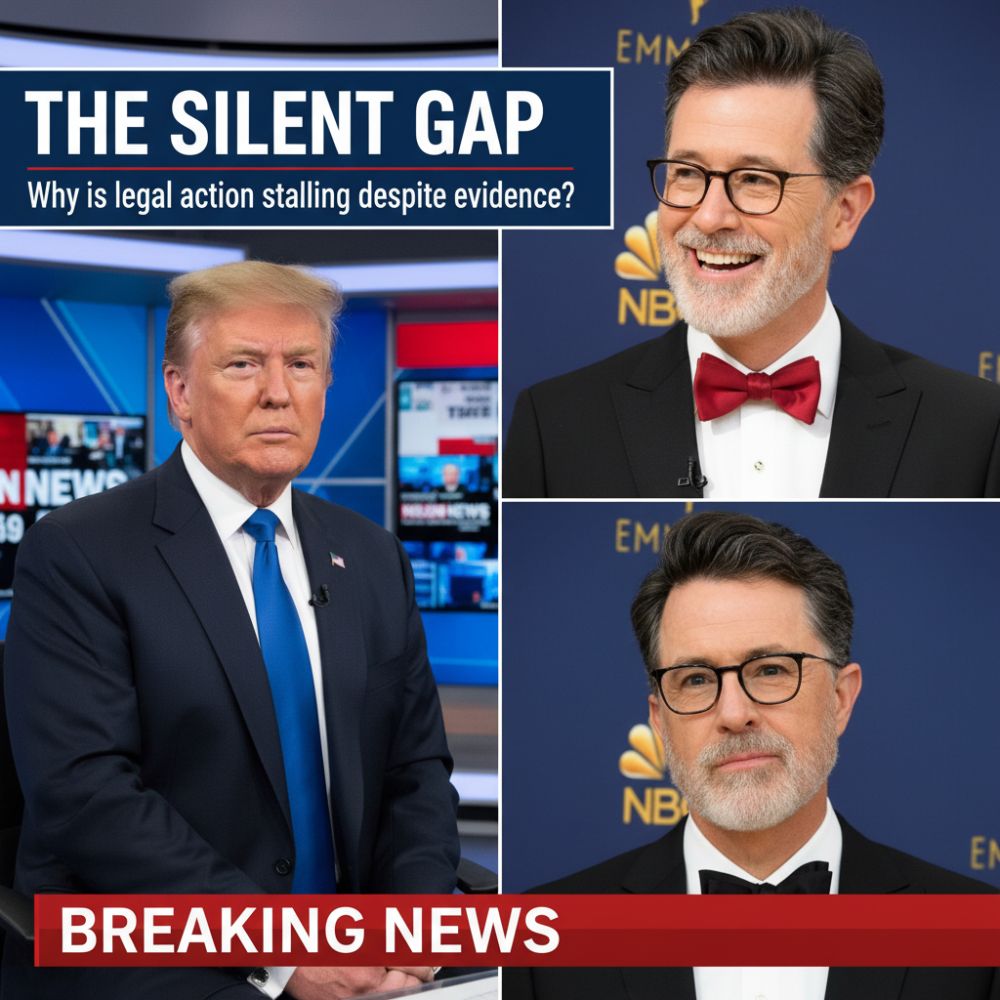
At the center of the discussion was Jeffrey Epstein, whose case continues to cast a long shadow across politics, business, and media. Over time, thousands of documents—flight logs, depositions, testimonies—have entered the public record, exposing a wide network of associations.
Donald Trump has publicly distanced himself from Epstein, stating he cut ties years ago and condemning him in strong terms. At the same time, Trump has pointed toward other high-profile figures, including Bill Clinton and Larry Summers, suggesting broader scrutiny is needed.
Colbert didn’t try to resolve those claims directly. Instead, he focused on a different tension—the scale of information available versus the apparent lack of visible legal consequences. Millions of pages, countless names, and yet, in the public eye, very little movement.
That contrast became the backbone of the segment. Colbert walked viewers through the timeline: documents released, media coverage surging, public attention intensifying—then gradually fading without the kind of prosecutorial action many expected.
The key question wasn’t whether wrongdoing existed. It was why the response appeared so limited. For Colbert, that silence became the story. Not loud, not dramatic—but persistent.

He then shifted attention to leadership at the Department of Justice, raising questions about priorities and decision-making at the highest level. Without making direct accusations, he framed it as an issue of alignment: what gets pursued, what doesn’t, and why.
The approach was restrained but pointed. Rather than declare conclusions, Colbert asked questions—who benefits from inaction, what factors influence prosecutorial focus, and whether power plays a role in determining outcomes.
Audience reaction reflected the shift in tone. There were fewer laughs, more silence, and moments of visible discomfort. Because unlike earlier segments built on contradiction or irony, this one dealt with uncertainty—an absence rather than a presence.
By the end, nothing had been resolved. No answers, no clear conclusions. Just questions, hanging in the air. And that was precisely the point: sometimes the most revealing part of a story isn’t what’s said or shown—but what happens when, despite everything revealed, nothing seems to happen at all.