
U.S. Tariffs Backfire as Canada Redirects Aluminum to Europe, Squeezing American Manufacturing
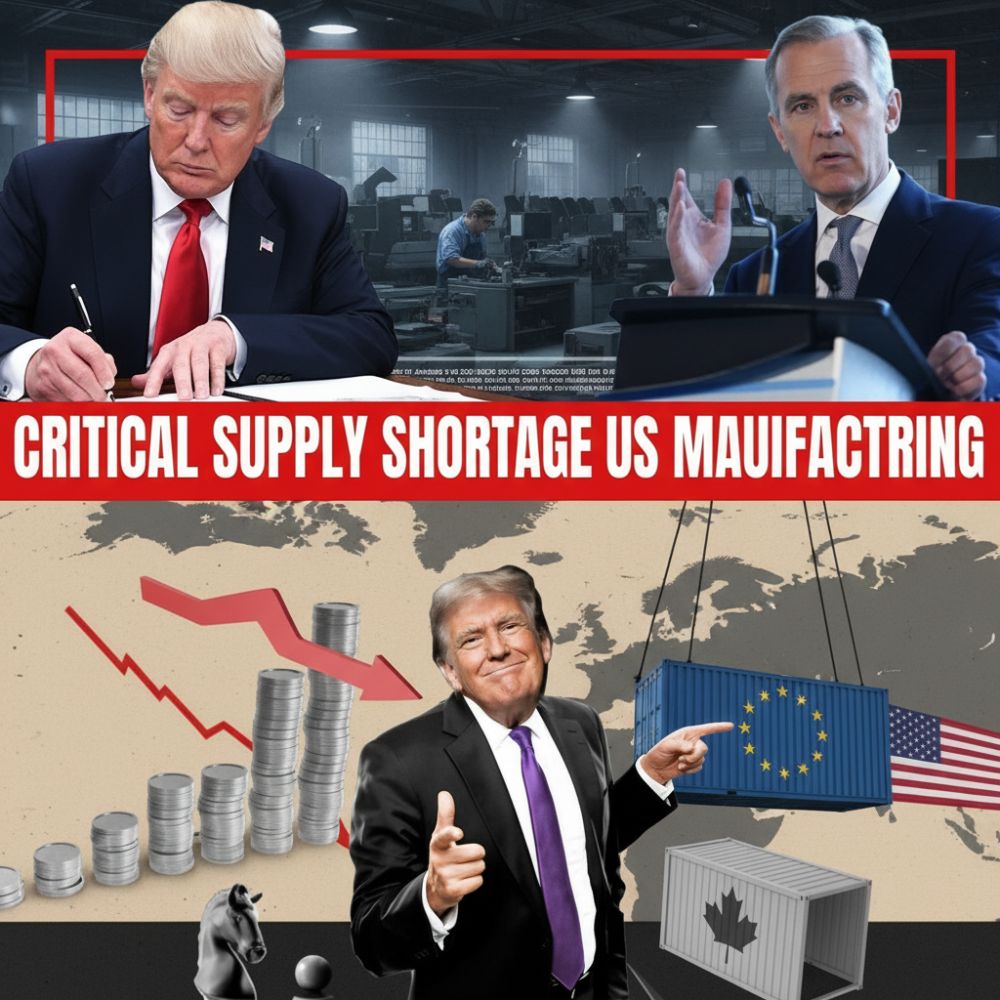
DETROIT — The 50 percent tariff on Canadian aluminum that Washington hoped would revive American smelting is instead doing something altogether different: starving U.S. factories of the metal they need while Canadian producers happily ship their low-carbon aluminum across the Atlantic to eager European buyers.
In a swift and stunning rerouting of North American supply chains, Canadian aluminum exporters have pivoted decisively toward European markets since the tariff took effect six weeks ago. The result, according to industry data and interviews with a dozen manufacturers, is tightening inventories, rising spot prices, and mounting frustration across American automotive, construction, aerospace, and defense sectors.
“We cannot get enough aluminum, period,” said Tom Baxter, purchasing director for a Midwest automotive parts supplier that counts Ford and General Motors among its customers. “Canadian metal used to arrive in three days. Now it goes to Germany. Our domestic smelters cannot match the volume or the quality. Production is slowing, and our customers are furious.”
The numbers tell a stark story. U.S. imports of primary aluminum from Canada fell 42 percent in March compared to the previous year, according to preliminary U.S. Census Bureau data. Meanwhile, Canadian exports to the European Union rose 37 percent over the same period, with Rotterdam warehouses reporting record inflows of North American metal.
For American manufacturers, the math is brutal. Domestic smelters, even running at full capacity, supply less than 20 percent of U.S. aluminum demand. The remainder has historically come from Canada — close, reliable, and integrated into just-in-time supply chains built over decades. That integration is now unraveling.
“We designed our factories expecting Canadian aluminum,” said Lisa Harwood, chief operating officer of a Texas-based extrusion company serving the construction industry. “Switching to domestic or imported metal from the Middle East means requalifying alloys, retooling furnaces, and accepting longer lead times. Every window frame, every curtain wall, every aluminum stud now costs more and arrives later.”
The automotive industry is feeling the squeeze first. Aluminum is critical to modern vehicles — from engine blocks and transmission housings to body panels and EV battery enclosures. The average car contains nearly 500 pounds of aluminum, a figure that has risen steadily as automakers pursue lighter, more fuel-efficient designs.
“Car prices were already punishing,” said Jessica Caldwell, head of insights at Edmunds. “Now add aluminum surcharges of 15 to 20 percent on top of everything else. The consumer will pay, or they will delay purchases. Either way, the industry loses.”
Ford Motor Company, in a recent supplier memo obtained by this reporter, warned of “potential production adjustments” if aluminum inventories continue to tighten. General Motors has reportedly activated contingency plans to source more metal from South American and Australian smelters — a process that adds weeks of shipping time and significant freight costs.
The defense sector is quietly alarmed. Aluminum is the backbone of military vehicles, aircraft, and munitions. The F-35 fighter jet contains approximately 25 percent aluminum by weight. The JLTV, the military’s current light tactical vehicle, uses aluminum extensively for armor and structure.
“Tariffs do not care whether aluminum goes into a pickup truck or a Patriot missile battery,” said a Pentagon procurement official, speaking on condition of anonymity. “If Canadian metal is rerouted to Europe, we compete for the same dwindling domestic supply as everyone else. That is not a recipe for readiness.”
Canada’s advantage is not merely geographic. Its aluminum industry has invested heavily in low-carbon hydroelectric smelting, producing metal with a carbon footprint roughly one-eighth that of Chinese or Middle Eastern producers. European buyers, facing their own emissions reduction mandates, are willing to pay a premium for that green credential.
“The EU’s Carbon Border Adjustment Mechanism makes Canadian aluminum cheaper to import than carbon-heavy alternatives, even with transatlantic shipping,” said Emily Schwartz, a trade analyst at the Peterson Institute for International Economics. “American tariffs have inadvertently made Canadian aluminum more attractive in Europe by removing it from the U.S. market and creating scarcity-driven price signals elsewhere.”
The political fallout is escalating. Republican senators from manufacturing states — including Ohio’s J.D. Vance and Indiana’s Todd Young — have privately urged the administration to reconsider the tariff structure, warning that constituent factories are shedding shifts. The American Aluminum Alliance, an industry group representing downstream users, has launched a six-figure advertising campaign calling for “sensible trade policy that keeps metal moving.”
But the White House, for now, appears unmoved. In a statement, a U.S. Trade Representative spokesperson said: “Tariffs are working to protect American smelting capacity and national security. Short-term adjustments by Canadian exporters do not change the long-term necessity of rebuilding domestic production.”
Canadian officials see the situation differently. “The United States chose to erect a wall between itself and its most reliable aluminum partner,” said François-Philippe Champagne, Canada’s minister of innovation, science and industry, in a recent interview. “We did not choose this. But we will not stand still. Europe values our product and our partnership. That is where our metal will go.”
The long-term consequences may be the most damaging. Supply chains, once rerouted, rarely return. European automakers and construction firms that secure long-term contracts with Canadian smelters are unlikely to release them when — or if — Washington reduces tariffs.
“Trust is the invisible currency of trade,” said Schwartz. “The United States spent decades building a seamless North American aluminum market. That trust is now broken. Even if tariffs vanish tomorrow, Canadian producers will remember that their largest customer became their most unpredictable one.”
Back in Detroit, Baxter’s parts supplier is doing what it can to survive. It has stockpiled three weeks of aluminum — at twice the usual cost. It has requalified a domestic smelter’s alloy, accepting lower consistency. And it has told its automotive customers to expect price increases starting next month.
“They say tariffs protect American jobs,” Baxter said. “I have three hundred American workers looking at me, wondering if their plant will be next. That is the reality of this policy. Not protection. Erosion.”