On the night of April 22, 1944, George Lascelles was where he was supposed to be, serving as an officer with the Grenadier Guards in Italy. Then the Germans took him. For the next year and more, the man who had been born sixth in line to the British throne, the first grandchild of King George V and Queen Mary, would be held inside the walls of Colditz Castle, the fortress reserved for the most valuable Allied officers the Reich could capture. His royal blood made him a prize.
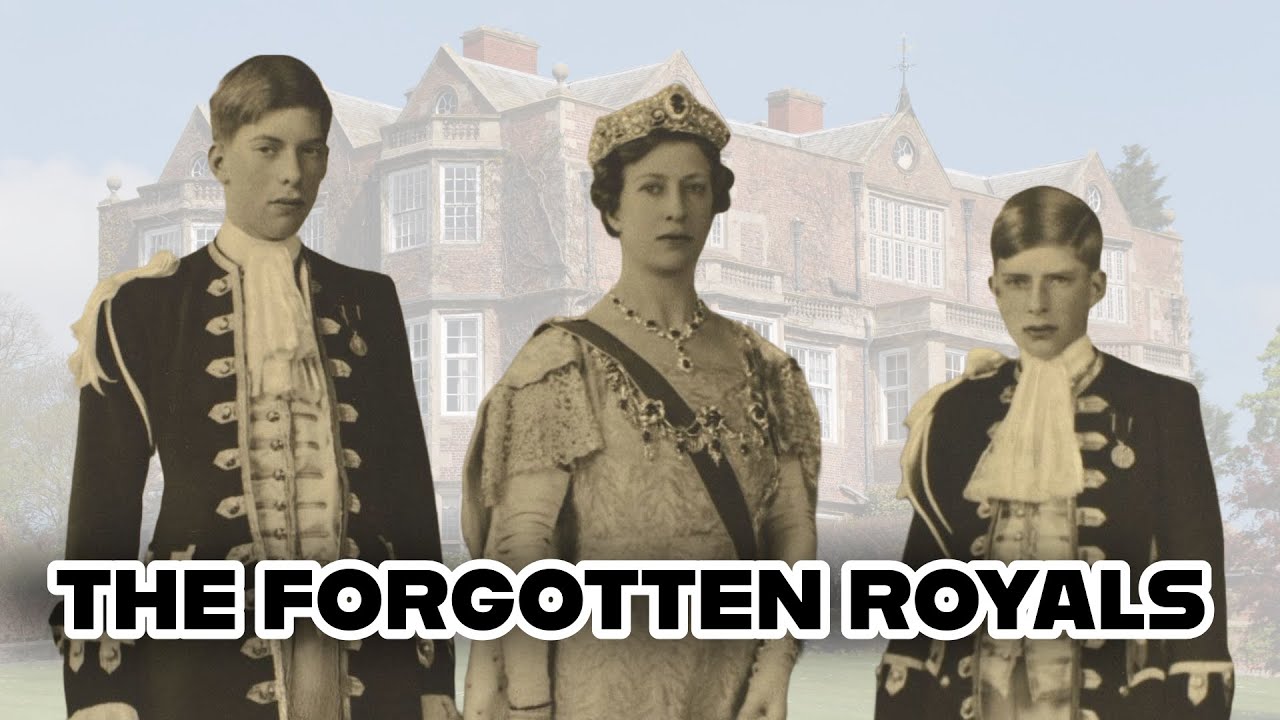
He refused to use it. He would endure the months of captivity with a stoic calm that marked him for the rest of his life, before he ever faced the scandal that would one day exile him from the Queen’s inner circle. But that story begins long before the war. It begins with a princess and the two sons she raised between gold and expectation.
On February 7, 1923, at Goldsborough Hall in Yorkshire, a wedding gift from King George V to his daughter Princess Mary and her husband Henry Lascelles, a son was born. He was named George Henry Hubert Lascelles, and from the moment he drew breath his life was set on a path defined by expectation. As the first grandchild of the sovereign, George was not just a peer’s son. He was sixth in line to the throne at birth.
Though he carried no princely title, his blood was royal, and he was heir to the prestigious Harewood earldom. Princess Mary was intensely devoted to her children, a hands-on parent within the stiff constraints of royal decorum. Young George was raised in opulence, but the burden of privilege came with pressure. He attended Eton, and like many boys of his class, his days were filled with riding, cricket, and tradition.
Yet from a young age, George was more intellectual than sporting, a quiet observer in a world of ceremony. A year after George’s birth, another boy arrived. On August 21, 1924, Gerald David Lascelles was born, the spare in the age-old heir-and-spare dynamic. Yet Gerald would come to embody something far less conventional.
Where George was bookish and reserved, Gerald was spirited and unrestrained. Raised in the same halls of gold, at Harewood and in court appearances, Gerald moved with more freedom, unburdened by the direct inheritance of a title or estate. He was a lover of fast cars, jazz, and rebellion, the kind of aristocrat who felt more at home at the races than at a state banquet. He held a respectable position within Britain’s upper echelons, but Gerald never quite played the royal game.
Over time, he became a curious footnote in royal history, close enough to royalty to be included, but far enough to disappear when inconvenient. When the Second World War erupted across Europe, both brothers stepped into the fray. George, ever the dutiful heir, was captured by the Germans in Italy in 1944 while serving with the Grenadier Guards. For over a year he was held as a prisoner of war in Colditz Castle, the infamous fortress for high-profile Allied officers.
His royal status made him a valuable asset, but he refused to exploit it. In later interviews, George recalled the ordeal with stoic clarity, a period that tested not only his endurance but his identity. Gerald, meanwhile, served with the Royal Armoured Corps, though his service was far less publicized. War sobered both brothers.
But while George returned to public life and royal duties, Gerald chose a different path, one of relative obscurity but greater personal freedom. After the war, in 1949, George Lascelles made what seemed a respectable match. He married Marion Stein, a gifted Austrian Jewish concert pianist and daughter of musician Erwin Stein. The match was modern, an aristocrat marrying a commoner, and a Jewish one at that.
But it was also deeply romantic. The pair were celebrated in intellectual and cultural circles. Their home at Harewood became a hub of music, arts, and royalty. They had three sons: David, born in 1950, who would eventually become the eighth Earl of Harewood; James, born in 1953; and Jeremy, born in 1955.
It seemed the Lascelles line was secure, progressive, and thriving. Gerald’s personal life, meanwhile, followed its own course. In 1952 he married Angela Dowding, a glamorous West End actress, in what some saw as an unconventional match. Though not royal herself, Angela quickly became a tabloid favorite, strikingly beautiful, modern, and unafraid of publicity.
They had one son, Henry Ulick Lascelles, born in 1953, another boy raised between titles and tabloids. But in the 1960s, the fairy tale cracked. George began an affair with Patricia Tuckwell, an Australian-born violinist and former model famously known as Bambi. Their relationship was no quiet tryst.
It exploded into headlines. At the time, George was still legally married to Marion. In 1967, George divorced her, causing a royal scandal. Divorce, while more common by the sixties, was still frowned upon by the royal family, especially among such close relations to the Queen.
To make matters worse, George married Patricia just days after his divorce was finalized, and their son, Mark Lascelles, was born mere months later. George became the first senior royal figure in modern history to divorce and remarry in such public fashion, a quiet rebellion that deeply embarrassed the monarchy. The Queen did not attend his second wedding. Neither did Princess Mary, who had died two years before, but who had reportedly disapproved of the affair.
The fallout did not spare Gerald. In the 1970s, his marriage to Angela broke down, and the couple separated and ultimately divorced, another royal-adjacent scandal in a family that preferred discretion. Gerald later married Elizabeth Colvin, a society figure, in 1978. Unlike George, Gerald never sought the limelight.
Instead, he pursued his passion for motorsports, serving as president of the British Racing Drivers’ Club and becoming a familiar face at Silverstone. He lived quietly in Sussex, often mistaken for an earl or forgotten entirely. His legacy was one of calm resistance, a man born close to a throne who chose his own track. Of Princess Mary’s grandsons, David Lascelles, George’s eldest son, would come to define the family’s future.
Born in 1950, David was educated at Eton and the University of York. A film and television producer by trade, he inherited Harewood House in 1997 and became the eighth Earl of Harewood. His productions focused on social issues, and he continued his father’s artistic legacy at Harewood, opening the estate to the public and to cultural events. But David too carried the family tradition of a complicated personal life.
He married Margaret Messenger in 1979, the daughter of a local doctor, and they had three children. Yet by the 1990s, their marriage had broken down. He later married Diane Howse, an artist with whom he has a son. His children, Alexander Lascelles, Viscount Lascelles, and the Honourable Emily and Benjamin, continue the Harewood line, though none hold royal titles.
With increasing distance from the crown, the Lascelles family is now part of Britain’s noble class, but no longer official members of the royal family. So what became of Princess Mary’s sons in the royal memory? George, the seventh Earl of Harewood, passed away in 2011. He left behind a vast musical legacy, having directed the Royal Opera House and chaired numerous cultural bodies.
His obituary hailed him as the most talented of his generation. Yet his scandal had permanently exiled him from the Queen’s inner circle. Gerald, the youngest son, died in 1998, largely forgotten yet deeply respected by those who knew him. He had carved a life in shadows, not spotlights.
Together, they represent the quiet shifting of royal boundaries, from crown to court, from palace to personal freedom. And their mother, Princess Mary, the dignified Princess Royal, remains a symbol of grace, perhaps unaware that her sons would one day shape a royal modern narrative through love, rebellion, and quiet endurance. Two sons, one born to inherit, the other born to roam.
Both raised in the golden world of Windsor, but destined to write stories beyond the palace walls.






