Vance hit the brakes at the mouth of the alley. The heavy door was right where the kid had said it would be, set deep into the brick of the old icehouse, rusted iron and shadow. Rossi was sweating through his coat beside him, tapping an unlit cigar against his knee in a nervous rhythm that was starting to wear on Vance’s nerves. They had come this far.
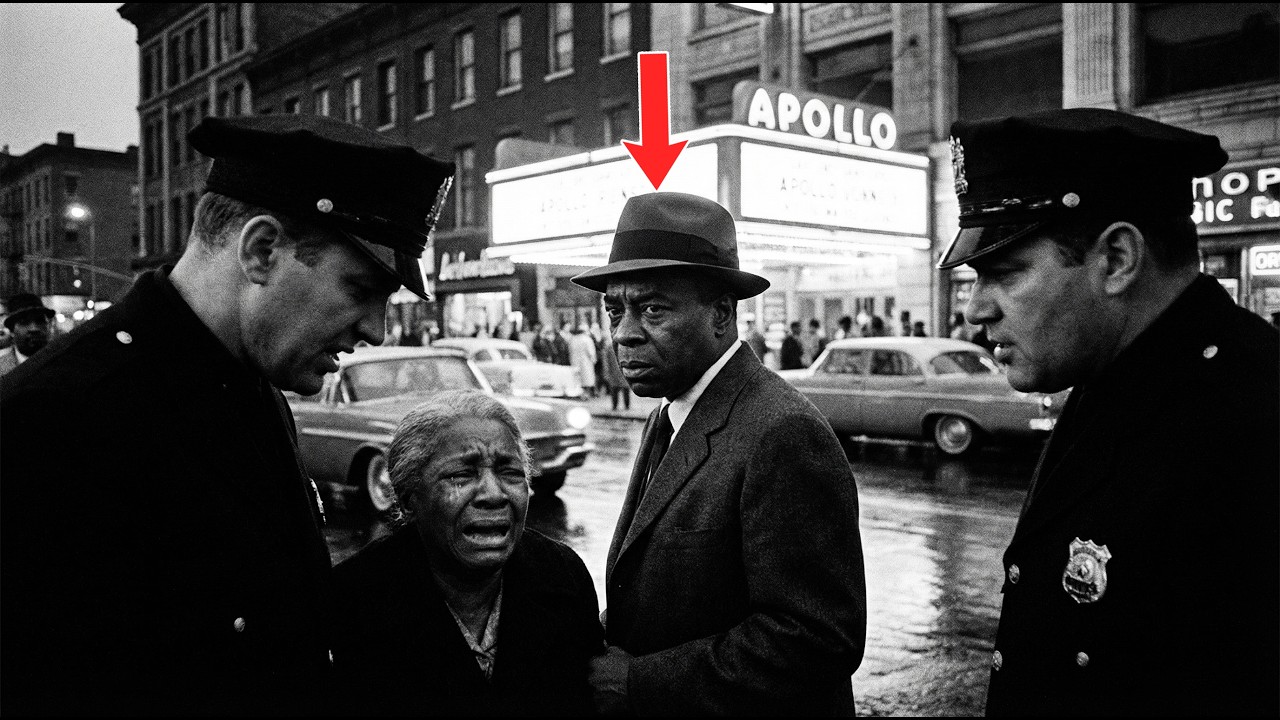
The money was in there, half a million in untraceable cash, sitting in duffel bags watched by two sleepy old men who wouldn’t know what hit them. It was too easy. That was exactly the problem. Vance got out of the Plymouth and pressed his back against the damp brick wall, moving with the practiced stealth of a man who had spent years learning how to hunt.
Rossi followed, his breath coming in short, anxious gasps. The alley reeked of stagnant river mud and diesel. The rain was warm and miserable, pasting their hair to their foreheads. They reached the iron door and listened.
Nothing inside but the low, distant hum of a generator. No voices, no shuffling feet, no clinking coins. Vance smiled in the dark. The prize was right there, waiting behind a rusted door.
He reached out, expecting to have to force the lock, expecting to spend five loud minutes prying the frame away from the brick. The doorknob turned in his hand without resistance. The mechanism was perfectly oiled. The heavy iron door swung open with a soft click.
A tiny, primal voice in the back of Vance’s skull screamed a warning. It was too easy. Before he could pull his hand back, before he could say a word to Rossi, a sound drifted out of the black void inside the warehouse. A slow, deliberate, rhythmic sound.
Clap. Clap. Clap. Someone was standing in the absolute darkness, applauding them.
Then a voice came out of the shadows, smooth as aged velvet and cold as a freshly dug grave: “I have always believed that a truly greedy man would happily walk straight into the fires of hell just as long as you convinced him the devil had dropped a dollar bill on the floor. Welcome to the icehouse, gentlemen. Please, don’t be shy. Come on inside and claim your prize.
”
Vance froze. His heart seized in his chest. Beside him, Rossi let out a pathetic, involuntary squeak. Vance’s hand darted under his coat toward his off-duty revolver.
Before his fingers could touch the grip, six massive magnesium floodlights snapped on simultaneously with a sound like a thunderclap, blazing down from the rusted rafters and burning their retinas. Vance stumbled backward, throwing his arms over his face. Rossi cried out and dropped his leather sap. When their vision cleared, they saw they had not walked into an abandoned warehouse.
They had walked into a trap of the most perfect, merciless design. In the center of the vast concrete floor, sitting alone under the crossbeams of blinding light in a magnificent high-backed antique chair with crimson velvet upholstery, sat Ellsworth Bumpy Johnson. He was dressed immaculately in a midnight blue suit, a gray silk tie, and a soft gray fedora. He held a glowing cigar between his fingers, one leg crossed casually over the other.
He looked entirely relaxed. He looked like a king on a throne. And he was not alone. Emerging slowly from the shadows all around the perimeter were men.
Dozens of them, materializing from behind rusted machinery and crumbling pillars. They formed a tightening ring of solid muscle and cold steel around the two officers. To Vance’s left stood Junie Byrd, a pump shotgun resting over his shoulder, his face a mask of chiseled stone. To his right stood Nat Pettigrew, holding a Thompson submachine gun, the drum magazine catching the harsh light.
Behind them, men holding lead pipes, brass knuckles, and long switchblades blocked every exit. There was no money. There were no sleepy old guards. There was only the king of Harlem, waiting patiently for the rats to step onto the glue trap.
Rossi’s knees gave way. He slumped against the damp brick wall, gasping for air. Vance tried to summon his authority. “What is this?
You’re making a massive mistake, Johnson. We’re on the job. You touch a badge and the entire city comes down on your head. ”
Bumpy took a long, measured drag of his cigar and exhaled a plume of blue smoke.
“You cats are severely confused. You think you are standing on a city street where your little piece of stamped tin means something. It doesn’t. You stepped off the map the moment you walked through that door.
You are standing in my house now. And in my house, the only law that matters is the one I write. ”
He ordered Junie to help the guests get comfortable. Junie crossed the floor with the terrifying, inevitable grace of an avalanche.
Vance reached for his gun, screaming that he would drop him. Junie did not stop. He closed the distance in three strides, clamped his massive hand over Vance’s hand and the revolver, crushing it halfway out of the holster. Vance screamed and dropped to his knees.
Junie grabbed him by the lapels of his trench coat and lifted him clean off the ground. “You pull a piece in front of Mr. Johnson, and I’ll make you eat the bullets one by one before I break your jaw. You dig?
” Vance whimpered and released the gun. Junie yanked it free and tossed it carelessly over his shoulder. Rossi was pressed flat against the wall, sobbing, hands in the air. “I don’t have a gun.
I got a bad heart. Don’t hit me. ” Junie took his sap and his badge and his wallet, then placed the badges, the wallet, and the revolver on a wooden crate beside Bumpy’s chair. He stepped back into the shadows.
Bumpy picked up one of the silver badges and turned it over in his hands. He spoke of the covenant it was supposed to represent, the promise to protect the weak and uphold the law. “But power is a funny, dangerous thing, isn’t it, gentlemen? For men of weak character, this badge is not a shield.
It is a skeleton key. A license to steal. You thought this piece of tin made you invisible to consequence. You thought you were wolves hunting in a forest of sheep.
But you forgot one fundamental rule of the jungle. When you hunt in someone else’s territory, you eventually draw the attention of the lion. ”
Vance tried to negotiate. Money.
A blind eye on the avenue. Patrol cars kept away from the clubs. Bumpy laughed, a low, humorless sound. “You think this is a negotiation?
You are bankrupt. You have nothing I want. ”
Then he made them remember Clara Higgins. A 72-year-old woman with arthritis in her hands who baked pies for the church.
The grandmother of the block on 135th Street. The woman they had extorted. The woman Vance had shoved into a wooden shelf. The woman whose collarbone was cracked and whose ribs were bruised when she hit the floor.
The woman on whose floor Rossi had spat before walking out with her crumpled dollar bills in his pocket. Rossi collapsed entirely. He fell to his knees, pressing his forehead to the wet concrete, sobbing uncontrollably. “I’m sorry.
Oh God, I’m so sorry. Tommy made me do it. I got a wife. I got kids in Queens.
I was just following his lead. ”
Bumpy looked down at him with chilling apathy. “You did not think of your family when you stole Clara’s livelihood. You did not think of your children when you spat on a grandmother.
You only think of them now because you realize the weight of the bill you have accrued and you do not want to pay the tab. ”
Vance played his final card. If two white cops turned up dead in Harlem, the whole city would burn. The mayor would demand blood.
Every tactical unit would be sent downtown. Bumpy couldn’t survive the heat of a cop killing. He had to let them walk. Bumpy smiled, a thin, razor-sharp expression.
“You are absolutely correct, Thomas. If I put a bullet in your head right now, the backlash would be severe. They would make martyrs out of you. They would drape your caskets in the American flag.
But you fundamentally misunderstand the nature of your punishment. Martyrs inspire people. Martyrs start wars. I have no intention of making you a martyr.
”
While they had been enjoying his hospitality, Bumpy explained, his men had been busy. A team was inside Vance’s apartment in Hell’s Kitchen, cleaning it out, removing his expensive suits and his hidden stash of cash, leaving his mistress a convincing note saying he had fled the country to avoid Internal Affairs. Another team had paid a quiet visit to Rossi’s Italian bookie in Queens, informing him that Rossi had skipped town on his debt. A portion of the stolen money had been planted in Rossi’s car, which was being driven to long-term parking at Idlewild Airport.
They were not going to die. They were going to be erased. Their reputations destroyed. Their families left with the shame of a cowardly father who abandoned them.
The precinct would not mourn them. They would despise them. “Please,” Vance whispered, his voice completely broken. “Just shoot me.
Don’t do this to my name. ”
“You did this to your name the moment you touched Clara Higgins. You wrote this script, Thomas. I am simply providing the stage direction.
”
He gave the order. Junie and his men moved with brutal speed. Foul-tasting rags were shoved into their mouths. Thick rope was wrapped around their wrists and ankles.
They were dragged across the concrete floor, out of the light, into the darkness of the rear loading docks. Bumpy stood alone in the center of the light, listening. He heard the muffled grunts. The heavy metallic clank of a rusted iron door sliding open.
Then, from the black waters of the Harlem River, the low, throaty rumble of a boat engine idling in the dark. The thud of canvas sacks dropping onto a wooden deck. The iron door slamming shut with the finality of a crypt sealing. The engine revving, fading away down the dark currents of the river, carrying the two officers out into the deep, cold, unforgiving waters of the Atlantic.
Bumpy took one final drag of his cigar, dropped the stub onto the concrete, and crushed it out meticulously beneath the polished heel of his shoe. “Turn out the lights,” he ordered the empty room. The floodlights snapped off, plunging the icehouse back into absolute darkness. The king of Harlem walked out into the night.
The next morning, the sun rose over Harlem with the same oppressive, suffocating heat. The avenues filled with vendors and transistor radios and the soulful sound of Sam Cooke. Nobody on the street knew anything about the surgery that had been performed in the dark corners of the city the night before. Downtown, at the local precinct, morning roll call was underway.
The captain barked out the sector assignments. When he called for Sector 6, he paused. “Where the hell are Vance and Rossi? Their shift started 20 minutes ago.
”
A young patrolman checked the locker room. The lockers were empty. Their street clothes were gone. No sign of them.
The captain ordered someone to call their homes, then turned to a paper a pale desk sergeant handed him. There was the call from the Hell’s Kitchen precinct about Vance’s abandoned apartment and the frantic mistress. There was the call from the Queens precinct about Rossi’s abandoned car at Idlewild, its trunk full of cash, a mob bookie demanding his blood. The captain looked out at the room full of officers.
He didn’t see brave men. He saw a precinct on the verge of a humiliating scandal. He crumpled the paper in his fist. “Vance and Rossi are gone.
They have abandoned their posts. They are suspected of severe corruption and fleeing the jurisdiction. They are no longer police officers. You are not to speak of them to the press.
You are not to investigate this. Internal Affairs will handle the warrants. ”
The room emptied in stunned silence. The officers knew the truth, even if they couldn’t prove it.
Vance and Rossi had been shaking down the avenues, and they had crossed an invisible line in Harlem. The darkness had simply reached out and swallowed them whole. Later that same sweltering afternoon, Clara Higgins sat in the cramped back room of her bakery, an ice pack pressed against her bruised collarbone. The front door was locked.
The closed sign hung in the window. She was staring at a stack of unpaid bills, a single tear cutting a track down her flour-dusted cheek, trying to figure out how to tell her landlord she was ruined. She heard a soft, polite knock at the back door. She froze.
“We’re closed. Please go away. ” The knocking did not resume. Instead, she heard something heavy slide under the gap beneath the door, then the sound of retreating footsteps fading down the alley.
She waited three full minutes, holding her breath. Then she pushed herself up, grabbed her cane, and limped to the door. Lying on the dusty floorboards was a thick, heavy, unmarked manila envelope. Inside were neat, perfectly banded stacks of crisp $20 bills.
More money than she had seen in her entire life. Enough to pay the rent for five years. Enough to buy a new glass display case. Sitting on top of the stacks was a small, elegant cream-colored card.
The handwriting was flowing and precise, written in dark blue fountain pen ink: “For the sweet potato pies and for your unflinching dignity, the neighborhood apologizes for the temporary disruption in service. Please reopen your doors tomorrow. The streets are perfectly safe again. Respectfully, a grateful neighbor.
”
Clara stared at the card for a long moment. The fear that had gripped her chest since Tuesday afternoon melted away. She wiped the tear from her cheek and smiled a small, genuine smile. She placed the envelope on the table, walked over to her apron hanging on the hook, and slowly tied it around her waist.
She had peach cobblers to bake for tomorrow. High above the heat and the hustle of the avenue, in the cool, dimly lit sanctuary of the Lenox Terrace penthouse, Bumpy Johnson sat quietly in his high-backed leather chair. Mayme walked in, holding two crystal glasses of amber liquid over ice, and handed one to her husband. “I heard the news on the radio this afternoon.
The police commissioner held a press conference. Said two rogue officers fled the state to avoid corruption charges. They’re launching a massive internal probe into the precinct. ”
Bumpy swirled the bourbon slowly.
“It is truly a shame. It is always a tragedy when men entrusted with public authority lose their moral compass and succumb to greed. It leaves a terrible stain on the institution. ”
Mayme smiled, a small, knowing smile.
She walked behind his chair and rested her hands gently on his shoulders. “And Clara Higgins? ”
“Clara will be opening the bakery promptly at eight tomorrow morning. I have it on very good authority that she will be featuring a fresh batch of apple turnovers.
I believe we should send Junie down to pick up a dozen for the men. It is important to support local, respectable businesses in the community. ”
Bumpy leaned back into the leather chair, closed his eyes, and let the mournful wail of the jazz trumpet wash over him. The balance of power in Harlem had been threatened, tested, and violently corrected without a single drop of blood staining the pavement.
The wolves had been erased. The grandmother had been made whole. The invisible crown upon his head remained absolutely secure. The king was resting.
And the streets, for now, were safe.






