On a narrow mountain path called Pound Gap, in the twilight of 1892, a wagon train carrying the Mullins family home from market rolled into an ambush. Rifle fire erupted from the darkening woods. The lead horse screamed and fell; men crumpled into the dirt before they could reach for their weapons. Jacko Fraser emerged from the trees and moved among the wounded and the dead, executing survivors where they lay and stripping the bodies of their cash.
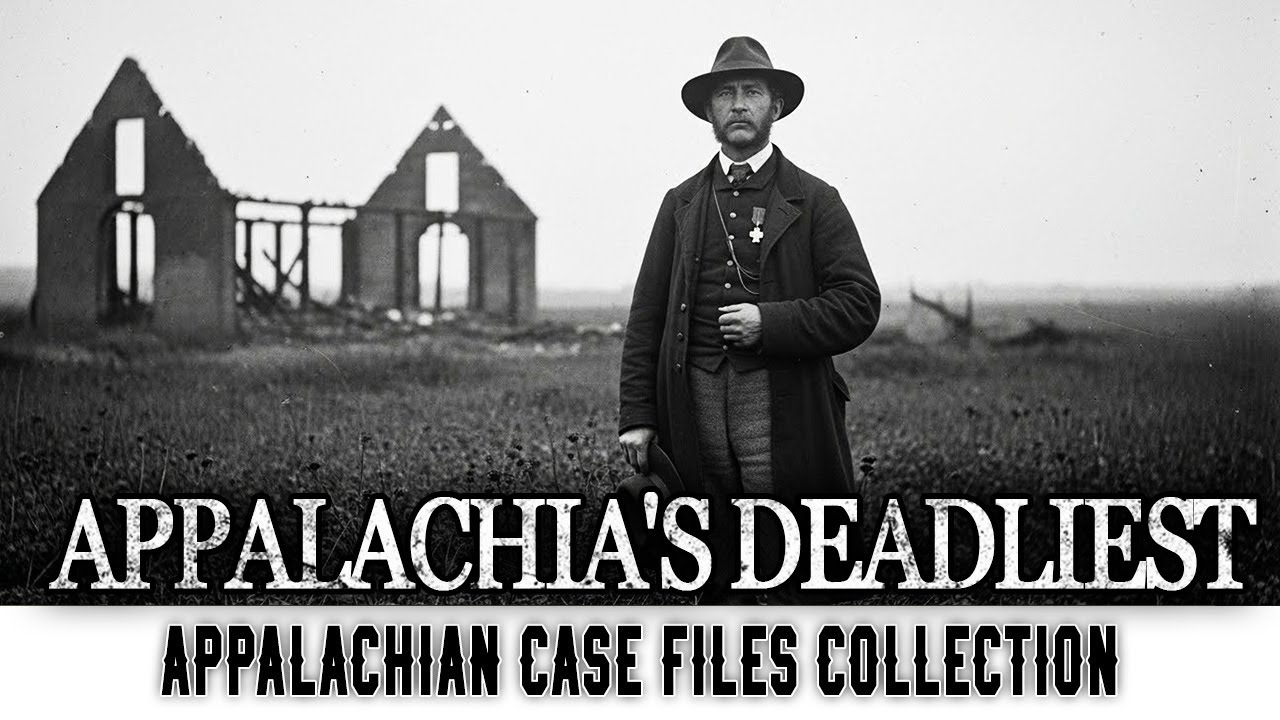
In the space of a few minutes, a prosperous family returning from a successful day of trading was reduced to wreckage, spilled flour, and silence. The robbery itself was staggering—several hundred dollars, a fortune in those mountains—but the manner of the killing was what marked the day. It was not a robbery. It was an execution, and it transformed John Fraser the outlaw into something else entirely: the White Devil, a figure of whispered legend in the Cumberland Mountains of Virginia and Kentucky.
The world that produced Jacko Fraser had been forged a generation earlier by the Civil War. The communities along the jagged border of Virginia and Kentucky had been ripped apart by the conflict and left in grinding poverty. Men came home from the war to ruined farms and a distant, unreliable law. In the isolated hollows, the old codes held: family was everything, an insult to one was an insult to all, and honor was paid in blood.
This was the era of the great Appalachian feuds, where violence was structured into daily life. Self-reliance was the only true protection. A county sheriff might hold authority in the dusty courthouse square, but out along the winding creeks and isolated cabins, his power faded to nothing. Men trusted their kin, their rifles, and their own judgment.
Jacko Fraser was a product of that world. He was said to be a veteran of the Confederacy, a man who had seen the war and carried it inside him afterward. He returned not looking for peace but nursing a grudge against humanity itself. He gathered lesser men around him—accomplices like Henley Cox—and built a network of informants and small-time crooks who bought his stolen goods and traded neighbors’ whereabouts for silver dollars.
For years before the massacre, his name spread through the mountains as a poison. A peddler vanished passing through Pound Gap. A farmer lost his best mule. Travelers arrived at settlements pale and shaken, telling of a man with cold pale eyes who robbed them on the trail.
None of these incidents were large enough to bring the law down from the state capital, but they built a foundation of dread. The community was slowly poisoned not just by Fraser’s deeds, but by the fear of what he might do next. The Mullins family was the opposite of everything Fraser stood for: a large, well-respected clan, a cornerstone of the community. They made the perfect target for a man who wanted to prove that no one and nothing was safe.
On the day of the massacre, several members of the family, including Ira Mullins and his wife, had made the long wagon journey to town and sold their goods successfully. Their pockets were heavy with cash as they began the journey home through Pound Gap. The attack was brutally efficient. The narrow pass became a slaughter pen.
Fraser’s men moved with chilling purpose, emerging from the treeline like specters. Ira Mullins lay wounded in the dirt, and Fraser stood over him with a revolver, his face impassive as carved stone. A single shot ended his life. Then Fraser knelt and calmly retrieved the roll of money from the dead man’s pocket, repeating the ritual as the gang moved from body to body.
When they left, they vanished into the forest. Nothing remained but the wreckage of a family and a silence that screamed. The news traveled through the mountains on the wind, passed from cabin to cabin in hushed, urgent whispers. The sheer brutality of the attack could no longer be ignored, even by the distant and often indifferent hand of the law.
The authorities in both Virginia and Kentucky, pressured by terrified communities, finally acted. A substantial reward was offered for Fraser and his gang, and notices were nailed to courthouse doors and the sides of general stores. The hunt drew in professional detectives from the Baldwin-Felts agency and a legendary mountain lawman, Marshal Big Ed Hall, who knew every secret trail and hidden hollow. Alongside them rode the kin of the murdered Mullins family, men with faces like stone who were not there for the reward money but to settle a family score.
For weeks, the posse combed the ridges and ravines. The mountains that punished the hunters were Fraser’s greatest ally. They found warm campfire embers and footprints only to have the trail vanish. Every rustle in the undergrowth could be an ambush; every shadowy rock formation a sniper’s nest.
The posse grew weary, their resolve frayed by frustration and the unnerving feeling of being watched. In the end, it was not tracker’s skill or detective’s logic that cornered the White Devil. It was human weakness. An informant, tempted by the reward or terrified into submission, gave up Fraser’s hiding place.
The tip led them to a lonely cabin near the Kentucky border. They surrounded it in the dead of night, and at first light, Big Ed Hall gave the signal. A final volley of gunfire tore apart the quiet morning as Fraser tried to fight his way out, but he was one man against a small army. When they dragged him into the light, the posse braced themselves for a demon.
Instead, they saw a man—ragged, weary, his eyes cold and empty. There was no fear, no regret, not even anger. Only a chilling emptiness and the exhaustion of a man who knew his road had come to an end. The arrest was a sensation.
Fraser’s trial in Wise, Virginia, drew people from three states who came on foot, on horseback, and in wagons. The courthouse lawn became a sprawling camp of onlookers. Inside, the air was thick enough to choke on as witnesses recounted the horrors of Pound Gap, their voices trembling with grief and fear. They pointed at the defendant’s table, where Jacko Fraser sat showing no remorse, no fear, not even a flicker of interest.
He watched the weeping survivors with the detached curiosity of a man watching a bug crawl across a windowsill. His cold, defiant calm was unnerving. The trial was a formality. The evidence was absolute, the testimony unshakable.
The jury returned a verdict of guilty, and the judge sentenced John “Jacko” Fraser to be hanged by the neck until dead. On September 15, 1893, the trap door opened in Wise, Virginia, and the physical life of Jacko Fraser came to an end. A collective sigh of relief swept through the crowd, as if a poison had been purged from the air. He was buried in an unmarked grave to prevent his final resting place from becoming either a shrine or a site of desecration.
The man was gone, but his ghost was just beginning to walk. The Mullins family endured, burying their dead and carrying the memory of the massacre not as a chilling legend but as a deep and painful part of their family history. Today their descendants still live in those hills, and the family names are carved in stone in old cemeteries, the dates of death a permanent, defiant answer to the violence that tried to erase them. The modern world has since carved a highway through Pound Gap.
Drivers cross the spot of the ambush at seventy miles an hour, unaware. But if you stop and listen, the woods are still deep, the shadows still long. The old courthouse in Wise still stands. And the legend of Jacko Fraser lives on as a dark ballad told around late-night fires.
Like all famous outlaws, he was rumored to have stashed a fortune in gold and silver somewhere in the caves and crevices of the Cumberland Mountains, and for decades treasure hunters dug into the hillsides chasing the ghost’s promise of cursed gold. The treasure was never found. The facts of the case have faded into yellowed records gathering dust in courthouse archives, but the mountains have a long memory. So how does a man become a monster?
The story of Jacko Fraser gives a chilling answer. He was not born a demon. He was forged in the fires of a brutal war and hammered into shape on the anvil of a lawless, desperate land. He was the ultimate consequence of a world where civilization was a distant rumor and survival was a daily battle.
And how does a monster become a legend? His cruelty was so absolute, so far beyond the normal feuds of the mountains, that people had to make him more than a man to understand him. It was easier to believe he was a ghost who could melt into the fog than to accept that a human being could be capable of such cold, empty evil. The legend of the White Devil was not just a story told to frighten children.
It was a story adults told themselves to make sense of the senseless.
