The back room of the social club in Queens was supposed to be the stage for the greatest moment of Tommy Desimone’s life. It was around eight o’clock on the evening of January 14th, 1979, and Tommy, twenty-eight years old, walked through the door smiling. He had been told he was about to become a made man in the Lucchese crime family. His sponsor was waiting inside.
The ceremony was ready. He walked into the back room and found two men from the Gambino family instead. They shot him once in the back of the head. The entire setup took less than two minutes.
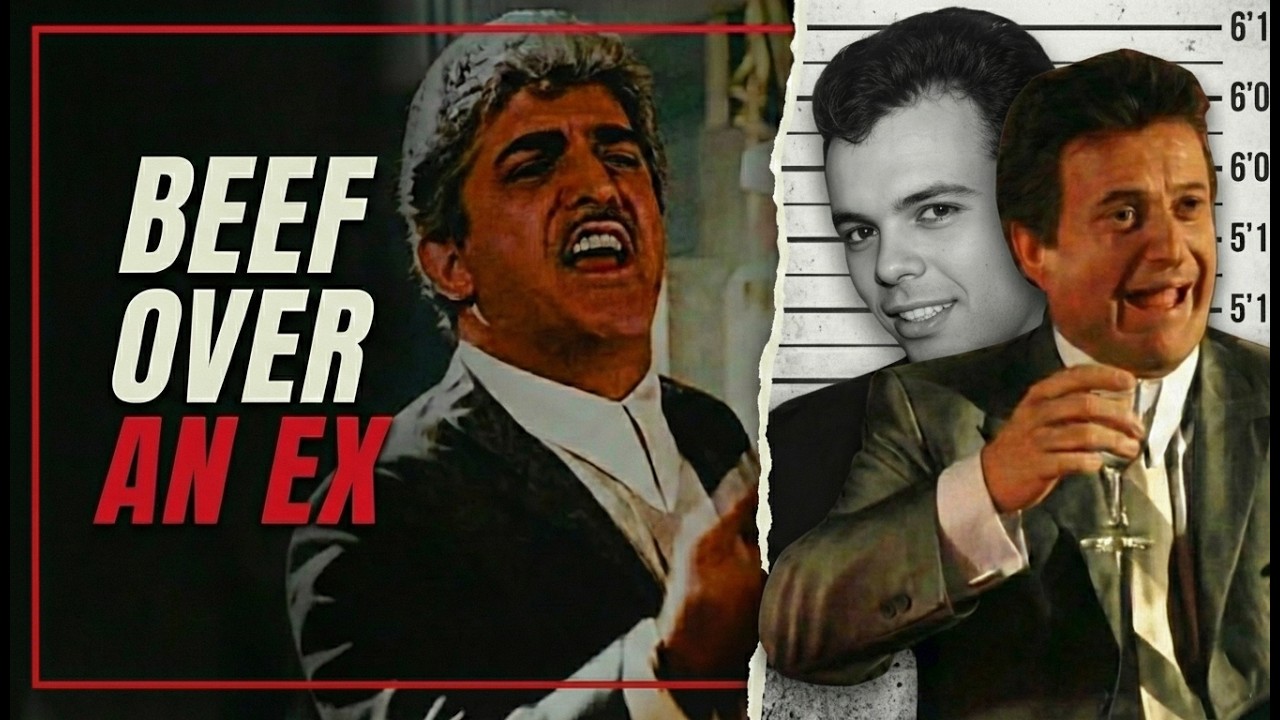
His body was never found. Tommy Desimone was not just another mob associate. By January 1979 he was Jimmy Burke’s most reliable killer, a man who had murdered at least eight people, including William “Billy Bats” Bentfena, a made member of the Gambino family. The film Goodfellas portrays Tommy’s death as inevitable karma, the violent end of a violent man who finally got what was coming to him.
But the truth is more complicated. Tommy did not simply get caught. He was led into a trap, and that trap required coordination, silence, and institutional agreement across multiple levels of organized crime. This is the story of who really set up Tommy Desimone: Paul Vario’s calculated silence, Jimmy Burke’s convenient absence, the Gambino family’s patience, and Tommy’s own reckless violence.
It was not one betrayal. It was a system deciding that one man was expendable. And once the system decides that, the individual does not stand a chance. Thomas Anthony Desimone was born on May 24th, 1950, in Brooklyn, New York.
His parents were Italian immigrants. His father worked construction; his mother raised six children. Tommy grew up in a neighborhood controlled by the Lucchese crime family. By age twelve he was running errands for local bookies.
By age fifteen he dropped out of school and began working full-time for Paul Vario’s crew. Tommy was not smart. He was not strategic. But he was violent, and violence has value in organized crime.
Paul Vario, forty-nine years old in 1970, was a capo in the Lucchese family who controlled operations in Brooklyn and Queens. He ran hijacking crews, bookmaking operations, loan sharking, and fencing stolen goods. Vario needed enforcers, men who could hurt people without hesitation, men who did not ask questions. Tommy Desimone fit perfectly.
By age eighteen, Tommy had committed his first murder, beating a truck driver to death with a tire iron after the man fought back during a hijacking. Vario heard about it and brought Tommy deeper into the crew. Tommy was five-foot-eight, thin and wiry, with curly hair and cold eyes. He dressed well and could be charming when he wanted to be.
But underneath, Tommy was a psychopath. He did not kill because he had to. He killed because he enjoyed it. Henry Hill, who worked alongside Tommy for years, later described him as the most dangerous person he had ever met, not because Tommy was the best fighter, but because Tommy had no off switch.
Most criminals use violence strategically. Tommy used it recreationally. By 1970, Tommy was working closely with Jimmy Burke. Burke, thirty-nine years old, was a Lucchese associate who ran hijacking operations out of Robert’s Lounge in South Ozone Park.
Burke and Tommy became a team. Burke planned the jobs; Tommy executed them. Between 1970 and 1979, they hijacked hundreds of trucks, ran bookmaking operations, and murdered at least a dozen people. Burke relied on Tommy.
But reliance is not the same as protection, and Burke understood something Tommy never did: in the mafia, loyalty flows upward, not downward. William Bentfena, known as Billy Bats, was a made member of the Gambino crime family, forty-nine years old in June 1970. Bats had just been released from prison after serving six years for drug trafficking. While he was inside, Tommy Desimone had started dating Bats’s ex-girlfriend.
When Bats got out, he heard about it. On June 11th, 1970, Bats walked into a bar in Queens where Tommy and Jimmy Burke were drinking. Bats saw Tommy and started mocking him, calling him a shoeshine boy and making jokes about Tommy dating his leftovers. Tommy did not respond.
He just sat there. Burke told Tommy to let it go. Tommy nodded. But Tommy never let anything go.
Two weeks later, on June 24th, 1970, Bats was back at the same bar. Tommy and Burke were there, and so was Henry Hill. Around midnight, Bats was drunk and started mocking Tommy again. This time Tommy snapped.
He walked over to Bats, pulled out a . 38 caliber revolver, and pistol-whipped him. Bats collapsed. Tommy kept hitting him.
Burke joined in. They beat Bats unconscious. Then they realized what they had done. They had just assaulted a made member of the Gambino family in a public bar, with witnesses everywhere.
This was a death sentence. Burke made a decision: they had to finish it. They could not let Bats wake up and report what had happened. Burke, Tommy, and Henry Hill loaded Bats’s unconscious body into the trunk of Hill’s car and drove to Burke’s mother’s house in Brooklyn.
Burke’s mother was not home. They carried Bats into the basement. He was still breathing. Tommy stabbed him multiple times.
Burke shot him twice in the chest. They wrapped the body in plastic and buried it in a shallow grave in the backyard. The whole sequence, from the bar fight to the burial, took about three hours. Bats was a made man.
Killing him without permission from the Commission was one of the most serious violations in mafia law. Tommy Desimone had just signed his own death warrant. He just did not know it yet. Here is where the story gets complicated.
When a made member is killed, the family he belonged to has the right to retaliation. But retaliation requires confirmation. The Gambinos needed to know for certain that Billy Bats was dead and who had killed him. That information does not appear magically.
Someone had to tell them. The question becomes: who told the Gambinos about Billy Bats, and who helped set up Tommy Desimone nine years later? Consider first Paul Vario. Vario was Tommy’s boss and knew about Bats’s murder.
Henry Hill later testified that Vario was informed within days of the killing. Vario’s response was silence. He did not report it to Lucchese family leadership. He did not try to negotiate with the Gambinos.
He did not punish Tommy or Burke. He just let it sit for nine years. Why? Because Tommy was useful.
Tommy was Burke’s primary enforcer, and Burke’s hijacking operations were earning Vario hundreds of thousands of dollars annually. As long as the Gambinos did not know for certain that Bats was dead, Vario could keep using Tommy. But the moment the Gambinos confirmed Bats’s death, Tommy became a liability, and liabilities get sacrificed. Vario’s calculation was straightforward.
If he protected Tommy from the Gambinos, he would start a war: the Lucchese family versus the Gambino family over one low-level killer who was not even a made member. Vario would lose that fight. But if Vario gave up Tommy, he would gain credibility with the Gambinos. He would show respect for mafia law.
He would prove the Lucchese family was honorable. And he would eliminate a dangerous, unstable enforcer who was becoming more trouble than he was worth. For Vario, Tommy’s death was a win. He just needed plausible deniability.
He could not actively set Tommy up, but he could stay silent while others did. Then there was Jimmy Burke. Burke was Tommy’s mentor and partner; they had worked together for nearly a decade. Burke relied on Tommy for murders, enforcement, and intimidation.
But by late 1978, in the aftermath of the Lufthansa heist, Burke was in full paranoia mode. He was systematically murdering everyone connected to the robbery: Stacks Edwards, Martin Krugman, Richard Eaton, Joe Manri, Theresa Ferrara. Burke killed six people in five months to protect himself. Tommy knew about all of it, and Tommy had participated in some of it.
That made Tommy a witness, and Burke did not leave witnesses alive. But Burke had a problem. He could not kill Tommy himself. Tommy was too close, too loyal, too useful.
If Burke killed Tommy, it would look suspicious. People would ask questions. Vario might intervene. But if the Gambinos killed Tommy for the Billy Bats murder, Burke was off the hook.
Tommy’s death would look like mafia justice, not Burke covering his tracks. Burke’s incentive was clear: let the Gambinos handle Tommy. Do not protect him. Do not warn him.
Just stay silent and let institutional forces do the work. Burke did not need to actively betray Tommy. He just needed to not save him. By early 1979, the Gambino family knew Billy Bats was dead.
How? Because too many people knew. Henry Hill knew. Jimmy Burke knew.
Paul Vario knew. Angelo Sepe knew. The men who helped move the body knew. In the mafia, secrets do not stay secret.
People talk. They brag. They hint. They use information as currency.
At some point between June 1970 and January 1979, someone told the Gambinos that Tommy Desimone had killed Billy Bats. That someone could have been an informant, a rival mobster looking to cause trouble, or a member of the Lucchese family who wanted Tommy gone. The Gambinos did not need a single confession. They just needed enough corroboration to act.
Once the Gambinos confirmed Bats was dead, they went to the Commission, the ruling body of New York’s five mafia families. When there is a dispute between families, the Commission mediates. The Gambinos presented their case: Billy Bats, a made Gambino member, had been murdered in 1970 by Tommy Desimone, a Lucchese associate. The Gambinos demanded justice.
The Commission agreed. Tommy had violated mafia law. He had to die. But there was a procedural problem.
Tommy was not a made member. You cannot simply kill a man connected to another family without permission. The Commission needed the Lucchese family to cooperate. The Lucchese family leadership, which included Paul Vario, agreed to the hit.
They did not fight it. They did not negotiate. They did not demand evidence. They just said okay.
Why? Because Tommy Desimone was expendable. He was not made. He was not related to anyone important.
He was just a killer, and killers are replaceable. By agreeing to Tommy’s execution, the Lucchese family maintained good relations with the Gambinos, showed respect for mafia law, and eliminated a man who was becoming a liability. Tommy’s death solved multiple problems for multiple people. That is why it happened.
But the execution required a setup. You cannot just shoot a man in the street. Tommy was paranoid. He was armed.
He was dangerous. The Gambinos needed Tommy to come to them willingly, so they used the one thing Tommy wanted more than anything: respect. Tommy had spent his entire adult life working for the mafia, watching made members enjoy privileges he could never have because he was not Italian on both sides. His father was Italian, but there was a question about his mother’s heritage; some accounts suggest she had Irish ancestry that disqualified Tommy from being made.
But in January 1979, someone told Tommy that the rules had changed, that the family was making an exception, that he was about to become a made man. Henry Hill later testified about this. He said Tommy was ecstatic. Tommy told Hill that his sponsor, John Gotti, had confirmed the ceremony.
Gotti, thirty-eight years old in 1979, was a rising star in the Gambino family. Tommy trusted Gotti. Why would he not? Gotti was famous.
Gotti was connected. If Gotti said Tommy was getting made, it must be true. But Gotti was not Tommy’s sponsor. Gotti was his executioner.
The whole ceremony was a lie, and Tommy walked right into it. On January 14th, 1979, Tommy was told to go to a social club in Queens for the ceremony. He dressed in his best suit. He was nervous but excited.
Henry Hill offered to drive him. Tommy said no. He wanted to arrive alone. That decision probably saved Hill’s life.
Tommy walked into the club around eight o’clock that evening. He went to the back room where the ceremony was supposed to happen. Two men were waiting. According to FBI sources, they were Gambino family members acting under orders from the Commission.
They shot Tommy once in the back of the head. He died instantly. His body was moved to an unknown location and buried. It has never been found.
Tommy Desimone, twenty-eight years old, was erased. What makes the setup so effective is that it required coordination at multiple levels. The Gambinos had to confirm Bats’s death. The Commission had to authorize the hit.
The Lucchese family had to agree not to protect Tommy. Jimmy Burke had to stay silent. Paul Vario had to refrain from intervening. And Tommy had to believe he was being honored, not executed.
Every piece had to fall into place. It did, because everyone involved wanted the same outcome: Tommy’s death. Who specifically told the Gambinos about Billy Bats? The most likely candidates are informants or rivals.
The FBI had informants embedded in multiple New York families by the late 1970s. It is possible an informant passed the information to the Gambinos through back channels. It is also possible that someone in the Lucchese family, someone who resented Tommy or Burke, leaked the information to cause trouble. The mafia is full of internal rivalries; men jockey for position and undermine each other.
Giving the Gambinos information about Tommy could have been a power move by someone looking to weaken Burke’s crew. Another possibility is that the information came from the Bats family itself. Billy Bats had relatives in the Gambino family, and those relatives would have been asking questions about his disappearance. At some point, someone might have told them the truth to gain favor or settle a debt.
In the mafia, information is currency. Giving up Tommy bought someone something. We just do not know who or what. But here is the crucial point: it does not matter who made the first call.
What matters is that once the call was made, nobody stopped it. Paul Vario did not protect Tommy. Jimmy Burke did not warn him. The Lucchese leadership did not fight for him.
They all let it happen because Tommy had burned through his value. He had killed without permission. He had embarrassed the family. He had become a liability.
In the mafia, liabilities do not get second chances. They get funerals, or in Tommy’s case, unmarked graves. Consider what each player gained from Tommy’s death. Paul Vario gained credibility with the Gambinos: he showed he respected mafia law, eliminated a dangerous enforcer who could have turned on him, and avoided a war.
Jimmy Burke gained insulation: Tommy knew about Lufthansa and the murders, and with Tommy dead, Burke had one less witness to worry about. The Gambinos gained justice for Billy Bats and showed the other families that you cannot kill their members without consequences. The Lucchese family gained peace with the Gambinos by avoiding conflict over a non-made associate. And Tommy lost everything.
He died believing he was about to achieve the one thing he had wanted his entire life: respect, membership, recognition. Instead, he got a bullet and an unmarked grave. That is the real tragedy of Tommy Desimone. Not that he was killed for murdering Billy Bats, but that he was killed because he had outlived his usefulness.
The Billy Bats murder was just the excuse. If it had not been Bats, it would have been something else. Tommy was always going to die, because men like Tommy do not retire. They do not get to walk away.
They are too dangerous, too unstable, too aware of too many secrets. The only way to neutralize them is to kill them. And the moment Tommy became more trouble than he was worth, his fate was sealed. Tommy never learned the lesson that governs the mafia.
Your value is determined by your usefulness. The moment you stop being useful, you stop mattering. Tommy thought loyalty meant something. It does not.
He thought his relationship with Burke would protect him. It did not. He thought his reputation as a killer would make him untouchable. It did not.
None of that mattered. What mattered was the calculation made by the people above him, and they calculated that Tommy dead was more valuable than Tommy alive. So who really set up Tommy Desimone? Everyone.
Paul Vario set him up by staying silent. Jimmy Burke set him up by not warning him. The Lucchese leadership set him up by agreeing to his execution. The Gambinos set him up by using the promise of being made as bait.
And Tommy set himself up by killing Billy Bats without permission, by being reckless, by embarrassing the families, by making himself impossible to protect. The setup was not one phone call. It was institutional and systematic, the entire structure of the mafia deciding that one man was expendable. In January 1979, when Tommy walked into that social club in Queens, he thought he was walking into his future.
He was actually walking into a decision that had been made months earlier by people he trusted, people he had killed for, people he thought were his family. But they were not his family. They were his employers. And when employees become liabilities, employers fire them.
In the mafia, firing means killing. Tommy Desimone got fired. After Tommy’s death, the crew moved on. Jimmy Burke kept killing, murdering at least four more people connected to Lufthansa in the months following Tommy’s execution.
Burke was eventually arrested in May 1980 and convicted of conspiracy related to the Boston College point-shaving scandal. He died in prison in 1996 from lung cancer at age sixty-four. Paul Vario was convicted of extortion in 1984 and died in prison in 1988 from respiratory failure at age seventy-three. Henry Hill cooperated with the FBI in May 1980 and entered witness protection.
He died in June 2012 from heart disease at age sixty-nine. Tommy Desimone’s body was never found. His family reported him missing in January 1979. Police investigated but found nothing.
The FBI suspected he had been killed by the Gambinos but could not prove it. Tommy’s mother held out hope for years that he was alive somewhere. He was not. Tommy died on January 14th, 1979, in a Queens social club, believing he was about to be honored.
Instead, he was executed. He was twenty-eight years old. Tommy’s death reveals what the mafia truly is. It is not about loyalty, honor, or family.
It is about usefulness. The mafia will protect you as long as protection serves its interests. But the second your death becomes more advantageous than your life, you are done. No negotiation.
No second chances. No mercy. Tommy Desimone learned that lesson six seconds too late. One bullet, one betrayal, one institutional decision.
That is all it took. The real betrayal was not one person making one phone call. It was everyone deciding Tommy was expendable. Paul Vario’s silence, Jimmy Burke’s absence, the Lucchese leadership’s agreement, the Gambinos’ patience, Tommy’s own recklessness: all of it combined into a perfect trap.
And Tommy walked right into it. Because in the mafia, when everyone wants you dead, you are already a ghost. You just do not know it yet.
