The handcuffs clicked around Maurice Dixon’s wrists in 1996, two weeks after a twenty-two-year-old economics graduate named Debbi Dorian was found dead on her bedroom floor in northeast Fresno. Her wrists were bound behind her back with duct tape. Her ankles were taped together. The tape stretched from the top of her skull to her jaw, sealing her mouth, nose, and eyes completely.
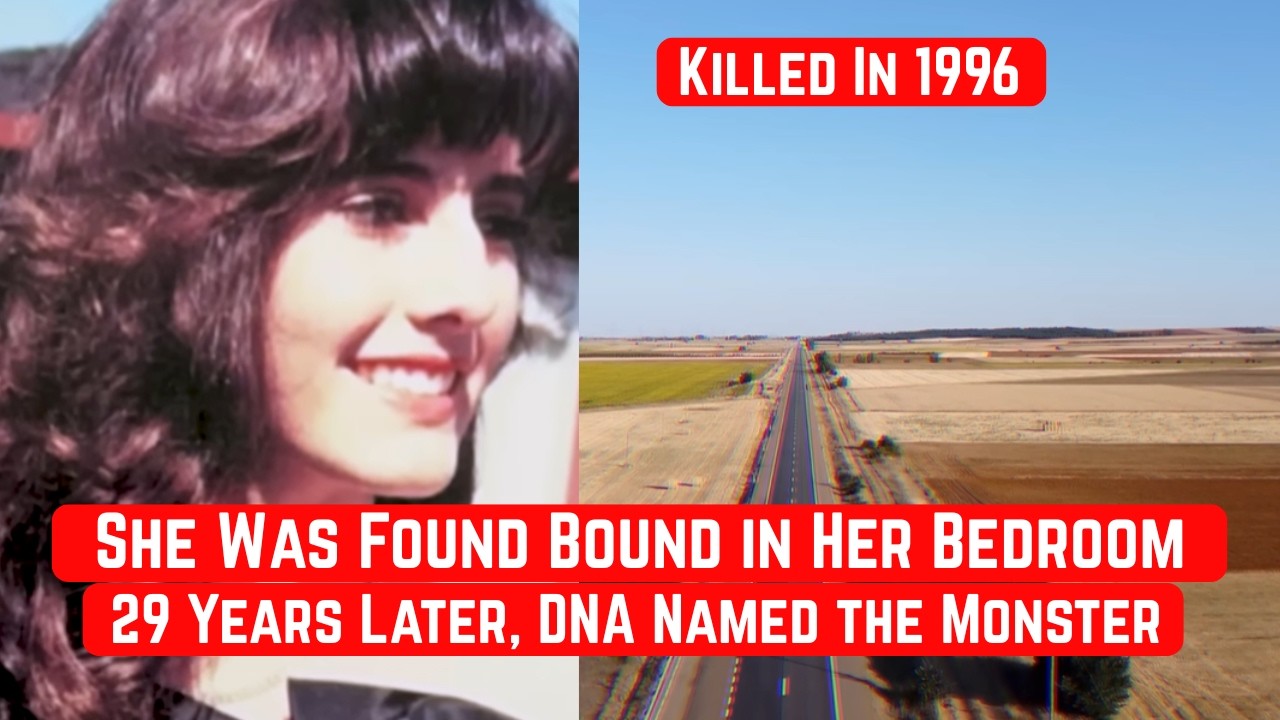
She had suffocated. The killer had brought the tape with him. There was no forced entry, no broken lock, no overturned furniture. Someone chosen.
Someone let in. Or someone who moved so fast and so controlled that Debbi never had a moment to react. Debbi had graduated from Fresno State with a degree in economics. She wanted to become an audiologist like her father, Peter.
She had a boyfriend she loved, an apartment she was proud of, and a father-daughter trip planned for August 22nd, 1996. Money was tight, so she had put up flyers and placed ads for a roommate. A handwritten list of names and numbers sat on her dining room table. That list would become evidence in her own murder investigation.
When Debbi didn’t show up for the trip, Peter drove to her apartment. Her car was parked where it always was. The door opened without resistance. The television was still running.
He found her in the bedroom, on her side, motionless. He stumbled to the phone, called his wife, who dialed 911, and then called Debbi’s mother, Sara Lovin. Sara ran through her house screaming no over and over. Forensic teams recovered DNA from the crime scene and entered it into CODIS, the national DNA database.
The result came back empty. No match. The man who had walked into Debbi’s home had never been arrested. He existed completely outside the system.
Investigators had his exact genetic code. They just had no way to read it yet. The roommate list on the dining room table looked like the only door still open. Debbi’s boyfriend, John Thomas, was cleared quickly; he had been working wildfire duty in northern California the day she was killed.
One name on the list came with a red flag. A registered sex offender named Alvin walked into the police station on his own after hearing about the murder on the news. He admitted he had met Debbi, paid a deposit, and planned to rent her spare room. His DNA was tested and he was excluded.
But Alvin handed investigators a new thread. He mentioned he hadn’t come to Debbi’s apartment alone. A friend drove him and waited nearby. That friend was Maurice Dixon.
Maurice Dixon was twenty-eight, an army veteran with zero criminal record. He told police he had never met Debbi Dorian, never entered her apartment, never seen her face until her photograph appeared on the news. During questioning, unprompted, he mentioned he had recently bought two rolls of duct tape to tie off rope ends on a punching bag. Nobody had told him duct tape was used to bind Debbi’s body.
That detail had never been released publicly. To detectives drowning in pressure, that was not a coincidence. They searched his home. The duct tape was there, exactly as described, a different brand and width.
It didn’t match what was used on Debbi. Then came the DNA. In 1996, forensic testing was far less precise. The result didn’t say he did it.
It simply said the technology couldn’t rule him out. In a high-profile murder case with a frightened city watching, that gray area became a weapon. Maurice Dixon was arrested. His face was flashed across evening news.
His name printed next to the word murderer. He sat in custody for just over two weeks. Then an advanced DNA test came back. Maurice Dixon’s DNA did not match the evidence from Debbi Dorian’s crime scene.
Not inconclusive. Simply, it did not match. Charges were dropped. He walked out.
His family has refused every interview request to this day. The investigation collapsed back to nothing. And the actual killer had watched the entire thing unfold. He had watched police build a case against the wrong man, arrest him, put his face on television, and then watch the whole machine collapse.
He had learned something that would make him far more dangerous going forward. The police were beatable. Three years later, in Visalia, sixty miles south of Fresno, he acted on that knowledge. On the night of July 30th, 1999, nineteen-year-old Beth was cycling home from her job at an ice cream parlor along Walnut Avenue.
A shadow stepped directly into her path. He grabbed her handlebars with both hands. He was wearing a hoodie, his face partially hidden. He pulled a gun from his waistband.
Get off your bike and get on your knees. He told her if she didn’t, he was going to kill her. She believed him. He forced her between a parked vehicle and a line of bushes, a narrow, shadowed pocket of space invisible from the street.
What happened there was calculated and controlled, the same signature documented in Debbi Dorian’s bedroom three years earlier. But Beth was watching him. She was memorizing the street. She was paying attention to exactly where she was.
Inside the terror of that moment, a thought formed: I’m going to get you. You’re not going to get away with this. When he was finished, he walked away. Beth didn’t go straight home.
She circled the blocks first, deliberately, methodically, because she understood that if he was watching her, home was no longer safe. She rode in a wide loop, checking the darkness behind her until she was certain she was alone. Then she went inside and called the police immediately. She walked investigators back to the exact spot on Walnut Avenue and pointed to the precise location between the bushes and the parked vehicle.
They found DNA evidence on the sidewalk. They collected it, labeled it, and logged it. And then it sat in a database, waiting. Between 1999 and 2002, more young women were attacked in Visalia under conditions so similar they couldn’t be coincidence.
Same dark hoodie. Same gun produced without warning. Young women approached alone at night in residential areas. Former Visalia detective Steve Pyeatt would later describe the pattern with chilling simplicity.
He’d find a young woman, late teens, early twenties. He’d find her alone. That was the entire criteria. He had refined his approach to something efficient and invisible, and he was applying it across the same city with the confidence of a man who believed the law couldn’t touch him.
For years, he was completely right. Then came 2006. Inside CODIS, an analyst ran a routine comparison. Two files matched each other.
The DNA recovered from Beth’s assault in 1999 and the DNA recovered from Debbi Dorian’s apartment in 1996. Same profile, same man. For the first time since 1996, investigators had a thread connecting everything, a single biological identity running through a decade of violence. But a thread is not a name.
They knew his crimes. They knew his method. They still had nothing that could tell them who he was when he went home at night. Investigators intensified the search.
They ran the profile through CODIS again and again. The system returned nothing because the killer had never been arrested. The only option left was doing it by hand. One by one, detectives identified men connected, however loosely, to Debbi’s world.
Men from the roommate list, men from the neighborhood, men whose names surfaced in tips. Each one was approached. Each one provided a sample. Each sample went to the lab.
Each result came back the same way. Excluded. Not him. 146 times.
Through all of it, one detective refused to walk away. Vince Zavala had made a promise to Sara Lovin early in the investigation. She had asked him directly, What happens when you retire? What happens to my daughter’s case when you’re gone?
Zavala looked at her and said something most detectives would never commit to. I won’t retire till I solve it. He meant it. When his career officially ended, Zavala kept working.
Unpaid, no badge, no official capacity. Just a retired detective who couldn’t stop opening the same folder. He had given his word to a mother. That was enough.
By 2009, investigators faced a new crisis. California’s statute of limitations on the Visalia sexual assault cases was closing. If they didn’t have a name soon, the law would permanently protect whoever was behind it. Prosecutors found a way around it.
They filed a John Doe warrant charging not a person, but the DNA profile itself. The warrant named the genetic sequence as the defendant, freezing the clock. The killer’s DNA was now, technically, a wanted fugitive. In 2018, something happened on the other side of California that changed everything.
Joseph James DeAngelo, the Golden State Killer, was arrested after forty years of complete invisibility. Investigators hadn’t used CODIS. They had used forensic genetic genealogy, public DNA databases populated by ordinary people who had voluntarily uploaded their genetic profiles to ancestry websites. The Fresno team contacted the same Sacramento County DA team and began the same process.
After several months of careful work, every branch pointed toward one person. Within days of the final analysis, a name appeared on a screen that made every investigator in the room go completely still. He had been living in Visalia the entire time. His name was Nikki Dewayne Stain.
Married, father of two, active in his children’s school. He managed a restaurant inside a local Visalia mall. He attended PTA meetings. To his neighbors, he was a familiar, unremarkable face.
He had maintained that second skin for twenty-three years. A family tree and a photograph are not a DNA match. Investigators needed a fresh sample from the man himself. On trash collection day, an investigator dressed as a sanitation worker positioned himself near Stain’s property.
When the household garbage was put out, the team swapped the trash cans and took the discarded contents away for processing. Among the items retrieved were used razor blades. The sample was logged as number 147, the 147th person tested in a twenty-three-year investigation. Two weeks later, the result came back.
Match. Not partial. Not inconclusive. A full, definitive match between the DNA on those razor blades and the DNA recovered from Debbi Dorian’s apartment in August 1996.
Before the arrest, Vince Zavala, the retired detective who had worked this case without pay, walked into that mall with his partner and asked for the manager. Stain came out and shook their hands. He was relaxed, cooperative. They asked him about Debbi Dorian.
He said he didn’t know her. They asked if he had ever been violent toward anyone. No. No violence against anybody.
They asked if he would voluntarily provide a DNA swab just for elimination. Routine, they said. Stain’s expression shifted just slightly. He said he wasn’t sure he wanted to do that.
Then he stood up, straightened his jacket, and delivered the line that would later be replayed in courtrooms and news broadcasts. I hope you find him. Have a good day. He turned and walked back into the mall.
He made it perhaps thirty feet. The arrest team moved in fast and clean. The handcuffs clicked around his wrists in the same mall corridor where he had been managing lunch orders an hour earlier. In jail, Stain placed a phone call to his family.
All calls from that facility are recorded. In that conversation, he said something prosecutors would later play in open court. I’ve done bad things. When investigators searched his home, they removed twenty-five boxes of potential evidence.
They also found a fake Facebook profile he had built under the name Nick Steel, posing in restaurant booths holding a beer, grinning like a man with nothing to hide. A fantasy identity layered over everything he actually was. Nick Dwayne Stain pleaded not guilty to all charges. A jury trial was scheduled for January 2026.
The death penalty was on the table. Then, seven months before that trial was set to begin, something happened in a Fresno courtroom that nobody saw coming. May 15th, 2025. Fresno County Superior Court.
No jury. No competing narratives. Just a judge, a defendant, and twenty-nine years pressing down on every person in that room. The judge asked the question.
Mr. Stain, how do you plead to a felony violation of penal code 187? That is first-degree murder. Nick Dwayne Stain stood at the defense table and said one word.
Guilty. The Visalia assault charges followed. Jane Doe 2 was in that courtroom. She sat there as the man who had destroyed a piece of her life said the words out loud on the record under oath.
Guilty, sir. Twelve felony counts, all of them. The deal was straightforward. Stain pleaded guilty to everything.
In exchange, prosecutors withdrew the death penalty. The sentence would be life without the possibility of parole. His defense attorney said outside court that he pleaded guilty not just to avoid the death penalty, but to be accountable, and for the families not to have to go through a trial. Sara Lovin would not sit through weeks of testimony.
Beth would not relive every detail under cross-examination. June 12th, 2025, sentencing day. Sara took the stand and faced Nikki Stain directly. I lived in a world of hard work, love, and kindness.
I believed that if you worked hard and did all the right things, evil wouldn’t come into your life. I was naive. I was wrong. Evil is closer than we realize, and it enters our lives when we least expect it.
He cruelly extinguished my daughter’s life and brought heartbreak to me and my family. Though he took my precious Deb, he did not take my soul. Beth also took the stand. Twenty-six years of PTSD and flashbacks, and the particular darkness that comes from surviving something no one should have to survive.
She stood in that courtroom and looked directly at him. I wish I could show him how much pain he caused me. The judge reviewed a handwritten letter Stain had submitted from custody, acknowledging responsibility and describing rehabilitation programs he had completed while awaiting trial, then handed down the sentence. Life without the possibility of parole.
Consecutive terms adding thirty-two years and four months, then forty-six years to life, stacked behind the permanent sentence. Stain would be transferred to California Medical Facility in Vacaville. He waived his right to appeal. The case was permanently closed.
Vince Zavala, the retired detective who had kept working without pay, who had been standing in that mall the day the handcuffs went on, who had made a promise to a grieving mother and spent the better part of his adult life keeping it, finally closed the file. Outside Sara Lovin’s window, the pine tree she planted the Christmas after Debbi was killed still stands, fifty feet tall, three feet around. That’s a long time to grow, Sara said at the press conference after sentencing. It reminds me of how long we’ve been working on this case.
Debbi’s birthday was June 20th. The sentencing was June 12th. She would have turned fifty-one years old eight days later. Sara imagined what Debbi would say if she could see this moment.
She knew exactly. She’s going, Yahoo, Mom. The tree keeps growing. Justice finally caught up.
And Debbi Dorian, the young woman with the roommate list on her dining table and a father-daughter trip planned and a whole life waiting, is remembered not only for how she died, but for everything she was before that August morning. She was twenty-two years old. She deserved fifty more years.
