The shots came without warning. Three prisoners, their hands bound, broke from the armed men who had come to take them to California. Before anyone could react, the guns went off. Two of the prisoners fell wounded.
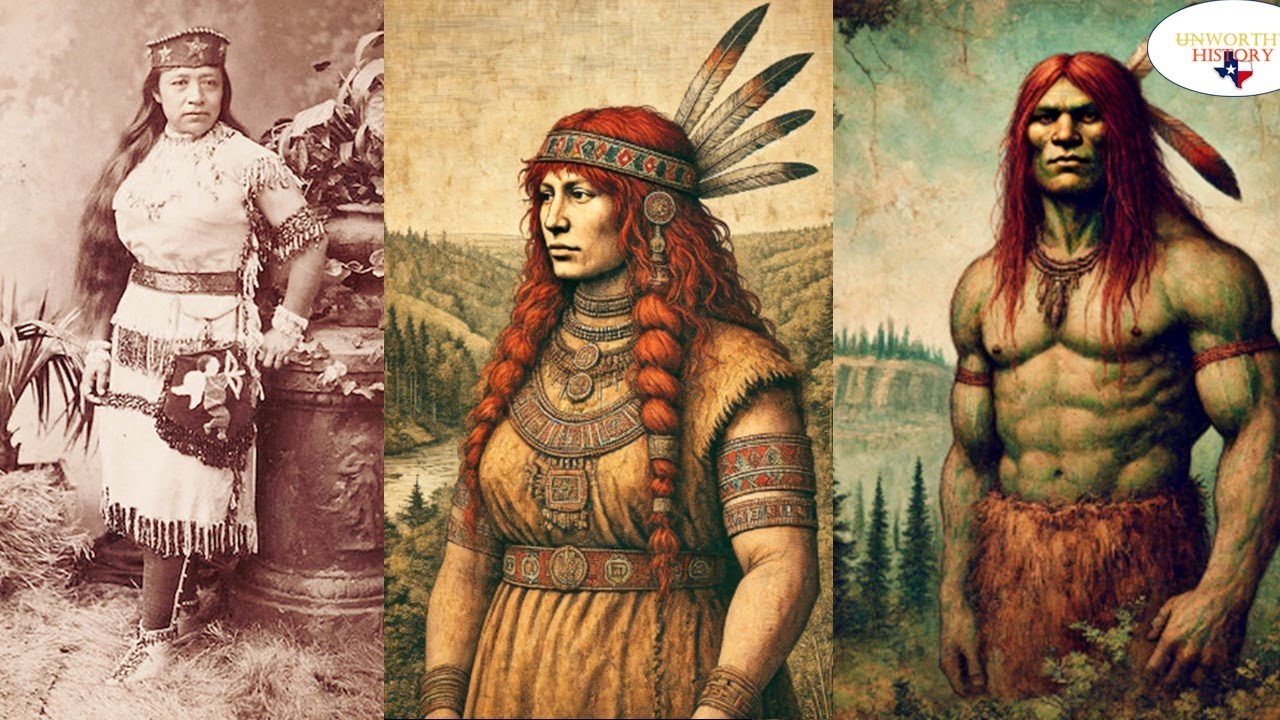
The third staggered back with his hands raised, but the firing continued until all three lay dead on the ground. Sarah Winnemucca stood watching, a girl of about fifteen, and she would carry the sight of that killing for the rest of her life. The dead men were Washo Indians, and Sarah believed with all her heart that they were innocent. The trouble had begun a few days earlier, in the late fall of 1859, when two white men named John McMullen and McWilliams had set out from their store on the Carson River to cross the mountains into California and buy supplies for the winter.
They carried a great deal of money. They camped for the night in the mountains, and during the night someone came and shot them both dead. Whoever killed them then placed arrows in their wounds to make it look as though Indians had done it. The next day the news spread that Indians had murdered McMullen.
When people asked how the messengers knew Indians had done it, the answer was simple: it had been done with arrows. Thirty men rode out that same afternoon and brought back the bodies, with the arrows still in them. Everyone said the Indians had killed the two men. Sarah’s brother, a peace chief named Natches, was sent for along with their cousin Young Winnemucca and a hundred other Paiutes.
They came within two days. Major William Ormsby, the militia leader of the Carson City settlers, with whose family Sarah and her sister had been living for two years, asked Sarah’s cousin what tribe the arrows belonged to. The cousin examined them and told him they were Washo arrows. Major Ormsby turned to Natches and asked if the Paiutes would help bring in the Washo chief so that the men who killed the two white men could be given up.
Natches agreed. That evening the Paiutes held what Sarah later called their first war dance, the first she had ever seen. A great many white men and women came to watch. Afterward Major Ormsby called his men together and they sang the Star-Spangled Banner, and Sarah, who had heard her grandfather sing it in his own way, thought it sounded nothing like that at all.
It was the first time she had heard white people sing it. Sarah’s cousin, as war chief, sent five men the next morning to bring in the Washo chief. They returned with the chief and about ten of his people. The white men gathered around them, and Major Ormsby showed the arrows and asked if the Washos knew them.
The chief, a man called Jam, answered that those were indeed his people’s arrows. Major Ormsby said that was enough. He told Natches to tell Captain Jam that his people had killed two men and must hand over the killers and all the stolen money, and then no one would be hurt and everything would be made right. The Washo chief replied that he knew his people had not killed the men, because none of his men had been away.
They had all been together at Pine Nut Valley. He did not know what to think of the sad thing that had happened. Sarah’s cousin, the war chief, held up the arrows and gave the Washos ten days to bring in the men who had killed the two white brothers. If they did not, he said, the Paiutes would have to fight them, because the white men had been so kind to them.
Who could have the heart to kill them? The Washo chief went away with a very sad heart. After he left, Natches talked with his men and asked what they thought of it all. They agreed it was very strange indeed, and that time would tell whether the Washos had done it.
Six days later the Washo chief came back with three prisoners. One of them had a wife; the other two had only their mothers, who came along with them. The white men gathered around, put handcuffs on the three Washos, and locked them in a small house for the night. The next morning all the white people came to see them.
Some said to hang the devils right off. White boys threw stones at them and used the most shameful language. At about three in the afternoon, thirty-one white men arrived, all carrying guns on their shoulders. As they marched along, Sarah’s brother and cousin ran to meet them.
One Washo woman began to scream that they had come to kill the prisoners. The crying of those people could be heard for miles. Natches went to them and told them not to cry. But the women threw themselves at his feet.
They swore the three men had not killed the white men, had not been away from camp for over a month. The chief had given up these three young men, they said, because they had no fathers to protect them. One young girl begged Natches, the mighty chief, to save her brother, for he was all she and her mother had. One young wife, married that winter, threw herself down before the war chief and begged him to speak for her husband, saying their own chief had given him up because he was afraid.
Then Natches told the Washos that the white men had come only to take the three prisoners to California to put them in jail. And at that moment one of the women cried out that the prisoners were being taken out. Everyone looked. Before Natches could get near them, the three bound men broke and ran.
Of course they were shot. Two were wounded. The third ran back with his hands up. All three died.
Sarah said she never thought she should see such a scene. At daybreak all the Washos ran to where the men had been killed. The wife of the young man threw herself down on his dead body, weeping so that it was enough to make the very mountains weep. They took the dead bodies into their arms, and they were all bloody themselves.
Sarah ran to Mrs. Ormsby, crying, with her heart nearly broken. She said she believed the Washo women, who swore their men were innocent and had not been away from camp. Mrs.
Ormsby answered that the Washo arrows were found there, and the chief himself had brought the prisoners in, and her husband knew what he was doing. Sarah ran back to see what they would do with the dead bodies, for she had heard her people say the Washos were like the Digger Indians, who burned their dead. When she got there, the Washo chief was talking to her brother. She had not heard what he said before she arrived, but from what she heard then, she knew he had been making a confession.
He pointed down at the men who had been innocently killed and said it was true what the women had said. It was he who had killed them. Their blood was on his hands. He knew their spirits would haunt him and give him bad luck while he lived.
The one who had been wounded also died. His mother cried out that the good spirit should send the same curse upon the white men, that they might all live to see the day when they would suffer at the hands of their white brothers as they called them. She turned to her daughter and said she had no brother now, no one to love her, no one to bring her game. She was left all alone.
That was the first trouble the poor Washos ever had with white people, Sarah wrote, and the only one they ever did have. The two dead Washos were taken away and burned, according to their custom. The third was taken into California. Sarah’s little sister made herself sick from crying.
It was two weeks before they could go to their mother, and when they got home it was winter, with so much snow that they stayed in the mountains where now stands Virginia City, which was then their pine nut country. Sometime during the winter the Washo chief came to them and said the white men who killed McMullen and McWilliams had been caught. They had been tried and two of them had been hanged. Then he asked Natches to pay him for the loss of the two Washos who had been killed.
Natches told him his people had nothing to do with what the white people had done. It was the chief himself who ought to pay the poor mother and sister and wife of his own tribe, because he had given those men up himself. The Paiutes had only done their duty. The next day Natches went to see for himself.
He gave the Washo chief a horse to ride, for the poor Washos had never owned a horse in their lives. Ten men went with him. The war of 1860 began this way. Two little girls, about twelve years old, went out into the woods to dig roots and did not come back.
Their parents went in search of them. When they could not find them, all the Paiutes who were there came to help and searched thoroughly. They found trails that led up to the house of two white men named Williams, who lived on the Carson River near the Indian camp. The Williams brothers said they had not seen the children and told the people to come in and search the house themselves.
They did, as thoroughly as they thought they could, and found nothing. After a few days they sorrowfully gave up the search. The relations had nearly given the girls up for dead. Then one morning an Indian rode up to the cabin of the Williams brothers.
In those days the settlers did not hesitate to sell guns and ammunition to the Indians when they had anything to buy. The Williams brothers proposed to buy the Indian’s horse. They offered him a gun, five cans of powder, five boxes of caps, and five bars of lead. After some talk, the trade was made.
The men took the horse, put it in the stable, closed the door, and went into the house to give the Indian the gun, powder, and caps. But they would not give him the lead. The Indian would not take part of the payment. He gave back what he had taken and went out to the barn to get his horse.
Then they set their dog on him. When the dog bit him, he began to holler, and to his surprise he heard children’s voices answering him. He knew at once that it was the lost children. He made for his camp as fast as he could and told what had happened and what he had heard.
Natches and others went straight to the cabin of the Williams brothers. The father of the children demanded them. The brothers denied having them. They talked quite a while, and the brothers denied it again.
Then all at once the brother of the children knocked one of the Williams brothers down with his gun and raised it to strike the other. But before he could do so, the other Williams brother stooped down and raised a trap door on which he had been standing. It was a surprise to the Paiutes, who had never seen anything of the kind. The father peeped down first but could see nothing.
Then he went down and found his children lying on a little bed with their mouths tied up with rags. He tore the rags away and brought them up. When the Paiutes saw the condition of the children, they at once killed both brothers and set fire to the house. Three days later the news spread, as usual, that the bloodthirsty savages had murdered two innocent, hardworking, industrious, kind-hearted settlers.
Word was sent to California for army soldiers to come and demand the murderers of the Williams brothers. As no army soldiers were there just then, Major Ormsby collected 160 volunteers and came up. Without asking for or listening to any explanation, he demanded the men. The Paiutes would not give them up.
When the volunteers fired on them, the Paiutes flew to arms to defend the father and brother, as any human beings would do in such a case and ought to do. And so the war began. The war lasted about three months. After a few precious ones of her people and at least a hundred white men had been killed, a peace was made.
Among the dead was Major Ormsby, their dear friend who had been so hasty. Natches had tried to save him. He met the major in the fight, and as Natches was ahead of the other Indians, Major Ormsby threw down his arms and implored him not to kill him. There was not a moment to be lost.
Natches said, drop down as if dead when I shoot, and I will fire over you. But in the hurry and agitation Major Ormsby still stood pleading, and he was killed by another man’s shots. Some other friends of Natches, Judge Broomfield and his servants and a Spaniard, lived in a small cabin about twelve miles off. They were not fighting against the Paiutes, and Natches defended their lives and risked his own.
He stood at their cabin door and beat back the assaults with a club, and succeeded in driving the attackers off. But his uncle and cousins were so angry with him for saving white men’s lives that they whipped him with a horse whip. Sarah said she always knew her uncle loved them, that he was always kind to them, but she could never love him again as she had done after he whipped her brother. Her noble, patient brother bore his uncle no ill will, but was satisfied that he had saved the lives of his friends.
There was another occasion when Natches saved the life of his friend Mr. Seth Cook of San Francisco and six others, but Sarah did not remember all the particulars and would not attempt to relate it. Mr. Cook had often given Natches valuable assistance, and he was still living and could tell the story of his escape himself.
The regular troops at last reached the grounds. After fighting a little while, they raised a flag of truce, which was responded to by Natches, and peace was made. A treaty gave the Pyramid Lake reservation to the Paiutes in 1860. They were to get large supplies as long as they were peaceful.
But though there were thirteen agents there in the course of twenty-three years, Sarah said she never knew of any issue after that first year. Among the traditions of Sarah’s people was one of a small tribe of barbarians who used to live along the Humboldt River, many hundreds of years before. They used to waylay the Paiutes and kill and eat them. They would dig large holes in the trails at night, and Paiutes who traveled by night, which they did because they were afraid of these barbarous people, would often fall into the holes.
The tribe would even eat their own dead. They would come and dig up the Paiute dead after they were buried, carry them off, and eat them. Now and then they would come and make war. When they fought, they were very brave, Sarah’s people said.
They would jump up in the air after the arrows that went over their heads and shoot the same arrows back again. The Paiutes took some of them into their families, but they could not make them like themselves, and at last they made war on them. That war lasted a long time. The tribe numbered about 2,600 people.
The war lasted some three years. The Paiutes killed them in great numbers, and what few were left went into the thick bush. The Paiutes set the bush on fire, right above Humboldt Lake. The survivors then made tuli, or bullrush, boats and went out onto Humboldt Lake.
They could not live there very long without fire, and they were nearly starving. The Paiutes watched them all around the lake and would kill them as fast as they could come on land. At last, one night, they all landed on the east side of the lake and went into a cave near the mountains. It was a most horrible place, for the Paiutes watched at the mouth of the cave and would kill them as they came out to get water.
The Paiutes would ask them if they would be like them and not eat people like coyotes or beasts. They talked the same language, but they would not give up. At last the Paiutes were tired. They gathered wood and began to fill up the mouth of the cave.
The poor fools began to pull the wood inside until the cave was full. At last the Paiutes set it on fire. At the same time they cried out to them, will you give up and be like men, and not eat people like beasts? Say quick, and we will put out the fire.
No answer came. The Paiutes thought the cave must be very deep, or far into the mountain. They had never seen it before, nor known it was there. They called out to them as loud as they could, will you give up, say so, or you will all die.
But no answer came. Then they all left the place. In ten days some went back to see if the fire had gone out. They went back to Sarah’s third or fifth great-grandfather and told him that they must all be dead, for there was such a horrible smell.
The tribe was called people-eaters. After the Paiutes had killed them all, the people around them called the Paiutes Sayu Cara, which means conqueror, and also enemy. Sarah did not know how they came by the name of Paiutes. It was not an Indian word, she thought, but a misinterpretation.
Sometimes they were called pine nut eaters, for they were the only tribe that lived in the country where pine nuts grew. The tribe the Paiutes exterminated had reddish hair, her people said. Sarah had some of that hair, handed down from father to son. She had a dress that had been in her family a great many years, trimmed with this reddish hair, which she intended to wear sometime when she lectured.
It was called the Morning Dress, and no one had such a dress but her family. Years later, the story found support from archaeological records. The cave was discovered by a company harvesting guano, and in 1929 the archaeologist Llewellyn Loud set down the accounts in a book about Lovelock Cave. John T.
Reed, a mining engineer in Lovelock, Nevada, gave his history. Reed’s father had run a general merchandise store at Lovelock from 1883 to 1895, where the son worked as a clerk, and through that work he came into contact with all the Indians of the region, old and young. Reed recalled that about 1887, when he was about sixteen, Captain Natches, two other Indians known locally as Coffee Charlie and Mustache Charlie, and Reed himself had undertaken to catch some wild horses that roamed in the neighborhood of the Carson and Humboldt sinks. In due time they came into contact with the horses, and the chase was on.
After running those horses all day long, they were obliged to camp overnight near the southern end of the Humboldt sink, on its eastern shore. The next morning they resumed the chase, following the horses over into the Carson sink desert. But there they had to turn around homeward, since they had no fresh saddle horses to pursue the mustangs further. On the way back they passed Lovelock Cave.
The hour being late, they decided to camp there for the night. Later, Captain Natches related to Reed the great calamity that had occurred in that cave to another race of people who had been exterminated by the Paiutes. In the tale Natches related, with the other two Indians aiding him and bringing out all the material facts, Reed was informed that about four or five generations back the Indians had fought to the extermination of a people who were red-headed and spoke their own language. The fact that the two peoples spoke the same language suggested that they had lived together for a long period of time.
Natches assigned no reason for the origin of the trouble, and Reed doubted if he knew or had a history, although his sister Sarah Winnemucca Hopkins stated that these people were cannibals and ate the Paiutes, which Reed thought hardly compatible with her further statement that the Paiutes had taken some of these people into their own families. Annie Lowry, a half-Indian who had married an Indian named Mr. Sany, assigned a different reason: that these people had stolen their women and taken their wild rice seed away from them. Reed rather thought the matter of food was the trouble, and that the Paiutes decided after a period of droughts that they would exterminate the other people, who were consumers of the small and ever-smaller amounts of food available in the form of wild seeds and wild fowl that visited the lakes.
Natches stated that these people had come from the southwest. A battle had waged for a long time on the Carson sink, at some sand hills on the east and west side of the Carson River, after which the Paiutes had driven these people northward into the region of the Humboldt Lake, then across the lake to the cave. Some went into the cave, while others went northward. From what Reed learned through Natches and numerous other old Indians, he deduced that this red-headed people had long occupied the territory about the cave before the Paiutes had come from elsewhere.
Natches further related how the Paiutes had gathered sagebrush in great quantity around and about the hills adjacent to the cave and assembled it on the bluff above it. Then they lit it and threw it down immediately in front of the cave. The Paiutes stayed on either side of the cave at a safe distance and watched for the people within to come out for food or water, or to escape the smoke, which in part penetrated the cave. As they came out, they were dispatched with well-directed arrows.
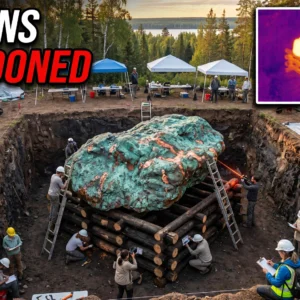
Reed also obtained an account from James H. Hart in regard to the first excavation of Lovelock Cave in 1911. Hart had heard David Pew of Lovelock tell of an old Indian cave some twenty miles south of Lovelock. Pew said it was full of bat guano, in which he had dug down four feet as a boy.
He had learned from the Indians where the cave was, and that there had been fires in it, for there was much smoke on the walls. Realizing that if the cave was as large as described the guano might be of value, Hart arranged with Pew to make a mineral location upon it and ship out the guano. They worked from the fall of 1911 to the spring of 1912. They drove a small tunnel into the mouth of the cave, or rather to one side of it, the natural opening being too small to work through.
They took out about five carloads of guano, shipped to the Hawaiian Fertilizer Company of San Francisco. They soon began to discover Indian relics and notified Dr. J. C.
Merriam of the University of California, who took the matter up with the University of Nevada and the Nevada Historical Society. They also wrote to the Smithsonian Institution, but the Smithsonian advised that they had no funds for collecting, receiving only donations. After some of the best specimens had been destroyed, they received word from the State Historical Society that, in conjunction with the University of California, they would send an investigator. This was Mr.
Loud. They gave him all possible facilities for collecting. Many objects had been destroyed by the weather, and others had been taken away. Reed recalled many boas, or ropes, of fine feathers, which lay strewn about in the open end of the cave in the way of the workmen and were irreparably damaged.
Some of these boas were found perfectly preserved. All the Indian objects began to appear about four feet below the surface of the guano. In the south end of the cave, about twenty feet deep, they unearthed some skeletons. In the north central part of the cave, about four feet deep, was a striking-looking body of a man, six feet six inches tall.
His body was mummified, and his hair was distinctly red. There was a grass rope about his neck with a knot under the left ear, the rope about eight feet long. His feet were bound together, and stout rope ran from the ankle to above the knees. The mummification was complete except for a part of the abdomen.
The other mummies all had red hair. Reed thought there were either four or five of them. Those that appeared to be women were small, something like a Japanese woman in height, which was not altogether due to the shrinking of the bodies in mummifying, because the man was a giant. The women had on moccasins which reached clear to the knees, the buckskin beaded with shells.
Two of them had on a kind of buckskin coat or gown that came down to the knees. These bodies were from the deep south end of the cave. There were no bats in the cave when they went there to work. Besides David Pew, there worked in the cave Samuel Pew, Hansen, Cummings, and perhaps one or two others.
They screened the guano through a three-quarter-inch mesh, discarding everything that did not go through the screen. Probably all objects that passed through the mesh were shipped away with the guano. After they got through working the cave, one George Stots worked on what was left in it for a while, and probably shipped out about a carload of guano. Sarah Winnemucca Hopkins died in 1891, eight years after the publication of her book.
The Pyramid Lake War had also cost the lives of three other men at the Williams Station, along with the two Williams brothers. They had been visiting the station saloon. A third Williams brother, James O. Williams, was not there at the time of the attack; he returned to find his brothers and the three patrons dead.
Most of the white settlers who fought the Paiutes alongside Major Ormsby had no military background and were not well trained. Consequently, most of them died in the same battle where Major Ormsby was killed. The red-haired people of the cave had died hundreds of years before Sarah Winnemucca wrote her book, so they were probably not simply white outlaws who had joined a tribe and lived like Indians. Some have speculated that they were somehow descended from Vikings who visited America hundreds of years before English settlement began, or that they were related to an Asian group like the Ainu of Japan, who have been known to have blonde or red hair.
Some archaeologists speculated that the preserved red hair was due to rust or another chemical process, and that these Indians did not really have red hair.